
Understanding Your Cooling Options: Window AC vs. Split System AC
As the mercury rises and the summer sun beats down, the need for effective cooling becomes paramount. You’re looking to beat the heat, to create an oasis of comfort within your own home, but faced with a dizzying array of options. Two of the most common choices for homeowners and renters alike are the ubiquitous window air conditioner and the increasingly popular split system air conditioner. Deciding between these two can feel like a significant undertaking, impacting not only your immediate comfort but also your energy bills and the aesthetic of your living space. You need to understand the fundamental differences, the pros and cons of each, and how they stack up against your unique needs and circumstances. This guide is here to walk you through the intricacies, empowering you to make an informed decision that will keep you cool and content throughout the sweltering seasons.
When considering air conditioning options for your home, it’s essential to understand the differences between window AC units and split system ACs. For a more in-depth comparison that highlights the advantages and disadvantages of each system, you can refer to this informative article on Freaky Science. It provides valuable insights into efficiency, installation, and maintenance, helping you make an informed decision. You can read the article here: Freaky Science.
Installation and Setup: Getting Your Cool On

Perhaps the most immediate distinction between a window AC and a split system lies in their installation process. This is often the first hurdle you’ll encounter when considering which unit is right for you.
The Simplicity of Window Units
For a window air conditioner, the installation is generally straightforward and can often be a DIY affair, or at the very least, a task that requires minimal professional help. You’ll need a suitable window, typically a double-hung or casement type that can accommodate the unit’s dimensions. The process usually involves sliding the unit into the open window frame and securing it with brackets or support panels. Many units come with expandableside panels to fill the gaps, preventing air leakage and ensuring optimal performance.
The beauty of a window AC’s installation lies in its self-contained nature. Everything you need – the compressor, condenser, and evaporator – is housed within a single, compact box. This means no complex refrigerant lines or extensive electrical work are typically required. While you’ll need to ensure a grounded electrical outlet is within reach of the unit’s power cord, the installation generally doesn’t involve altering your home’s existing electrical system. For renters, this is a major advantage, as window units are usually portable and can be removed without leaving permanent damage to the property, making them a common and accepted cooling solution.
The Sophistication of Split Systems
Split systems, in contrast, demand a more involved installation. As their name suggests, they are divided into two main components: an outdoor unit (containing the compressor and condenser) and an indoor unit (the evaporator and fan), which is typically mounted on a wall. These two units are connected by refrigerant lines and electrical wiring that must be routed through your walls.
This necessitates professional installation. A qualified HVAC technician will be able to properly connect the refrigerant lines, ensuring they are sealed and insulated to prevent leaks and maintain efficiency. They will also handle the electrical connections between the indoor and outdoor units and to your home’s power supply, which often requires a dedicated circuit. Furthermore, the technician will need to create a small hole in your wall to pass these connections through, a process that requires careful sealing and finishing to prevent drafts and maintain your home’s aesthetics. While the initial installation cost for a split system is invariably higher than for a window unit, the long-term benefits often outweigh this upfront expense.
Performance and Efficiency: How Well Do They Cool?
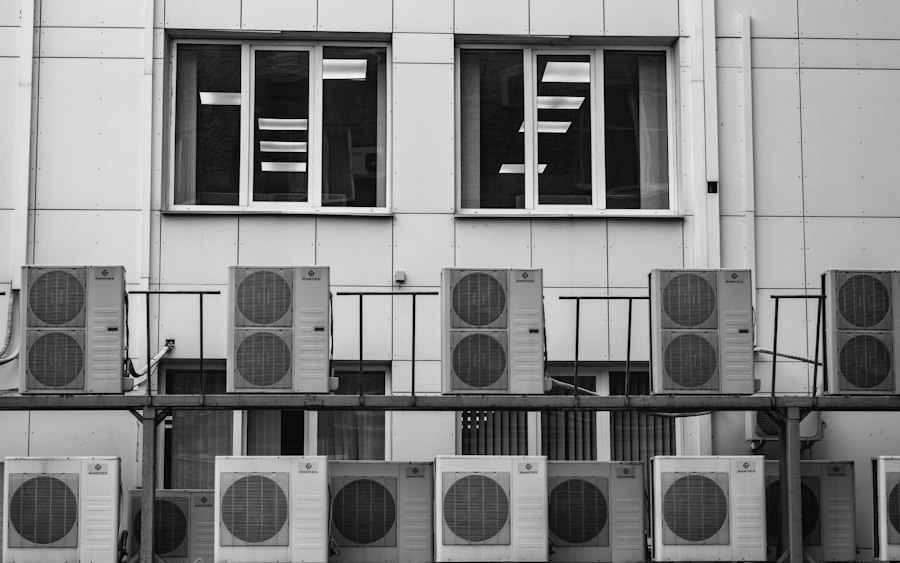
Beyond the installation, the actual performance and energy efficiency of your chosen cooling system are crucial considerations. This is where you’ll see significant differences between window units and split systems, impacting both your comfort level and your monthly energy bills.
Window ACs: Focused Cooling Power
Window air conditioners are designed to cool a single room or a relatively small, defined space. They excel at providing targeted cooling, quickly lowering the temperature in the immediate vicinity. Their cooling capacity is measured in British Thermal Units (BTUs), and you’ll select a unit based on the square footage of the room you intend to cool. While they are effective for their intended purpose, their efficiency can vary. Older or lower-end models might be less energy-efficient, leading to higher electricity consumption. Modern window units, however, often come with ENERGY STAR certifications, indicating improved efficiency and lower running costs.
The primary limitation of a window AC in terms of performance is its localized nature. If you’re trying to cool an entire floor or a larger, open-plan living area with a single window unit, you’ll likely find it struggles to achieve consistent and even temperatures. The air circulation is confined to the room it occupies, and you might experience pockets of hot or cold air. Additionally, window units can sometimes be noisy, as the compressor is located within the same unit as the fan that blows cool air into your room. This can be a significant drawback in bedrooms or living areas where quiet is desired.
Split Systems: Centralized Comfort and Superior Efficiency
Split systems, particularly central air conditioning systems that use multiple indoor units connected to a single outdoor unit, offer a more comprehensive and often more efficient cooling solution for your entire home. The indoor units are designed to circulate cooled air throughout larger areas or multiple rooms, providing a more uniform and consistent temperature. This centralized approach means you’re not relying on individual units struggling to keep up.
The efficiency of split systems, especially inverter-driven models, is generally superior to that of window units. Inverter technology allows the compressor to vary its speed, rather than cycling on and off at full power. This leads to significant energy savings and also contributes to a quieter operation. The outdoor unit handles the noisier components, while the indoor units are designed for quiet air distribution. This makes split systems an excellent choice for bedrooms, nurseries, or any space where tranquility is a priority. Furthermore, many split systems offer advanced features like programmable thermostats, multiple fan speeds, and even dehumidification modes, giving you greater control over your home’s climate.
Cost Considerations: Upfront Investment vs. Long-Term Savings
When making any major purchase, especially one that involves your home’s infrastructure, understanding the cost is paramount. This includes not only the initial purchase price but also the ongoing expenses associated with operation and maintenance.
Window ACs: Affordable Entry Point
The most significant advantage of window air conditioners from a financial perspective is their lower upfront cost. You can purchase a capable window unit for a fraction of the price of a split system. This makes them an attractive option for individuals or families on a tighter budget, or for those who only need to cool a specific room or for a limited period. The ease of installation also contributes to lower overall costs, as you can often avoid the expense of professional installation.
However, you need to consider the long-term implications. While the initial outlay is lower, less efficient window units can lead to higher electricity bills over time. If you’re running multiple window units to cool different parts of your home, these cumulative energy costs can start to add up significantly. Maintenance for window units is generally minimal, often involving just cleaning the air filter periodically. However, if a component fails, the repair costs can sometimes be close to the cost of a new unit, especially for older or less expensive models.
Split Systems: Higher Initial Outlay, Greater Long-Term Value
The initial investment for a split system air conditioner is considerably higher than for a window unit. This is due to the cost of the equipment itself, which is more technologically advanced, and the mandatory professional installation. However, it’s crucial to view this as an investment rather than just an expense. The superior energy efficiency of most split systems, especially those with inverter technology, translates into significantly lower electricity bills over the lifespan of the unit. Over several years, these energy savings can often offset the higher upfront cost.
Moreover, split systems, when properly maintained, tend to have a longer operational lifespan than window units. Routine professional maintenance, typically recommended annually, can help prevent minor issues from becoming major problems, extending the life of your system and ensuring it operates at peak efficiency. While maintenance for split systems is more involved and therefore incurs a professional service cost, it is generally considered a worthwhile investment for the longevity and performance of the system. If you’re looking to cool multiple rooms or your entire home, the long-term cost-effectiveness of a split system often makes it the more prudent financial choice.
When considering the best air conditioning solution for your home, understanding the differences between window AC units and split system ACs can be crucial. For a more in-depth analysis, you can check out this informative article that explores the pros and cons of each type. It provides valuable insights that can help you make an informed decision. If you’re interested in learning more about these systems, visit this article for further details.
Noise Levels and Aesthetics: Comfort for Your Senses
| Feature | Window AC | Split System AC |
|---|---|---|
| Installation | Installed in a window or a hole in the wall | Indoor unit mounted on wall + outdoor compressor unit |
| Cooling Capacity | Typically 0.75 to 2 tons | Typically 1 to 5 tons or more |
| Noise Level | Noisier as compressor is inside the room | Quieter as compressor is outside |
| Energy Efficiency | Lower energy efficiency (EER around 8-10) | Higher energy efficiency (EER around 10-13 or more) |
| Space Requirement | Requires window or wall opening | Requires wall space for indoor unit and outdoor space for compressor |
| Cost | Generally lower initial cost | Higher initial cost |
| Maintenance | Relatively easier to maintain | Requires professional servicing for both units |
| Appearance | Bulky and visible on window | More aesthetically pleasing and less obtrusive |
| Flexibility | Limited to single room or small area | Can cool multiple rooms with multi-split systems |
Beyond the practicalities of cooling and cost, your living environment also encompasses your sensory experience. The noise a unit produces and how it integrates into your home’s appearance are important factors to consider.
Window ACs: A Compromise on Quiet and Style
Window air conditioners are inherently more noticeable in terms of noise. Because the compressor and fan are housed within the same unit that sits directly in your window, the vibrations and mechanical sounds are readily transmitted into the room. While manufacturers have made strides in reducing noise levels, particularly with newer models, you can still expect some degree of hum, whirring, or even rattling, especially when the compressor kicks in. This can be disruptive in bedrooms, home offices, or any space where quiet is essential for relaxation or concentration.
Aesthetically, window units can be perceived as intrusive. They occupy a significant portion of your window, blocking natural light and altering the exterior appearance of your home. While some people don’t mind the look, others find it detracts from their home’s curb appeal. Furthermore, the exposed window unit can sometimes be a security concern, though most units are designed to be securely fastened.
Split Systems: Silent Operation and Seamless Integration
One of the most celebrated advantages of split systems is their remarkably quiet operation. The noisy components are housed in the outdoor unit, far from your living spaces. The indoor units, which are responsible for air distribution, are designed to be as unobtrusive as possible, with quiet fan motors and strategically placed vents. This allows you to enjoy a cool environment without the constant hum or drone that can accompany window units, making them ideal for creating serene living spaces.
In terms of aesthetics, split systems offer a much sleeker and more integrated look. The indoor units are typically mounted high on a wall, blending in with your décor. They are available in various designs and colors to match your interior. The refrigerant lines and electrical connections are discreetly routed through the walls, leaving your windows unobstructed and maintaining the clean lines of your home. This seamless integration contributes to a more sophisticated and modern living environment.
Environmental Impact and Future-Proofing: Thinking Long-Term
As you consider your cooling options, it’s also wise to think about the broader implications for the environment and how your choice aligns with long-term sustainability and potential future needs.
Window ACs: Incremental Improvements
Window air conditioners have been around for a long time, and while their design has seen incremental improvements in energy efficiency, they are generally not the most environmentally friendly cooling solution. Older models, in particular, can have a significant energy footprint. The refrigerants used in some older units may also have a higher global warming potential. However, as mentioned, ENERGY STAR certified window units offer a more responsible choice within this category. Their localized cooling also means you might be over-cooling or under-cooling certain areas, leading to wasted energy.
When it comes to the lifespan of a window unit, they typically have a shorter operational life compared to a well-maintained split system. This means more frequent replacements, contributing to landfill waste. However, their simpler design often means easier recyclability of individual components.
Split Systems: Efficiency and Sustainability
Split systems, especially modern inverter-driven models, represent a more energy-efficient and thus more environmentally conscious choice. Their ability to precisely regulate temperature and avoid the constant on-off cycling of less sophisticated systems significantly reduces energy consumption. This translates to a smaller carbon footprint associated with their operation. Furthermore, many newer split systems utilize refrigerants with lower global warming potential, further reducing their environmental impact.
The longer lifespan of split systems also contributes to their sustainability. By investing in a durable and efficient system that is properly maintained, you are reducing the need for frequent replacements and the associated manufacturing and disposal impacts. Many manufacturers are also increasingly focusing on designing systems with a longer life cycle and incorporating more recyclable materials. As smart home technology becomes more prevalent, many split systems can integrate with smart thermostats, allowing for even greater control over energy usage and further optimizing efficiency based on occupancy and external weather conditions, truly future-proofing your cooling solution.

Your AC Blows Hot Air Outside. Is That Heat From Your Room?
FAQs
What is the main difference between a window AC and a split system AC?
Window AC units are typically installed in a window opening, while split system AC units have two main components – an indoor unit and an outdoor unit connected by refrigerant lines.
Which type of AC is easier to install, a window AC or a split system AC?
Window AC units are generally easier to install as they can be mounted in a window opening without the need for extensive installation work like with split system AC units.
Which type of AC is more energy efficient, a window AC or a split system AC?
Split system AC units are typically more energy efficient than window AC units because they have advanced features like inverter technology and variable speed compressors.
Which type of AC is more aesthetically pleasing, a window AC or a split system AC?
Split system AC units are considered more aesthetically pleasing as the bulky outdoor unit can be placed out of sight, while window AC units are visible from the exterior of the building.
Which type of AC is more suitable for larger spaces, a window AC or a split system AC?
Split system AC units are more suitable for larger spaces as they can cool multiple rooms efficiently with the use of multiple indoor units connected to a single outdoor unit.