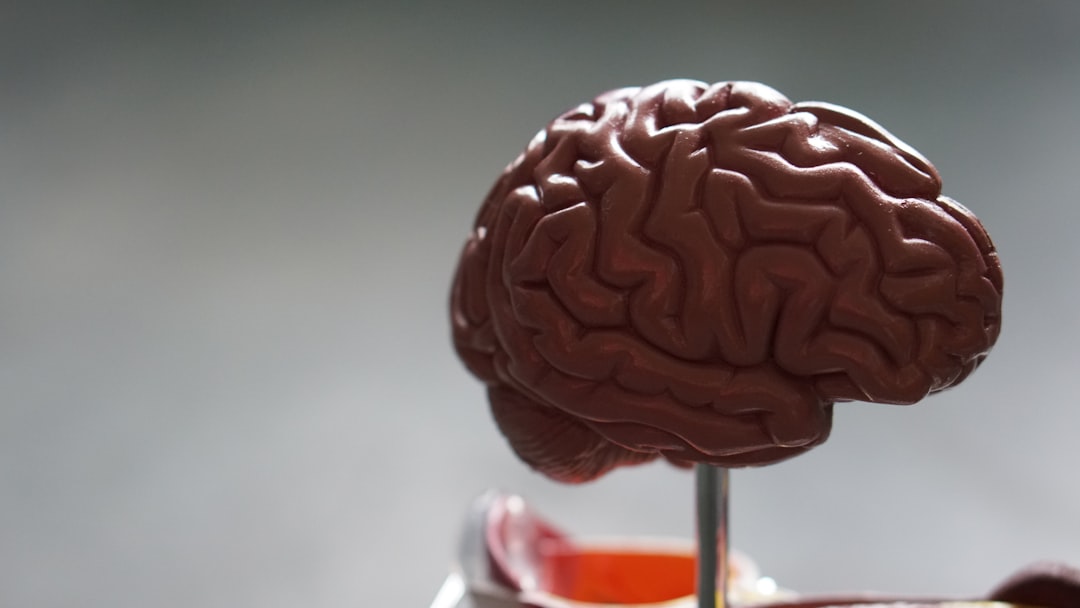
You experience it all the time, don’t you? That moment when you miss a crucial detail, when a conversation feels slightly out of sync, or when a sudden event catches you completely off guard. You might blame it on distraction, fatigue, or simply being clumsy. But the truth is, the lag between your brain and reality is a fundamental aspect of how your consciousness works. It’s not a bug; it’s a feature. Your brain isn’t a perfect, real-time camera capturing the world as it unfolds. Instead, it’s a sophisticated, albeit slightly delayed, interpreter, constructor, and predictor. Understanding this inherent delay is key to understanding why you perceive the world the way you do, why you sometimes make mistakes, and even why your mind is capable of such incredible feats of inference and creativity. It’s a fascinating journey into the inner workings of your own mind, revealing that what you perceive as immediate is often a carefully constructed narrative built on past experiences and future predictions.
You might assume that when you see, hear, or feel something, your brain registers it instantaneously. After all, the world feels immediate, doesn’t it? When a ball flies towards you, you seem to react without a second’s thought. When someone speaks, you understand their words as they are uttered. However, a closer examination, and considerable scientific evidence, reveals that this feeling of direct, unadulterated perception is an illusion. Your brain is an incredibly efficient processor, but it’s not designed for instantaneous, raw data ingestion. Instead, it works through a series of complex, sequential steps.
Sensory Input Takes Time to Travel
Consider the journey of a single visual cue. Light from an object strikes your retina. This light is converted into electrical signals by photoreceptor cells. These signals then travel along the optic nerve, a bundle of nerve fibers, all the way to your brain. This journey isn’t instantaneous. It involves the transmission of electrochemical impulses, which, while incredibly fast, still have a measurable speed. Even within the eye itself, there are multiple layers of processing before the signal even leaves the retina.
The Retina: More Than Just a Light Sensor
Your retina isn’t merely a passive film. It’s a highly active neural tissue that performs initial processing of visual information. Cells like bipolar cells and ganglion cells begin to interpret patterns, contrast, and movement even before the signal leaves your eye. This pre-processing is vital for filtering out noise and highlighting important features, but it also adds a layer of computational time.
Neural Pathways: The Superhighways to Your Brain
Once the signals leave your retina, they travel through a series of interconnected neurons. The optic nerve is just the beginning. These signals then reach various areas of your brain, including the thalamus and ultimately the visual cortex. Each synapse, each junction between neurons, involves biochemical and electrical processes that take time. Think of it like a vast, intricate network of wires and switches; even the fastest electrical signals take a finite amount of time to traverse its entirety. When you consider the volume of data processed from your eyes alone – color, shape, motion, depth – it becomes clear that this entire process cannot be instantaneous.
Auditory Processing: Lagging Behind Sound Waves
The same principles apply to your sense of hearing. Sound waves travel through the air, enter your ear canal, vibrate your eardrum, and then set in motion the tiny bones in your middle ear. These vibrations are then converted into electrical signals by the cochlea in your inner ear. These signals then travel along the auditory nerve to your brain. Again, this is a physical and electrochemical process that requires time.
The Mechanics of Your Ear: A Delicate Choreography
The physical movement of your eardrum, ossicles, and basilar membrane in the cochlea are all subject to the laws of physics. These mechanisms work remarkably quickly, but not infinitely so. The frequency and amplitude of sound waves influence how quickly and precisely these structures can respond.
From Sound to Meaning: The Brain’s Interpretation Engine
Once the electrical signals reach the auditory cortex, your brain begins the arduous task of decoding them. It identifies pitches, loudness, and the location of the sound source. It then progresses to recognizing speech, distinguishing different voices, and understanding the meaning of words. This is where the lag becomes more significant. Your brain isn’t just receiving raw sound data; it’s actively constructing meaning, a process that draws heavily on your memory and learned patterns. The time taken to match incoming auditory patterns to learned phonetic and semantic representations contributes to the perceived delay.
The phenomenon of our brains often lagging behind reality can be attributed to the complex processes involved in perception and cognition. This intriguing topic is explored in greater detail in the article found at Freaky Science, which discusses how our brains interpret sensory information and the delays that can occur in this process. Understanding these delays can shed light on why our reactions may not always align perfectly with the events happening around us.
The Role of Predictive Coding: Your Brain as a Constant Forecaster
Given this inherent delay in sensory processing, how do you manage to navigate the world so effectively, often appearing to react in real-time? The answer lies in your brain’s remarkable ability to predict what’s coming next. This is often referred to as predictive coding or predictive processing. Your brain isn’t passively waiting for sensory information to arrive; it’s actively generating hypotheses about what it expects to perceive and then comparing incoming sensory data against these predictions.
Generating Expectations: The Foundation of Perception
Based on your past experiences, your current context, and your goals, your brain constantly generates predictions about the sensory input it anticipates. If you’re walking down a familiar street, your brain predicts the usual sights and sounds. If you’re holding a cup, your brain predicts the sensation of its weight and texture. These predictions are not conscious guesses; they are fundamental neural processes.
Top-Down vs. Bottom-Up Processing: A Constant Dialogue
Your brain operates with both top-down and bottom-up processing. Bottom-up processing involves signals originating from your sensory organs and moving up to higher brain areas. This is the raw data stream. Top-down processing, on the other hand, involves higher-level cognitive functions (like expectations and attention) influencing how sensory information is interpreted. Predictive coding emphasizes the dominant role of top-down processing, where your brain’s predictions heavily influence what you perceive.
The Surprise Element: When Predictions Fail
When incoming sensory information matches your brain’s predictions, perception is smooth and seamless. You might not even consciously register the event. However, when there’s a mismatch – a surprise – your brain flags this “prediction error.” This error signal is crucial. It tells your brain that its model of reality needs updating. This error signal is then propagated upwards, leading to revisions in your perception and learning from the unexpected event. This is why novel or unexpected stimuli tend to capture your attention and are more memorable; they represent significant deviations from your internal model.
The Advantage of Prediction: Efficiency and Speed
Predictive coding offers significant advantages. By anticipating sensory input, your brain can process information far more efficiently. Instead of needing to analyze every detail from scratch, it can focus on the discrepancies, the aspects that deviate from its expectations. This also allows for faster responses. If your brain predicts the trajectory of a falling object, it can initiate a motor response before the object actually hits you, creating the illusion of instantaneous reaction.
Minimizing Computational Load: Don’t Reinvent the Wheel
Imagine if your brain had to process every single visual pixel from scratch every millisecond. The computational demand would be astronomical. Predictive coding allows your brain to bypass much of this, focusing only on the information that requires new processing. It’s like having a template for reality and only filling in the blanks where the template doesn’t quite match.
Enhanced Attention and Focus: Directing Resources Wisely
When your predictions are accurate, your attention is free to focus on more complex or novel aspects of your environment. When there’s a prediction error, your attention is automatically drawn to the surprising stimulus, ensuring that you learn from the unexpected. This dynamic allocation of attentional resources is critical for survival and learning.
The Information Bottleneck: We Don’t Process Everything
Even with predictive coding, your brain is not a supercomputer capable of processing every single piece of sensory information it receives. There’s a fundamental limit to the amount of information your brain can attend to and process consciously at any given moment. This is often referred to as the “information bottleneck.”
Selective Attention: Choosing What to Focus On
You are constantly bombarded with sensory input, far more than you can possibly process. Your brain employs selective attention to filter this information, prioritizing what it deems most important or relevant. This filtering process itself takes time and can contribute to the lag.
The Cocktail Party Effect: A Classic Example
The “cocktail party effect” is a prime illustration. In a noisy room with many conversations, you can focus your attention on a single conversation, effectively tuning out the others. However, if your name is suddenly called out from another conversation, your attention can immediately shift. This demonstrates the brain’s ability to selectively attend and its capacity to be drawn by salient, unexpected stimuli. The process of switching attentional focus is not instantaneous.
Inattentional Blindness: Missing the Obvious
Perhaps the most striking consequence of the information bottleneck is inattentional blindness. This occurs when you fail to notice completely visible but unexpected stimuli because your attention is focused elsewhere. The classic gorilla experiment, where participants counting basketball passes fail to notice a person in a gorilla suit walking through the scene, vividly demonstrates this. Your brain, focused on the task of counting, simply didn’t allocate resources to process the unexpected visual information.
The Role of Working Memory: A Limited Workspace
Your working memory is like a temporary notepad where your brain holds and manipulates information for immediate use. It has a limited capacity. Information that enters your working memory is subject to decay and interference. This means that even if you briefly register something, it might not be retained long enough for conscious awareness or further processing if it’s not actively maintained. The act of transferring information from sensory buffer to working memory, and then to long-term memory, also involves temporal stages.
Capacity Limitations: The Constant Trade-off
The limited capacity of working memory forces your brain to make decisions about what information is most crucial to retain. This involves a constant trade-off, where some information is prioritized while other information is allowed to fade. This process of selection and prioritization inherently introduces a delay.
Rehearsal and Elaboration: Techniques for Retention
To overcome working memory limitations, you engage in strategies like rehearsal (repeating information) and elaboration (connecting new information to existing knowledge). These are active processes that require cognitive effort and time, further contributing to the overall temporal dynamics of perception and cognition.
Memory Consolidation: Building a Coherent Narrative
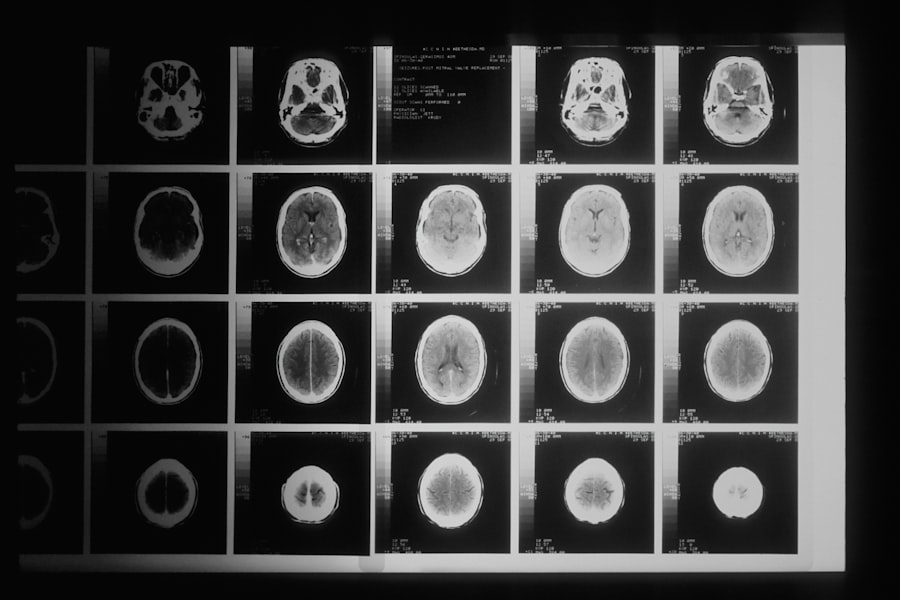
The raw sensory data that enters your brain is constantly being processed, filtered, and interpreted. But what you consciously “remember” and reconstruct as your experience is not a direct playback of events. Instead, it’s a narrative built through the process of memory consolidation and retrieval. This process is inherently reconstructive and thus introduces a significant temporal gap between the actual event and your conscious recollection of it.
Encoding: Transforming Raw Data
When you experience something, your brain must first encode that information into a format that can be stored. This involves transforming sensory signals into neural representations. This encoding process is not instantaneous; it requires neuronal activity and synaptic changes. Different types of memories (episodic, semantic, procedural) are encoded through distinct neural mechanisms, each with its own temporal characteristics.
Synaptic Plasticity: The Physical Basis of Memory
The physical basis of memory lies in the strengthening and weakening of synaptic connections between neurons. This process, known as synaptic plasticity, is not immediate. It involves complex molecular events that unfold over time, from milliseconds to hours and even days, to consolidate a memory trace.
The Hippocampus: A Key Player in Memory Formation
Structures like the hippocampus play a critical role in the formation of new explicit memories. This region acts as a temporary holding area, binding together different aspects of an experience (visual, auditory, emotional) before they are consolidated into more stable long-term memories distributed across the cortex. This binding process, and the subsequent transfer to long-term storage, is a protracted affair.
Consolidation: From Short-Term to Long-Term
Once information is encoded, it undergoes consolidation, the process of stabilizing and integrating memory traces. This can take days, weeks, or even years. During sleep, for example, your brain actively replays and strengthens memories, a crucial process for long-term retention. This means that your recollection of an event, even a recent one, is not a pristine recording but a re-assemblage of information that has undergone significant processing.
Sleep’s Architect: The Role of Dormant Hours
During sleep, stages like slow-wave sleep and REM sleep are crucial for memory consolidation. Neuronal activity patterns observed during waking experience are replayed, leading to the strengthening of synaptic connections. This happens without your conscious awareness, highlighting the fact that memory formation is an ongoing, often unconscious, process that dictates what you’ll eventually recall.
The Reconstructive Nature of Recall: Filling in the Blanks
When you recall a memory, you are not accessing a perfect playback. Instead, you are reconstructing the event based on the consolidated memory traces, your current knowledge, and your current emotional state. This reconstruction process can introduce inaccuracies, biases, and even entirely new information. It’s why two people who experienced the same event can recall it differently.
Have you ever wondered why your brain seems to lag behind reality, processing information just a fraction of a second too late? This phenomenon can be attributed to the way our brains interpret sensory data and make decisions. For a deeper understanding of this intriguing topic, you might find the article on Freaky Science particularly enlightening, as it explores the complexities of perception and cognition in greater detail. By delving into the mechanisms of our neural pathways, we can gain insight into the fascinating interplay between our experiences and our brain’s processing capabilities.
The Social and Emotional Layer: Understanding Others Takes Time
| Reasons | Explanations |
|---|---|
| Sensory Processing | It takes time for your brain to process and interpret sensory information from your environment. |
| Neural Transmission | Signals from your senses travel through neurons to reach your brain, which takes time. |
| Attentional Focus | Your brain prioritizes certain stimuli, causing a delay in processing other information. |
| Perceptual Filters | Your brain filters out irrelevant information, which can lead to a delay in processing important details. |
Your perception of reality is not solely about the physical world; it’s also deeply intertwined with your understanding of other people and your emotional responses. Interpreting social cues, deciphering intentions, and processing emotions all add layers of complexity and temporal lag to your experience.
Theory of Mind: Grasping Another’s Perspective
Theory of Mind is your ability to attribute mental states – beliefs, desires, intentions, emotions – to yourself and to others and to understand that others have mental states that are different from your own. This is a complex cognitive feat that doesn’t happen instantaneously. It involves assessing subtle cues, making inferences, and perhaps drawing on past experiences with similar social situations.
Inferring Intentions: The Art of Reading Between the Lines
When someone speaks or acts, you are constantly trying to infer their intentions. Is their tone sarcastic or sincere? Are they offering genuine help or trying to manipulate you? This inferential process requires drawing on a vast repertoire of social knowledge and can be prone to error, especially across cultural divides. The time it takes to process these subtle cues and make an accurate inference contributes to the perception that understanding others can lag behind their actions.
Empathy: Feeling With and For Others
Empathy, the ability to understand and share the feelings of another, is also a complex process. It involves not only recognizing another’s emotional state but also experiencing a resonance with it. This requires considerable cognitive and emotional processing and is not a passive, immediate reception of another’s feelings.
Emotional Processing: The Subjective Experience of Time
Your emotional state significantly influences your perception of time. When you are experiencing intense emotions, like fear or excitement, time can seem to speed up or slow down. This subjective distortion of time is a testament to the intricate interplay between your cognitive and emotional systems.
The Flashbulb Memory Phenomenon: Vivid Yet Unreliable
The phenomenon of “flashbulb memories” – vivid, detailed recollections of shocking or momentous events – illustrates how strong emotions can seemingly freeze time. However, research has shown that even these seemingly accurate memories can be subject to significant distortion over time. The intense emotional encoding might make the memory feel more real, but it doesn’t guarantee absolute accuracy.
Affective Forecasting: Predicting Future Feelings
Your brain is also constantly involved in forecasting future emotional states, a process known as affective forecasting. You predict how certain events will make you feel, which influences your decisions and behaviors. This predictive process, like all predictions, is an estimate and is not always accurate, demonstrating the ongoing temporal dimension of your emotional landscape.
In conclusion, the lag between your brain and reality is not a flaw, but rather a fundamental characteristic of your biological and cognitive architecture. From the time it takes for sensory signals to travel and be processed, to your brain’s remarkable ability to predict and construct narratives, and the limitations of your attention and memory, every aspect of your cognitive system operates within a temporal framework. Understanding this inherent delay allows you to appreciate the sheer complexity of your own mind and the incredible feats it performs to create your coherent, albeit slightly delayed, experience of the world. It’s a reminder that what feels immediate is often the culmination of intricate, time-consuming processes, constantly working to make sense of the unfolding universe.

You’ve Never Experienced the Present
FAQs
1. Why does the brain lag behind reality?
The brain processes information from the senses and creates a perception of reality, but this process takes time. As a result, our perception of reality is always slightly delayed.
2. How much of a delay is there between reality and our brain’s perception?
Studies have shown that the delay between an event occurring in reality and our brain’s perception of it can range from a few milliseconds to a few seconds, depending on the specific sensory system involved.
3. What are some factors that contribute to the brain lagging behind reality?
Factors such as the speed of neural transmission, the time it takes for sensory information to be processed, and the complexity of the brain’s interpretation of sensory input all contribute to the brain lagging behind reality.
4. How does the brain compensate for this delay?
The brain uses predictive processing and other mechanisms to compensate for the delay in perception. It anticipates sensory input based on past experiences and makes rapid predictions to help us navigate the world in real time.
5. Can the brain’s lag behind reality be altered or improved?
While the brain’s processing speed is largely determined by biological factors, certain practices such as mindfulness and meditation have been shown to improve the brain’s ability to process sensory information and reduce the feeling of lag behind reality.