It’s a curious thing when your once crisp white LED light starts to take on a purplish hue. It’s not just you; it’s a common phenomenon that can be a bit frustrating when your lighting isn’t quite what it used to be. So, why do white LEDs turn purple over time? The main culprit is often a degradation of the phosphor coating within the LED package, a crucial component responsible for transforming the blue light emitted by the LED chip into the white light we see.
The Inner Workings of White LEDs
To understand why they change color, we first need a quick peek inside a typical white LED. It’s not as complicated as it sounds, but knowing the basics helps explain the problem.
Blue Light and Phosphors: The Color-Creating Duo
Most white LEDs work by using a blue LED chip as their foundation. This blue chip emits light in the shorter, bluer wavelengths. To get white light, which is a combination of many colors, this blue light needs to be converted. This is where phosphors come in. Phosphor materials are applied as a coating over the blue LED chip. When the blue light hits these phosphors, they absorb some of that energy and re-emit light at longer wavelengths – typically greens, yellows, and reds. The mix of the original blue light and the re-emitted longer wavelengths is what our eyes perceive as white light. The specific blend of phosphor materials determines the “color temperature” of the white light, whether it’s a cool, bluish-white or a warm, yellowish-white.
Different Phosphor Blends for Different Whites
It’s worth noting that not all white LEDs are created equal. Manufacturers use different combinations and densities of phosphor powders to achieve various shades of white. For instance, LEDs designed for a cooler white light might have a higher concentration of phosphors that emit bluer or greener light, while those for warmer white light will have more phosphors that produce reds and yellows. This variation in formulation plays a role in how susceptible they are to color shift.
As white LED lights age, they can sometimes exhibit a color shift, turning purple over time due to various factors such as material degradation and temperature fluctuations. This phenomenon has been the subject of several studies and articles, including one that provides a detailed analysis of the underlying causes and potential solutions. For more information on this topic, you can read the related article here: Understanding the Color Shift in White LEDs.
The Phosphor Degradation Hypothesis
This is where the purple starts to creep in. The phosphor coating, while effective, isn’t indestructible. Over time and under constant stress, it can begin to break down.
Heat and Humidity: The Unseen Stressors
The primary enemies of phosphor coatings are heat and humidity. LEDs, even though they are generally more energy-efficient and produce less heat than incandescent bulbs, still generate heat during operation. This heat can accumulate within the LED package, especially in poorly ventilated fixtures or in environments with high ambient temperatures. Prolonged exposure to elevated temperatures accelerates the chemical reactions that lead to phosphor degradation. Humidity, often working in tandem with heat, can also contribute to the breakdown process. Moisture can seep into the LED package and react with the phosphor materials, causing them to change their optical properties.
Chemical Reactions and Structural Changes
As the phosphor materials degrade, their ability to absorb blue light and re-emit it at the desired wavelengths changes. This often means they become less efficient at emitting longer wavelengths (greens, yellows, reds) and more efficient at reflecting or transmitting the original blue light. This shift in the spectral output is what causes the perceived color change. Instead of a balanced mix of colors that looks white, you end up with a spectrum dominated by the residual blue light, with less of the warmer tones. This imbalance is what our eyes interpret as a purplish or pinkish hue.
The Role of Material Purity and Manufacturing Quality
It’s also important to consider that the quality of the phosphor materials and the precision of the manufacturing process can influence longevity. LEDs made with lower-purity phosphors or those where the coating is applied unevenly might be more prone to early degradation. Variations in the encapsulation material, which is meant to protect the chip and phosphors from the environment, can also allow moisture or other contaminants to enter, speeding up the decay.
Why Purple? A Closer Look at the Spectrum Shift
The specific color shift to purple isn’t random. It’s a predictable consequence of how phosphors interact with blue light.
The “Missing” Warm Tones
Think back to the phosphor mix. To create white light, you need a blend of blue, green, yellow, and red. When the phosphors responsible for producing the green, yellow, and red components start to break down, they become less effective. This means fewer of those longer wavelengths are being generated. The blue light from the LED chip, however, remains relatively unaffected in its emission. The result is an imbalance where the blue light is proportionally more dominant than the other colors. Our eyes perceive this dominance of blue, combined with the reduced presence of warmer tones, as a shift towards the violet end of the spectrum, hence the purplish tint.
Selective Absorption and Re-emission Changes
The degradation process can make the phosphors less efficient at absorbing specific wavelengths of blue light or less efficient at re-emitting the desired longer wavelengths. For example, a phosphor might start to absorb blue light but then re-emit it at a wavelength still within the blue-violet range, rather than shifting it significantly towards green or yellow. This subtle shift in the absorption and re-emission characteristics directly alters the spectral power distribution of the light, leading to the color change we observe.
Not All Phosphors Degrade Equally
Different phosphor materials have different sensitivities to heat, humidity, and UV exposure. Some are more robust than others. The specific blend used in a particular LED will influence how it ages. If the phosphors responsible for the warmer end of the spectrum are particularly susceptible to degradation, the shift towards purple will be more pronounced.
Practical Solutions and Preventive Measures
While you can’t reverse the chemical changes that have already occurred, there are steps you can take to mitigate the issue and potentially extend the life of your LEDs.
Ventilation is Key: Keeping Things Cool
One of the most straightforward ways to slow down phosphor degradation is to ensure your LED fixtures are well-ventilated. Overheating is a major contributor, so giving the LEDs a chance to dissipate heat is crucial.
Improving Airflow in Fixtures
If you have enclosed light fixtures, consider if there are ways to improve airflow. This might involve removing any unnecessary covers that aren’t essential for safety or aesthetics, or ensuring that the fixture isn’t crammed into a tight space with no room for air to circulate. For recessed lighting, check that the insulation around the fixture isn’t directly touching the housing, as this can trap heat. Some fixtures are designed with vents; make sure these aren’t blocked.
Choosing Fixtures Wisely
When purchasing new lighting, opt for fixtures that are designed for good thermal management. Open-backed fixtures or those with ample ventilation will generally allow LEDs to run cooler. Avoid fixtures where the LEDs are tightly packed and enclosed with no way for heat to escape.
Environmental Control: Managing Heat and Humidity
The environment where your lights are installed plays a significant role. Reducing ambient heat and humidity can make a big difference.
Reducing Ambient Temperature
If your lights are in an attic, garage, or other areas that experience extreme temperature fluctuations, try to regulate the temperature where possible. This might involve adding insulation, improving ventilation in the space itself, or even using fans to circulate air. In enclosed rooms, maintaining a comfortable temperature can help, though this is more about the overall building climate.
Addressing Moisture Issues
In damp areas like bathrooms or basements, addressing humidity is important. Using exhaust fans after showers, ensuring proper dehumidification, and fixing any leaks can all contribute to a drier environment that’s less stressful for electronics.
Selecting Higher-Quality LEDs
Not all LEDs are created equal, and you often get what you pay for. Investing in reputable brands and higher-quality products can lead to better longevity.
Researching Brands and Warranties
Look for manufacturers known for their quality control and reliable products. Brands that offer longer warranties (e.g., 3-5 years or more) often have more confidence in the longevity of their LEDs. Read reviews that specifically mention color stability over time.
Understanding LED Specifications
When buying new LEDs, pay attention to their specifications. Look for information about their lumen maintenance (how well they retain brightness over time) and color rendering index (CRI). While CRI doesn’t directly predict color shift, it’s an indicator of light quality. Some manufacturers also provide data on “lumen depreciation” or “chromaticity shift,” which can be helpful. For critical applications, consider professional-grade LEDs that often use more robust materials and manufacturing processes.
As white LEDs age, they can undergo a fascinating transformation, often turning a purple hue over time. This phenomenon is linked to the degradation of the phosphor coating used in the LED, which can affect the light’s color temperature. For a deeper understanding of the science behind this color shift and its implications, you can read more in this insightful article on Freaky Science.
When Replacement Becomes the Only Option
| Time (hours) | Color Shift (CIE xy coordinates) | Luminous Intensity (cd) | Dominant Wavelength (nm) | Temperature (°C) | Notes |
|---|---|---|---|---|---|
| 0 | (0.33, 0.33) | 100 | 450 (Blue peak) / 570 (Yellow peak) | 25 | Initial white light output |
| 100 | (0.30, 0.28) | 95 | 460 / 560 | 30 | Beginning of blue shift, slight purple tint |
| 500 | (0.28, 0.25) | 85 | 470 / 550 | 35 | Noticeable purple hue, yellow phosphor degradation |
| 1000 | (0.25, 0.22) | 70 | 480 / 540 | 40 | Strong purple color, significant phosphor loss |
| 2000 | (0.22, 0.18) | 50 | 490 / 530 | 45 | Severe color shift, LED nearing end of life |
Despite your best efforts, some LEDs will eventually reach the end of their useful life or become aesthetically unappealing due to color shift. In these cases, replacement is the most practical solution.
Recognizing End-of-Life Indicators
The purple hue is a strong indicator that the LED is degrading. While it might still be producing light, the quality and color accuracy are compromised. Other signs of aging can include flickering, a noticeable dimming of the light output, or complete failure. When the color shift becomes distracting or impacts the intended function of the light (e.g., in areas where accurate color representation is important), it’s time to consider a replacement.
Choosing Replacements for Consistent Lighting
When replacing a single LED in a fixture with multiple bulbs, or when replacing an entire fixture, it’s important to ensure consistency.
Matching Color Temperature and CRI
To avoid having bulbs with different color casts next to each other, try to match the color temperature (measured in Kelvin, K) and CRI of your new bulbs to the existing ones. If your current bulbs are already showing signs of purple, you might want to aim for a slightly warmer color temperature and a good CRI to ensure a more pleasing and consistent look. Check the packaging of your existing bulbs for this information.
Considering Different LED Technologies
While phosphor-converted LEDs are the most common for white light, other technologies exist. For example, some high-end applications might use multi-chip LEDs or other methods to achieve better color stability. However, for most general residential and commercial use, standard phosphor-converted LEDs will be the most readily available and cost-effective. If you’re replacing an entire fixture, consider the overall design and thermal management to ensure longevity.
Disposal of Old LEDs
When you replace your old LEDs, remember to dispose of them responsibly. While they don’t contain the same hazardous materials as older fluorescent bulbs, they are still electronic waste and should be recycled. Many electronic retailers and local recycling centers offer e-waste disposal services. Check with your local municipality for specific guidelines on how to recycle them in your area. This ensures that the materials used in their construction can be recovered and reused, reducing environmental impact.
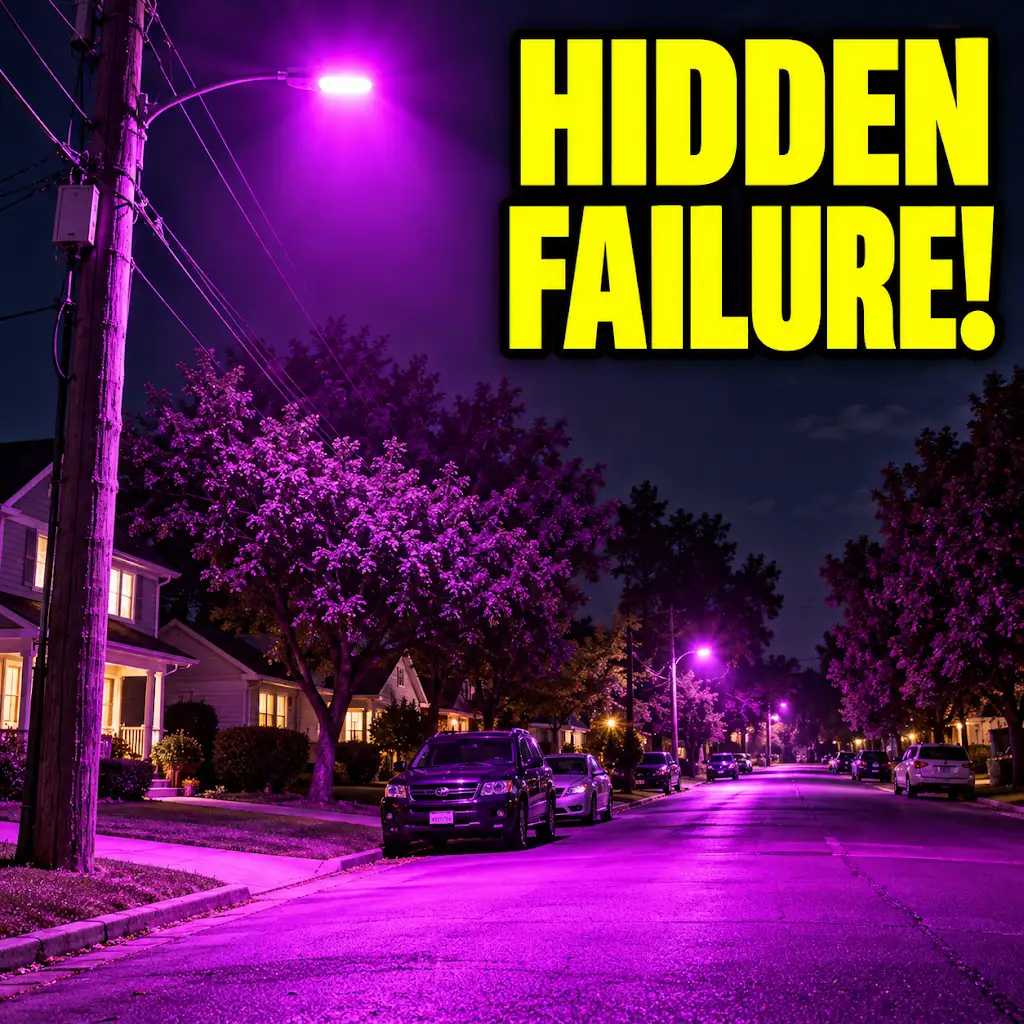
Why The Streetlights Are Turning Purple
FAQs
Why does a white LED turn purple over time?
White LEDs can turn purple over time due to the degradation of the phosphor coating used to create the white light. This degradation can be caused by factors such as heat, humidity, and exposure to UV light.
Can the color change of a white LED be prevented?
While it is difficult to completely prevent the color change of a white LED, using high-quality LEDs, proper heat management, and avoiding exposure to harsh environmental conditions can help slow down the process of color shifting.
Does the purple color change affect the performance of the LED?
In most cases, the purple color change in a white LED does not significantly affect its performance in terms of brightness or energy efficiency. However, it may impact the overall aesthetic appeal of the light output.
Is there a way to reverse the purple color change in a white LED?
Unfortunately, once a white LED has turned purple due to phosphor degradation, it is challenging to reverse the color change. The best solution is to replace the LED with a new one to restore the original white light output.
How long does it typically take for a white LED to turn purple?
The time it takes for a white LED to turn purple can vary depending on the quality of the LED, operating conditions, and usage patterns. In general, it may take several months to years for the color shift to become noticeable.