The Persistent Plateau: Understanding Water’s Constant Boiling Temperature
Observing a pot of water on a stove, one notices a fascinating phenomenon. As the heat is applied, the water temperature steadily climbs. Bubbles begin to form, initially small and hesitant, then growing in size and frequency. The water churns, a vigorous dance of vapor and liquid. Yet, remarkably, the thermometer reading remains stubbornly fixed at 100 degrees Celsius (212 degrees Fahrenheit) at standard atmospheric pressure, even as the boiling intensifies. This apparent contradiction – increasing energy input leading to a static temperature – often sparks curiosity. Why does water maintain its boiling point during a vigorous boil? The answer lies in the intricate interplay of heat transfer, phase change, and the constant battle between liquid and gaseous states. It is a testament to the fundamental principles of thermodynamics, where energy is not lost but rather transformed.
When water reaches its boiling point, it remains at that temperature even during vigorous boiling due to the principle of heat transfer and phase change. This phenomenon is explained in detail in the article “Why Does Water Stay at Boiling Point During Vigorous Boil?” found on Freaky Science. The article delves into the science behind boiling, emphasizing that the heat energy supplied to the water is used for converting liquid water into steam rather than increasing the temperature further. For more insights on this topic, you can read the article here: Why Does Water Stay at Boiling Point During Vigorous Boil?.
The Driving Force: Heat Input and Molecular Excitation
The journey to a vigorous boil begins with the application of heat. This heat energy is absorbed by the water molecules, causing them to vibrate more intensely. Imagine each molecule as a tiny, energetic dancer. The more heat they receive, the faster and more erratically they move. This increased molecular motion directly translates into a rise in the water’s temperature. As the temperature escalates, the average kinetic energy of the water molecules increases. This is the essence of temperature: a measure of the average kinetic energy of the particles within a substance.
The Initial Ascent: From Room Temperature to Boiling Point
When a pot of water at room temperature is placed on a heat source, the energy transfer is primarily through conduction from the stovetop to the pot, and then convection within the water. Initially, this added energy causes the molecules to move faster, leading to a steady increase in temperature. The heat absorbed is used to overcome the intermolecular forces holding the liquid molecules together and to increase their kinetic energy. This phase is characterized by a continuous rise in temperature as more heat is supplied. The water’s internal energy is increasing, and this increase is reflected in a higher temperature reading. This is the stage where the water is preparing for its dramatic transformation, accumulating the energy required for the phase change.
The Critical Threshold: Reaching the Boiling Point
The boiling point is not an arbitrary number; it is a specific temperature at which the vapor pressure of the liquid equals the surrounding atmospheric pressure. Vapor pressure is the pressure exerted by the vapor of a liquid in equilibrium with its liquid phase. As water is heated, its vapor pressure increases. When this vapor pressure reaches parity with the external pressure, the liquid can begin to vaporize not just at the surface but also from within the bulk of the liquid, forming bubbles. This point of equilibrium is the boiling point. The heat absorbed up to this point contributes to raising the kinetic energy of the molecules and, consequently, the temperature. However, once the boiling point is reached, the nature of the energy input changes significantly.
The Energy Sink: The Latent Heat of Vaporization
The key to understanding why the temperature remains constant during boiling lies in the concept of latent heat. Specifically, it is the latent heat of vaporization that plays the starring role. Latent heat refers to the energy absorbed or released during a phase change at a constant temperature. In the case of water boiling, the energy being supplied is no longer used to increase the kinetic energy of the molecules (and thus the temperature). Instead, it is used to overcome the intermolecular forces of attraction that hold the water molecules together in their liquid state.
Breaking the Bonds: The Work of Phase Change
Liquid water molecules are held together by hydrogen bonds, which are relatively strong intermolecular forces. To transition from a liquid to a gas (steam), these bonds must be broken. This breaking process requires a substantial amount of energy. When the water reaches its boiling point, any additional heat energy supplied is directed towards this bond-breaking mechanism. Each molecule absorbing this energy uses it to escape the confines of the liquid phase and become a gas molecule. This transformation is akin to a workforce expending energy to break free from their employers. The energy is consumed in the act of liberation, not in making the workers work faster at their original tasks.
The Constant Temperature: A Balance of Energy Input and Transformation
During vigorous boiling, the rate of heat input from the stove is consistently being absorbed by the water. However, as explained, this energy is primarily consumed in the phase transition from liquid to gas. The molecules are busy breaking free from their liquid bonds and entering the gaseous state. The kinetic energy of the remaining liquid molecules, which dictates the temperature, does not increase further. Therefore, the thermometer reading remains constant at the boiling point. It’s like a factory working at full capacity to produce a specific product. Even if more raw materials are supplied, the factory can only produce the product at its maximum rate; the rate of production, analogous to the boiling temperature, remains constant. The excess energy is channeled into the “production” of steam.
The Role of Atmospheric Pressure: A Crucial Equilibrium
The boiling point of water is not an absolute constant but is intimately linked to the surrounding atmospheric pressure. This relationship is fundamental to understanding why water boils at a specific temperature under normal conditions. Atmospheric pressure is the force exerted by the weight of the air above a given surface. This pressure pushes down on the surface of the water.
The Counterbalance: Vapor Pressure vs. Atmospheric Pressure
For boiling to occur, the vapor pressure of the water must be equal to the external atmospheric pressure. As heat is applied, the water molecules gain kinetic energy, and some escape the liquid surface, forming vapor. This vapor exerts a pressure, known as vapor pressure. As the temperature rises, the vapor pressure increases. At the boiling point, the vapor pressure becomes strong enough to overcome the external atmospheric pressure, allowing bubbles of steam to form within the liquid and rise to the surface. The vigorous boiling signifies that the rate of vaporization is high, and the vapor pressure is actively counteracting the atmospheric pressure.
Altitude and the Boiling Point: A Practical Demonstration
The effect of atmospheric pressure on boiling point is vividly demonstrated by changes in altitude. At higher altitudes, the atmospheric pressure is lower because there is less air above. Consequently, water boils at a lower temperature at high altitudes. For example, at sea level, water boils at 100°C. However, in Denver, Colorado, which is approximately a mile high, water boils at around 95°C. This means that food cooked in boiling water at higher altitudes will take longer to cook because the water is not as hot. Conversely, at pressures higher than atmospheric pressure, such as in a pressure cooker, water boils at a temperature higher than 100°C, allowing food to cook more quickly. This practical application underscores the critical role of pressure in defining the boiling point.
When water reaches its boiling point, it may seem counterintuitive that the temperature remains constant even during a vigorous boil. This phenomenon occurs because the heat energy being added to the water is used to convert the liquid into steam rather than increasing the temperature. For a deeper understanding of this process, you can explore a related article that delves into the science behind boiling and phase changes. You can find it here: Freaky Science. This resource provides valuable insights into the thermodynamics of boiling water and the energy dynamics involved.
The Dynamics of Vigorous Boiling: More Than Just Bubbles
| Metric | Value | Explanation |
|---|---|---|
| Boiling Point of Water | 100°C (212°F) at 1 atm | Temperature at which water changes from liquid to gas at standard atmospheric pressure. |
| Heat Energy Input | Constant during boiling | Energy supplied is used for phase change, not temperature increase. |
| Latent Heat of Vaporization | 2260 kJ/kg | Energy required to convert 1 kg of water at boiling point to steam without temperature change. |
| Temperature During Vigorous Boil | ~100°C | Remains constant as heat energy breaks intermolecular bonds rather than raising temperature. |
| Pressure | 1 atm (at sea level) | Boiling point depends on pressure; at 1 atm, water boils at 100°C. |
| Phase Change Process | Liquid to Gas | During boiling, water molecules gain enough energy to become vapor. |
Vigorous boiling signifies a high rate of vaporization, but it doesn’t imply a temperature increase beyond the boiling point. The intensity of the boiling is a visual representation of how much energy is being converted into steam. The more vigorous the boil, the more bubbles are forming and escaping, indicating a higher rate of phase transition.
Convection Currents: Efficient Heat Distribution
During vigorous boiling, the formation of steam bubbles within the liquid creates powerful convection currents. As bubbles of steam rise from the bottom of the pot, they carry hot water with them. Cooler, denser water from the surface then sinks to replace the rising bubbles, creating a continuous circulation. These convection currents efficiently distribute heat throughout the water, ensuring that all the water molecules have the opportunity to reach the boiling point and undergo vaporization. This constant mixing prevents localized overheating and maintains a uniform temperature across the entire volume of water.
The Energetic Escape: Momentum and Phase Change
The vigorous nature of the boiling also speaks to the momentum of the molecules. Those molecules that have absorbed enough energy to break free from the liquid phase are not just gently drifting away; they are propelled by their accumulated kinetic energy. This energetic escape contributes to the visual spectacle of a rolling boil. However, even this increased momentum is a manifestation of the energy being consumed by the phase change, not by a further increase in the average kinetic energy of the liquid molecules. The energy is being used to facilitate the transition from the organized structure of a liquid to the chaotic freedom of a gas. The energy required to propel these molecules into the gaseous state is precisely what keeps the liquid’s temperature from rising.
Implications and Further Considerations: Beyond the Pot
The principle of water maintaining its boiling point during vigorous boiling has significant implications across various scientific and practical domains. Understanding this phenomenon is crucial for everything from cooking to industrial processes.
Cooking and Heat Transfer: Optimizing Culinary Outcomes
In the culinary world, understanding the constant boiling point of water is fundamental. When boiling water for pasta, vegetables, or other foods, the temperature is always 100°C (at sea level). The intensity of the boil primarily affects the rate at which heat is transferred to the food. A vigorous boil ensures rapid and even heat distribution, leading to consistent cooking. However, excessively vigorous boiling can sometimes lead to the loss of delicate flavors or nutrients through excessive agitation and evaporation. Chefs often adjust the heat to achieve a gentle simmer or a rolling boil depending on the desired outcome.
Industrial Applications: Steam Power and Chemical Processes
The principle of latent heat of vaporization is also critical in many industrial processes. Steam power generation, for instance, relies heavily on the energy released when steam condenses and the energy absorbed when water boils. In chemical engineering, maintaining precise temperatures during reactions is often achieved by using water at its boiling point as a heat bath. This ensures that the reaction mixture remains at a stable, controlled temperature, preventing unwanted side reactions or decomposition. The constant temperature during boiling provides a reliable and predictable energy source for a multitude of applications, from powering turbines to facilitating complex chemical syntheses. The energy supplied is not a thermometer-reading increaser once boiling begins; it is a transformative energy, a workhorse for phase change.
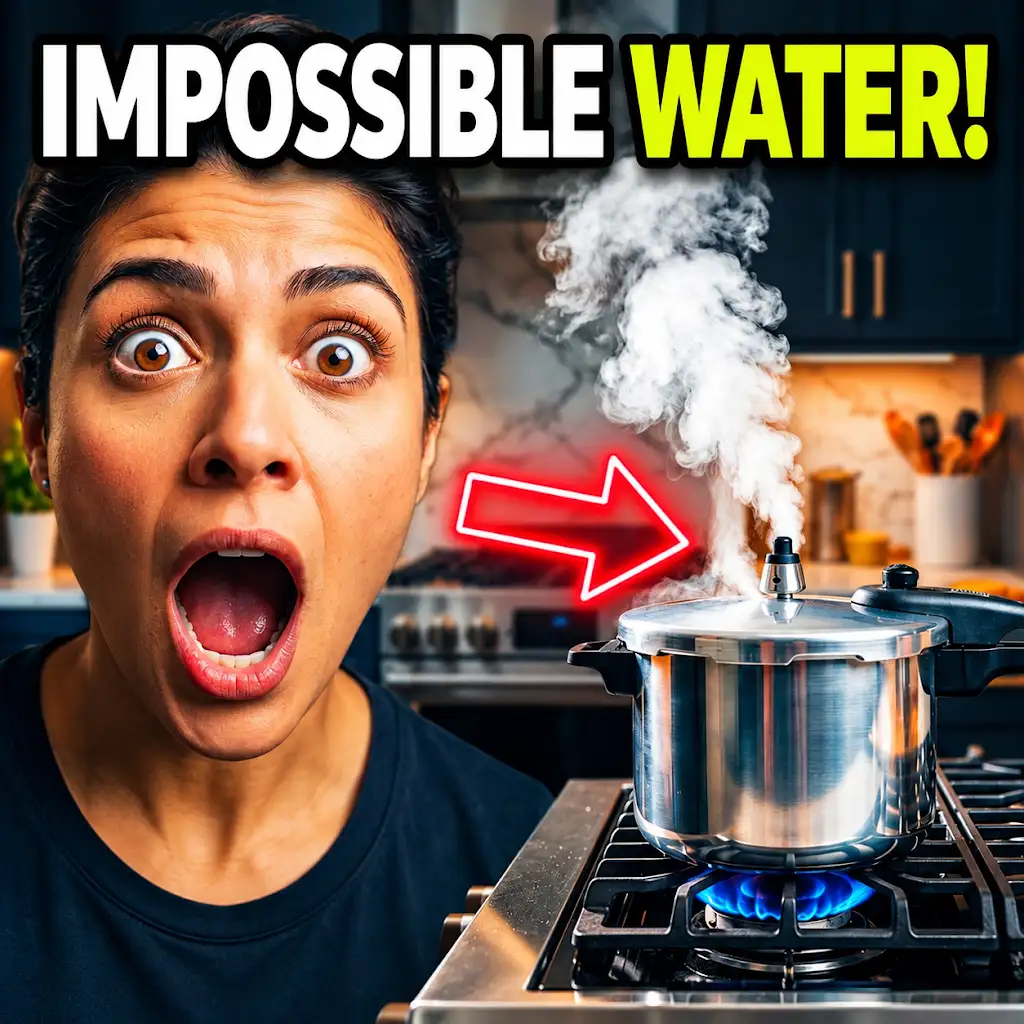
Why This Water Doesn’t Boil at 100°C
FAQs
1. Why does water stay at boiling point during vigorous boil?
Water stays at boiling point during a vigorous boil because the heat being applied to the water is continuously converting the liquid water into water vapor. As long as there is enough heat being supplied, the water will continue to boil and remain at its boiling point.
2. What is the boiling point of water?
The boiling point of water is 100 degrees Celsius (212 degrees Fahrenheit) at standard atmospheric pressure. At this temperature, water changes from a liquid to a gas, forming water vapor.
3. Does the boiling point of water change during a vigorous boil?
No, the boiling point of water remains constant at 100 degrees Celsius during a vigorous boil. The additional heat being applied causes the water to boil more vigorously and convert into steam at the same temperature.
4. Why does water boil at a specific temperature?
Water boils at a specific temperature because at the boiling point, the vapor pressure of the liquid equals the pressure exerted on the liquid by the surrounding atmosphere. This balance allows the liquid to change into vapor at a consistent temperature.
5. Can water exceed its boiling point during a vigorous boil?
Water cannot exceed its boiling point of 100 degrees Celsius under normal atmospheric pressure. Any additional heat applied will only cause the water to boil more vigorously and convert into steam, but the temperature will remain constant at the boiling point.