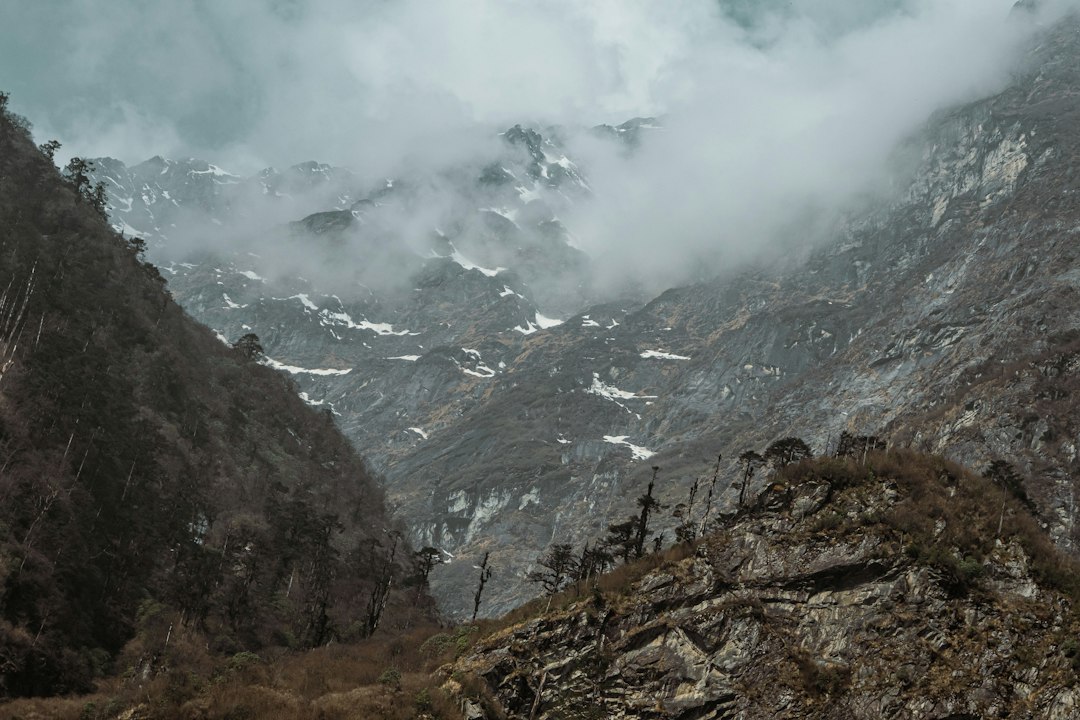
The familiar sight of water bubbling and steaming is a common experience, often associated with cooking, cleaning, or simply enjoying a warm beverage. Most people understand that water boils at a specific temperature, the ubiquitous 100 degrees Celsius (212 degrees Fahrenheit) at standard atmospheric pressure. However, those who have ventured to higher altitudes, perhaps on a hiking trip or a visit to a mountain town, may have noticed a curious phenomenon: water seems to boil more readily, appearing to reach its boiling point at a lower temperature. This observation, while seemingly counterintuitive, is a direct consequence of fundamental physics, specifically the relationship between atmospheric pressure and the boiling point of a liquid. Understanding why water boils at lower temperatures on mountains requires delving into the nature of pressure and how it influences the state of matter.
The Essence of Boiling: A Battle of Forces
The process of boiling is fundamentally a contest between two opposing forces: the vapor pressure of the liquid and the external pressure acting upon it. Every liquid, at any given temperature, possesses a certain amount of vapor pressure. This pressure arises from the tendency of molecules within the liquid to escape into the gaseous phase, forming vapor. Imagine the surface of the water as a bustling marketplace. Some molecules, energized by heat, gain enough momentum to break free from their neighbors and rise into the air as vapor. This upward push of vapor molecules exerts a pressure, known as vapor pressure.
Simultaneously, the liquid is subjected to external pressure. At sea level, this external pressure is primarily the weight of the entire column of air above it, known as atmospheric pressure. This atmospheric pressure acts downwards, pressing on the surface of the liquid and making it harder for the vapor molecules to escape. Boiling occurs when the vapor pressure of the liquid equals the external pressure. At this point, vapor bubbles can form within the bulk of the liquid, not just at the surface, and rise freely to the surface, releasing their contents as steam. The energy required to overcome both the intermolecular forces holding the liquid together and the external pressure is what defines the boiling point.
Vapor Pressure: The Inherent Tendency to Escape
The vapor pressure of a liquid is not a static value. It is intrinsically linked to temperature. As a liquid is heated, its molecules gain kinetic energy. This increased energy allows more molecules to overcome the attractive forces holding them in the liquid state and transition into the gaseous phase. Consequently, as the temperature rises, the vapor pressure of the liquid also increases. At room temperature, water has a very low vapor pressure. However, as it is heated towards its boiling point, its vapor pressure climbs significantly. This escalating vapor pressure is a crucial component in reaching the boiling threshold.
Atmospheric Pressure: The Weight of the Sky
Atmospheric pressure is the force exerted by the weight of the atmosphere on the Earth’s surface and everything on it. This pressure is not uniform across the globe. It varies depending on altitude, weather patterns, and even the local density of the air. The higher one ascends, the less air there is above, and therefore, the lower the atmospheric pressure. This is analogous to being at the bottom of a swimming pool versus being near the surface; the pressure is much greater at the bottom due to the weight of the water above. On a mountaintop, the column of air pressing down is considerably shorter and less dense than at sea level, resulting in a noticeable decrease in atmospheric pressure.
The phenomenon of water boiling at lower temperatures in mountainous regions is primarily due to the decrease in atmospheric pressure at higher altitudes. As elevation increases, the air pressure surrounding the water decreases, which in turn lowers the boiling point. For a deeper understanding of this concept, you can explore the related article that discusses various scientific principles, including the impact of altitude on boiling points, by visiting this link.
Altitude’s Influence: Thinning Air, Reduced Pressure
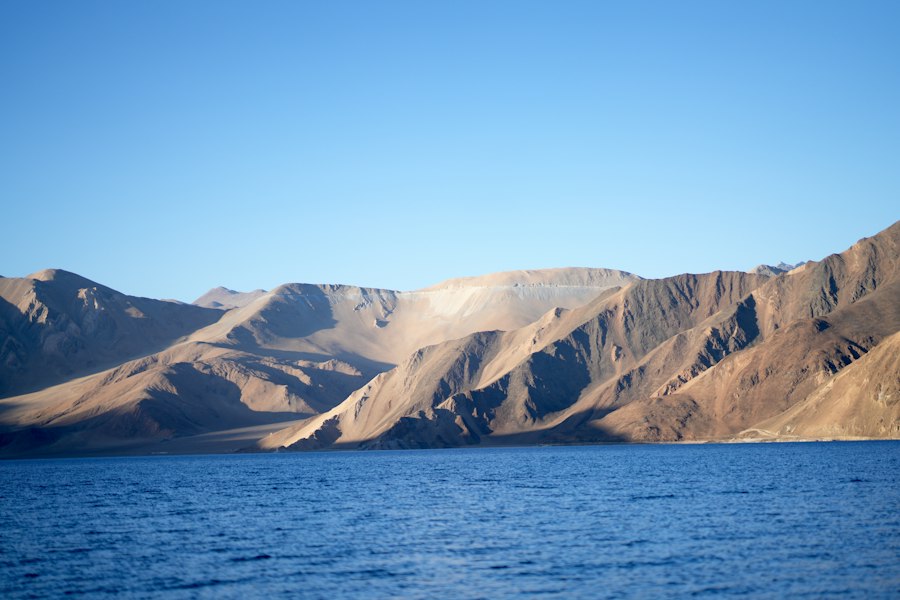
The most significant factor contributing to water boiling at lower temperatures on mountains is the direct correlation between altitude and atmospheric pressure. As one ascends in elevation, the density of the air decreases. This means there are fewer air molecules per unit volume. Consequently, the weight of the air column above a given point also diminishes. This reduction in atmospheric weight translates directly into lower atmospheric pressure. For instance, at sea level, standard atmospheric pressure is approximately 101.3 kilopascals (kPa), or 1 atmosphere (atm). At an altitude of 1,500 meters (about 5,000 feet), atmospheric pressure drops to around 85 kPa, and at 3,000 meters (about 10,000 feet), it can be as low as 70 kPa. This decrease in external pressure is the key to understanding the altered boiling point.
The Pressure Cooker Analogy: Understanding Pressure’s Role
A common kitchen appliance, the pressure cooker, provides an excellent analogy for demonstrating the relationship between pressure and boiling point. A pressure cooker is a sealed pot that traps steam, increasing the internal pressure above the food being cooked. This elevated pressure allows the water inside to reach temperatures well above its normal boiling point of 100°C before it actually boils. This higher temperature cooks food much faster. Conversely, if the external pressure on a liquid is reduced, as it is at higher altitudes, the liquid requires less energy (and thus a lower temperature) for its vapor pressure to match this reduced external pressure. The “battle” between vapor pressure and external pressure is easier for the vapor to win when the external force is weaker.
Calculating the Drop: The Magnitude of the Effect
The extent to which the boiling point decreases with altitude is quantifiable. For every 1,000 feet (approximately 305 meters) of elevation gained, the boiling point of water drops by roughly 1 degree Fahrenheit (about 0.56 degrees Celsius). This means that at an altitude of 5,000 feet, water would boil at approximately 95°C (203°F). At 10,000 feet, the boiling point could be around 90°C (194°F). While these figures are approximations, they illustrate a significant and noticeable difference. This reduction is not a matter of the water being “less pure” or some intrinsic change in its chemical composition; it is purely a physical response to the altered environmental conditions.
Practical Implications: Cooking and Beyond
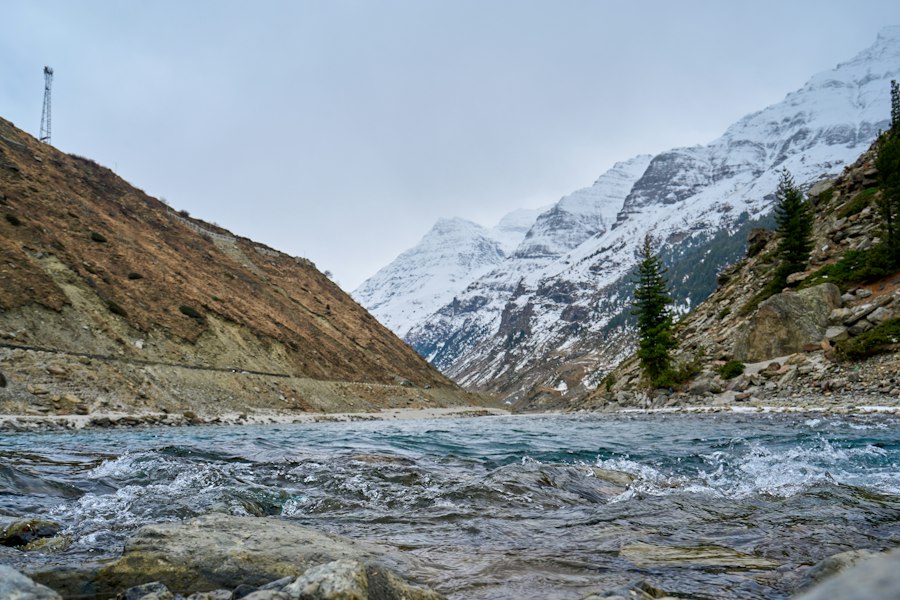
The lower boiling point of water at higher altitudes has several practical implications, most notably in the realm of cooking. For individuals accustomed to cooking at sea level, preparing meals at higher elevations can present challenges if they are not aware of this phenomenon. Many recipes are designed with the assumption of water boiling at 100°C. When this isn’t the case, the outcome of certain cooking processes can be affected.
Culinary Adjustments: Adapting Recipes for the Mountains
The primary challenge for cooks at high altitudes is that food will cook slower if the recipe relies on a 100°C boiling point. Since the water is boiling at a lower temperature, it takes longer for the heat to transfer to the food and break down its cellular structures. For example, boiling an egg at 6,000 feet might take several minutes longer than it would at sea level to achieve the same level of firmness. Similarly, pasta might require extended cooking times. Bakers may also notice differences, as the lower atmospheric pressure can affect the leavening of doughs and the evaporation of liquids during baking. Adjusting recipes often involves increasing cooking times or slightly modifying ingredient ratios.
The Pressure Cooker Solution: Restoring Higher Temperatures
Fortunately, the pressure cooker offers a readily available solution for high-altitude cooking. By increasing the pressure within the cooker, it effectively mimics sea-level conditions, allowing the water to boil at its standard 100°C. This not only helps to maintain familiar cooking times but can also improve the quality of cooked food, as it allows for more efficient heat transfer and the breakdown of tough fibers. For those who frequently cook at high altitudes, a pressure cooker can be an invaluable tool for ensuring consistent and successful culinary results.
The Science of Thermodynamics: Energy and Equilibrium
The explanation of why water boils at lower temperatures on mountains is deeply rooted in the principles of thermodynamics, the branch of physics that deals with heat, work, and temperature, and their relation to energy, entropy, and the physical properties of matter. Boiling is a phase transition, a change from the liquid state to the gaseous state, and like all such transitions, it involves an exchange of energy and is governed by the laws of thermodynamics.
Equilibrium and Free Energy: The Driving Force
Thermodynamic equilibrium describes a state where a system is stable and there is no net change in its macroscopic properties over time. For a liquid to boil, it must reach a state where the liquid and vapor phases are in equilibrium at a given temperature and pressure. The driving force behind this transition is related to the Gibbs free energy, a thermodynamic potential that can be used to calculate the maximum and minimum electrical work that can be extracted from, or supplied to, a thermodynamic system at constant temperature and pressure. At the boiling point, the Gibbs free energy of the liquid and vapor phases are equal, indicating that neither phase is thermodynamically favored over the other.
Intermolecular Forces and Heat Input: Overcoming Attraction
In the liquid state, water molecules are held together by intermolecular forces, primarily hydrogen bonds. To transition into the gaseous state, these molecules need to gain enough kinetic energy to overcome these attractive forces and break free. The heat supplied to the water provides this kinetic energy. Simultaneously, the external pressure acts as a barrier, making it more difficult for molecules to escape. When the vapor pressure equals the external pressure, the molecules have sufficient energy to overcome both the intermolecular forces and the external resistance, leading to boiling. A lower external pressure means less resistance, and therefore, less energy (lower temperature) is required for the vapor pressure to reach equilibrium with the external pressure.
When exploring the fascinating phenomenon of why water boils at a lower temperature in mountainous regions, it’s interesting to consider how atmospheric pressure plays a crucial role in this process. As altitude increases, the air pressure decreases, which in turn lowers the boiling point of water. For a more in-depth understanding of this topic, you can read a related article that delves into various scientific principles and experiments. This resource can be found at Freaky Science, where you can discover more about the intriguing effects of altitude on boiling points and other scientific curiosities.
Beyond Water: A Universal Phenomenon
| Factor | Description | Effect on Boiling Point |
|---|---|---|
| Atmospheric Pressure | Pressure exerted by the weight of the air above the surface | Decreases with altitude, causing water to boil at lower temperatures |
| Altitude | Height above sea level | Higher altitude means lower atmospheric pressure |
| Boiling Point at Sea Level | Standard boiling temperature of water at 1 atm pressure | 100°C (212°F) |
| Boiling Point at 2000 meters | Approximate boiling temperature of water at 2000 meters altitude | Approximately 93.4°C (200.1°F) |
| Boiling Point at 3000 meters | Approximate boiling temperature of water at 3000 meters altitude | Approximately 90°C (194°F) |
| Reason | Lower pressure means water molecules require less heat energy to escape into vapor | Boiling occurs at lower temperature |
While water is the most common liquid encountered in everyday life, the principles governing its boiling point at different altitudes are not unique to H2O. This phenomenon is a universal characteristic of all liquids. Any liquid will boil at a lower temperature when the external pressure is reduced, and at a higher temperature when the external pressure is increased. This understanding has far-reaching implications in various scientific and industrial applications.
Industrial Processes: Distillation and Chemical Reactions
In many industrial processes, controlling the boiling point of liquids is crucial. For example, in distillation, a liquid is heated to its boiling point, vaporized, and then condensed back into a liquid. The purity of the separated substances depends on precise control over the boiling points. Similarly, many chemical reactions are carried out in solution, and the temperature at which the solvent boils can influence the reaction rate and the overall efficiency of the process. Engineers often design systems that can operate at reduced pressures to achieve lower boiling points, which can be beneficial for heat-sensitive materials or for reducing energy consumption.
Space Exploration and Vacuum Conditions: The Absence of Pressure
The extreme example of reduced pressure is found in the vacuum of space. In a near-perfect vacuum, the atmospheric pressure is virtually zero. If liquid water were exposed to such conditions, it would boil almost instantaneously at extremely low temperatures, even below its freezing point. This process is known as sublimation when ice directly turns into vapor, but in the case of liquid water, it would rapidly boil and then freeze as it rapidly loses heat through evaporation. Understanding how liquids behave under vacuum conditions is critical for designing spacecraft, life support systems, and conducting experiments in space. The principles that explain why water boils at lower temperatures on mountains are fundamental to comprehending these more extreme environments.
Why This Water Doesn’t Boil at 100°C
FAQs
1. Why does water boil at a lower temperature in mountains?
Water boils at a lower temperature in mountains due to the decrease in atmospheric pressure at higher altitudes. As altitude increases, the air pressure decreases, causing the boiling point of water to also decrease.
2. How does the decrease in atmospheric pressure affect the boiling point of water?
At lower atmospheric pressure, the molecules in the water can escape into the air more easily, requiring less energy to transition from liquid to gas. This results in water boiling at a lower temperature in mountainous regions.
3. What is the relationship between altitude and boiling point of water?
As altitude increases, the atmospheric pressure decreases, leading to a lower boiling point for water. For every 500 feet increase in altitude, the boiling point of water decreases by approximately 1 degree Fahrenheit.
4. How does the lower boiling point of water affect cooking in mountainous areas?
In mountainous areas, where water boils at a lower temperature, cooking times are often longer because the water takes longer to reach the desired temperature for cooking food. This can impact the texture and taste of dishes prepared at high altitudes.
5. Are there any adjustments that need to be made when cooking at high altitudes due to the lower boiling point of water?
When cooking at high altitudes, it is recommended to increase cooking times or use higher cooking temperatures to compensate for the lower boiling point of water. Additionally, recipes may need to be adjusted to achieve the desired results in mountainous regions.