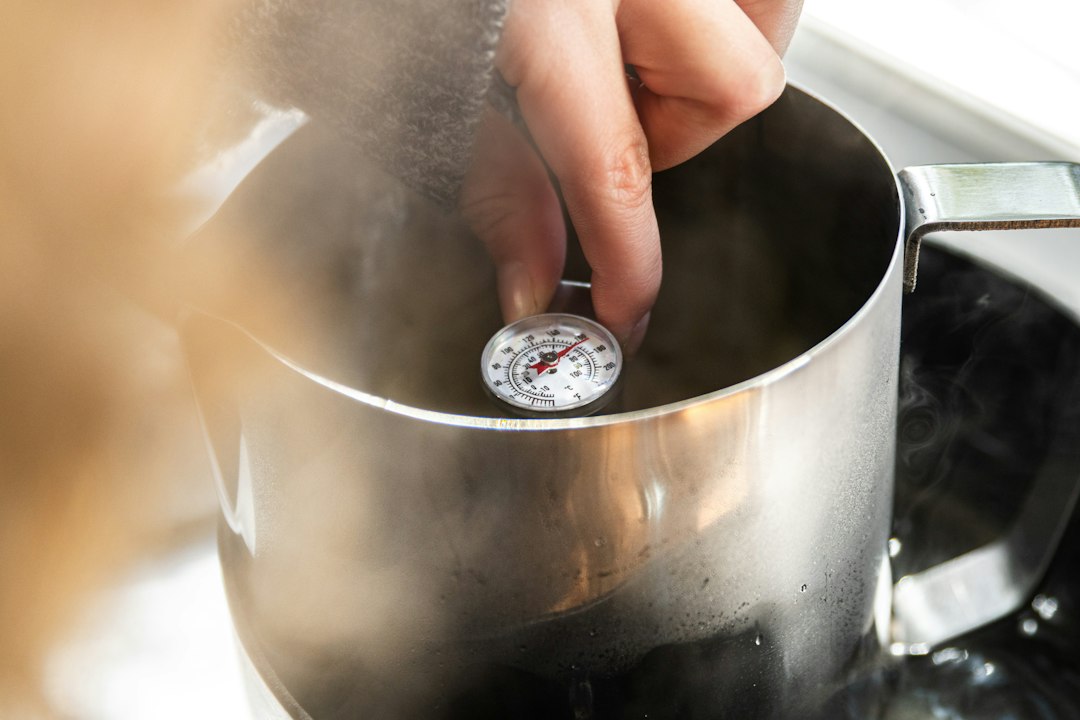
The Fundamentals of Boiling: A Molecular Dance
The phenomenon of boiling, a ubiquitous and seemingly simple process, is, at its core, a fascinating interplay of molecular energy and external forces. For most individuals, water boils at 100 degrees Celsius (212 degrees Fahrenheit) at standard atmospheric pressure. This well-known fact, however, belies a more complex reality where the pressure exerted upon a liquid can significantly alter its boiling point. Understanding why water boils at higher temperatures under increased pressure requires a dive into the microscopic world of water molecules and the invisible force of pressure.
At the heart of boiling lies the concept of vapor pressure. Water, like all liquids, possesses molecules that are in constant motion. Even below the boiling point, some molecules at the surface have enough kinetic energy to break free from the liquid phase and enter the gaseous state, forming water vapor. This escaping vapor exerts a pressure, known as vapor pressure, on the surrounding environment. As the temperature of the liquid increases, the kinetic energy of its molecules also rises. This leads to more molecules possessing sufficient energy to overcome the intermolecular forces holding them together in the liquid state, and thus, the vapor pressure increases.
Boiling occurs when the vapor pressure of the liquid becomes equal to the external pressure acting upon it. At this point, bubbles of vapor can form not only at the surface but also within the bulk of the liquid, rising and escaping as steam. In essence, the liquid has enough internal energy to push back against the external pressure. Standard atmospheric pressure at sea level is approximately 1 atmosphere (atm) or 101.3 kilopascals (kPa). At this pressure, water’s vapor pressure reaches 1 atm at 100°C.
Intermolecular Forces: The Sticky Business of Water
Water molecules are not merely independent entities; they are bound together by a network of intermolecular forces, primarily hydrogen bonds. These bonds, though weaker than covalent bonds, are strong enough to significantly influence the physical properties of water, including its boiling point. Hydrogen bonds form when the positively charged hydrogen atom of one water molecule is attracted to the negatively charged oxygen atom of another. This attraction creates a cohesive force that keeps the water molecules relatively close together in the liquid state.
To overcome these intermolecular forces and transition from liquid to gas, water molecules require a certain amount of energy, which is manifested as heat. The stronger these intermolecular forces, the more energy is needed to break them, and consequently, the higher the boiling point. Imagine trying to pull apart a group of people holding hands tightly; it requires more effort than pulling apart individuals standing loosely. Water’s extensive hydrogen bonding network means that a substantial amount of energy is needed to liberate individual molecules into the gaseous phase.
The Role of Pressure: A Lid on Molecular Escape
Pressure, in the context of boiling, acts as a physical barrier or constraint on the water molecules. It is the force exerted per unit area on the surface of the liquid. This external pressure pushes down on the water, making it more difficult for the molecules to escape into the gaseous state. Think of it like trying to inflate a balloon that is already being squeezed from all sides; it requires more force to expand it.
When the external pressure is higher, the vapor pressure of the water must also be higher to reach the boiling point. Since vapor pressure is directly related to temperature, a higher vapor pressure necessitates a higher temperature. Therefore, under increased pressure, water molecules need to acquire more kinetic energy – meaning the water needs to be heated to a higher temperature – before their collective vapor pressure can overcome the imposed external pressure and initiate boiling.
Understanding why water boils at a higher temperature under pressure is essential in various scientific and practical applications, such as cooking and industrial processes. For a deeper exploration of this phenomenon, you can refer to a related article that delves into the principles of boiling point elevation and the effects of atmospheric pressure. To learn more, visit Freaky Science for detailed insights and explanations.
The Influence of External Pressure on Vapor Pressure Equilibrium
The relationship between vapor pressure and external pressure is the cornerstone of understanding why boiling points change. As previously mentioned, boiling is the point at which the liquid’s internal vapor pressure matches the external pressure. This equilibrium is dynamic, with molecules continuously transitioning between liquid and gas phases.
Reaching the Boiling Point: A Delicate Balance
In a closed container with a vacuum above the liquid, the vapor pressure is relatively low. As heat is added, more molecules escape into the vapor phase, increasing the vapor pressure until it equals the minuscule external pressure, and boiling ensues at a low temperature. Conversely, in an open container at standard atmospheric pressure, the external pressure is significant, requiring a higher temperature for the vapor pressure to equalize.
When pressure is artificially increased, such as in a pressure cooker, the external force pushing down on the water’s surface is magnified. This means that the water molecules must possess considerably more kinetic energy to generate a vapor pressure high enough to counteract this enhanced external pressure. Consequently, the temperature must rise beyond the standard 100°C for boiling to occur. This principle is not exclusive to water; all liquids exhibit this behavior, with their boiling points increasing as the surrounding pressure increases.
Kinetic Energy and Molecular Freedom
The kinetic energy of molecules is directly proportional to the temperature. At higher temperatures, molecules move faster and collide with greater force. When external pressure is high, it effectively suppresses the escape of molecules from the liquid. The molecules at the surface need to overcome not only the attractive intermolecular forces but also the impinging force of the external pressure. Thus, more vigorous molecular motion, achievable only at higher temperatures, is required for the vapor pressure to equal and exceed the ambient pressure, leading to boiling. This increased kinetic energy translates to a higher thermal energy input needed to achieve the phase transition.
Practical Applications: Harnessing Pressure for Cooking and Beyond
The principle of water boiling at higher temperatures under pressure has significant practical implications, most notably in cooking and industrial processes. The ability to control and manipulate boiling points opens up avenues for enhanced efficiency and novel applications.
The Magic of the Pressure Cooker
The pressure cooker is a quintessential example of this principle in action. By sealing the pot, steam generated during heating is trapped, causing the internal pressure to rise significantly above atmospheric pressure. As the pressure increases, so does the boiling point of water within the cooker. Water can reach temperatures of 121°C (250°F) or even higher, depending on the pressure. This elevated temperature dramatically accelerates the cooking process, as heat is transferred to the food much more rapidly. Tougher cuts of meat become tender in a fraction of the time, and beans cook significantly faster. The sealed environment also prevents the escape of volatile flavor compounds, leading to more flavorful dishes.
Industrial Processes and Chemical Reactions
Beyond the kitchen, the manipulation of boiling points under pressure is crucial in various industrial settings. In chemical engineering, many reactions require specific temperature ranges to proceed efficiently and safely. By controlling the pressure, engineers can achieve these precise temperatures, even for substances with normally low boiling points, allowing for controlled reactions and separations. For instance, in distillation processes, adjusting the pressure can alter the boiling points of different components in a mixture, allowing for their separation. High-pressure environments can also be used to dissolve gases into liquids, a process vital in carbonated beverages and certain industrial synthesis.
Understanding the Vapor-Liquid Equilibrium Curve
To visualize and quantify the relationship between pressure and boiling point, scientists use vapor-liquid equilibrium curves. These graphs are invaluable tools for understanding the behavior of substances under varying conditions.
Charting the Boiling Point Landscape
A typical vapor-liquid equilibrium curve plots pressure on one axis (often the y-axis) and temperature on the other (often the x-axis). For a given liquid like water, the curve shows the pressure at which the liquid and vapor phases are in equilibrium at each temperature. As you move up the pressure axis, the corresponding temperature on the curve also increases, illustrating that a higher pressure requires a higher temperature for boiling.
This curve is essentially a map of the boiling point landscape for a specific substance. It allows engineers and scientists to determine the exact boiling temperature for any given pressure. For water, this curve would show that at 0.5 atm, the boiling point is below 100°C, while at 2 atm, it would be significantly above 100°C. These curves are derived from experimental data and thermodynamic principles, providing a reliable basis for practical applications.
Factors Affecting the Curve
It is important to note that the specific shape and position of the vapor-liquid equilibrium curve are unique to each substance. Factors such as the strength of intermolecular forces play a significant role. Substances with stronger intermolecular forces, like water with its hydrogen bonds, will generally have higher boiling points at any given pressure compared to substances with weaker forces, like simple hydrocarbons. Impurities in a liquid can also slightly alter the vapor-liquid equilibrium curve, a phenomenon known as boiling point elevation.
Understanding why water boils at a higher temperature under pressure is crucial in various scientific and culinary applications. For a deeper exploration of this phenomenon, you can refer to an insightful article that discusses the principles of boiling point elevation and its implications in everyday life. This article elaborates on how pressure affects the boiling point and provides examples from cooking techniques to industrial processes. To learn more about this fascinating topic, check out the article here.
Subtleties of Phase Transitions: Beyond Simple Boiling
| Factor | Description | Effect on Boiling Point |
|---|---|---|
| Pressure | External pressure applied on the water surface | Higher pressure increases boiling point |
| Vapor Pressure | Pressure exerted by water vapor in equilibrium with liquid | Boiling occurs when vapor pressure equals external pressure |
| Boiling Point at 1 atm | Standard atmospheric pressure (101.3 kPa) | 100°C (212°F) |
| Boiling Point at 2 atm | Pressure doubled to 202.6 kPa | Approximately 120°C (248°F) |
| Reason | Increased pressure requires higher temperature for vapor pressure to match | Water molecules need more energy to escape liquid phase |
| Practical Application | Pressure cookers use increased pressure to cook food faster | Boiling point raised, allowing higher cooking temperatures |
While the focus has been on boiling, it’s worth acknowledging that pressure’s influence extends to other phase transitions of water, albeit in more nuanced ways. The triple point and critical point of water are fascinating examples of where pressure and temperature dictate the dominant state of matter.
The Triple Point: A Trifecta of Phases
The triple point of a substance is a unique combination of temperature and pressure at which the solid, liquid, and gaseous phases of that substance can coexist in thermodynamic equilibrium. For water, this occurs at a very low temperature of 0.01°C (273.16 K) and a pressure of 0.006 atm (611.65 Pa). Below this pressure, liquid water cannot exist; ice will directly sublime into water vapor, and water vapor will directly deposit into ice. This demonstrates that for certain conditions, the standard progression from solid to liquid to gas is bypassed.
The Critical Point: The End of Distinct Phases
The critical point represents the highest temperature and pressure at which a substance can exist as a distinct liquid and vapor. Beyond the critical point, the liquid and gas phases become indistinguishable, forming a supercritical fluid. For water, the critical point is at 374°C (705°F) and 22.1 MPa (about 218 atm). At temperatures and pressures above the critical point, water exhibits properties of both liquids and gases, making it an exceptionally effective solvent for many substances that are insoluble in either pure liquid water or steam. This unique state is harnessed in various industrial applications, such as supercritical water oxidation for waste treatment.
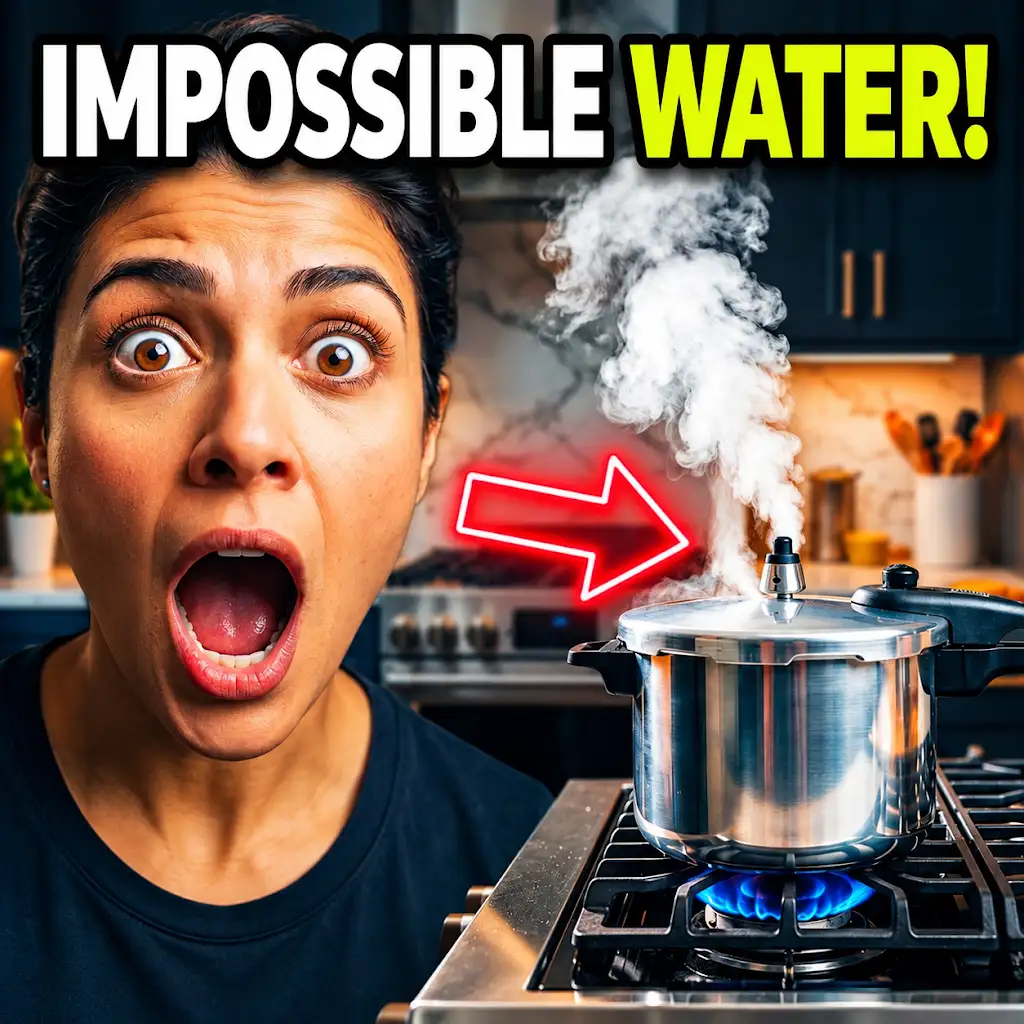
Why This Water Doesn’t Boil at 100°C
FAQs
Why does water boil at a higher temperature under pressure?
When pressure is increased, the boiling point of water also increases because the pressure prevents water molecules from escaping as easily. This means that more heat is needed to overcome the increased pressure and allow the water to boil.
How does pressure affect the boiling point of water?
Pressure affects the boiling point of water by increasing the force that must be applied to the water molecules in order for them to escape as steam. As pressure increases, the boiling point of water also increases.
What is the relationship between pressure and boiling point?
The relationship between pressure and boiling point is direct – as pressure increases, the boiling point of a substance like water also increases. Conversely, as pressure decreases, the boiling point decreases as well.
Can water boil at different temperatures under different pressures?
Yes, water can boil at different temperatures under different pressures. For example, at higher altitudes where atmospheric pressure is lower, water will boil at a lower temperature compared to sea level where the pressure is higher.
How does the boiling point of water change with altitude?
As altitude increases, atmospheric pressure decreases, causing the boiling point of water to decrease as well. This is why it takes longer to cook food at higher altitudes, as water boils at a lower temperature and therefore requires more time to reach the desired cooking temperature.