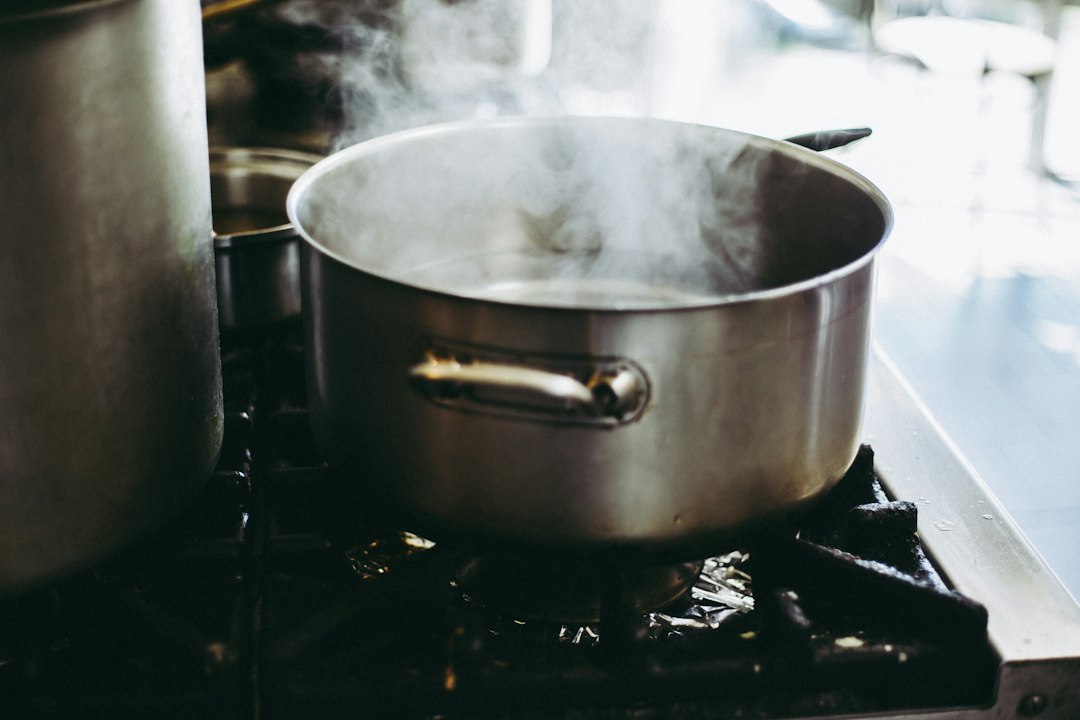
The Everyday Mystery of a Rolling Boil
The simple act of boiling water, a cornerstone of kitchens worldwide, belies a fascinating scientific principle: water doesn’t always boil at the same temperature. While most people associate boiling with the familiar 100 degrees Celsius (212 degrees Fahrenheit), this is only true under a very specific set of conditions. Understanding why this familiar benchmark isn’t universal opens a window into the fundamental properties of liquids and the forces that govern their behavior. This exploration will demystify the seemingly constant process of boiling, revealing the underlying factors that cause water to transform from a liquid into a gas at varying thermal thresholds. From the comforting simmer of soup to the vigorous churn of a scientific experiment, the temperature at which water chooses to boil is far more dynamic than it appears.
The boiling point of water can vary significantly depending on factors such as altitude and atmospheric pressure, which can lead to interesting discussions about the science of boiling. For a deeper understanding of this phenomenon, you can explore the article titled “Why Does Water Boil at Different Temperatures?” available at this link: Why Does Water Boil at Different Temperatures?. This article delves into the principles of thermodynamics and how they affect the boiling point, providing valuable insights for anyone curious about the science behind everyday occurrences.
The Fundamental Dance of Molecules
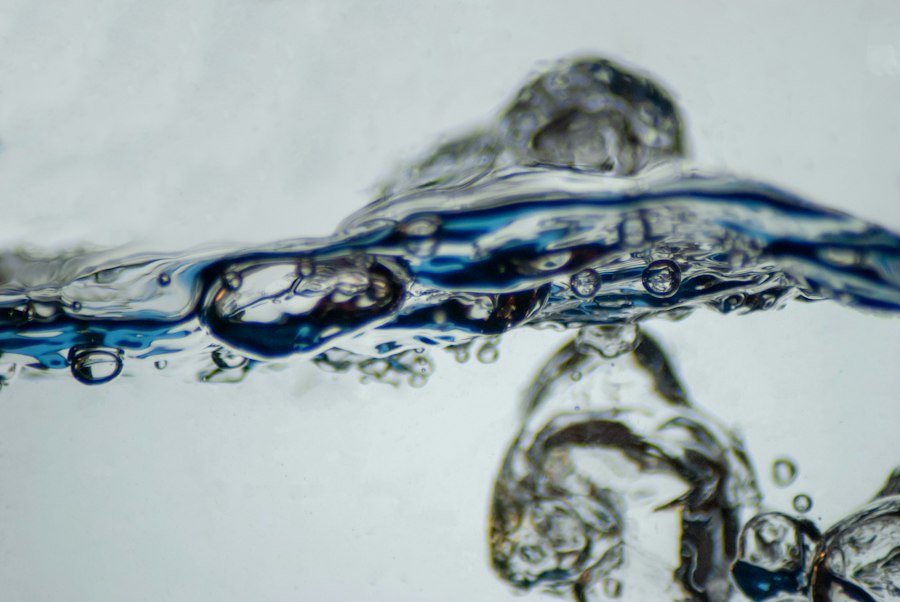
At its core, boiling is a phase transition. It’s the point where a liquid becomes a gas, or vapor, throughout the entire bulk of the liquid, not just at the surface. This transformation is driven by the internal energy of the water molecules and their ability to overcome the forces holding them together in the liquid state.
The Energetic Lives of Water Molecules
Water molecules are in constant motion. Even at room temperature, they are vibrating, rotating, and translating, jostling against each other. Temperature is a direct measure of this average kinetic energy. As heat is added to water, its molecules absorb this energy, causing them to move faster and collide with greater force. This increased molecular activity is the initial step towards boiling.
The Invisible Grip of Intermolecular Forces
Water molecules are not isolated entities. They are held together by a network of attractive forces known as intermolecular forces, specifically hydrogen bonds. These bonds, while weaker than the covalent bonds within a water molecule, are crucial for keeping water in its liquid form. They create a cohesive “skin” on the surface and a generally ordered structure within the liquid. For water to boil, these intermolecular forces must be overcome.
The Escape Velocity of Vapor
Boiling occurs when enough energy is imparted to the water molecules that they can break free from these intermolecular attractions and transition into the gaseous state, where they are much farther apart and move with far greater freedom. This escape isn’t just a surface phenomenon; it happens within the body of the liquid, forming bubbles of steam that rise and dissipate.
The Dominant Force: Atmospheric Pressure
While the internal energy of water molecules is key, their ability to escape is significantly influenced by an external force: atmospheric pressure. This is the weight of the air above the water, pressing down on its surface. Atmospheric pressure plays a pivotal role in determining the boiling point.
What is Atmospheric Pressure Anyway?
The Earth is enveloped in a blanket of air, and this air has weight. This weight exerts pressure in all directions. At sea level, this pressure is approximately one atmosphere (atm), or 101.3 kilopascals (kPa), or 14.7 pounds per square inch (psi). This constant pressure is what we experience every day.
The Battle for Freedom: Molecules Versus Atmosphere
When water is heated, its molecules gain energy and attempt to escape into the gaseous phase. However, they must contend with the downward force of atmospheric pressure. For boiling to occur, the vapor pressure of the water (the pressure exerted by the water vapor in equilibrium with its liquid phase) must equal or exceed the surrounding atmospheric pressure. If the atmospheric pressure is high, the water molecules need more energy—and thus a higher temperature—to generate enough vapor pressure to overcome this external force and form bubbles. Conversely, if the atmospheric pressure is low, the water molecules require less energy to achieve the necessary vapor pressure, leading to a lower boiling point.
Pressure Cookers and Mountaintops: Real-World Examples
The effect of atmospheric pressure on boiling point is vividly demonstrated in two common scenarios. On a mountaintop, where the altitude is high, the atmospheric pressure is significantly lower. As a result, water boils at a temperature well below 100°C. This is why cooking times are often longer at higher altitudes – the water is not as hot when it boils, so it takes longer to cook food. Conversely, a pressure cooker works by sealing the pot and increasing the internal pressure. With higher pressure inside, the water must reach a temperature significantly above 100°C before it can boil. This superheated water cooks food much faster.
The Subtle Influence of Solutes
Beyond pressure, the composition of the water itself can also subtly alter its boiling point. The presence of dissolved substances, known as solutes, can have a noticeable effect, a phenomenon known as boiling point elevation.
Dissolving: A Molecular Interruption
When a solute, such as salt or sugar, is dissolved in water, the solute particles become interspersed among the water molecules. These solute particles can interfere with the ability of water molecules to escape into the vapor phase. They essentially create a more crowded environment, making it harder for water molecules to break free from the intermolecular forces and form vapor.
The Boiling Point Elevation Principle
For the water to boil, its vapor pressure must equal the external pressure. Because the solute particles reduce the tendency of water molecules to escape, the water must be heated to a higher temperature to achieve the required vapor pressure to match the external pressure. This increase in boiling point is directly proportional to the concentration of dissolved solute particles. A higher concentration of solute leads to a greater boiling point elevation. This is why adding salt to water when cooking pasta might seem to make the water boil more vigorously; it’s not that it boils at a lower temperature, but the presence of salt slightly raises the boiling point.
Pure Water vs. Contaminated Water: A Practical Distinction
In practical terms, the effect of common solutes on everyday boiling is often minimal. For instance, adding a teaspoon of salt to a pot of water will raise its boiling point by a very small fraction of a degree. However, in industrial processes or scientific settings where precise temperature control is crucial, the presence of even small amounts of dissolved impurities can be significant. The concept of “pure water” boiling at exactly 100°C at standard atmospheric pressure is an ideal scenario; in reality, most water we encounter contains some dissolved minerals or other substances.
The boiling point of water can vary significantly depending on factors such as altitude and atmospheric pressure, which can lead to interesting culinary challenges and scientific explorations. For a deeper understanding of this phenomenon, you might find the article on the science of boiling points quite enlightening. It explains how changes in environmental conditions affect the temperature at which water transitions from liquid to gas. To read more about this topic, you can check out this informative piece on Freaky Science.
Other Factors That Can Tweak the Thermometer
| Factor | Description | Effect on Boiling Point | Example |
|---|---|---|---|
| Atmospheric Pressure | The pressure exerted by the weight of the air above the water. | Higher pressure increases boiling point; lower pressure decreases it. | At sea level (1 atm), water boils at 100°C; on Mount Everest (~0.34 atm), it boils at ~70°C. |
| Altitude | Height above sea level affects atmospheric pressure. | Higher altitude means lower pressure, so water boils at lower temperatures. | Boiling point at 2000 meters is about 93.4°C. |
| Impurities in Water | Presence of dissolved substances like salt or sugar. | Impurities raise boiling point (boiling point elevation). | Saltwater boils at a temperature higher than 100°C. |
| Vacuum Conditions | Reduced pressure environment created artificially. | Water boils at much lower temperatures under vacuum. | In a vacuum chamber, water can boil at room temperature. |
| Humidity | Amount of water vapor in the air. | Minimal effect on boiling point but can slightly affect atmospheric pressure. | Negligible change in boiling point with varying humidity. |
While atmospheric pressure and dissolved solutes are the most significant factors influencing water’s boiling point, a few other elements can also play a minor role. These are generally less impactful in everyday scenarios but are important in specific scientific or engineering contexts.
The Role of Impurities and Contaminants
Similar to dissolved solutes, other types of impurities, such as suspended particles or even dissolved gases, can also affect boiling. These contaminants can alter the surface tension of the water or create nucleation sites for bubble formation, indirectly influencing the boiling process. For instance, water with a lot of dissolved air might boil at a slightly different temperature than de-aerated water.
Nucleation Sites: Where the Magic Begins
Boiling is not a spontaneous event that occurs everywhere in the water simultaneously. It often starts at specific points called nucleation sites. These are usually small imperfections on the surface of the container or tiny trapped air bubbles. At these sites, it is easier for water molecules to gather enough energy to form a vapor bubble. The presence and nature of these nucleation sites can influence the temperature at which boiling becomes vigorous. If there are fewer or less effective nucleation sites, the water might become superheated, meaning its temperature rises above its normal boiling point without actually boiling, until a sudden, violent eruption of steam occurs.
The Container Material: A Subtle Influence
The material of the pot or vessel holding the water can also have a very slight effect. Different materials have different thermal conductivity and surface properties. A highly conductive pot might transfer heat more efficiently, leading to quicker boiling. However, the effect of the container material on the temperature of boiling is generally considered negligible compared to pressure and solute concentration. It primarily affects the rate at which the boiling point is reached.
The Science Behind Your Kitchen Kettle
The next time you heat water for a cup of tea or to cook pasta, consider the invisible forces at play. The familiar 100°C mark is a guide, a convenient average for our everyday experiences at or near sea level. But the reality is that water is a remarkably adaptable substance, its boiling point a dynamic property shaped by the world around it.
From Sea Level to the Stratosphere: A Spectrum of Boiling Points
From the high-pressure environment of a deep-sea trench to the low-pressure vacuum of space, water’s boiling point can fluctuate dramatically. Understanding these variations is not just an academic exercise; it is crucial for everything from designing efficient industrial processes to ensuring the safety of astronauts in space. The simple act of boiling water serves as a powerful, everyday demonstration of fundamental physics and chemistry.
Practical Implications in Everyday Life
The knowledge of how pressure affects boiling is why recipes often include adjustments for high-altitude cooking. It explains why you need to be more careful when heating water in a sealed container, as the pressure can build up to dangerous levels. It also underscores why the quality and purity of water can matter in scientific experiments or sensitive applications.
A Deeper Appreciation for the Ordinary
Ultimately, appreciating why water boils at different temperatures fosters a deeper understanding and appreciation for the seemingly ordinary. The everyday kettle, the simmering pot, the steaming shower – all are testaments to the intricate interplay of energy, pressure, and molecular forces that govern our physical world. The next time you see bubbles forming in a pot of water, remember that you are witnessing a complex scientific phenomenon, adjusted in real-time by the ever-changing conditions of its environment.
Why This Water Doesn’t Boil at 100°C
FAQs
1. Why does water boil at different temperatures?
Water boils at different temperatures due to variations in atmospheric pressure. The boiling point of water decreases as altitude increases because the atmospheric pressure decreases, causing water to boil at a lower temperature.
2. How does impurities affect the boiling point of water?
Impurities in water, such as salt or minerals, can raise the boiling point of water. This is because impurities disrupt the hydrogen bonding between water molecules, making it harder for the water to reach its boiling point.
3. Does the container affect the boiling point of water?
Yes, the material and shape of the container can affect the boiling point of water. A container made of a material that conducts heat well, such as metal, can cause water to boil faster. Additionally, a narrow container can cause water to boil more quickly than a wide one due to increased surface area.
4. How does heating rate impact the boiling point of water?
The rate at which water is heated can impact its boiling point. Rapid heating can cause water to superheat, where it is heated beyond its boiling point without actually boiling. This can result in a sudden and violent boiling when disturbed.
5. Can dissolved gases affect the boiling point of water?
Yes, dissolved gases in water, such as oxygen or carbon dioxide, can affect the boiling point. These gases can act as impurities, raising the boiling point of water. Removing these gases through boiling or aeration can help lower the boiling point back to its normal level.