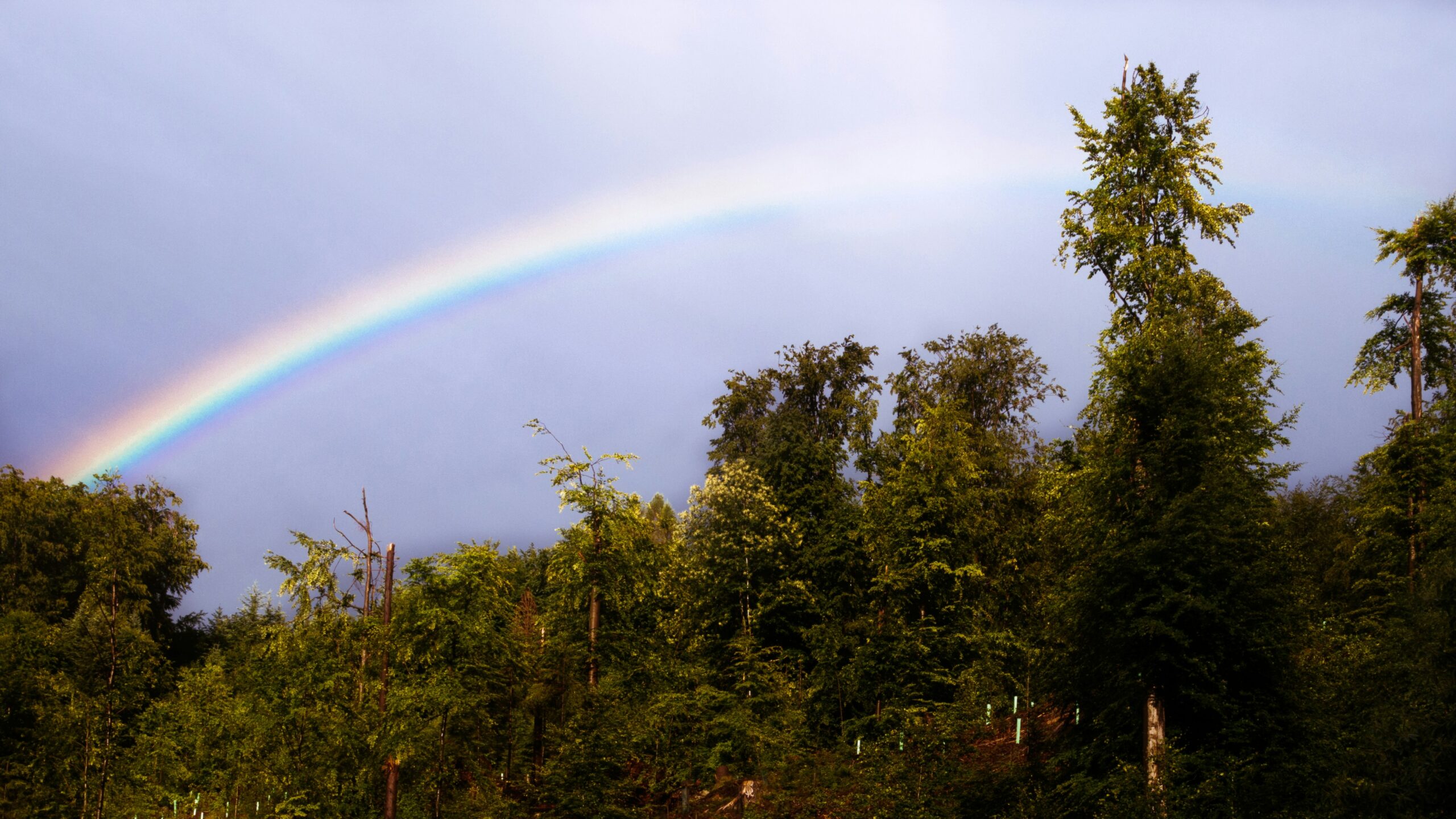
You’ve seen them your whole life: the vibrant arcs painted across the sky after a rain shower, a dazzling display of color. You know the order by heart: red, orange, yellow, green, blue, indigo, and violet. But have you ever stopped to wonder about the colors that aren’t there? Specifically, have you ever noticed the distinct absence of magenta? It’s a common question, a curious quirk of nature that has sparked fascination for centuries. You might assume that, like the other colors, magenta is simply too faint or transient to be consistently visible. However, the reality is far more fascinating, rooted in the very physics of light and the way your eyes perceive it. This isn’t just about what you see; it’s about how your visual system constructs what you see.
You’ve likely learned about the visible light spectrum, that continuous band of colors that make up white light. When sunlight passes through a prism, or in the case of a rainbow, through water droplets, it separates into its constituent wavelengths. Each wavelength corresponds to a specific color. Red light has the longest wavelength, and violet light has the shortest. All the colors in between – orange, yellow, green, blue, indigo – exist as distinct bands within this spectrum. You might think of a rainbow as a perfect, unbroken ribbon of these colors. But here’s where the first hint of the magenta mystery lies: the spectrum is, in fact, continuous. There aren’t discrete “bands” where one color abruptly ends and the next begins. Instead, the transitions are gradual, with many shades in between.
White Light: A Symphony of Wavelengths
Before diving deeper into the rainbow’s secrets, it’s essential to understand what white light truly is. It’s not a single color; it’s a composite. When all the visible wavelengths of light combine in roughly equal proportions, your brain interprets that combination as white. Sunlight is a near-perfect example of white light. When you see a rainbow, you’re witnessing the separation of this white light into its individual components. Each water droplet acts like a tiny prism, refracting (bending) and reflecting sunlight.
Refraction and Reflection: The Mechanics of a Rainbow
The formation of a rainbow is a beautiful dance between refraction and reflection. As sunlight enters a water droplet, it slows down and bends – this is refraction. Different wavelengths of light bend at slightly different angles. Violet light, with its shorter wavelength, bends more than red light, with its longer wavelength. This initial bending separates the colors. Then, the light travels to the back of the droplet, where it reflects off the inner surface. Finally, as the light exits the droplet, it refracts again, further separating the colors. The angle at which you are standing relative to the sun and the water droplets is crucial in determining which colors you see. Each observer sees their own unique rainbow, formed by light from different sets of droplets.
The Continuous Nature of Light: Beyond the Seven Colors
The idea of seven distinct colors in the rainbow is a simplification, a useful mnemonic device. In reality, the spectrum flows smoothly from one color to the next. There are countless shades and hues between red and orange, orange and yellow, and so on. This continuity is key to understanding why certain colors appear and others don’t, even if they theoretically exist within the visible spectrum.
The phenomenon of why the rainbow lacks the color magenta is a fascinating topic that delves into the science of light and color perception. For a deeper understanding of this subject, you can explore the article available at Freaky Science, which explains how our eyes perceive colors and why certain colors, like magenta, do not appear in the natural spectrum of light. This article provides insights into the complexities of color theory and the limitations of human vision, making it a valuable resource for anyone curious about the science behind rainbows.
Your Eyes: The Architects of Color Perception
The absence of magenta in the rainbow isn’t a failure of physics; it’s a testament to the sophisticated, yet sometimes peculiar, way your visual system processes light. Your eyes contain specialized cells called cones, which are responsible for color vision. There are three types of cones, each sensitive to different ranges of wavelengths: red-sensitive, green-sensitive, and blue-sensitive. Your brain then interprets the combined signals from these cones to perceive a vast array of colors. This is where the magic – and the mystery – truly begins.
The Three-Cone System: How You See Color
Your ability to perceive color relies on a system of additive color mixing, similar to how a computer screen displays images. When you look at an object, light reflects off it and enters your eyes. The cones in your retinas respond to the different wavelengths present in that light. For instance, if you look at a red apple, the red-sensitive cones will be highly stimulated, while the green and blue-sensitive cones will respond less. Your brain then takes these varying levels of stimulation and interprets them as the color red.
The Concept of “Color Space”: A Map of Your Perceptions
Scientists often visualize color perception using a “color space.” Imagine a three-dimensional graph where each axis represents the activity of one type of cone (red, green, or blue). Every color you can perceive can be plotted as a point within this space, determined by the unique combination of cone stimulation it elicits. The visible spectrum, when mapped into this color space, forms a specific shape.
The Role of Opponent Processes: Beyond Simple Cone Signals
It’s not just about the direct signals from the cones. Your visual system also employs opponent processes. This means that certain color channels are antagonistic. For example, there’s a red-green channel and a blue-yellow channel. This explains why you can’t perceive a reddish-green or a yellowish-blue. This opponent process system plays a crucial role in how your brain filters and interprets the information from your cones, ultimately shaping your perception of color.
Why Magenta Isn’t on the Spectrum: The Science of Additive Mixing

Now, let’s directly address the magenta enigma. Magenta isn’t a spectral color in the same way that red, green, or blue are. This means it doesn’t correspond to a single, pure wavelength of light. Instead, magenta is a perceived color, an artifact of how your brain interprets a specific combination of light wavelengths. Think of it as a “missing link” between red and violet, but not a link that exists as a distinct wavelength in the rainbow.
The Absence of a “Pure” Magenta Wavelength
Unlike red, which has a specific range of long wavelengths, or blue, with its shorter wavelengths, there is no single wavelength of light that, when isolated, your brain perceives as pure magenta. If you were to isolate a specific wavelength of light, it would be perceived as some shade of red, orange, yellow, green, blue, or violet.
The Combination That Creates Magenta
Magenta is what your brain perceives when it receives a simultaneous, balanced stimulation of both your red-sensitive and blue-sensitive cones, with little to no stimulation of your green-sensitive cones. Imagine shining a red light and a blue light onto a white surface. The combination of these two colors, when mixed additively, is perceived as magenta. This is a crucial distinction: magenta is a result of mixing, not a fundamental component of the spectrum itself.
The Rainbow’s Limitations: No Direct Red-Blue Stimulation
Now, consider the rainbow. The process of light splitting through water droplets separates white light into its constituent wavelengths. Red light is at one end of the spectrum, and violet light is at the other. Crucially, there is no point within the rainbow where red light and violet light are simultaneously present in such a way that they can directly stimulate both your red and blue cones in the precise combination required for magenta perception. The light that reaches your eyes from a rainbow is composed of discrete, separated wavelengths. You might see red, then a blend towards orange, and so on, eventually reaching violet. At no point do you receive a direct mixture of red and violet light originating from the same spectral band.
The Role of “Non-Spectral” Colors and Your Brain’s Interpretation
The concept of “non-spectral” colors is fundamental to understanding why magenta is absent. These are colors that cannot be produced by a single wavelength of light. Your brain is remarkably adept at filling in the gaps and making sense of the visual information it receives. When confronted with certain combinations of light, it constructs colors that aren’t directly present in the physical stimulus.
Defining Non-Spectral Colors
Non-spectral colors are those that lie outside the continuous band of wavelengths that form the visible spectrum. Magenta is the most famous example, but other non-spectral colors include various shades of brown, pink, and gray. These colors arise from the way our cone cells are stimulated, not from the presence of a specific wavelength.
Brown: Another Example of a Non-Spectral Color
Consider the color brown. There’s no single wavelength of light that appears brown. Brown is typically perceived when your eyes receive a dim, desaturated orange. It’s a combination of low intensity and a specific mix of red and yellow wavelengths. Your brain interprets this specific combination as brown. This reinforces the idea that color perception is an active process of interpretation by your brain.
Pink: The Desaturated Red
Pink is another excellent example. Pink is essentially a desaturated red – a red light mixed with white light. Since white light contains all wavelengths, adding white light to a pure red wavelength dulls the intensity of the red stimulation and broadens the range of cone activation, leading to the perception of pink. Again, there’s no specific wavelength that is “pink.”
How Your Brain “Fills In” the Missing Information
Your brain is constantly making predictions and inferences based on the sensory data it receives. When it encounters a stimulation pattern that isn’t directly represented by a single spectral color, it uses learned associations and its understanding of color relationships to create a perceived color. This “filling in” process is crucial for our ability to navigate and understand the world. In the case of the rainbow, the absence of a direct, spectral combination of red and violet wavelengths means that the brain doesn’t receive the specific input pattern needed to generate the perception of magenta.
The phenomenon of why the rainbow lacks the color magenta is a fascinating topic that delves into the science of light and color perception. While rainbows display a spectrum of colors, magenta does not appear because it is not part of the visible spectrum produced by light refraction. For a deeper understanding of this intriguing subject, you can explore a related article that discusses the intricacies of color perception and the physics behind rainbows. Check it out here for more insights.
The Boundary Between Red and Violet: Where the Magic Happens
| Reason | Explanation |
|---|---|
| Physics of Light | Due to the way light is refracted and dispersed, magenta is not a part of the visible spectrum and therefore cannot be seen in a rainbow. |
| Color Mixing | Magenta is a combination of red and blue light, which are at opposite ends of the rainbow spectrum, making it impossible for magenta to appear in a rainbow. |
| Human Perception | Our eyes are not able to perceive magenta as a single wavelength of light, so it cannot be seen in a rainbow. |
The very end of the visible spectrum presents a fascinating boundary. On one side, you have red, with its long wavelengths. On the other, you have violet, with its short wavelengths. There’s a gap in the spectrum of individual wavelengths that your brain interprets as the transition between these two extremes. This transition is where the possibility of magenta arises, but only through additive mixing, not through the direct separation of light as seen in a rainbow.
The Wavelengths of Red and Violet
Red light typically falls within the wavelength range of approximately 620 to 750 nanometers. Violet light, on the other hand, has wavelengths in the range of about 380 to 450 nanometers. Notice the significant gap between these ranges. This gap is precisely where the wavelengths that would be needed for a spectral magenta would theoretically lie, but those wavelengths are not present in visible light.
The Limits of Human Vision and the Electromagnetic Spectrum
It’s important to remember that the visible spectrum is just a small portion of the entire electromagnetic spectrum. Beyond violet lies ultraviolet (UV) radiation, which has shorter wavelengths than violet light and is invisible to the human eye. Beyond red lies infrared (IR) radiation, with longer wavelengths than red light, also invisible to us. Our eyes are specifically tuned to detect the wavelengths between approximately 380 and 750 nanometers.
The Rainbow as a Phenomenon of Spectral Separation
The rainbow, by its very nature, is a phenomenon of spectral separation. It displays the components of white light that are ordered by their wavelengths. Since magenta is not a single wavelength but a combination of red and blue light stimulation, it cannot be directly produced by this process of separating light into its individual spectral components. You see red, then you see a continuous progression through orange, yellow, green, and blue, eventually reaching violet. There’s no point in this progression where you’re receiving a direct mix of red and violet light from the same spectral band.
Beyond the Rainbow: Where Magenta Shines
While magenta might be a phantom in the rainbow, it’s far from absent in your visual world. You encounter magenta regularly in everyday objects, art, and even other optical phenomena. Its presence in these contexts further highlights the difference between spectral colors and perceived colors.
Magenta in Art and Design: A Powerful Hue
Magenta is a vibrant and often striking color used extensively in art, fashion, and graphic design. Its boldness and unique character make it a popular choice for creating visual impact. Think of the vivid hues in a sunset that might lean towards magenta, or the deliberate use of magenta in paintings and digital imagery to evoke specific emotions or aesthetics.
Other Optical Phenomena: Where Magenta Might Appear
You might sometimes perceive magenta in other optical phenomena, though often it’s still a result of light mixing. For instance, some forms of light scattering or interference can lead to the perception of magenta. The way light interacts with certain materials, like iridescent surfaces, can also produce colors that appear magenta. These instances, however, are typically not a pure spectral display but rather a complex interplay of light properties and your visual system.
The Takeaway: Color is a Collaboration
Ultimately, the absence of magenta in the rainbow is a beautiful illustration of the collaborative nature of color perception. It’s not just about the light that exists in the physical world; it’s also about how your eyes and brain work together to interpret that light. The rainbow showcases the spectral colors, the fundamental building blocks of white light. Magenta, on the other hand, is a masterpiece of your brain’s ingenuity, a color born from the artful combination of signals, a testament to the fact that what you see is as much a product of your internal world as it is of the external one. So, the next time you gaze at a rainbow, you’ll not only appreciate its breathtaking beauty but also understand the intricate science behind the colors you see, and perhaps more importantly, the colors you don’t.

Why Your Brain Had to Invent Magenta
FAQs
1. What is the reason behind the rainbow not having the color magenta?
The reason why the rainbow does not include the color magenta is due to the way light is refracted and dispersed through water droplets in the atmosphere. The colors of the rainbow are determined by the wavelength of light, and magenta is not a single wavelength color, but rather a combination of red and blue light.
2. How are rainbows formed without the color magenta?
Rainbows are formed when sunlight is refracted, or bent, as it enters a water droplet, and then dispersed into its component colors as it exits the droplet. The colors of the rainbow are red, orange, yellow, green, blue, indigo, and violet, which are the result of the different wavelengths of light being separated.
3. Can magenta be seen in other natural phenomena besides rainbows?
Magenta is not typically seen in natural phenomena like rainbows, as it is a color that is created by the human brain when it processes a combination of red and blue light. However, magenta can be seen in certain flowers, fruits, and other natural objects that have pigments which reflect both red and blue light.
4. Is there a way to create a rainbow with the color magenta included?
While traditional rainbows do not include the color magenta, it is possible to create a rainbow-like effect with magenta included using prisms or other methods of dispersing light. By combining red and blue light in the correct proportions, a magenta band can be created alongside the other colors of the spectrum.
5. Are there any cultural or symbolic meanings associated with the absence of magenta in rainbows?
There are no specific cultural or symbolic meanings associated with the absence of magenta in rainbows. The phenomenon is purely a result of the physics of light and the way it is dispersed through water droplets in the atmosphere.