The velvet curtain of night, usually an inky canvas splashed with the stark white pinpricks of stars, can be a source of wonder. Gazing upwards, the human eye often registers a universe painted in shades of monochrome. Where are the vibrant blues of Rigel, the fiery reds of Betelgeuse, or the ethereal greens and purples of distant nebulae? The common perception is that these celestial wonders are largely colorless to our unaided vision. This article delves into the fascinating scientific reasons behind this phenomenon, exploring the limitations of the human eye and the remarkable ways astronomers overcome them to reveal the universe’s true chromatic splendor.
The perception of color is a complex process involving the interaction of light with the photoreceptor cells in our eyes. To understand why stars and nebulae often appear colorless at night, one must first appreciate the fundamental building blocks of vision: photons and the specialized cells that detect them.
Photons: The Building Blocks of Light and Color
Light travels in discrete packets of energy called photons. Each photon carries a specific amount of energy, which is inversely proportional to its wavelength. The range of wavelengths that our eyes can detect, from approximately 400 nanometers (violet) to 700 nanometers (red), is what we perceive as the visible spectrum of light. When light enters our eyes, it strikes the retina, a light-sensitive layer at the back of the eye.
Rods: Masters of Low Light, Prisoners of Color
The retina contains two primary types of photoreceptor cells: rods and cones. Rods are incredibly sensitive to light, with a single photon being enough to trigger a response. This sensitivity makes them invaluable for vision in dim conditions, such as during twilight or at night. There are approximately 120 million rods in each human eye, and they are distributed more densely in the periphery of the retina. Their remarkable sensitivity, however, comes at a cost: rods are monochromatic. They contain a single type of photopigment, rhodopsin, which is most sensitive to a wavelength of around 500 nanometers (blue-green). This means that while rods can detect the presence of light in very low quantities, they cannot differentiate between different wavelengths, and therefore cannot perceive color.
Cones: The Architects of Color, Architects of Brightness
Cones, on the other hand, are responsible for our perception of color and fine detail. There are about 6 million cones in each human eye, concentrated in the fovea, the central part of the retina responsible for sharpest vision. Humans typically have three types of cones, each containing a different photopigment that is maximally sensitive to distinct ranges of wavelengths:
- Short-wavelength cones (S-cones): Sensitive to blue light (peaking around 420 nm).
- Medium-wavelength cones (M-cones): Sensitive to green light (peaking around 530 nm).
- Long-wavelength cones (L-cones): Sensitive to red light (peaking around 560 nm).
The brain interprets the relative stimulation of these three cone types to construct our perception of all the colors in the spectrum. However, cones require a significantly higher level of illumination to function effectively compared to rods. In very dim light, such as that found during stargazing, the cones are largely inactive, leaving the task of light detection almost entirely to the more sensitive rods. Consequently, the nuanced color information that cones provide is lost, and the world, including the night sky, appears in shades of gray.
The reason stars and nebulae appear colorless at night is primarily due to the limitations of human vision in low-light conditions, as well as the vast distances that light must travel from these celestial objects. In dim light, our eyes rely more on rod cells, which are sensitive to light but do not detect color, leading to a monochromatic view of the night sky. For a deeper understanding of this phenomenon and related topics, you can read more in this informative article on Freaky Science: Freaky Science.
The Dimness of Distant Objects: A Question of Photon Count
The stars and nebulae we observe in the night sky are often incredibly distant. While some stars are relatively close to our solar system, even the nearest ones are light-years away, meaning their light has traveled for years to reach us. Nebulae, which are vast clouds of gas and dust, can span many light-years and are often much fainter than individual stars. This immense distance dramatically reduces the number of photons that reach our eyes from these celestial objects.
Inverse Square Law: The Tyranny of Distance
The intensity of light from a point source, like a star, decreases with the square of the distance from the source. This is known as the inverse square law. If you double the distance to a star, its apparent brightness decreases by a factor of four. As we look out into the cosmos, the vast distances involved mean that the photon flux reaching our eyes from most stars and nebulae is extremely low.
Insufficient Stimulation for Cones
For our cones to register color, they need to be stimulated by a sufficient number of photons of specific wavelengths. In the dim light of a starry night, the number of photons from a distant star or a faint nebula that strike a cone cell is simply not enough to trigger a reliable color response. The brain, receiving minimal input from the cones, defaults to the information provided by the more numerous and sensitive rods, which, as discussed, are colorblind. This is why even intrinsically colorful objects can appear as faint, whitish or grayish smudges to the naked eye.
The Science of Color in Celestial Objects: Wavelengths and Excitation
While our eyes may not see the full spectrum of colors emanating from stars and nebulae at night, these objects are far from monochromatic. Their colors are intrinsically linked to their physical properties, primarily their temperature and chemical composition, which dictate the wavelengths of light they emit.
Stellar Temperature and Wien’s Displacement Law
The color of a star is a direct indicator of its surface temperature. Hotter stars emit more light at shorter wavelengths (bluer light), while cooler stars emit more light at longer wavelengths (redder light). This relationship is described by Wien’s Displacement Law, which states that the wavelength at which a blackbody emits most of its radiation is inversely proportional to its temperature.
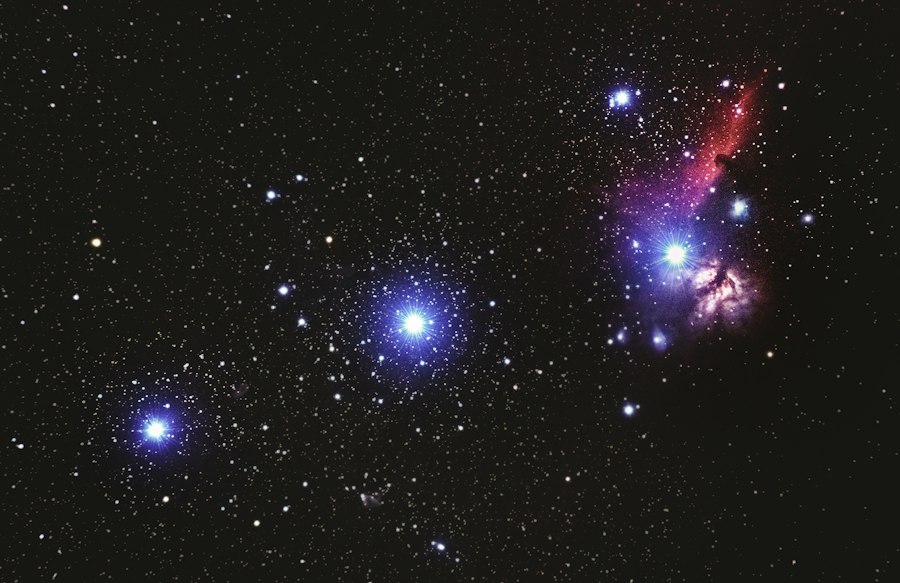
- O-type stars: Extremely hot (over 30,000 K) and appear blue.
- B-type stars: Hot (10,000–30,000 K) and appear blue-white.
- A-type stars: Moderately hot (7,500–10,000 K) and appear white.
- F-type stars: Warm (6,000–7,500 K) and appear yellowish-white.
- G-type stars: Like our Sun (5,200–6,000 K) and appear yellow.
- K-type stars: Cooler (3,700–5,200 K) and appear orange.
- M-type stars: Coolest (2,400–3,700 K) and appear red.
Although we can’t discern these subtle color differences with the naked eye in dim conditions, skilled astronomers and even dedicated amateur observers using dark adaptation and good quality optics can sometimes detect these stellar hues.
Nebulae: Emission, Reflection, and Dark Nebulae
Nebulae are diverse in their composition and how they produce their colors.
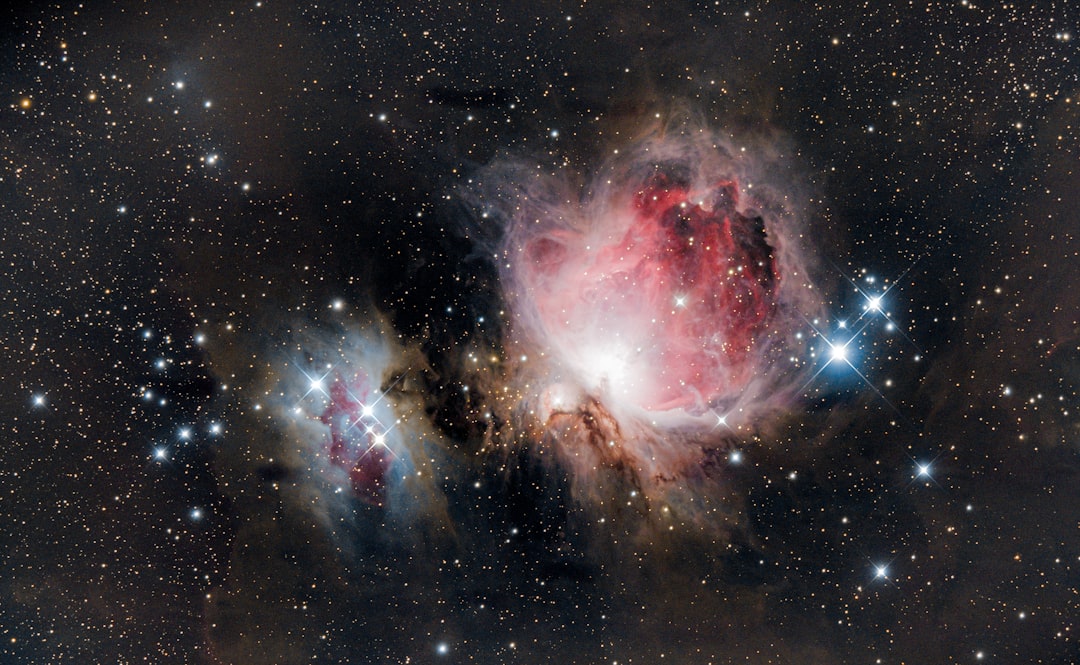
- Emission Nebulae: These are clouds of ionized gas, often hydrogen, that emit their own light. When energetic particles (like ultraviolet radiation from nearby hot stars) excite the atoms within the nebula, they gain energy. As these excited atoms return to their ground state, they release photons of specific wavelengths, resulting in characteristic colors. Hydrogen alpha, for instance, emits light at 656 nanometers, which appears red to our eyes. Oxygen, ionized by nearby stars, can emit green and blue light. These are the vibrant reds, blues, and greens often seen in photographs of nebulae like the Orion Nebula or the Lagoon Nebula.
- Reflection Nebulae: These nebulae are composed of dust and gas that do not emit their own light. Instead, they reflect the light from nearby stars. The color of a reflection nebula is determined by the wavelengths of light scattered by the dust particles. Smaller dust particles scatter shorter, bluer wavelengths more effectively, giving these nebulae a bluish appearance, as seen in the Pleiades star cluster. Larger particles scatter all wavelengths more evenly, making them appear whitish.
- Dark Nebulae: These are dense clouds of gas and dust that are so opaque they block the light from stars behind them. They appear as dark patches against the brighter background of the sky or more distant nebulae. While they don’t emit or reflect visible light, they can be studied by observing the light they absorb or the subtle infrared radiation they emit.
The Role of the Atmosphere and Light Pollution
Even if our eyes were perfectly suited to detect faint colors in low light, the Earth’s atmosphere and the ever-increasing problem of light pollution would still present significant challenges to observing the true colors of celestial objects.
Atmospheric Scattering: A Cosmic Filter
The Earth’s atmosphere is not a passive conduit for light; it actively interacts with it. Gas molecules and tiny particles within the atmosphere scatter sunlight. This is why the sky appears blue during the day: shorter, bluer wavelengths of sunlight are scattered more effectively by air molecules than longer, redder wavelengths.
At night, while the direct sunlight is absent, atmospheric effects still play a role. The scattering of even faint starlight can alter its perceived color. Furthermore, turbulence in the atmosphere, known as “seeing,” can cause stars to twinkle, blurring their light and making it harder to discern subtle color variations.
Light Pollution: The Enemy of Dim Objects
One of the most significant detractors from observing faint celestial colors is light pollution. The artificial lights from cities and towns scatter in the atmosphere, creating a pervasive glow that washes out fainter light sources. This ambient light increases the overall brightness of the night sky, making it even harder for our eyes, particularly the color-sensitive cones, to detect the subtle hues of distant stars and nebulae. The more light pollution there is, the dimmer the universe appears, and the less likely we are to perceive any color whatsoever.
When we gaze up at the night sky, the stars and nebulae often appear colorless, a phenomenon that can be attributed to various factors including human perception and the limitations of our eyes in low light. For a deeper understanding of this intriguing topic, you can explore an insightful article that delves into the science behind our perception of celestial bodies. This article explains how the rods in our eyes, which are responsible for vision in dim light, do not detect color in the same way that cones do during the day. To learn more about why these magnificent objects seem to lack color, check out this fascinating article.
Unveiling the Colors: Telescopes and Imaging
| Reasons why stars and nebulae look colorless at night |
|---|
| 1. Human eye sensitivity: The human eye is not very sensitive to color in low light conditions, so stars and nebulae appear colorless to the naked eye at night. |
| 2. Atmospheric scattering: The Earth’s atmosphere scatters light, especially shorter wavelengths like blue and violet, which can make stars and nebulae appear colorless when viewed from the surface. |
| 3. Distance and light intensity: Stars and nebulae are often very far away, and their light intensity is not strong enough to trigger the color receptors in our eyes, leading to a colorless appearance. |
| 4. Light pollution: Artificial light from cities and towns can wash out the natural colors of stars and nebulae, making them appear colorless when viewed from light-polluted areas. |
The stunning images of colorful nebulae and vibrant stars that grace our screens and textbooks are not typically the result of direct naked-eye observation. Instead, they are the product of sophisticated technology and techniques that allow astronomers to overcome the limitations of human vision.
The Power of Telescopes: Gathering More Light
Telescopes are fundamentally light-gathering instruments. The larger the aperture (diameter) of a telescope’s primary mirror or lens, the more light it can collect. By gathering a significantly greater number of photons than our eyes can, telescopes can illuminate the sensitive cones in our eyes, allowing us to perceive some color even in dim objects.
- Visual Observation: Even with a telescope, the amount of light from many nebulae and faint stars is still insufficient for strong cone stimulation. However, with larger telescopes and in very dark sky conditions, it is possible to discern some colors. For instance, the Orion Nebula often shows a greenish hue to the eye through a telescope, a result of oxygen emission. Brighter stars will also reveal their temperature-based colors more readily.
Astrophotography: Capturing and Enhancing Color
Astrophotography is where the true magic of celestial color is revealed. Modern digital cameras used in astronomy, particularly those equipped with specialized sensors and filters, can capture light over much longer exposure times than the human eye can perceive.
- Long Exposures: By collecting light for minutes, hours, or even days, astrophotographers can accumulate enough photons to reveal faint details and subtle colors that are invisible to the naked eye.
- Filters: Specialized filters are used to isolate specific wavelengths of light. For example, narrowband filters allow only the light emitted by particular elements (like hydrogen-alpha or oxygen-III) to pass through. By capturing images through different filters and then combining them, astronomers can create false-color images that accurately represent the chemical composition and physical processes within nebulae. These false-color images are crucial for scientific research, allowing us to map out the distribution of different gases and understand the dynamics of these celestial objects.
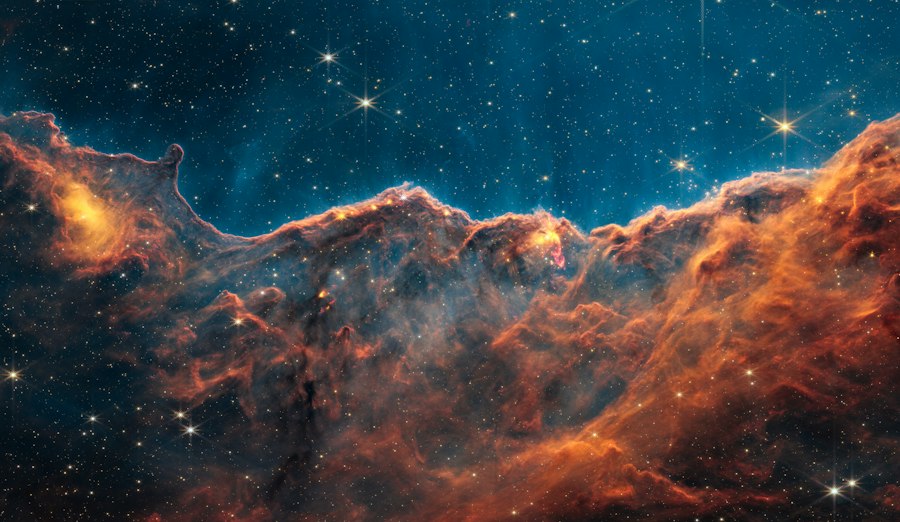
- Image Processing: The raw data captured by astrophotographers is then meticulously processed using specialized software. This processing involves adjusting brightness, contrast, color balance, and noise reduction to bring out the full beauty and scientific information contained within the images. This is why a photograph of the Carina Nebula might show vibrant reds, blues, and purples that are far more intense than anything one might glimpse through even a powerful telescope visually.
Conclusion: A Universe of Color Awaits Discovery
While the night sky, viewed with the naked eye, often appears as a monochrome masterpiece, the universe is, in reality, a riot of color. The reasons for this disparity lie in the fundamental limitations of our visual system – the dominance of light-sensitive but colorblind rods in dim conditions and the insufficient photon flux from distant celestial objects to stimulate our color-perceiving cones. Furthermore, the Earth’s atmosphere and light pollution further hinder our ability to witness these cosmic hues.
However, the absence of visible color to the unaided eye does not diminish the scientific significance of these celestial wonders. The colors of stars tell us about their temperatures, and the colors of nebulae reveal their chemical composition and the energetic processes at play. Through the ingenious application of technology – the light-gathering power of telescopes and the long-exposure capabilities and filtering techniques of astrophotography – humanity has unlocked the true chromatic splendor of the cosmos. These images serve not only as breathtaking works of art but also as invaluable scientific tools, pushing the boundaries of our understanding of the universe, one vibrant photon at a time. The colorless night sky, therefore, is not a sign of a bland universe, but rather an invitation to explore deeper, to look closer, and to appreciate the extraordinary efforts undertaken to reveal the universe’s breathtaking, multi-hued reality.

The Space Photos Are Real—But Your Eyes Would See This
FAQs
1. Why do stars and nebulae appear colorless at night?
Stars and nebulae appear colorless at night because the human eye is not sensitive enough to perceive their true colors in the low light conditions of the night sky. Additionally, the light emitted by stars and nebulae is often too faint to trigger the color receptors in our eyes.
2. Do stars and nebulae actually have colors?
Yes, stars and nebulae do have colors. The colors of stars are determined by their surface temperature, with hotter stars appearing blue and cooler stars appearing red. Nebulae, on the other hand, can appear in a variety of colors due to the different gases and elements present within them.
3. Can telescopes capture the true colors of stars and nebulae?
Yes, telescopes equipped with specialized filters and cameras can capture the true colors of stars and nebulae. By using longer exposure times and sensitive detectors, telescopes can reveal the vibrant colors that are often invisible to the naked eye.
4. Why do some photographs of stars and nebulae show vibrant colors while others appear colorless?
Photographs of stars and nebulae can vary in color depending on the equipment and techniques used to capture them. Some images may be enhanced or colorized to highlight specific features, while others may aim to accurately represent the true colors of the celestial objects.
5. Are there any specific locations or conditions where stars and nebulae may appear more colorful to the naked eye?
In areas with minimal light pollution and under optimal atmospheric conditions, stars and nebulae may appear more colorful to the naked eye. Additionally, using specialized filters or observing during specific astronomical events, such as a supernova or a planetary nebula, can enhance the perception of colors in the night sky.