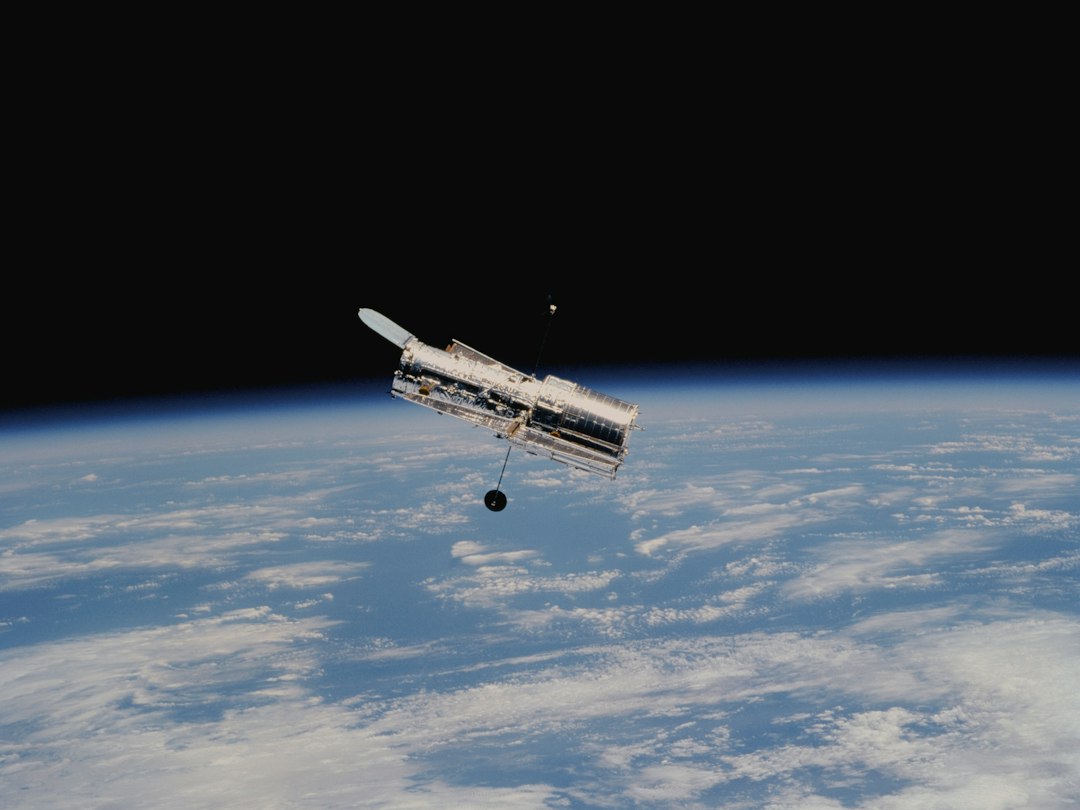
The fiery descent of a spacecraft through Earth’s atmosphere is a spectacle both awe-inspiring and terrifying, a dramatic conclusion to an incredible journey. While the image of a burning projectile might conjure notions of simple, destructive heat, the reality is far more nuanced and deeply rooted in the fundamental principles of physics. The intense incineration observed during atmospheric reentry is not a mere byproduct of speed but a direct consequence of atmospheric friction and the subsequent generation of plasma. Understanding this phenomenon requires delving into the nature of our atmosphere, the kinetic energy of a returning spacecraft, and the complex interactions that occur at extreme velocities.
The Earth’s atmosphere, often perceived as empty space, is in fact a dense and dynamic ocean of gases. This gaseous envelope, composed primarily of nitrogen (N2) and oxygen (O2) molecules, along with smaller amounts of argon, carbon dioxide, and trace gases, acts as a formidable barrier to objects traveling at high speeds. The density of the atmosphere is not uniform; it decreases significantly with altitude. At sea level, the air is thickest, providing the most resistance. As altitude increases, the molecules become more spread out, and the atmospheric pressure drops. However, even at the fringes of space, a thin scattering of molecules exists, and it is these molecules that play a crucial role in the reentry process.
Layers of Resistance
The atmosphere is not a monolithic entity but is structured into distinct layers, each with varying densities and compositions.
The Troposphere: Our Breathing Zone
This is the lowest layer, extending from the Earth’s surface up to about 7-15 kilometers (4-9 miles). It’s where all weather occurs and where the atmosphere is densest. A spacecraft reentering from orbit would pass through this layer last, experiencing the most significant drag.
The Stratosphere: A Gradual Thinning
Above the troposphere lies the stratosphere, extending to about 50 kilometers (31 miles). The air here is much thinner, and temperatures increase with altitude due to the absorption of ultraviolet radiation by the ozone layer.
The Mesosphere: The Beginning of the Burn
Reaching from about 50 to 85 kilometers (31 to 53 miles), the mesosphere is where the initial stages of reentry heating become pronounced. Although still very thin, the atmospheric particles are dense enough to begin interacting with a fast-moving object.
The Thermosphere and Exosphere: The Void and the Threshold
Beyond the mesosphere lie the thermosphere and exosphere, where the atmosphere is extremely tenuous, transitioning into the vacuum of space. While the density is negligible for most purposes, it is within these outermost layers that the reentry process truly begins its energetic transformation.
Spacecraft experience intense heating during reentry due to the friction generated as they travel at high speeds through the Earth’s atmosphere. This phenomenon is crucial to understand, as it can significantly impact the safety and integrity of the spacecraft and its occupants. For a deeper insight into the science behind this process, you can refer to a related article that explores the mechanics of reentry and the thermal protection systems used to mitigate the effects of extreme temperatures. To learn more, visit Freaky Science.
The Torpedo of Kinetic Energy
A spacecraft returning from orbit possesses an enormous amount of kinetic energy. This energy is a direct result of its incredible orbital velocity, typically around 28,000 kilometers per hour (17,500 miles per hour) for low Earth orbit. To maintain this orbit, the spacecraft must travel at a speed that balances the Earth’s gravitational pull. When reentry begins, this immense kinetic energy must be dissipated. It cannot simply vanish; it must be converted into other forms of energy, and in the case of atmospheric reentry, the primary conversion mechanism is into heat.
Speed is the Catalyst
The sheer velocity of the returning spacecraft is the fundamental driver behind the intense heating. It’s not the presence of air alone that causes the incineration, but the interaction of that air with an object moving at hypersonic speeds.
Hypersonic Velocities
Speeds exceeding Mach 5 are classified as hypersonic. During reentry, spacecraft typically travel at Mach 25 or even higher. At these velocities, the air molecules do not simply flow around the object; they are compressed and energized to an extraordinary degree.
The Challenge of Deceleration
The primary goal of reentry is to safely decelerate the spacecraft. This deceleration is achieved by forcing the spacecraft to plow through the atmosphere, generating immense drag. Without this atmospheric resistance, the spacecraft would continue at orbital velocity, posing a significant hazard.
Atmospheric Friction: The Illusion of Rubbing
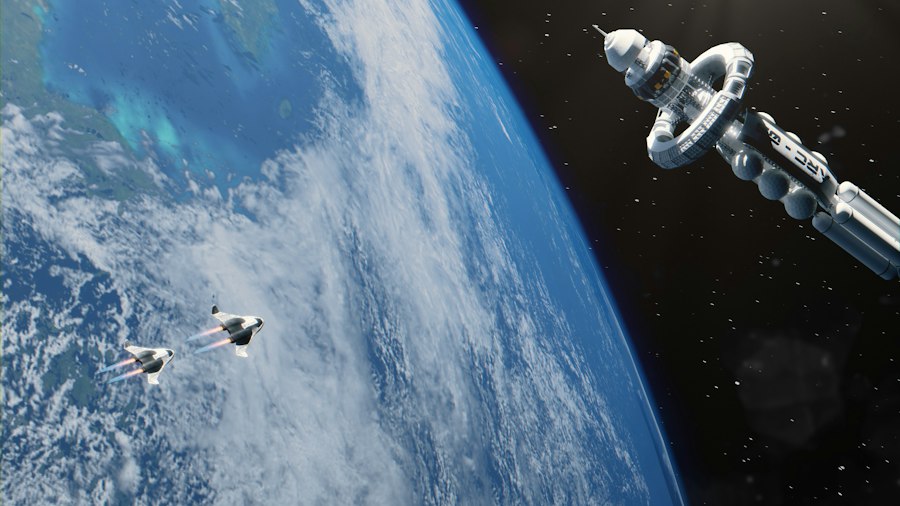
The term “atmospheric friction” can be somewhat misleading. While it accurately describes the resistive force, it’s not the same as the friction we experience when rubbing two solid surfaces together. In the case of atmospheric reentry, the primary mechanism of energy transfer is not microscopic rubbing but rather the compression and excitation of air molecules by the rapidly moving spacecraft.
Compression and Shockwaves
As the spacecraft plunges into the atmosphere, it pushes the air molecules in front of it. Because the spacecraft is moving at hypersonic speeds, the air molecules do not have enough time to move out of the way smoothly. This leads to a rapid and intense compression of the air. This compression generates powerful shockwaves that form around the spacecraft.
The Shock Layer
These shockwaves create a region of highly compressed, superheated air known as the shock layer. Within this layer, the air molecules are squeezed together with incredible force, causing their kinetic energy to increase dramatically. This increase in kinetic energy manifests as a significant rise in temperature.
Adiabatic Heating
The rapid compression of the air within the shock layer is an example of adiabatic heating. In an adiabatic process, there is no heat exchange with the surroundings. As the air is compressed, its internal energy increases, leading to a rise in temperature. For a spacecraft traveling at orbital speeds, this temperature can reach thousands of degrees Celsius, far exceeding the melting point of most materials.
The Birth of Plasma: The Fiery Mantle

The extreme temperatures generated by atmospheric compression transform the air surrounding the spacecraft into a state of matter known as plasma. Plasma is often referred to as the fourth state of matter, distinct from solid, liquid, and gas. It is an ionized gas, meaning that a significant portion of its atoms have lost or gained electrons, resulting in a collection of free ions and electrons.
Ionization: The Unraveling of Atoms
At the incredibly high temperatures of reentry, the collisions between air molecules become so energetic that electrons are stripped from their atoms. This process, called ionization, creates a plasma.
Electron Stripping
When air molecules are heated to thousands of degrees Celsius, the kinetic energy of the collisions is sufficient to overcome the electrostatic forces holding electrons to the atomic nuclei. These freed electrons then move independently, along with the positively charged ions left behind.
The Plasma Sheath
The ionized gas surrounding the spacecraft forms a plasma sheath. This sheath is not a passive bystander; it actively interacts with the spacecraft’s surface and its radio communications. The heat generated within this plasma is so intense that it radiates outward, causing the visible glow observed during reentry.
Thermal Radiation: The Intense Glow
The incandescent plasma surrounding the spacecraft emits intense thermal radiation across a wide spectrum of electromagnetic waves, including visible light, infrared, and ultraviolet. This is the source of the spectacular fiery display.
Blackbody Radiation
The superheated plasma behaves like a near-perfect blackbody radiator, meaning it absorbs and emits radiation efficiently at all wavelengths. The peak wavelength of this emission is dependent on the temperature, and at reentry temperatures, this peak falls within the visible light spectrum, producing the characteristic orange and red glow.
Heat Transfer to the Spacecraft
A significant portion of the heat generated in the plasma sheath is transferred to the spacecraft’s outer surface through convection and radiation. This necessitates robust thermal protection systems to prevent the spacecraft and its occupants from disintegrating.
When spacecraft reenter the Earth’s atmosphere, they experience extreme temperatures due to the friction generated by their high-speed descent. This intense heat can cause the outer layers of the spacecraft to burn away, which is a crucial aspect of ensuring the safety of the crew and the integrity of the vehicle. For a deeper understanding of the science behind this phenomenon, you can read more in this informative article on the subject. The article provides insights into the materials used in spacecraft design and how engineers mitigate the risks associated with reentry. To explore further, visit this link.
Thermal Protection Systems: The Shield Against the Inferno
| Factor | Description | Impact on Spacecraft | Typical Values |
|---|---|---|---|
| Atmospheric Friction | Spacecraft collides with air molecules at high speed, causing friction. | Generates intense heat, leading to surface temperatures that can cause burning. | Heat flux up to 1000 W/cm² |
| Reentry Velocity | Speed at which spacecraft reenters Earth’s atmosphere. | Higher velocity increases kinetic energy converted to heat. | 7.8 km/s (Low Earth Orbit) |
| Compression of Air | Air in front of spacecraft compresses, increasing temperature. | Creates a shockwave and extreme heating on the leading surfaces. | Temperatures can exceed 1500°C |
| Surface Material | Material properties affect heat resistance and ablation. | Materials may burn, melt, or ablate to protect the spacecraft. | Ablative heat shields with melting points > 2000°C |
| Angle of Reentry | Steep angles increase heating rate; shallow angles increase duration. | Improper angle can cause excessive heating or skipping off atmosphere. | Typical reentry angle: 5-7 degrees |
To survive the fiery ordeal of reentry, spacecraft are equipped with sophisticated thermal protection systems (TPS). These systems are designed to absorb, dissipate, or ablate (wear away) the immense heat generated by atmospheric friction and compression. The choice of TPS depends on the mission profile, the spacecraft’s design, and the expected reentry conditions.
Ablative Materials: The Sacrificial Armor
One of the most common and effective types of TPS is ablative material. These are composite materials designed to char, melt, and vaporize when exposed to extreme heat. As the material ablates, it carries heat away from the spacecraft’s structure.
The Process of Ablation
When an ablative material is heated, it undergoes a series of chemical and physical changes. It may char and become porous, or it may melt and then vaporize. The gaseous byproducts of ablation can also form a boundary layer that helps to insulate the spacecraft from the hotter plasma.
Common Ablative Materials
Materials like phenolic resins reinforced with carbon or silica fibers are commonly used. These materials are chosen for their ability to withstand high temperatures and their predictable ablation characteristics.
Reusable Thermal Protection: The Durable Shield
For reusable spacecraft like the Space Shuttle or future reusable launch vehicles, more durable and reusable TPS materials are employed. These typically involve ceramic tiles or advanced composite materials.
Ceramic Tiles
The Space Shuttle famously used thousands of silica-based ceramic tiles. These tiles were designed to be lightweight, insulating, and capable of withstanding multiple reentry cycles. However, they were also fragile and required careful inspection and maintenance.
Advanced Composites
Modern spacecraft and reusable launch systems are exploring and utilizing advanced composite materials, such as carbon-carbon composites and reinforced carbon-carbon (RCC). These materials offer superior strength and thermal resistance, allowing for more robust and efficient reentry.
Heat Shields: The Frontline Defense
The primary component of any reentry vehicle’s TPS is the heat shield. This is the outermost layer, directly facing the incoming plasma. Its design and material selection are critical to the success of the reentry.
Aerodynamic Design
The shape of the heat shield is also crucial. A blunt, rounded shape, while seemingly counterintuitive for speed, is often preferred for reentry. This bluntness helps to create a stronger, more detached shockwave further in front of the spacecraft, effectively pushing the hottest plasma away from the vehicle’s surface.
Active Cooling Systems
While most reentry relies on passive TPS, some advanced concepts and certain mission phases might involve active cooling systems, where a fluid is circulated to absorb and dissipate heat. However, for typical atmospheric reentry, passive systems are more practical and reliable.
In conclusion, the mesmerizing spectacle of a spacecraft burning during reentry is a testament to the power of physics. It is not a simple act of ignition, but a complex interplay of atmospheric density, kinetic energy, molecular compression, ionization, and the ingenious engineering of thermal protection systems. The atmosphere, far from being an empty void, acts as a powerful brake, converting the spacecraft’s immense orbital velocity into heat through a process that transforms air into a fiery plasma. The successful navigation of this inferno, thanks to advanced materials and designs, allows humanity to safely return from the stars, a constant reminder of our ongoing quest to understand and harness the fundamental forces of the universe.

There’s Only One Safe Way Back to Earth From the Moon
FAQs
What causes spacecraft to burn during reentry?
During reentry, spacecraft experience extreme heat due to the friction between the spacecraft and the Earth’s atmosphere. This friction generates high temperatures that can cause the spacecraft to burn.
How hot does a spacecraft get during reentry?
The temperatures experienced by a spacecraft during reentry can reach up to 3,000 degrees Fahrenheit (1,650 degrees Celsius). This intense heat is a result of the high-speed entry into the Earth’s atmosphere.
How do spacecraft protect themselves from burning up during reentry?
Spacecraft are equipped with heat shields made of materials that can withstand high temperatures. These heat shields help dissipate and absorb the heat generated during reentry, protecting the spacecraft and its occupants.
Can spacecraft catch fire during reentry?
While spacecraft do not catch fire in the traditional sense, the extreme heat generated during reentry can cause the outer layers of the spacecraft to burn or melt. This is why spacecraft are designed with heat-resistant materials to withstand the heat.
Are there any risks to astronauts during spacecraft reentry?
Reentry is a critical phase of a space mission, and there are risks involved for astronauts. The intense heat and forces experienced during reentry can pose dangers to the spacecraft and its occupants. However, with proper design and engineering, these risks can be minimized.