You’ve stood in the kitchen, new cookware gleaming, ready to tackle that recipe. You pull out your trusty skillet, the one you’ve used for years, and place it on your sleek new induction cooktop. Nothing happens. A flicker of frustration, maybe even a touch of suspicion. Why doesn’t this pan work on induction? You’re not alone. The magic of induction cooking, while revolutionary, comes with a specific set of requirements, and not all your existing cookware will be invited to the party. The good news? Understanding the science behind it demystifies the process and empowers you to make informed choices. It’s not about magic; it’s about magnetism.
Induction cooking is a marvel of modern kitchen technology, offering precise temperature control, rapid heating, and impressive energy efficiency. Unlike traditional stovetops that heat the pan from below using a heating element or flame, induction works by creating a magnetic field. This field directly interacts with the cookware, generating heat within the pan itself. It’s a more direct and efficient transfer of energy.
The Heart of the Matter: The Electromagnetic Coil
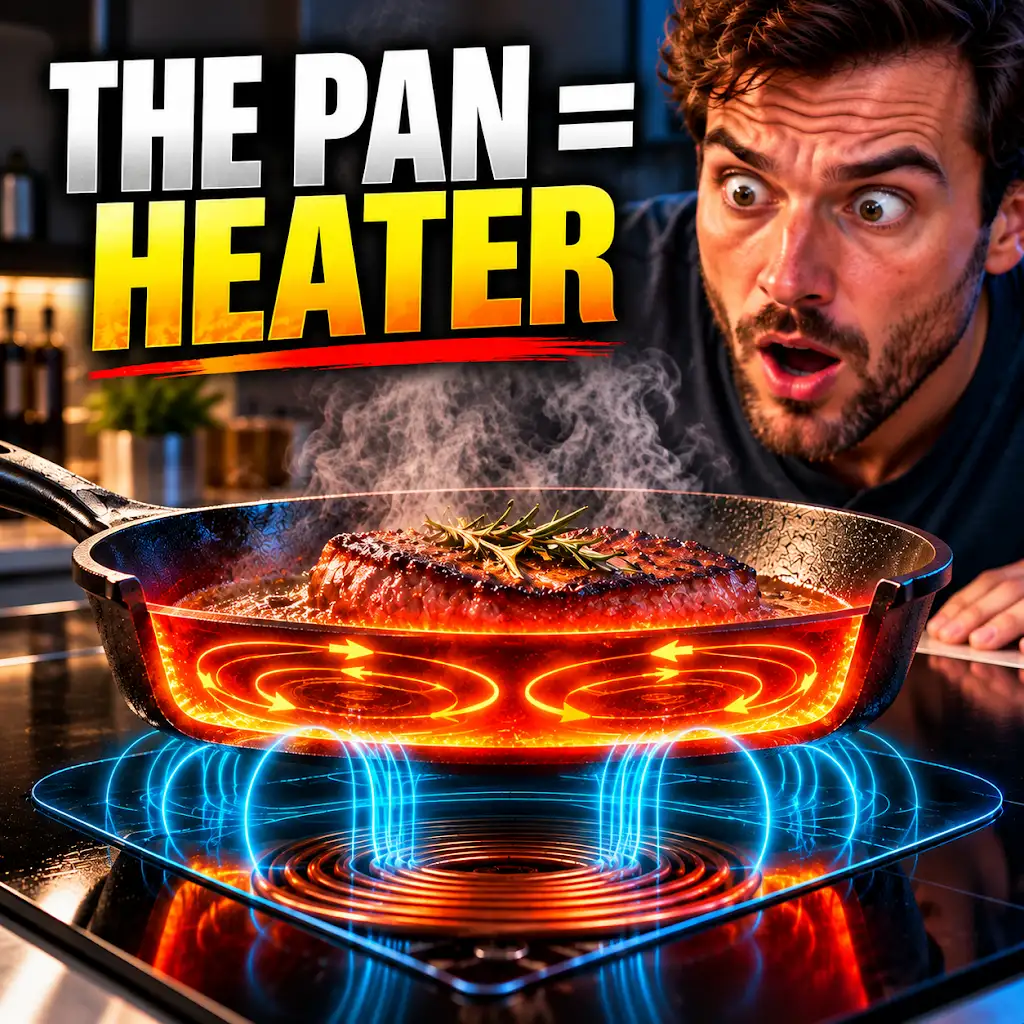
Beneath the smooth, ceramic surface of your induction cooktop lies a coiled electromagnetic wire. When you turn on the burner and place a compatible pot or pan on it, an alternating electric current flows through this coil. This current, in turn, generates a rapidly fluctuating magnetic field. Think of it like a powerful, invisible magnet that’s constantly switching its poles on and off.
The Interaction: Eddy Currents and Hysteresis Loss
The key to induction cooking lies in how this magnetic field interacts with your cookware. It’s not just about the magnet itself; it’s about what that magnet does to the material of your pan.
Eddy Currents: The Whirlwind of Heat
When the fluctuating magnetic field encounters a ferromagnetic material (more on that later), it induces electrical currents within the metal of the pan. These are known as eddy currents. These currents are essentially tiny electrical loops that circulate within the metal. Because the magnetic field is constantly changing, these eddy currents are also constantly changing, and this rapid movement and resistance within the metal is what generates heat. Imagine a swirling vortex of electricity inside your pan – that’s the essence of eddy currents at work, and it’s where a significant portion of the heat is produced. The faster the alternating current in the coil, the more rapidly the magnetic field fluctuates, and thus, the stronger and more numerous the eddy currents become, leading to faster heating.
Hysteresis Loss: The Molecular Friction
Beyond eddy currents, another phenomenon contributes to heat generation, particularly in materials with high magnetic permeability. This is called hysteresis loss. When a ferromagnetic material is exposed to a changing magnetic field, its internal magnetic domains (tiny regions where magnetic moments are aligned) are constantly being realigned. This constant flipping and realigning of magnetic domains creates friction at a molecular level. This friction, much like rubbing your hands together vigorously, generates heat. Materials that are easily magnetized and demagnetized exhibit greater hysteresis loss, contributing further to the pan’s ability to heat up.
The Efficiency Advantage: Direct Heat Transfer
The beauty of induction lies in its directness. The heat is generated within the pan itself, not through a secondary heating element that then transfers heat to the pan. This means very little energy is lost to the surrounding air. For you, this translates to faster cooking times, more responsive temperature adjustments, and a cooler kitchen environment because the cooktop surface itself doesn’t get as hot as with other methods.
Induction cooking has gained popularity for its efficiency and precision, but not all pans are compatible with this technology. The reason some pans work on induction cooktops while others do not is primarily due to the materials used in their construction. Induction cooktops require cookware made from ferrous materials, such as cast iron or certain types of stainless steel, which can generate a magnetic field. For a deeper understanding of this topic, you can read more about the science behind induction cooking in this related article: Freaky Science.
The Magnetic Imperative: Ferromagnetic Materials
The fundamental requirement for a pan to work on an induction cooktop is that it must be made of, or contain, a ferromagnetic material. This is the primary reason why some of your existing pans might be left out in the cold. Not all metals are created equal when it comes to magnetism.
What is Ferromagnetism?
Ferromagnetism is a property of certain materials that allows them to be strongly attracted to a magnet and to be permanently magnetized themselves. The key players in this category are iron and its alloys, such as steel. In ferromagnetic materials, the atoms are arranged in a way that their magnetic moments (tiny magnetic poles within each atom) tend to align with each other, forming larger regions called magnetic domains.
The Atomic Dance: Magnetic Domains
Within a ferromagnetic material, these magnetic domains are like tiny bar magnets. In an unmagnetized state, these domains are randomly oriented, so their magnetic effects cancel each other out. However, when you expose the material to an external magnetic field (like the one from your induction cooktop’s coil), these domains tend to align themselves with the external field. This alignment is what makes the material “magnetic” and allows it to interact with the induction field, leading to the generation of eddy currents and hysteresis loss.
Common Ferromagnetic Metals Used in Cookware
The most common and effective ferromagnetic metals used in cookware for induction compatibility are:
Cast Iron: The Classic Performer
Cast iron is a king of the induction world. Its high iron content makes it strongly ferromagnetic. This means it readily interacts with the magnetic field, generating heat efficiently. While cast iron can be prone to rust if not properly seasoned and cared for, its durability and excellent heat retention make it a beloved choice for many home cooks, especially on induction.
Stainless Steel: The Versatile Choice
Many types of stainless steel are also ferromagnetic. However, not all stainless steel is created equal in this regard. The magnetic properties of stainless steel depend on its alloy composition. For example, austenitic stainless steels (like 18/8 or 304) are generally not magnetic. On the other hand, ferritic and martensitic stainless steels (often used in cookware for their hardness and durability) are typically magnetic and thus induction-compatible. This is why some stainless steel pans work on induction, while others don’t. Look for pans specifically marketed as “induction-compatible” if you’re unsure.
Enameled Cast Iron: The Best of Both Worlds
Enameled cast iron combines the ferromagnetic core of cast iron with a protective, non-reactive enamel coating. The cast iron core provides the magnetic properties necessary for induction cooking, while the enamel coating makes it easy to clean and prevents the metallic taste that can sometimes occur with bare cast iron.
Non-Ferromagnetic Materials: The Outcasts
Materials that are not ferromagnetic will not be attracted to a magnet and therefore will not efficiently generate eddy currents or experience significant hysteresis loss when placed on an induction cooktop.
Aluminum: The Speedy Heater (But Not on Induction Directly)
Aluminum is an excellent conductor of heat, which is why aluminum pans heat up quickly on conventional stovetops. However, aluminum is non-ferromagnetic. This means it doesn’t have the necessary magnetic properties to interact directly with the induction field. Therefore, a pan made purely of aluminum will not work on an induction cooktop.
Copper: The Premium Conductor (Also Not Directly)
Copper, like aluminum, is a superb heat conductor but is also non-ferromagnetic. Therefore, pure copper cookware will not work on induction either.
Glass and Ceramic: The Non-Starters
Glass and ceramic are non-metallic and non-magnetic. They have no ability to interact with magnetic fields, so cookware made solely from these materials is incompatible with induction.
The “Magnetic Test”: Your Instant Compatibility Check
You don’t need a science lab to determine if your existing pans are induction-ready. There’s a simple, practical test you can perform that leverages the fundamental principle of magnetism.
The Magnet’s Tale: A Simple but Effective Method
This test is remarkably straightforward and can save you the frustration of discovering incompatibility after the fact.
The Fridge Magnet Rule
Grab any common magnet from your refrigerator. The stronger the magnet, the better. Place the magnet firmly on the bottom of your pot or pan.
What the Magnet Tells You
- If the magnet sticks firmly: Congratulations! Your pan is likely made of a ferromagnetic material and will work on your induction cooktop. The strength of the attraction is a good indicator of its magnetic properties.
- If the magnet sticks weakly or not at all: Your pan is probably made of a non-ferromagnetic material like aluminum, copper, glass, or non-magnetic stainless steel. It will not heat on an induction cooktop.
Beyond the Fridge Magnet: Understanding Limitations
While the magnet test is a great starting point, it’s not always a perfect science, especially when it comes to layered cookware.
Layered Cookware: The Deceptive Bottom
Many modern cookware pieces are constructed with multiple layers of different metals to combine the benefits of each. For example, a pan might have an aluminum core for excellent heat distribution sandwiched between layers of stainless steel for durability and a magnetic exterior for induction compatibility.
The Crucial Layer: The Bottom Surface
In the case of layered cookware, the magnetic test will only tell you about the outermost layer of the pan’s base. If the bottom exterior is ferromagnetic (e.g., magnetic stainless steel), the magnet will stick, and the pan will likely work on induction, even if the inner core is aluminum. The induction field will induce currents in the magnetic outer layer, which will then transfer heat to the non-magnetic inner core.
The “Sandwich” Effect
Therefore, a pan that fails the magnet test on its sides might still work if its base has a magnetic layer. Always focus your magnet test on the very bottom surface of the pan.
Cookware Construction: Layers and Design Matter

The way a pan is constructed plays a significant role in its induction compatibility, especially when manufacturers aim to combine the advantages of different metals. Understanding these construction techniques can help you decipher why some seemingly unsuitable pans might surprise you with their induction readiness.
The “Sandwich” Construction: Combining Strengths
As mentioned, “sandwich” or layered construction is a common and effective method for creating induction-compatible cookware that also offers excellent heat conductivity.
The Magnetic Base
The most critical element for induction compatibility in layered cookware is a magnetic base. This is typically achieved by incorporating a layer of ferromagnetic stainless steel at the very bottom of the pan. This layer is what interacts with the induction coil.
The Non-Magnetic Core
Above the magnetic base, manufacturers often use highly conductive metals like aluminum or copper. These materials excel at spreading heat evenly across the cooking surface once it’s generated by the magnetic layer. This combination provides the best of both worlds: induction compatibility and superior heat distribution.
The Inner Surface
The interior cooking surface can be made from a variety of materials, including non-stick coatings, ceramic, or even another layer of stainless steel. These layers do not need to be magnetic as long as the base is properly constructed.
Solid Metal vs. Clad Cookware: Different Approaches
The terms “solid metal” and “clad” refer to different construction methods.
Solid Ferromagnetic Cookware
This refers to pans made entirely from a single ferromagnetic material, such as solid cast iron or solid magnetic stainless steel. These are inherently induction-compatible and straightforward in their design.
Clad Cookware: The Layered Advantage
Clad cookware, as discussed in the “sandwich” construction, involves bonding together multiple layers of different metals. For induction compatibility, at least the outermost bottom layer must be ferromagnetic. Common cladding configurations include:
- Stainless Steel Exterior, Aluminum Core: A common and cost-effective option. The stainless steel exterior is magnetic, while the aluminum core provides excellent heat conductivity.
- Stainless Steel Exterior, Copper Core: Offers superior heat conductivity compared to aluminum, but at a higher price point. The exterior stainless steel layer ensures induction compatibility.
- Tri-Ply and Multi-Ply Construction: These refer to cookware with three or more layers. Typically, this involves a magnetic exterior (stainless steel) and a core of conductive metal (aluminum or copper), and sometimes an additional layer for improved performance or durability.
Identifying Induction-Ready Cookware: Look for the Symbols
Manufacturers are aware of the confusion surrounding induction compatibility and often make it easier for consumers to identify suitable products.
The Induction Symbol
Many cookware brands will include a distinct symbol on their packaging or directly on the cookware itself to indicate induction compatibility. This symbol often resembles a coil or a series of concentric circles. Familiarize yourself with this symbol, and it will become your quickest visual cue.
Product Descriptions and Specifications
Always read the product descriptions and specifications carefully. Retailers and manufacturers will explicitly state whether a particular cookware item is induction-compatible. If you’re buying online, this information is usually readily available.
Induction cooking has gained popularity for its efficiency and precision, but not all pans are compatible with this technology. To understand why certain cookware works on induction cooktops, you can explore a related article that delves into the science behind magnetic fields and cookware materials. This insightful piece explains how ferromagnetic materials interact with induction cooktops, making them essential for effective cooking. For more information, check out this article that provides a deeper look into the topic.
Beyond the Basics: Special Cases and Considerations
| Property | Description | Effect on Induction Compatibility | Example Materials |
|---|---|---|---|
| Magnetic Permeability | Ability of material to support magnetic field lines | High permeability allows induction cooktops to generate heat effectively | Cast iron, stainless steel (magnetic grades) |
| Electrical Conductivity | Ability to conduct electric current | Moderate conductivity helps induce eddy currents for heating | Stainless steel, cast iron |
| Material Thickness | Thickness of the pan’s base | Thicker bases improve heat distribution and induction efficiency | Multi-layered pans with magnetic base |
| Base Flatness | Flatness of the pan’s bottom surface | Flat base ensures maximum contact with induction surface for better heating | Most induction-compatible cookware |
| Presence of Ferromagnetic Layer | Layer of ferromagnetic material in the pan’s base | Essential for induction heating as it reacts with magnetic field | Induction-ready stainless steel pans with magnetic base |
While the ferromagnetic principle is the cornerstone of induction compatibility, there are a few nuances and special cases that might catch you off guard. Understanding these can further refine your cookware choices.
Cookware with Magnetic Plates
Some cookware that is not inherently ferromagnetic can be made induction-compatible by incorporating a separate ferromagnetic plate.
The “Induction Disk” or “Converter”
These are thin, metal discs, usually made of magnetic stainless steel, that are either permanently attached to the bottom of non-magnetic cookware (like aluminum or copper pots) or are designed as separate, detachable accessories. When placed on the induction cooktop, the magnetic plate heats up, and then transfers that heat to the non-magnetic cookware it’s sitting beneath.
Pros and Cons of Induction Plates
- Pros: This is a cost-effective way to use your existing non-magnetic cookware on an induction stove without having to buy entirely new sets.
- Cons: Heat transfer can be less efficient, and the plate itself can become very hot, posing a minor safety concern. The cooking experience might not be as responsive or even as with cookware designed specifically for induction.
The Importance of a Flat Bottom
While not strictly about material composition, the design of a pan’s bottom is crucial for optimal performance on an induction cooktop.
Maximizing Magnetic Field Contact
Induction works by creating a magnetic field that is concentrated directly beneath the coil. For efficient heat transfer, the bottom of your cookware needs to make as much direct contact as possible with this field.
Flat-Bottomed Pans: The Ideal Scenario
Pans with flat, smooth bottoms are ideal for induction. They ensure maximum surface area contact with the magnetic field, leading to the most efficient and even heating.
Warped or Rounded Bottoms: The Inefficiency
Pans with significantly warped, rounded, or uneven bottoms will have reduced contact with the magnetic field. This can result in hot spots, inefficient heating, and a less responsive cooking experience. Some induction cooktops have a built-in shut-off mechanism that will disable the burner if the pan is too warped to make adequate contact.
The “Boiling Water Test” (with caveats)
While the magnet test is the most reliable for material compatibility, some people use the boiling water test.
How the Boiling Water Test Works
You place a pot of water on the induction burner and turn it on. If the water boils relatively quickly, the pot is likely induction-compatible.
Why it’s Not Always Reliable
- Speed is Subjective: What one person considers “quick” might be slow for another.
- Efficiency Varies: Even compatible pans can vary in how quickly they heat water based on their material thickness, shape, and the power output of the induction burner.
- Doesn’t Identify the “Why”: This test confirms functionality but doesn’t tell you why it works (i.e., the material). It’s a functional confirmation, not a scientific explanation.
Ultimately, understanding the science behind induction cooking—the magnetic fields, eddy currents, and the ferromagnetic properties of your cookware—empowers you to make confident choices. So the next time you’re faced with a sleek induction cooktop, you’ll know it’s not a mystery, but a fascinating interplay of magnetism and metal that brings your meals to life.
The Pan Is the Heater: How Induction Cooking Really Works
FAQs
What is induction cooking?
Induction cooking is a method of cooking that uses electromagnetic energy to heat pots and pans directly, rather than relying on a burner to generate heat.
How does induction cooking work?
Induction cooking works by creating a magnetic field between the cooktop and the pan. This magnetic field causes the molecules in the pan to vibrate and generate heat, which then cooks the food inside the pan.
Why do some pans work on induction cooktops while others don’t?
Pans that work on induction cooktops are made from magnetic materials, such as cast iron or stainless steel. These materials are able to create the necessary magnetic field to generate heat for cooking.
Can non-magnetic pans be used on an induction cooktop?
Non-magnetic pans, such as aluminum or copper, will not work on an induction cooktop unless they have a layer of magnetic material added to the bottom. This added layer allows the pan to create the magnetic field needed for induction cooking.
Are there any safety concerns with using pans on an induction cooktop?
One safety concern with using pans on an induction cooktop is that the cookware must be flat and have good contact with the cooktop surface to ensure even heating. Additionally, the cookware should not be too small or too large for the burner size to prevent overheating or inefficient cooking.