You’ve likely heard the cautionary tales, the dire warnings plastered on appliance manuals and whispered by worried relatives: “Never put metal in the microwave!” And for good reason, you might think. The image of sparks flying, the acrid smell of burning, and the potential for a fiery disaster are enough to make anyone shy away from even the shiniest fork near that humming box. But what if you’ve also noticed that your microwave oven itself is lined with metal? And what about those sleek, modern microwave-safe dishes that sometimes incorporate metallic accents? This apparent contradiction begs a question: why do some metals seem to cause chaos in the microwave, while others, like the very walls of your appliance, operate with perfect harmony?
The answer, it turns out, lies not in the mere presence of metal, but in its form and finish. You see, smooth, unbroken metal surfaces in a microwave are your friends, acting as silent guardians against the very dangers you’ve been warned about. Let’s delve into the fascinating physics behind why smooth metal works so effectively in your microwave, preventing those dreaded sparks and fires.
Before we can understand why smooth metal is safe, you need a basic grasp of how your microwave oven actually heats your food. It’s a clever application of electromagnetic radiation.
The Magnetron: The Heart of the Microwave
At the core of your microwave is a device called a magnetron. This is the engine that generates the high-frequency radio waves, specifically microwaves, that do the cooking. Think of it as a highly specialized vacuum tube. When electricity is applied, the magnetron emits these powerful electromagnetic waves, typically at a frequency of around 2.45 gigahertz (GHz).
Wave Propagation and Absorption
These microwaves are then channeled into the cooking cavity. The goal is for these waves to interact with the food. Water molecules, fats, and sugars within your food are particularly good at absorbing microwave energy. When they absorb this energy, they vibrate rapidly, generating heat through friction. This is why your food gets hot, not the plate it’s sitting on (unless the plate has absorbed some heat from the food). The electromagnetic waves bounce around the inside of the microwave cavity, ensuring they reach as much of the food surface as possible.
Reflective Surfaces: Keeping the Waves Contained
Now, this is where the metal comes in. The interior walls of your microwave are made of metal, and this is a crucial design element. Microwaves are a form of electromagnetic radiation, and like light, they can be reflected. The smooth, continuous metal surfaces of the microwave cavity act as highly efficient reflectors for these microwaves.
This reflection is not just about bouncing waves around; it’s about containment and directed energy. By reflecting the microwaves back into the cavity, the metal walls ensure that the energy is concentrated on the food, rather than escaping into your kitchen. Imagine trying to direct a beam of light into a dark room; if the walls are absorbent, the light will dissipate. If the walls are reflective, the light will bounce around and illuminate the space more effectively. The same principle applies to microwaves, albeit with a different type of wave.
Smooth metal can sometimes work in microwaves due to its ability to reflect microwaves effectively, preventing them from being absorbed and causing sparks or fires. This phenomenon is explained in detail in the article found at Freaky Science, which discusses the interaction between microwaves and various materials. The article highlights how the surface smoothness and shape of the metal can influence microwave behavior, allowing for safe usage in certain contexts.
The Perils of Pointy: Why Sharp Metal Causes Trouble
So, if smooth metal is good, what makes certain metal objects – like a fork or aluminum foil with crumpled edges – so dangerous? The key difference lies in the shape and the resulting interaction with the microwave energy.
Electric Fields and Charge Accumulation
Microwaves are essentially oscillating electric and magnetic fields. When these electromagnetic waves encounter an object, they can induce electrical currents within that object. In a conductor like metal, electrons are free to move.
In a smooth, continuous piece of metal, like the microwave walls, these induced currents tend to flow uniformly. There are no points or edges for the electrons to “pile up” or become concentrated.
The Corona Discharge Effect: The Birth of Sparks
However, when microwaves encounter metal objects with sharp edges, points, or thin protrusions, the situation changes dramatically. At these sharp points, the electric field becomes intensely concentrated. This concentration of the electric field can pull electrons from the surrounding air towards these points.
When enough electrons accumulate at a sharp point, the electric field strength at that point can exceed the dielectric strength of the air. This is the point where the air can no longer act as an insulator. It ionizes, meaning electrons are stripped from the air molecules, creating a plasma. This sudden discharge of electricity through the ionized air is what you see as a spark. This phenomenon is known as corona discharge.
Mini-Arcing and Potential Fires
These sparks are not just a visual spectacle; they are small electrical arcs. These arcs generate intense heat and can be hot enough to ignite any nearby flammable materials. If you have a piece of paper towel, a rogue bread crust, or even some food scraps in your microwave, these sparks can easily set them alight, leading to a fire. The thinness of certain metal objects, like the edges of aluminum foil, also contributes to this problem. They have less mass to absorb the energy, making them more prone to rapid heating and ignition.
Faraday Cage Effect vs. Tesla Coil Effect
It’s worth noting the difference between how a large, smooth metal object and a small, sharp metal object behave. The interior of your microwave acts, in essence, as a Faraday cage for microwaves. A Faraday cage is an enclosure made of conductive material that blocks external electromagnetic fields. The smooth metal walls reflect the microwaves, keeping them contained within the cavity.
On the other hand, a sharp metal object with protrusions can act more like a rudimentary Tesla coil. In a Tesla coil, a sharp point is used to amplify electrical discharges. Similarly, the sharp edges of metal in a microwave can amplify the electric field, leading to concentrated charges and the subsequent corona discharge.
Smooth Surfaces: The Unsung Heroes of Microwave Safety
You’ve seen the danger; now let’s celebrate the safety of smooth, unbroken metal. The design of your microwave oven is a testament to the power of smooth surfaces in managing electromagnetic energy.
Uniform Reflection and Energy Distribution
When microwaves encounter the smooth, continuous metal interior of your oven, they are reflected evenly. This uniform reflection ensures that the microwave energy is distributed throughout the cavity, bathing your food in a consistent field. There are no points of intense concentration, no “hot spots” of electric field strength that could lead to discharge.
Preventing Charge Buildup
Because the metal surface is smooth and unbroken, the electrons induced by the microwave energy can flow freely and evenly across the surface. There are no sharp corners or edges where charges can accumulate to dangerous levels. This uniform distribution of charge is paramount to preventing corona discharge.
The Microwave Cavity as a Resonator
The interior of your microwave oven is carefully designed to act as a resonant cavity for microwaves. This means that the dimensions of the cavity are such that the microwaves can efficiently bounce around and build up in intensity. The smooth metal walls are essential for this resonance to occur effectively and safely. If the walls were not highly reflective, the microwaves would be absorbed or scattered, and the oven would not heat efficiently.
Microwave-Safe Dishes: When Metal is Part of the Design

You might have seen microwave-safe dishes that feature metallic trims or even entirely metallic interiors (in specialized appliances). This can be confusing, given the general warnings about metal. However, these are carefully designed exceptions that highlight the importance of form and function.
Smooth, Encapsulated Metallic Elements
Many microwave-safe dishes with metallic accents have these elements designed to be smooth and to not have any sharp edges or protrusions that can extend outwards. The metallic trim might be a thin layer that is smoothly integrated into the ceramic or glass of the dish. These smooth metallic surfaces behave much like the interior walls of your microwave, reflecting the waves without creating dangerous concentrations of electric fields.
Intentional Design for Reflection
In some cases, metallic elements are intentionally incorporated into microwave-safe cookware to enhance their performance. For instance, a browning dish might have a metallic base that absorbs and re-radiates microwave energy to create a crispy exterior on food. The design of these elements is crucial, ensuring they are smooth and that any sharp edges are either absent or shielded.
The Role of Insulation and Distance
Furthermore, the metallic components in these dishes are often designed to be insulated from the direct exposure of the food or to be positioned in a way that their interaction with the microwaves is controlled. The distance between the metallic element and any potential “sparking” points is carefully considered.
When it comes to using metal in microwaves, many people are surprised to learn that smooth metal can sometimes be safe. This phenomenon occurs because the smooth surfaces can reflect microwaves without causing arcing, unlike crumpled or jagged metal. For a deeper understanding of this topic, you can explore a related article that discusses the science behind microwave interactions with various materials. Check out the article here to learn more about why certain types of metal can be used in microwaves without any issues.
The Takeaway: Form Over Substance
| Reasons why smooth metal sometimes works in microwaves |
|---|
| 1. Reflection of microwaves |
| 2. Even heating of food |
| 3. Shielding effect |
| 4. Reduced sparking |
The overarching principle here is that the form of the metal is far more critical than its mere presence when it comes to microwave safety.
Smoothness is Key
The smoothness of the metal surface is the primary factor in preventing sparks. Imagine a perfectly polished sphere versus a jagged rock. Both are made of matter, but their interaction with forces can be vastly different. The smooth metal surfaces of your microwave and the metallic accents on carefully designed cookware allow for a controlled and safe interaction with microwave energy.
Avoiding Sharp Edges and Thin Protrusions
It is the sharp edges, thin points, and crumpled sections of metal that act as lightning rods for microwave energy. They concentrate the electric fields, leading to ionization of the air and the spectacular, but dangerous, corona discharge. This is why crumpled aluminum foil is a major no-no. The crinkles create countless tiny, sharp edges that will readily spark.
The Importance of Following Instructions
Ultimately, the warnings about metal in microwaves are not arbitrary. They are based on sound scientific principles. By understanding why certain metals cause problems, you can make more informed decisions about what you place in your microwave. Always err on the side of caution. If you are unsure whether an item is microwave-safe, it’s best to avoid it. But for the smooth, unbroken metallic surfaces within your oven, you can rest assured that they are working diligently to keep your food cooking safely and efficiently, reflecting those powerful microwaves exactly where they need to go. Your microwave’s internal metal shell is not a hazard; it’s a sophisticated engineering solution, a testament to the power of smooth surfaces in taming the energetic dance of microwaves.
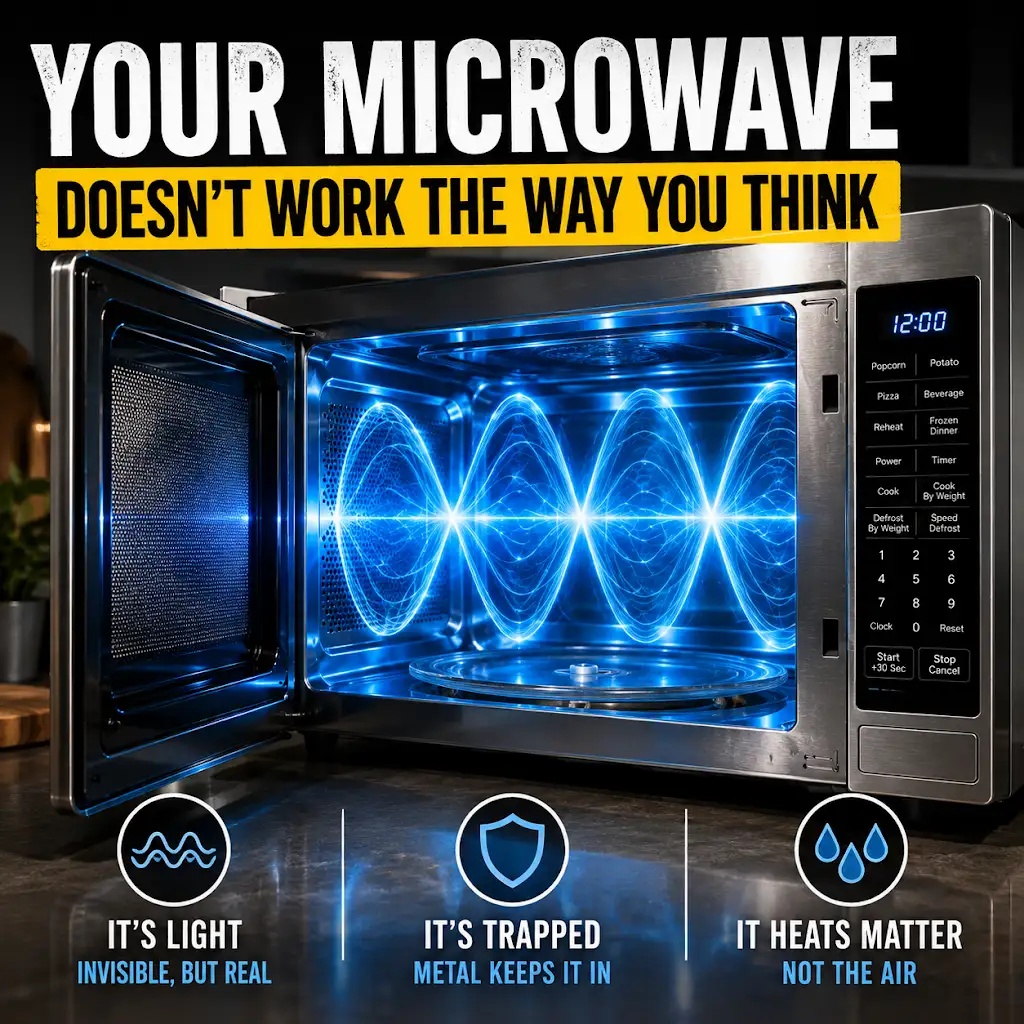
Your Microwave Doesn’t Work the Way You Think
FAQs
1. Why does smooth metal sometimes work in microwaves?
Smooth metal can work in microwaves because it reflects microwaves rather than absorbing them, which can lead to arcing and potential damage to the microwave.
2. What types of smooth metal can be used in microwaves?
Thin, flat pieces of smooth metal, such as aluminum foil or metal pans, can be used in microwaves as long as they are not crumpled or wrinkled.
3. Are there any safety concerns when using smooth metal in microwaves?
Yes, there are safety concerns when using smooth metal in microwaves, as it can cause arcing, sparks, and potential damage to the microwave. It is important to follow the manufacturer’s guidelines and only use approved metal items in the microwave.
4. Can smooth metal be used in all microwaves?
Not all microwaves are designed to safely accommodate smooth metal. It is important to check the manufacturer’s guidelines for your specific microwave model before using any smooth metal items.
5. Are there any alternatives to using smooth metal in microwaves?
Yes, there are alternatives to using smooth metal in microwaves, such as microwave-safe glass or ceramic containers, as well as microwave-safe plastic wrap or covers. It is important to use items that are specifically labeled as microwave-safe to avoid any potential hazards.