The Fundamental Principle: Boiling Point Elevation
The primary reason pressure cookers achieve their remarkable speed lies in a fundamental scientific principle: the elevation of the boiling point of water. In everyday cooking, we rely on water reaching 100 degrees Celsius (212 degrees Fahrenheit) to boil and steam, initiating the cooking process. However, this temperature is only accurate at standard atmospheric pressure at sea level. When atmospheric pressure increases, so does the boiling point of water. A pressure cooker ingeniously harnesses this phenomenon by creating a sealed environment that traps steam, thereby increasing the internal pressure. This elevated pressure directly translates to a higher boiling point for the water inside, pushing the cooking temperature significantly beyond the familiar 100 degrees Celsius mark.
Understanding Atmospheric Pressure and Boiling
At sea level, the atmosphere exerts a constant pressure on everything. This pressure is the weight of the air column above us. Water molecules, when heated, gain kinetic energy and begin to move more vigorously. For water to transition from a liquid to a gas (steam), these molecules need enough energy to overcome the intermolecular forces holding them together and the external pressure pushing down on the liquid surface. When the vapor pressure of the water equals the surrounding atmospheric pressure, boiling occurs. If the external pressure is higher, the water molecules require more energy – and thus a higher temperature – to achieve this equilibrium and escape into the gaseous state.
The Science of Pressure and Vapor Pressure
Vapor pressure is the pressure exerted by the vapor of a substance in equilibrium with its liquid or solid phase. As water is heated, its vapor pressure increases. In an open pot, boiling happens when the water’s vapor pressure matches the ambient atmospheric pressure. In a pressure cooker, the lid forms a sealed chamber. As the water heats, it produces steam. Since this steam cannot escape, it accumulates, increasing the pressure inside the cooker. This buildup of pressure forces the water’s boiling point to rise. For instance, at a pressure of 15 psi (pounds per square inch) above atmospheric pressure, the boiling point of water can reach around 121 degrees Celsius (250 degrees Fahrenheit). This increase of over 20 degrees Celsius is crucial for accelerating the cooking process.
Practical Implications of a Higher Boiling Point
The higher the temperature of the cooking medium, the faster chemical reactions, including those that break down food tissues and tenderize ingredients, occur. By raising the boiling point, the pressure cooker effectively cooks food at a significantly higher temperature than conventional stovetop methods. This means that tougher cuts of meat, dried beans, and fibrous vegetables, which normally require long simmering times, can be cooked to tenderness in a fraction of the time. This not only saves energy but also allows for quicker meal preparation, a significant advantage in today’s fast-paced world.
A pressure cooker cooks faster than traditional cooking methods due to the increased pressure and temperature it creates, which allows food to cook more quickly. This phenomenon is explained in detail in a related article on Freaky Science, where the science behind pressure cooking is explored, highlighting how the boiling point of water rises under pressure, enabling food to cook in less time while retaining moisture and flavor. For more insights, you can read the article here: Freaky Science.
The Role of Steam and Heat Transfer
Beyond simply increasing the boiling point, the way steam behaves within a pressure cooker also contributes to its speed. Steam is an incredibly efficient medium for transferring heat. When water boils at a higher temperature under pressure, the resulting steam is superheated relative to its boiling point at atmospheric pressure. This superheated steam can transfer its thermal energy to the food much more rapidly and effectively than simmering water or even circulating hot air in an oven.
Steam as a Potent Heat Carrier
Steam, by its very nature, carries a significant amount of latent heat – the energy absorbed or released during a phase change. When water vapor condenses back into liquid water, it releases this latent heat. In a pressure cooker, as the superheated steam comes into contact with the cooler food, it condenses, transferring a large amount of thermal energy. This rapid and intense heat transfer is far more effective than conduction alone, where heat moves slowly through solid matter. The constant circulation of this hot, pressurized steam ensures that all parts of the food are exposed to high temperatures, leading to more uniform and faster cooking.
Convection Currents Within the Cooker
The sealed environment of a pressure cooker, combined with the generation of steam, creates powerful convection currents. As the water heats and steam rises, it circulates throughout the cooker, carrying heat with it. These currents ensure that even parts of the food that are not in direct contact with the liquid are efficiently cooked by the circulating steam. This contrasts with an open pot where steam can escape, and convection might be less pronounced or even disrupted by drafts. The confined space amplifies the effect of these natural convection currents, maximizing heat distribution and accelerating the cooking process.
Minimizing Heat Loss
The sealed nature of a pressure cooker also plays a vital role in its efficiency. Unlike an open pot where heat is continuously lost to the surrounding air through evaporation and convection, a pressure cooker traps most of the heat within its vessel. This reduced heat loss means that more of the energy supplied by the stovetop is directed into cooking the food. The pressure seal prevents steam from escaping, thus retaining both the moisture and the thermal energy, which are critical for rapid cooking.
The Impact of Pressure on Food Structure
The elevated pressure within a cooker not only affects the boiling point of water but also has a direct impact on the food itself. This pressure can influence how different components of food, such as cell walls and connective tissues, behave when subjected to heat.
Breaking Down Tough Tissues
Tough cuts of meat are characterized by dense connective tissues, primarily collagen. At normal boiling temperatures, the breakdown of collagen into gelatin, which makes meat tender, is a slow process. However, the higher temperatures achieved in a pressure cooker significantly accelerate this chemical reaction. The heat, combined with the steam, effectively “melts” the collagen, rendering the meat incredibly tender in a much shorter timeframe. Similarly, the cell walls of vegetables, which can be fibrous and resistant to heat, are also more readily broken down under the combined influence of high temperature and pressure, leading to faster softening and cooking.
Moisture Retention and Infusion
The sealed environment of a pressure cooker ensures that moisture is retained within the food. Instead of evaporating, the water and juices released by the food are trapped and recirculate, keeping the food moist and flavorful. Furthermore, the increased pressure can facilitate the infusion of cooking liquids and seasonings into the food. The pressure helps to push the flavorful liquids into the porous structure of the ingredients, leading to a more intense and evenly distributed taste throughout the dish. This is particularly beneficial for ingredients that might otherwise struggle to absorb flavors, such as dried beans or dense root vegetables.
Affecting Texture and Mouthfeel
While pressure cooking dramatically speeds up cooking times and tenderizes tough ingredients, it’s important to note that the texture can differ from conventionally cooked food. The rapid breakdown of tissues can sometimes lead to a softer texture. However, with careful control of cooking times and liquid amounts, it’s possible to achieve desirable textures, from tender and flaky fish to perfectly cooked grains. The increased moisture retention also contributes to a desirable succulent mouthfeel that can be difficult to achieve with other methods in the same timeframe.
Efficiency and Energy Savings
The speed advantage of pressure cookers translates directly into significant energy efficiency. By cooking food much faster, less time is spent on the stovetop, resulting in a noticeable reduction in energy consumption.
Reduced Cooking Times, Reduced Energy Use
The core of energy savings lies in the shortened cooking duration. Imagine a stew that typically simmers for two hours. In a pressure cooker, that same stew might be ready in 30-45 minutes. This reduction in cooking time directly equates to less gas or electricity used. For a busy household that cooks frequently, these savings can accumulate over time, making pressure cookers a cost-effective as well as a time-saving appliance.
Heat Containment and Less Heat Waste
As previously mentioned, the sealed nature of a pressure cooker is crucial for its efficiency. Unlike an open pot or even a lidded pot on a conventional stovetop where a significant amount of heat escapes into the kitchen environment, a pressure cooker minimizes this heat loss. The heat generated by the burner is primarily directed towards raising the internal temperature of the cooker and cooking the food. This means that less energy is wasted heating the surrounding air, leading to more efficient energy utilization overall.
Comparison with Other Cooking Methods
When compared to other common cooking methods, pressure cooking often emerges as the most energy-efficient. For example, oven baking typically requires preheating the oven and involves longer cooking times. Frying, while fast for some items, often requires larger amounts of oil and can be less energy-efficient for larger quantities of food. Steaming in an open pot also involves significant heat loss. The ability of a pressure cooker to rapidly bring food to high temperatures and then maintain them with minimal loss makes it a clear winner in terms of energy efficiency for many types of cooking.
A pressure cooker cooks faster than traditional methods due to the increased pressure it creates, which raises the boiling point of water and allows food to cook more quickly. For a deeper understanding of the science behind this phenomenon, you can explore a related article that delves into the mechanics of pressure cooking and its benefits. This informative piece can be found here, offering insights that enhance your knowledge of culinary techniques.
Safety Features and Modern Design
| Factor | Description | Effect on Cooking Time | Scientific Explanation |
|---|---|---|---|
| Increased Pressure | Pressure cookers increase the internal pressure above atmospheric pressure. | Reduces cooking time by up to 70% | Higher pressure raises the boiling point of water, allowing food to cook at higher temperatures. |
| Higher Temperature | Water boils at temperatures above 100°C (212°F) inside the cooker. | Speeds up chemical reactions in food. | Elevated temperature accelerates heat transfer and softens food faster. |
| Steam Environment | Food is cooked in steam rather than dry heat. | Prevents drying out and promotes even cooking. | Steam transfers heat efficiently and maintains moisture. |
| Sealed Environment | The cooker is airtight, trapping heat and steam inside. | Maintains consistent high temperature and pressure. | Prevents heat loss, improving energy efficiency and cooking speed. |
While the science behind pressure cookers is rooted in understanding physics and chemistry, modern designs incorporate sophisticated safety features to ensure their safe and reliable operation. Early pressure cookers had a reputation for being somewhat risky, but contemporary models have evolved significantly.
Pressure Release Mechanisms
The most critical safety feature is the pressure release mechanism. All pressure cookers are equipped with safety valves that are designed to release excess pressure if it builds up beyond a predetermined safe level. These can include spring-loaded valves that hiss to indicate pressure release or weighted valves that jiggle. Many modern cookers also have secondary pressure indicators that show when the cooker is pressurized and a further safety vent that will release steam if the primary valve fails. These mechanisms are paramount in preventing dangerous over-pressurization.
Locking Lids and Handles
Modern pressure cooker lids are designed to lock securely during operation. This ensures that the lid cannot be accidentally opened while the cooker is under pressure, which would be extremely hazardous. The handles are also designed to stay cool to the touch, allowing for safe handling of the hot cooker. Many electric pressure cookers feature interlocking lids that prevent operation unless the lid is correctly sealed.
Overheating Protection and Sensors
Electric pressure cookers, in particular, incorporate advanced electronic safety features. These include sensors that monitor temperature and pressure, automatically shutting off the heating element if the temperature exceeds safe limits or if the pressure rises too rapidly. Some models also have a “burn” or “food debris” sensor that alerts the user if it detects insufficient liquid or a blockage that could lead to overheating. These integrated safety systems provide a high level of assurance for home cooks.
User Education and Best Practices
While the technology is robust, responsible use remains essential. Manufacturers provide detailed instruction manuals that outline proper usage, cleaning, and maintenance. Understanding the maximum fill lines, ensuring the sealing ring is in good condition, and regularly inspecting the safety valves are all crucial for safe operation. By adhering to these guidelines, users can confidently harness the speed and efficiency of pressure cooking, enjoying its culinary benefits without compromising safety.
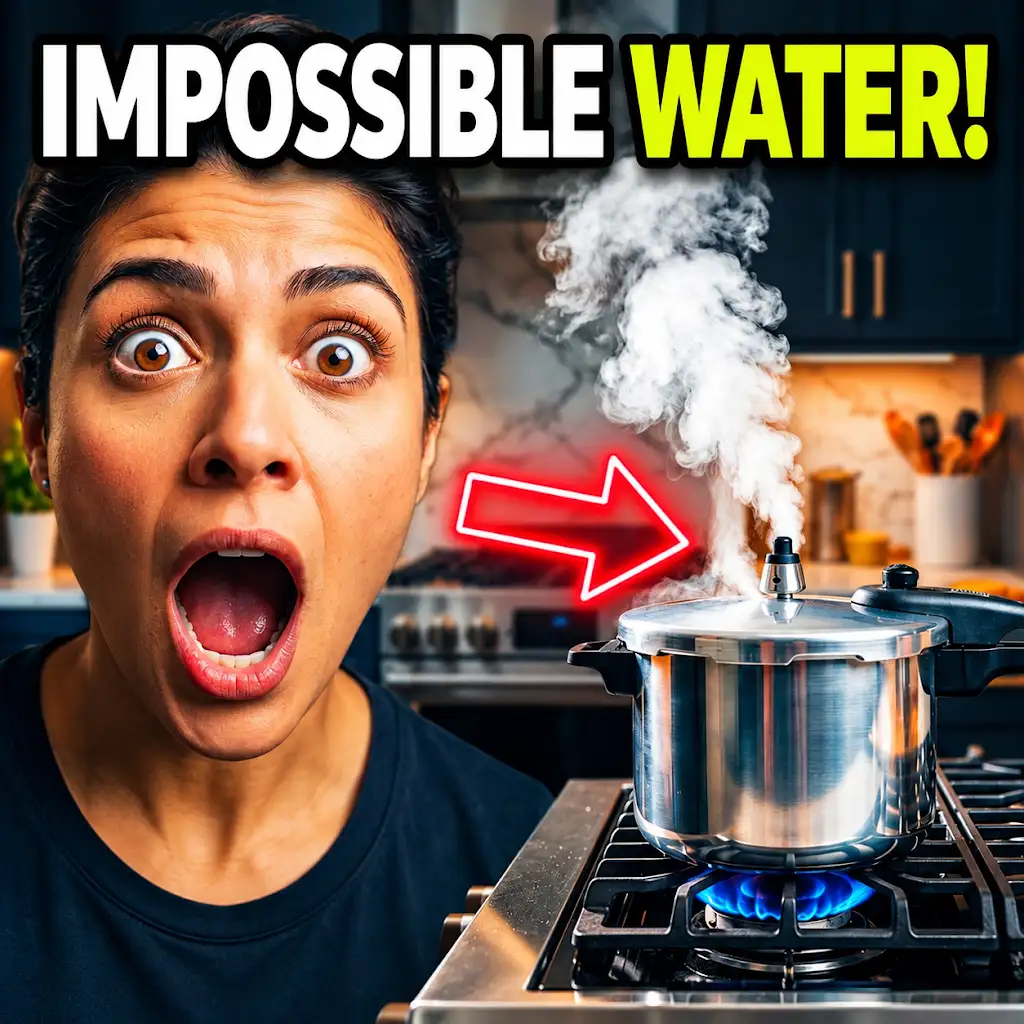
Why This Water Doesn’t Boil at 100°C
FAQs
1. How does a pressure cooker cook food faster?
A pressure cooker cooks food faster because it uses steam and high pressure to raise the boiling point of water, which results in quicker cooking times.
2. What is the science behind the faster cooking time in a pressure cooker?
When the pressure inside the cooker increases, the boiling point of water also increases, allowing food to cook at a higher temperature and therefore faster than traditional cooking methods.
3. Does a pressure cooker retain more nutrients in food compared to other cooking methods?
Yes, a pressure cooker retains more nutrients in food because the shorter cooking time helps to preserve vitamins and minerals that can be lost during longer cooking processes.
4. Are there any safety concerns associated with using a pressure cooker?
While pressure cookers are generally safe to use, it is important to follow the manufacturer’s instructions carefully to avoid accidents. Pressure build-up and steam release should be managed properly to prevent burns or other injuries.
5. Can all types of food be cooked in a pressure cooker?
Most types of food can be cooked in a pressure cooker, including meats, vegetables, grains, and even desserts. However, delicate foods like fish or certain fruits may not be suitable for pressure cooking due to the high pressure and temperature involved.