
The Heat Transfer Paradox: Why Your Outdoor AC Unit Works Harder Than You Think
You’re sitting in your living room, basking in the cool, conditioned air your air conditioner provides. It’s a technological marvel, a silent guardian against the summer swelter. But have you ever stopped to consider what’s happening outside, where the heat is actually being expelled? You might assume that the “indoor heat removal” is the primary work, the core function of the AC. However, the reality is far more nuanced, and in many crucial ways, the outdoor AC heat transfer is demonstrably greater than the simple act of cooling your indoor space. This isn’t a paradox to be feared, but a fundamental principle of thermodynamics to be understood.
Your air conditioner, whether it’s a central unit, a ductless mini-split, or a portable model, operates on the principle of moving heat. It doesn’t “create” cold; rather, it extracts heat from your indoor environment and dumps it outside. This process involves a refrigerant, a closed loop system, and a fundamental exchange of energy. While the effect you experience is the comfortable coolness indoors, the cause involves a significant amount of energy being transferred and dissipated externally.
The phenomenon of outdoor air conditioning heat being greater than the heat removed indoors can be attributed to several factors, including the efficiency of heat exchange and environmental conditions. For a deeper understanding of this topic, you can explore the article on Freaky Science, which delves into the principles of thermodynamics and how they apply to air conditioning systems. To read more about this, visit Freaky Science.
## Understanding the Refrigeration Cycle: The Heart of the Matter
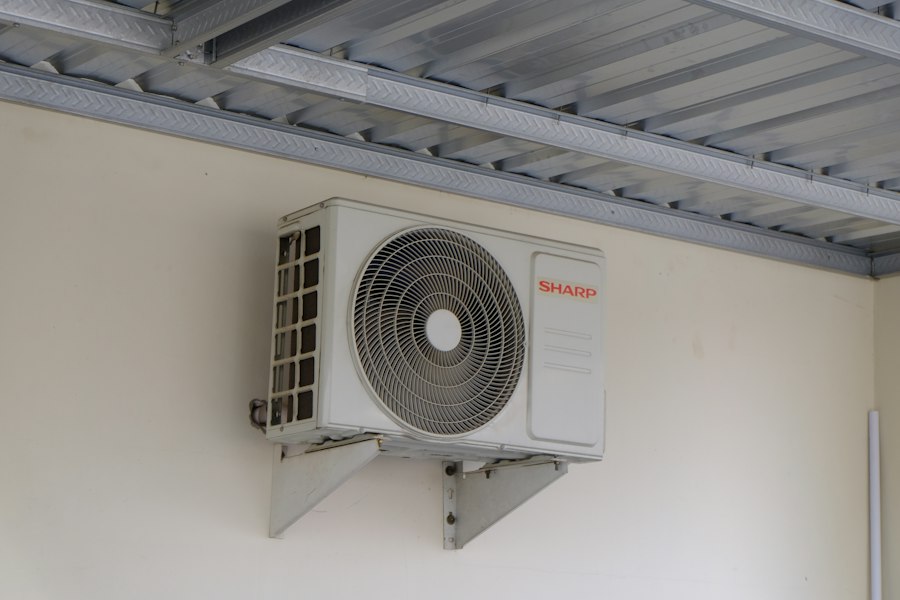
Before we delve into the comparative heat loads, it’s essential to grasp the basic operation of your air conditioner. You can think of it as a heat pump, but one designed specifically to move heat from a cooler place (your home) to a warmer place (the outdoors). This is not a spontaneous process; it requires energy input, primarily in the form of electricity to power the compressor and fans.
### The Key Components and Their Roles
The refrigeration cycle, the backbone of your AC system, involves four main components: the evaporator, the compressor, the condenser, and the expansion valve. Each plays a vital role in the heat transfer process.
#### The Evaporator (Indoor Coil): The Heat Absorber
This is where the magic of indoor cooling begins. Inside your home, the evaporator coil is a network of tubes filled with a cold, low-pressure refrigerant. As warm air from your living space is blown across these tubes by the indoor fan, the heat from the air is absorbed by the refrigerant. This absorption causes the refrigerant to evaporate from a liquid to a gas. Think of it like water evaporating off your skin – it takes heat with it, leaving you feeling cooler. This is the “indoor heat removal” you directly feel.
#### The Compressor: The Energy Pusher
Once the refrigerant has absorbed heat and turned into a gas, it travels to the compressor. This is the “engine” of your AC system, a powerful electric motor that compresses the gaseous refrigerant. This compression significantly increases the refrigerant’s temperature and pressure. It’s this energy input that drives the entire cycle, making it possible to move heat against its natural gradient.
#### The Condenser (Outdoor Coil): The Heat Emitter
Now that the refrigerant is hot and pressurized, it’s sent to the outdoor unit, specifically to the condenser coil. Here, the hot refrigerant releases its absorbed heat to the outside air. As the heat is expelled, the refrigerant cools down and condenses back into a high-pressure liquid. The outdoor fan plays a crucial role here, blowing ambient air across the condenser coils to facilitate this heat dissipation. This is the primary site of the “outdoor AC heat transfer” that we’ll explore in more detail.
#### The Expansion Valve: The Pressure Reducer
Finally, the high-pressure liquid refrigerant passes through the expansion valve. This valve restricts the flow, causing a sudden drop in pressure and temperature. This low-pressure, cold liquid refrigerant is now ready to return to the evaporator coil, and the cycle begins anew.
## Beyond Simple Cooling: The Latent Heat Factor
When we talk about indoor heat removal, we often focus on the sensible heat – the heat you can feel, the temperature change. However, air conditioning deals with a significant amount of latent heat as well, and this is a critical factor in understanding the greater heat load outdoors.
### Sensible Heat vs. Latent Heat Explained
- Sensible Heat: This is the heat that causes a change in temperature. When your AC cools your home, it removes sensible heat, lowering the air temperature.
- Latent Heat: This is the heat associated with a change in phase. In the context of your AC, the most significant latent heat transfer occurs when moisture in the air condenses into liquid water. This condensation process releases a substantial amount of heat.
### The Dehumidification Bonus (and Burden)
One of the key benefits of air conditioning is its ability to dehumidify your home. As the warm, humid indoor air passes over the cold evaporator coil, water vapor in the air condenses into liquid water. This condensed water is then drained away, often through a pipe to the outside.
Here’s where the outdoor heat load increases significantly: the latent heat released during this condensation process must also be expelled outdoors. For every gallon of water removed from your indoor air, a considerable amount of heat is released. Your AC system doesn’t just have to deal with the sensible heat that’s making your home feel warm; it also has to manage the energy locked within the water vapor. This energy is then transferred to the refrigerant and ultimately dissipated by the condenser coil outdoors. So, while you feel the benefit of a drier, cooler home, the outdoor unit is working to reject not only the heat absorbed from the air but also the heat released from the condensing water.
## The Outdoor Unit: A Heat Exchanger Under Pressure
Your outdoor AC unit, often referred to as the condenser unit, is essentially a powerful heat exchanger. Its sole purpose is to reject the heat collected from indoors, along with the heat generated by the refrigeration cycle itself, into the ambient environment. This process is far more demanding than simply reducing the temperature of the air within your home.
### The Combined Heat Load: More Than Just Your Home’s Temperature
The heat leaving your outdoor unit is a composite of several energy transfers:
- Sensible Heat from Indoors: This is the direct heat you want removed from your living space to achieve your desired thermostat setting.
- Latent Heat from Dehumidification: As discussed, the heat released when water vapor condenses into liquid water.
- Heat Generated by the Compressor: The compressor, being an electrical device performing mechanical work, generates its own heat as a byproduct. This heat is also absorbed by the refrigerant and expelled outdoors.
- Heat from the Refrigerant Itself: The refrigerant is in a high-temperature, high-pressure state when it reaches the condenser. This temperature difference drives the heat transfer to the cooler outdoor air.
Therefore, the total heat energy that the outdoor unit must dissipate is the sum of all these components. It’s not just about cooling your house down by a few degrees; it’s about actively moving a significant quantity of thermal energy against the natural flow of heat.
### The Role of Ambient Temperature
The efficiency of your outdoor unit is directly influenced by the temperature of the surrounding air. On a hotter day, the temperature difference between the refrigerant and the outside air is smaller. This means the condenser has to work harder to transfer the heat. It’s like trying to cool a hot drink with a slightly warm glass – it’s less effective than using a cold glass. This increased effort translates to a greater thermal load on the outdoor unit. Your AC system is designed to operate within a certain range, but extreme heat can push its capacity to its limits.
Understanding why outdoor AC heat removal is greater than indoor heat is crucial for optimizing energy efficiency in cooling systems. This phenomenon can be attributed to various factors, including the design of air conditioning units and the environmental conditions outside. For a deeper insight into this topic, you can explore a related article that discusses the principles of heat exchange and the impact of outdoor temperatures on AC performance. Check it out here for more information.
## Quantifying the Difference: Why “Greater” is the Right Word
| Metric | Outdoor AC Heat | Indoor Heat Removed | Explanation |
|---|---|---|---|
| Heat Absorbed from Indoor Air | 0 BTU/hr (initially) | 10,000 BTU/hr | Indoor unit absorbs heat from inside air |
| Compressor Work Input | 2,000 BTU/hr | 0 BTU/hr | Energy added by compressor to transfer heat |
| Total Heat Rejected Outdoors | 12,000 BTU/hr | 0 BTU/hr | Sum of indoor heat + compressor work |
| Heat Transfer Efficiency | Greater than 1 (Coefficient of Performance) | 1 (baseline) | Outdoor heat includes added compressor energy |
| Energy Source | Electrical energy input | Heat energy from indoor air | Compressor converts electrical energy to heat |
While it’s difficult to provide exact figures without knowing the specifics of your AC unit, your home’s insulation, and the prevailing weather conditions, the principle holds true: the total heat energy rejected by the outdoor unit is greater than the heat energy you perceive as removed from your indoor space.
### The Coefficient of Performance (COP) and Energy Efficiency Ratio (EER)
These metrics, often found on your AC unit’s label, offer insight into the system’s efficiency. While not directly measuring heat rejection, they relate to how much cooling output you get for the energy input. A higher COP or EER generally means a more efficient system, but it doesn’t negate the fundamental physics of heat transfer.
### A Simplified Analogy: The Sponge and the Bucket
Imagine your indoor space is a sponge saturated with heat and moisture. Your AC’s evaporator coil is like the part of your hand that squeezes the sponge. You feel the immediate relief as the water (heat) is squeezed out. However, the water that’s squeezed out (the heat) then needs to be transported and disposed of somewhere else. The outdoor unit is like the bucket and the journey to dump the water. Not only do you have to carry the water that was in the sponge, but the act of carrying and the process of dumping it might involve some effort (energy consumption and additional heat).
More accurately, consider the refrigerant itself as a fluid carrying the heat. The compressor expends energy to pressurize and heat this fluid. The condenser then releases this energy, along with the original heat absorbed indoors and any heat generated by the compressor. This combined outflow of energy is inherently larger than the input of heat from your home alone.
### The Importance of Proper Sizing and Maintenance
An undersized AC unit will struggle to keep up, running longer and less efficiently, leading to increased stress on the outdoor unit. Conversely, an oversized unit can short-cycle, leading to poor dehumidification and uneven cooling. Regular maintenance, including cleaning the condenser coils, ensures the outdoor unit can effectively dissipate heat. Dirty coils act as an insulator, hindering heat transfer and forcing the system to work harder. This increased workload directly translates to a greater heat burden on the outdoor components.
## The Thermodynamics of It All: Energy Conservation in Action
At its core, the explanation for why outdoor AC heat is greater than indoor heat removal lies in the fundamental laws of thermodynamics.
### The First Law of Thermodynamics: Conservation of Energy
This law states that energy cannot be created or destroyed, only transferred or changed from one form to another. Your air conditioner doesn’t magically create cold. It uses electrical energy to pump heat from one location to another. The total amount of energy in the system remains constant. This means the energy that leaves your outdoor unit is the sum of the energy that entered it from your home plus the energy consumed by the system itself (primarily converted into heat by the compressor).
### The Second Law of Thermodynamics: Entropy and Heat Flow
This law dictates that heat naturally flows from a warmer object to a cooler object. To move heat from a cooler indoor environment to a warmer outdoor environment, you need to do work – you need to expend energy. This expenditure of energy, particularly by the compressor, adds to the total heat load that must be dissipated outdoors. You are essentially forcing the system to work against its natural tendency.
### The Practical Implications for Your Energy Bill
Understanding this concept has practical implications for your energy consumption. The “work” done by the compressor to overcome the natural flow of heat is a significant factor in your electricity bill. The more heat your outdoor unit has to reject, the longer and harder it will run, consuming more electricity. This is why selecting an energy-efficient AC unit and ensuring proper installation and maintenance are crucial for managing your cooling costs. The efficiency ratings (like SEER, EER, and HSPF) are designed to quantify how effectively the system transfers heat and minimizes energy waste. While they focus on the cooling output relative to energy input, they implicitly acknowledge the greater thermal load the outdoor unit must manage.
In conclusion, while you enjoy the comfort of a cooled home, remember that your outdoor AC unit is the silent hero, diligently working to expel a significant amount of thermal energy. It’s not just a radiator; it’s a sophisticated heat exchanger managing multiple heat sources and working against the natural order of thermodynamics to keep you comfortable. The heat you don’t feel indoors is the heat that’s being forcefully pushed out, along with the energy required to make that expulsion happen.

Your AC Blows Hot Air Outside. Is That Heat From Your Room?
FAQs
1. Why is outdoor AC heat greater than indoor heat removed?
Outdoor AC heat is greater than indoor heat removed because the outdoor unit of an air conditioning system is responsible for dissipating the heat absorbed from the indoor air. This process requires the outdoor unit to work harder and expel the heat into the surrounding environment.
2. How does the outdoor AC unit remove heat from the indoor air?
The outdoor AC unit removes heat from the indoor air through a process called refrigeration. The refrigerant in the system absorbs heat from the indoor air, then the compressor in the outdoor unit pressurizes the refrigerant, causing it to release the absorbed heat outside.
3. What factors contribute to the outdoor AC heat being greater than indoor heat removed?
Several factors contribute to the outdoor AC heat being greater than indoor heat removed, including the efficiency of the system, the outdoor temperature, the size of the outdoor unit, and the amount of heat being generated indoors.
4. How does the outdoor temperature affect the heat removal process?
The outdoor temperature affects the heat removal process by impacting the efficiency of the outdoor unit. Higher outdoor temperatures make it more challenging for the outdoor unit to release the absorbed heat, leading to a greater temperature difference between the indoor and outdoor environments.
5. Can proper maintenance help improve the efficiency of heat removal by the outdoor AC unit?
Yes, proper maintenance can help improve the efficiency of heat removal by the outdoor AC unit. Regular cleaning, checking for refrigerant leaks, and ensuring proper airflow can all contribute to the system’s ability to remove heat effectively and maintain a comfortable indoor environment.