You’ve probably seen it. That unsettling flicker of blue or white light deep within your microwave oven, often accompanied by a faint crackling sound. It’s a phenomenon that can make you pause, wonder if your appliance is about to stage a fiery rebellion, and perhaps even lead you to unplug it in a hurry. This is arcing, or sparking, and while it can be alarming, understanding the science behind why narrow gaps in your microwave cause these electrical fireworks reveals a fascinating interplay of physics. It’s not about your food being possessed by tiny lightning bugs; it’s about the very nature of how microwaves work and the electrical properties of the materials you use.
The Electrifying World of Microwaves
Before we delve into the specifics of arcing, it’s crucial to grasp the fundamental principles of how your microwave oven operates. It’s a marvel of everyday technology, harnessing invisible electromagnetic waves to heat your food.
The Magnetron: The Heart of the Operation
At the core of every microwave oven lies the magnetron. This ingenious vacuum tube is the engine that generates the microwave radiation. Think of it as a highly specialized oscillator. When you set your microwave to cook, electricity flows into the magnetron, exciting electrons within its cavity. These excited electrons, under the influence of powerful magnetic fields, then oscillate at a very high frequency – specifically, around 2.45 gigahertz (GHz). This oscillation is what produces the microwave energy.
Waveguides and the Cavity: Directing the Energy
The microwave energy generated by the magnetron doesn’t just blast randomly into your oven. It’s carefully channeled through a metal structure called a waveguide. This waveguide acts like a conduit, directing the microwaves towards the cooking cavity – the main chamber where you place your food. The cavity itself is designed as a Faraday cage, a metal enclosure that reflects the microwaves, bouncing them around until they are absorbed by the food. This continuous bouncing and absorption is what cooks your meal.
The Principle of Dielectric Heating
The magic of microwave cooking lies in a process called dielectric heating. Water molecules, abundant in most foods, are polar. This means they have a slightly positive end and a slightly negative end, much like a tiny magnet. When exposed to the oscillating electromagnetic field of the microwaves, these polar molecules try to align themselves with the rapidly changing electric field. This frantic jostling and rotation of water molecules generates friction, which in turn creates heat. Other polar molecules in food, like fats and sugars, also contribute to this heating process, albeit to a lesser extent.
Microwave ovens are a common household appliance, but many users may not be aware of the potential hazards associated with placing metal objects inside them. A fascinating article that delves into the science behind why narrow gaps can cause microwave sparks can be found at this link. The article explains how the electromagnetic waves generated by microwaves interact with metal, particularly in narrow spaces, leading to the phenomenon of arcing. Understanding these principles can help users avoid dangerous situations and ensure safe microwave usage.
The Culprit: Metal and Electromagnetic Fields
Now that you have a basic understanding of how microwaves create heat, we can begin to understand why certain materials and configurations cause those telltale sparks. The primary culprit in microwave arcing is metal, and more specifically, the way metal objects interact with the intense electromagnetic fields within the oven.
Electrical Conductivity and Reflection
Metals are excellent electrical conductors. This means that electric charges can move freely within them. When microwaves, which are essentially oscillating electromagnetic waves carrying energy, encounter a metallic surface, they induce electric currents within the metal. Unlike the polar molecules in your food that absorb and convert microwave energy into heat, metals tend to reflect these waves. This reflection is crucial for the oven’s operation, keeping the microwaves contained within the cavity. However, when the geometry of the metal object is not ideal, this reflection can lead to problems.
The Role of Sharp Edges and Corners
The shape of a metallic object plays a significant role in how it interacts with microwaves. Sharp edges, points, and thin metal strips are particularly problematic. These areas can concentrate the induced electric charges. Imagine a crowded room; if everyone is trying to get through a narrow doorway at once, there’s going to be congestion and pressure. Similarly, the electric charges induced on a sharp metal edge become concentrated, leading to a significant build-up of electrical potential.
Narrow Gaps: The Perfect Storm for Arcing
This is where the concept of narrow gaps becomes paramount. When you introduce a metal object with a small gap between its edges, or a thin metal piece, you create a scenario where electrical charges can build up and then discharge dramatically.
The Accumulation of Electric Charge
Consider a thin strip of aluminum foil, a metal fork, or even the decorative metallic trim on some plates. These objects have electrical charges induced on them by the microwaves. In a uniform metallic object, these charges can distribute themselves relatively evenly. However, in the case of narrow gaps, the electric charges can become trapped or concentrated in specific areas. Imagine a dam holding back a lot of water; the pressure at the base of the dam is immense. Similarly, the concentrated charges at the edges of a narrow gap create a high electrical potential difference.
The Breakdown of Air: Ionization
The air within your microwave oven, while generally an insulator, can only withstand a certain amount of electrical stress before it breaks down. When the electrical potential difference across a narrow gap becomes sufficiently high, it exceeds the dielectric strength of the air. This means the electric field is strong enough to rip electrons away from the air molecules. This process is called ionization. The air molecules become charged, turning the insulating air into a conductive plasma.
The Discharge: The Spark
Once the air is ionized, it provides a pathway for the accumulated electrical charges to flow rapidly. This rapid flow of electrons and ions through the now-conductive air is what we perceive as a spark or an arc. It’s a miniature lightning strike happening right inside your microwave. The energy released during this discharge is what creates the visible flash and the characteristic crackling sound. The intensity of the spark depends on the amount of charge accumulated and the size and sharpness of the gap.
Why Certain Materials Are Worse Than Others
While any metal can potentially cause arcing under the right circumstances, some materials and forms are more prone to it than others. This is directly related to their electrical conductivity and how they tend to concentrate electric charges.
Foil and Thin Metal Foils: The Usual Suspects
Aluminum foil is perhaps the most common offender. Its thinness and tendency to be crumpled or placed in ways that create sharp edges make it a prime candidate for arcing. When you scrunch up a piece of foil, you create countless tiny edges and potential gaps. Even a small piece of foil left in your microwave can become a focal point for electrical discharge.
Metal Trim on Dishes and Utensils: The Deceptive Danger
Many plates, bowls, and mugs feature decorative metallic trim, often a thin band of gold or silver. While seemingly innocuous, these metallic elements can also lead to arcing. The narrowness of the trim and its placement on the dish can create small gaps where charges accumulate. Similarly, metal utensils, especially those with pointed tines or sharp edges, are highly susceptible to causing sparks. The prongs of a fork, for instance, can create concentrated points of electrical stress.
The “Crinkling” Effect: A Recipe for Arcing
Even materials that might seem safe can become problematic if they are crinkled or folded in a way that creates narrow gaps. For example, some types of oven liners or reusable food wraps that contain metallic components can cause arcing if they are not used according to the manufacturer’s instructions or if they become damaged. The key is the presence of thin metallic elements and the potential for small, concentrated gaps.
Microwave sparks can often be attributed to the presence of narrow gaps, which create conditions for electrical discharge. This phenomenon is explained in detail in a related article that explores the science behind microwave interactions with various materials. For those interested in understanding the intricate details of how these sparks occur, you can read more about it in this fascinating article. It delves into the mechanisms of electrical arcs and how they can be influenced by the geometry of objects placed inside microwaves.
Preventing the Spark: Safe Microwave Practices
The good news is that microwave arcing is largely preventable with a few simple precautions. By understanding the science, you can avoid those unsettling sparks and ensure the safe operation of your microwave.
The Golden Rule: No Metal (Generally)
The most important rule of microwave cooking is to avoid placing metal objects inside the oven. This includes:
- Foil: Unless explicitly instructed by the manufacturer for specific shielding purposes (and even then, with extreme caution and specific placement), keep foil out of your microwave.
- Metal Utensils: Never put forks, spoons, knives, or any other metal cutlery in the microwave.
- Metal Trimmed Dishes: Be wary of plates, bowls, and mugs with metallic accents. If you’re unsure, err on the side of caution and use plain ceramic or glass dishes.
- Metal Containers: Avoid using metal food containers in the microwave.
Reading the Manual: Your Best Friend
Every microwave oven comes with a user manual. This document is filled with essential information about safe operating procedures, including what materials are safe and what should be avoided. Take a few minutes to read through it; it could save you from a sparking incident.
Understanding “Microwave-Safe” Labels
Many dishes and containers are labeled “microwave-safe.” This generally means they are made of materials that do not absorb significant amounts of microwave energy and do not conduct electricity in a way that causes arcing. However, always double-check if any part of the container has a metallic component.
Smoothness is Key: Avoiding Sharp Edges
When using any material that might be close to the line of fire, ensure it’s as smooth as possible. Avoid crinkling or folding metallic packaging in ways that create sharp points or narrow gaps. If you need to cover food with foil for shielding purposes (again, only if instructed and with caution), ensure the foil is smooth and doesn’t touch the oven walls.
By understanding the fundamental principles of microwave operation and the physics behind electrical discharge, you can demystify those sparks and enjoy the convenience of your microwave oven without worry. It’s a testament to how even the most common household appliances involve fascinating scientific principles, waiting to be understood. So, the next time you see a flicker, you’ll know it’s not magic, but a clear demonstration of electric potential and the breakdown of air.
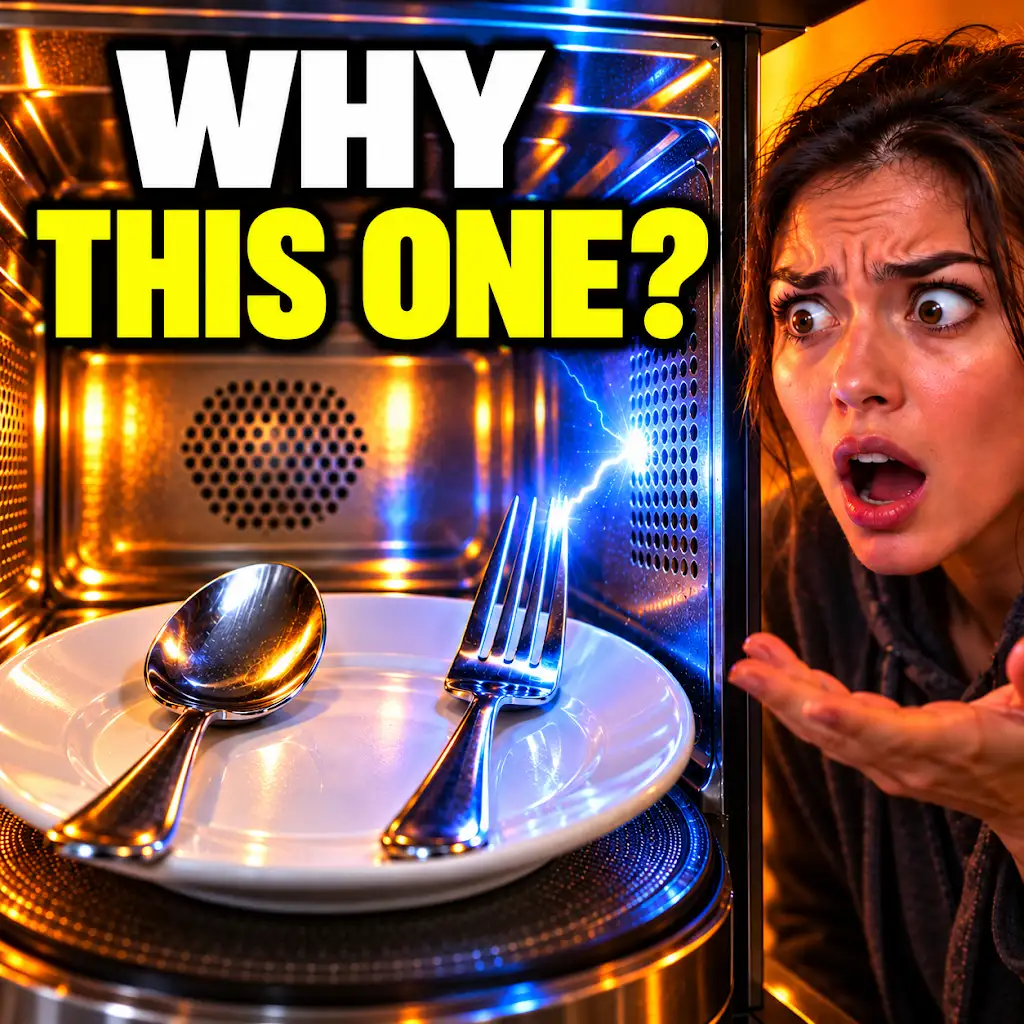
A Fork and a Spoon React Differently in a Microwave. Why?
FAQs
1. What causes microwave sparks in narrow gaps?
Narrow gaps in the microwave can cause sparks due to the concentration of electric fields. When the gap is too narrow, the electric field strength can become high enough to ionize the air, leading to sparks.
2. How do narrow gaps affect microwave performance?
Narrow gaps can disrupt the even distribution of electric fields within the microwave, leading to uneven heating and potential sparking. This can affect the overall performance and efficiency of the microwave.
3. Can narrow gaps in the microwave be dangerous?
Yes, narrow gaps in the microwave can be dangerous as they can lead to sparking, which poses a fire hazard. Additionally, the presence of sparks can also cause damage to the microwave itself.
4. How can narrow gaps be prevented in the microwave?
To prevent narrow gaps in the microwave, it’s important to ensure that the interior surfaces are clean and free from food debris or other obstructions. Additionally, regular maintenance and inspection can help identify and address any potential narrow gaps.
5. Are there any safety precautions to take to prevent microwave sparks from narrow gaps?
To prevent microwave sparks from narrow gaps, it’s important to avoid placing metal objects or containers with metal trim in the microwave. Additionally, keeping the interior clean and ensuring proper ventilation can help reduce the risk of sparking.