
You’ve probably done it. Maybe you were in a hurry, maybe you just didn’t think. You’ve tossed a fork into the microwave, or perhaps a foil-wrapped leftover. And then it happened. A terrifying display of crackling, popping, and startling flashes of blue light. The metallic object in your microwave is sparking, and you’re left wondering, “Why is this happening?” It’s a common kitchen mishap, but the science behind those dramatic sparks is fascinating, and understanding it can save you from a minor disaster.
You might assume that microwaves are simply powerful ovens that heat food with magic, but there’s a precise scientific process at play. When you switch on your microwave, you’re activating a device called a magnetron. This magnetron is the heart of your appliance, and its job is to generate electromagnetic waves, specifically in the microwave frequency range. These waves are then channeled into the cooking chamber, bouncing around until they interact with your food. The key to why metal reacts so violently lies in how these electromagnetic waves behave when they encounter conductive materials.
The Electromagnetic Symphony: How Microwaves Work
To truly grasp why metal sparks, you first need to understand the fundamental principles of how your microwave oven operates. It’s not just about brute force heating; it’s about a carefully orchestrated dance of electromagnetic energy.
The Magnetron: The Wave Generator
At the core of every microwave oven is the magnetron. This ingenious vacuum tube is responsible for producing the high-frequency electromagnetic waves that cook your food. Think of it as the engine that powers your microwave.
How the Magnetron Generates Microwaves
The magnetron works by using a combination of a strong magnetic field and a high voltage to accelerate electrons. These electrons then interact with resonant cavities within the magnetron, causing them to oscillate and emit microwaves. This is a complex piece of engineering, but the outcome is simple: a stream of microwave energy directed towards your food.
Waveguides: Directing the Energy
Once generated, the microwaves need to be guided into the cooking chamber. This is the role of the waveguide, a metal channel that efficiently directs the electromagnetic waves from the magnetron to the oven cavity. The shape and material of the waveguide are critical for ensuring that the microwaves are delivered effectively to where they are needed.
The Turntable: Ensuring Even Heating
You’ve likely noticed that most microwaves have a turntable. This seemingly simple addition is crucial for achieving even cooking. Microwaves don’t always distribute perfectly evenly within the oven cavity; there can be hot spots and cold spots. The turntable rotates your food, ensuring that all sides are exposed to the microwave energy for a more uniform and efficient cooking experience.
Microwaves can spark when metal objects are placed inside them due to the interaction between the microwaves and the metal, which can cause electrical arcing. This phenomenon is not only fascinating but also potentially hazardous, as it can damage the microwave or even start a fire. For a deeper understanding of this topic, you can explore a related article that delves into the science behind microwaves and metal interactions. To read more, visit Freaky Science.
The Metal Menace: Why Conductors React
Now, let’s delve into the star of our show – metal. Metals are excellent conductors of electricity, and this property is precisely what makes them so problematic in a microwave. When microwaves, which are electromagnetic waves carrying electrical and magnetic fields, encounter a conductive material like metal, interesting and often alarming things happen.
Electrical Conductivity: The Foundation of the Problem
Metals have a high concentration of free electrons that can move easily throughout the material. This free movement of electrons is what makes them excellent conductors of electricity. When an electric field, like the one present in microwaves, interacts with these free electrons, it causes them to move and oscillate.
Free Electrons in Action
Imagine the electric field of a microwave wave as a pushing and pulling force. In a metal, these forces can easily jostle the free electrons, causing them to surge back and forth. This collective movement of electrons is essentially an electric current.
Reflection and Refraction: The First Signs of Trouble
When microwaves hit a smooth, flat surface of metal, they tend to be reflected. This is similar to how light reflects off a mirror. However, the interaction is more complex than simple reflection. The electromagnetic waves can also be refracted, or bent, as they interact with the metal’s surface.
The Mirror Effect
Think about a perfectly polished piece of metal. It acts like a mirror for microwaves, bouncing them back in the opposite direction. This bouncing can redirect the energy in unpredictable ways, potentially concentrating it in certain areas.
Electric Field Buildup: The Sparking Genesis
The real drama unfolds when the metal object has sharp edges, points, or is irregularly shaped. In these scenarios, the electric field can become intensely concentrated at these points. This phenomenon is known as charge accumulation.
Point Discharge and Corona Effect
When the electric field at a sharp point becomes sufficiently strong, it can actually ionize the air molecules surrounding that point. This ionization creates a conductive path for electricity to jump from the metal to the air, resulting in a visible spark or corona discharge. This is similar to the sparks you might see from a high-voltage power line.
The Dangerous Dance of Arcing
The sparks you see are not just a visual spectacle; they are a sign of electrical arcing, a phenomenon that can be damaging and even dangerous. Arcing occurs when a strong electric current jumps across a gap, creating a plasma that emits intense heat and light.
What is Arcing?
Arcing is essentially a controlled (or in this case, uncontrolled) electrical discharge. It’s a high-temperature plasma that forms when the electric field across a gap becomes strong enough to break down the insulating properties of the medium, in this case, air.
The Plasma Formation
The intense electric field rips electrons from air molecules, creating ions and free electrons. These charged particles are then accelerated by the electric field, colliding with other molecules and creating a cascade of ionization. This plasma is highly conductive and emits light and heat.
Potential for Damage: Beyond the Sparks
While the sparks themselves are startling, the real danger of arcing in a microwave lies in the potential for damage to the appliance. The intense heat generated by an arc can melt or burn components within the microwave, including the interior lining, the magnetron itself, or even the oven’s electronics. This can lead to costly repairs or a completely unusable appliance.
Beyond Forks: Everyday Metal Culprits
You might be surprised to learn about the variety of metal objects that can trigger these sparks. It’s not just cutlery that’s the issue; many everyday items can pose a risk.
The Foil Fiasco: Thin is Dangerous
Aluminum foil, often used for wrapping leftovers, is a common culprit. Its thinness and the way it can crinkle and fold create sharp edges that are perfect for charge accumulation and sparking. Even small pieces can be problematic.
Crumpled vs. Smooth Foil
While smooth, flat foil might reflect microwaves somewhat harmlessly, crumpled foil creates numerous points where electric fields can concentrate, leading to a higher risk of arcing.
Metallic Trims and Embellishments
Many dishes, mugs, and serving platters have decorative metallic trims or designs. These seemingly innocuous elements can also be a source of sparking. Even a thin band of gold or silver paint can contain enough conductive material to cause a reaction.
The Illusion of Decoration
You might think a little bit of metallic decoration is harmless, but the principle remains the same. If there’s a conductive path, there’s a potential for sparking. Always check the edges and undersides of your dishes for any metallic elements.
Small Metal Components in Food Packaging
Sometimes, even the packaging of your food can contain hidden metallic components. Think of the foil seals on yogurt cups, the metal twist ties on bread bags, or even the metallic linings in some snack bags. These small, often overlooked elements can trigger sparks.
The Hidden Dangers
It’s always a good practice to remove food from its packaging before microwaving, especially if there’s any doubt about the presence of metallic elements. A quick visual inspection can save you a lot of trouble.
Microwaves can spark when metal objects are placed inside them due to the interaction between the microwaves and the metal, which can cause electrical arcing. This phenomenon occurs because metal reflects microwaves instead of absorbing them, leading to a buildup of electrical energy that can create sparks. For a deeper understanding of this topic, you can explore a related article that discusses the science behind microwave ovens and their interactions with various materials. To learn more, check out this informative piece on Freaky Science.
Safety First: Preventing the Sparking Catastrophe
Understanding the science behind microwave sparking is the first step. The next, and most important, step is to practice safe microwaving habits to avoid these potentially damaging and alarming incidents.
The Golden Rule: No Metal Inside
This is the most straightforward and effective rule: Never place metal objects inside your microwave unless the manufacturer explicitly states it’s safe for specific purposes (e.g., some older models might have had specific racks, but this is rare and generally discouraged). This includes cutlery, foil, metal-trimmed dishes, and anything with metallic paint or embellishments.
When in Doubt, Leave it Out
If you are ever unsure whether an item is microwave-safe, err on the side of caution. It’s better to be safe than to risk damaging your appliance or creating a hazardous situation.
Understanding “Microwave-Safe” Labels
Many kitchen items are now clearly labeled as “microwave-safe.” These labels indicate that the material is designed to withstand microwave radiation without degrading or causing adverse reactions. However, these labels generally refer to the container itself, not necessarily any decorative elements on it.
Beyond the Label
Always remember to check for those metallic trims or embellishments, even on items marked “microwave-safe.” The label might refer to the base material, but the decorative elements are a separate consideration.
Alternative Materials: The Safe Bets
Fortunately, there are plenty of safe and effective alternatives to metal for use in your microwave.
Glass and Ceramic: Your Go-To Choices
Glass and ceramic dishes are generally excellent choices for microwaving. They are non-conductive and allow microwaves to pass through them to heat your food effectively. Just ensure they don’t have any metallic decorations.
Microwave-Safe Plastics: Convenience with Caution
Many plastics are designed to be microwave-safe. These are often lightweight and convenient. However, it’s crucial to ensure you’re using plastics specifically designed for microwave use. Some plastics can warp, melt, or leach chemicals when heated. Look for the “microwave-safe” symbol on the bottom of the plastic container.
Paper Products: With Limits
Plain paper products, like paper towels or parchment paper, are generally safe for short periods of microwaving. They are useful for covering food to prevent splattering or for absorbing excess moisture. However, avoid using paper products with any metallic inks or coatings, which are sometimes found on disposable plates or cups.
By understanding the electromagnetic principles at play and the conductive nature of metals, you can easily avoid the startling and potentially damaging sparks that can occur when metal meets microwave. A little knowledge goes a long way in keeping your kitchen safe and your appliances in good working order. So, the next time you’re reaching for that fork or that foil-wrapped snack, remember the science, and choose wisely.
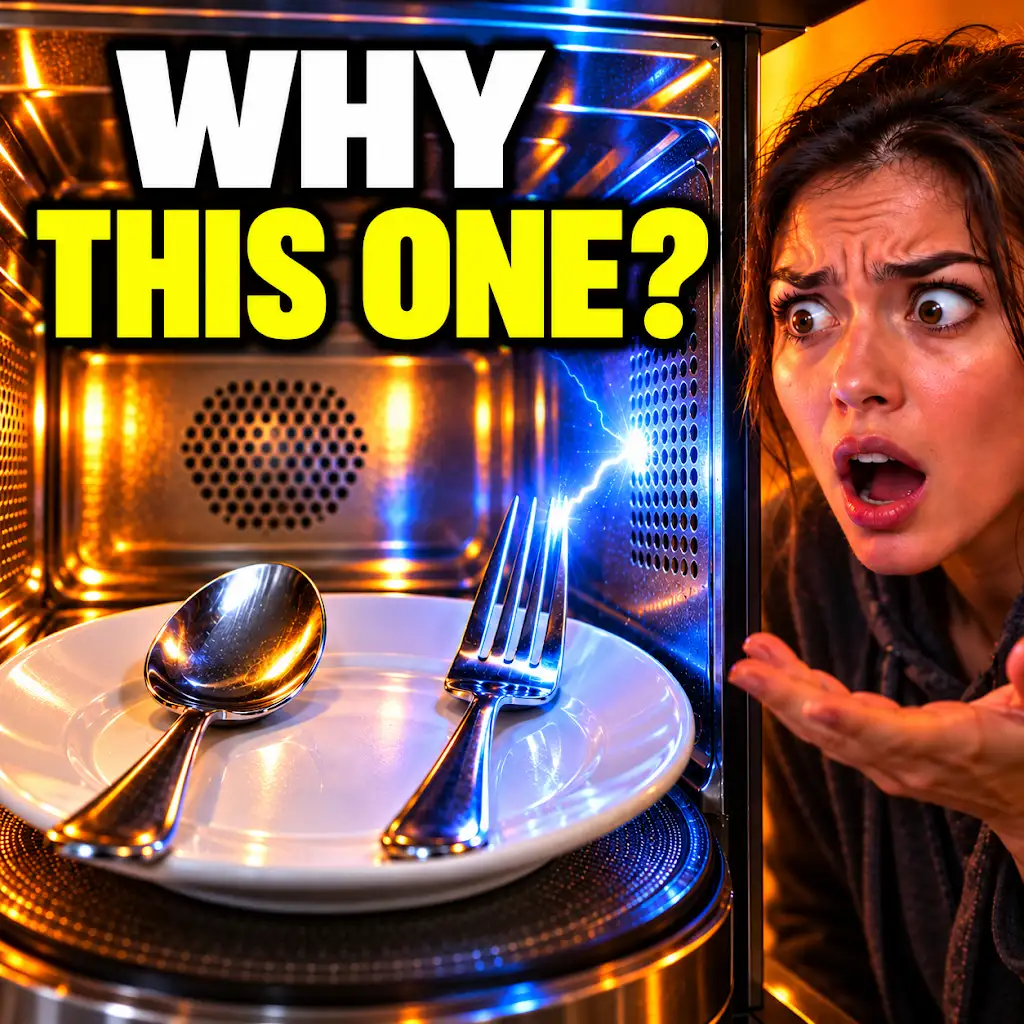
A Fork and a Spoon React Differently in a Microwave. Why?
FAQs

1. Why do microwaves spark with metal?
Metal objects in the microwave can cause sparks because the microwaves are reflected off the metal, creating an electric charge. This can lead to sparking and potentially damage the microwave.
2. What types of metal can cause sparking in the microwave?
Any type of metal, including aluminum foil, metal utensils, and metal-trimmed dishes, can cause sparking in the microwave due to their ability to reflect and conduct electricity.
3. Is it safe to put metal in the microwave?
It is not safe to put metal in the microwave as it can cause sparking, potentially damage the microwave, and pose a fire hazard. It is important to only use microwave-safe cookware and utensils.
4. How can I safely use metal in the microwave?
To safely use metal in the microwave, it is recommended to only use microwave-safe metal cookware and utensils that are specifically designed for microwave use. Additionally, avoid using metal-trimmed dishes or containers in the microwave.
5. What should I do if my microwave sparks with metal?
If your microwave sparks with metal, immediately turn off the microwave and carefully remove the metal object using oven mitts or tongs. Inspect the interior of the microwave for any damage and do not use the microwave until it has been inspected and deemed safe by a professional.