You’ve probably seen it. That unnerving, flickering dance of light and energy that erupts when a metal fork, a bit of foil, or even a mug with a metallic rim finds its way into your microwave. It’s a startling sight, often accompanied by a crackling sound, and it’s enough to make you instinctively hit the stop button. But what exactly is going on behind those mysterious sparks? It’s not magic; it’s a fascinating interplay of physics, electromagnetism, and the very nature of metal. Understanding why metal sparks in microwaves is not just about satisfying your curiosity; it’s about ensuring your safety and the longevity of your appliance. Let’s delve into the science behind this dazzling, and sometimes dangerous, phenomenon.
Before we can understand why metal misbehaves in the microwave, you need to grasp how the appliance itself works. Your microwave oven is a marvel of engineering designed to heat food efficiently using electromagnetic radiation. The heart of this process is the magnetron, a vacuum tube that generates microwaves.
How the Magnetron Creates Microwaves
The magnetron is a complex device, but at its core, it generates high-frequency radio waves, specifically in the microwave spectrum. It does this by using a powerful magnetic field and a flow of electrons. When electricity is applied, electrons are emitted and then forced to travel in curved paths by the magnetic field. This movement of charged particles generates electromagnetic waves, which are then directed into the cooking cavity.
The Purpose of Microwaves in Heating Food
Microwaves are chosen for a reason. They are particularly effective at interacting with water molecules, which are abundant in most foods. When microwaves enter the oven cavity, they bounce around off the metal walls, creating a field of radiation. Water molecules, being polar (having a positive and negative end), try to align themselves with this oscillating electric field. As the field rapidly changes direction, the water molecules vibrate back and forth at an incredibly high speed. This rapid vibration generates heat through friction, cooking your food from the inside out.
The Role of the Metal Cavity
The interior of your microwave is lined with metal. This isn’t just for aesthetics; it serves a crucial purpose. The metal walls act as a Faraday cage, reflecting the microwaves and keeping them contained within the cooking cavity. This ensures that the radiation is focused on your food and doesn’t escape into your kitchen, where it could be harmful. Without this reflective barrier, the microwaves would dissipate, and your food wouldn’t heat effectively.
When it comes to understanding why metal sparks in microwave ovens, it’s essential to explore the science behind microwave radiation and its interaction with different materials. For a deeper insight into this phenomenon, you can read a related article that delves into the specifics of microwave technology and safety precautions. Check out this informative piece at Freaky Science to learn more about the reasons behind the sparking and how to safely use your microwave.
The Electrifying Nature of Metal: Free Electrons at Play
Now, let’s turn our attention to the star of our sparking show: metal. Metals are unique in their atomic structure, and this uniqueness is key to understanding their reaction to microwaves.
The Electron Sea Model of Metals
Think of a piece of metal as a vast sea of positively charged atomic nuclei floating in a sea of negatively charged electrons. These electrons, known as valence electrons, are not tightly bound to individual atoms. Instead, they are delocalized and can move freely throughout the entire metal structure. This “electron sea” is what gives metals their characteristic properties, such as conductivity and malleability.
How Metal Conducts Electricity
The free movement of these electrons is precisely why metals are excellent conductors of electricity. When an electric potential is applied across a metal, the electrons are easily pushed along, creating an electric current. This ability to readily accept and move charges is fundamental to understanding why metal interacts so dramatically with the electromagnetic fields produced by your microwave.
The Interaction with Electromagnetic Fields
Microwaves, as we’ve established, are electromagnetic waves. This means they have both an electric field component and a magnetic field component that oscillate. When these waves encounter a conductor like metal, the oscillating electric field exerts a force on the free electrons within the metal.
The Sparking Phenomenon: A Cascade of Electrical Discharge
So, what happens when this energetic dance of microwaves meets the “electron sea” of metal? It’s a recipe for electrical fireworks.
Electrons are Pushed and Pulled
The oscillating electric field of the microwaves exerts a force on the free electrons in the metal. Imagine the field as a powerful, rapidly changing hand, pushing and pulling on these electrons. As the electric field oscillates back and forth, it causes the electrons within the metal to move, creating a surge of electrical charge.
Charge Accumulation and Electric Fields
This movement of electrons isn’t uniform. Depending on the shape of the metal object, charges can begin to accumulate in certain areas. Sharp edges, points, or thin pieces of metal are particularly adept at concentrating these charges. This concentration of charge creates localized regions of very strong electric fields within and around the metal object.
Reaching the Breakdown Voltage: The Birth of a Spark
Every material has a limit to how much electric field it can withstand before it breaks down and allows current to flow through it. This is known as the dielectric breakdown voltage. In the case of air, which surrounds the metal object, this breakdown voltage is typically around 3 million volts per meter. When the electric fields built up by the accumulated charges on the metal exceed the breakdown voltage of the surrounding air, the air ionizes. Ionization means that the air molecules lose electrons, becoming charged particles. This ionized air becomes conductive, creating a pathway for electricity to flow. This sudden, rapid flow of electric current through the ionized air is what you perceive as a spark. The visible light and crackling sound are the results of this energetic discharge.
The Critical Role of Shape and Size: Why Some Metals Spark More Than Others
Not all metal objects in your microwave will behave the same way. The shape and size of the metal are crucial factors in determining whether you’ll witness a spark show or not.
Edges and Points: Charge Concentrators
As mentioned earlier, sharp edges and points on metal objects are notorious for causing sparks. This is because electric fields tend to concentrate at these areas. Imagine a smooth, rounded hill versus a sharp, pointed mountain peak. The same amount of charge spread over a large area on the hill will create a less intense electric field than if that charge were concentrated on the tiny tip of the mountain. In a microwave, these concentrated electric fields are more likely to reach the breakdown voltage of the surrounding air, initiating a spark.
Thin and Small Metal Objects: High Resistance, High Impact
Thin pieces of metal, like aluminum foil, are also highly prone to sparking. While they have many free electrons, their thinness means they have higher electrical resistance compared to a solid, thick block of metal. When microwaves induce currents in thin foil, the resistance causes significant energy loss in the form of heat. More importantly, the small surface area can lead to rapid charge accumulation, especially at the edges of the foil. If a piece of foil is also close to the microwave’s internal walls or other metal objects, it can create a very short and intense electrical discharge. Small, thin pieces are also more likely to be completely exposed to the intense microwave fields.
Larger, Solid Metal Objects: A Different Kind of Interaction
Larger, solid metal objects, like a metal bowl or pot, might not spark in the same dramatic fashion as a piece of foil. This is because the microwaves can induce currents within them, but the larger surface area and greater mass can help to dissipate this energy more evenly, or the charge accumulation might not reach the critical breakdown point. However, these objects can still cause problems. They can block microwaves from reaching your food, leading to uneven cooking. In some cases, prolonged exposure or certain configurations can still lead to arcing, particularly if there are sharp edges or if the object is close to the microwave walls.
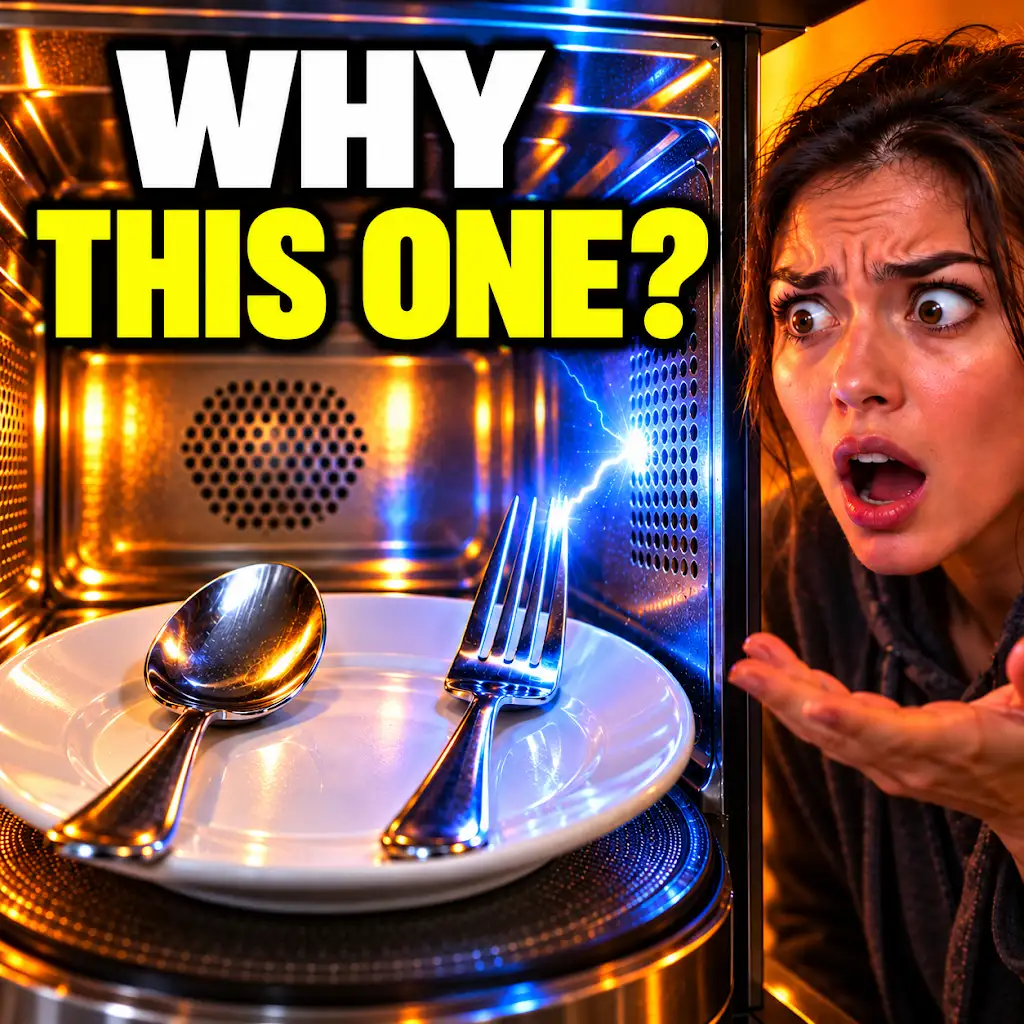
The Myth of the Spoon: A Practical Example
Think about putting a metal spoon in your microwave. If the spoon is entirely submerged in liquid, the liquid can absorb some of the microwave energy, and the overall charge accumulation on the spoon might be less likely to cause a spark. However, if a significant portion of the spoon is exposed to the microwave field and has a sharp edge (like the tip of the handle), it becomes a prime candidate for sparking. This illustrates how the interplay of the object’s form, its interaction with the food, and its positioning within the microwave cavity all contribute to the likelihood of sparking.
When using a microwave oven, many people may wonder why metal objects can cause sparks and potentially damage the appliance. This phenomenon occurs due to the interaction between microwaves and the metal, which can create electric fields that lead to arcing. For a deeper understanding of this topic, you can read a related article that explains the science behind these sparks and offers safety tips for microwave use. To learn more, check out this informative piece on Freaky Science.
The Dangers of Metal in the Microwave: More Than Just Sparks
| Reason | Explanation |
|---|---|
| Metal Composition | Metals with sharp edges or points can create sparks due to the electric field in the microwave. |
| Reflection | Metal reflects microwaves, causing them to build up and create sparks. |
| Arcing | If the metal is too thin, it can create an electrical arc, leading to sparks. |
| Fire Hazard | Sparks from metal in a microwave can lead to a fire hazard, posing a safety risk. |
While the visual spectacle of sparks might be the most immediate concern, the presence of metal in your microwave can lead to a host of other problems, some far more serious than a few flickering lights.
Damage to the Magnetron: The Heart of the Appliance
The magnetron is the most critical and expensive component of your microwave oven. The excessive and uncontrolled electrical discharges caused by sparking metal can create intense electromagnetic interference. This interference can disrupt the magnetron’s operation, potentially causing it to overheat or even fail completely. Replacing a magnetron is often as expensive as buying a new microwave, so avoiding this scenario is paramount.
Fire Hazards: A Very Real Threat
The sparks themselves are essentially small electrical arcs. These arcs generate intense heat. If these sparks occur near flammable materials, such as food debris, paper towels, or packaging, they can easily ignite a fire. This is why it is absolutely crucial to remove all metal objects from your microwave before operating it. A small spark can quickly escalate into a serious fire.
Uneven Cooking and Reduced Efficiency
As we touched upon, metal objects can block microwaves from reaching your food. This leads to uneven heating, where some parts of your food are cooked while others remain cold. In severe cases, a large metal object can create “dead zones” within the microwave cavity where very little microwave energy penetrates, rendering that area of the oven ineffective for cooking.
Potential for Electrical Shock (though rare and unlikely with modern safety features)
While modern microwaves have numerous safety features to prevent this, in extreme cases of internal damage caused by prolonged and severe arcing, there’s a theoretical risk of electrical shock if the safety interlocks are compromised. This is a very rare scenario, but it underscores the importance of treating your microwave with care and avoiding conditions that could lead to its malfunction.
Safe Practices: What You Should and Shouldn’t Microwave
Now that you understand the science, let’s translate that knowledge into practical advice for using your microwave safely and effectively.
Always Check for Metal: A Simple Pre-Operation Check
Before you hit that start button, take a quick look at what’s inside. Are there any metal utensils? Is there any foil? Does your container have a metallic trim or handle? A brief visual inspection can save you a lot of trouble.
Understanding “Microwave-Safe” Labels
Many food containers and dishes are labeled as “microwave-safe.” This means they are designed not to interact negatively with microwaves. These are typically made of glass, ceramic, or specific types of plastic that don’t contain metallic components and can withstand the heat generated.
When Foil is (Sometimes) Okay: The Nuances of Aluminum Foil
The general rule is to avoid aluminum foil. However, there are exceptions, and they come with caveats. Small, smooth pieces of aluminum foil can be used to shield parts of food from overcooking. For example, if you’re cooking a chicken breast, you might use a small piece of foil to cover a thin section that’s cooking too quickly. Crucially, the foil must be smooth, not crumpled, and it must not touch the sides of the microwave. Even then, it’s a practice that requires careful attention and is best avoided by beginners. When in doubt, err on the side of caution and skip the foil.
The Do’s: Safe Materials for Your Microwave
- Glassware: Most heat-resistant glass is perfectly safe.
- Ceramics: Plain ceramic dishes and mugs are usually fine. Be cautious of decorative rims that might contain metallic paint.
- Microwave-safe Plastics: Look for the “microwave-safe” symbol. These plastics are designed to not leach harmful chemicals when heated.
- Paper Products (with caution): Plain white paper towels and unbleached parchment paper are generally safe for short periods, but avoid paper with any printing or metallic embellishments.
The Don’ts: Materials to Absolutely Avoid
- All Metals: This includes utensils, foil, aluminum containers, and dishes with metallic trim or paint.
- Styrofoam: Many Styrofoam containers are not microwave-safe and can melt or leach chemicals into your food.
- Brown Paper Bags: These can be flammable.
- Travel Mugs and Insulated Cups: Many have metal components.
- Closed Containers: Pressure can build up inside sealed containers, leading to explosions.
By understanding the fundamental principles of how microwaves work and how metal interacts with electromagnetic fields, you can confidently use your appliance and avoid those startling, and potentially dangerous, sparks. It’s a simple yet powerful application of physics that keeps your meals warm and your kitchen safe.
A Fork and a Spoon React Differently in a Microwave. Why?
FAQs
What happens when metal sparks in a microwave oven?
Metal sparks in a microwave oven because the microwaves cause electric currents to flow through the metal, which can lead to arcing and sparking.
Why is it dangerous to put metal in a microwave?
Putting metal in a microwave is dangerous because it can cause sparks, which can lead to a fire. Additionally, the sparks can damage the interior of the microwave and create a potential safety hazard.
What types of metal can cause sparking in a microwave?
Any type of metal can cause sparking in a microwave, including aluminum foil, metal utensils, and metal containers with metallic accents or decorations.
How can I safely use metal in a microwave?
To safely use metal in a microwave, it is important to only use microwave-safe metal containers and utensils. These are typically labeled as safe for microwave use and are designed to prevent arcing and sparking.
What should I do if metal sparks in my microwave?
If metal sparks in your microwave, immediately turn off the microwave and do not open the door until the sparking stops. Remove the metal object using a non-metallic utensil and inspect the interior of the microwave for any damage. If there is damage, do not use the microwave and have it inspected by a professional.