
You’ve probably seen it: a light that used to be bright white or a warm yellow is now sporting a distinct purple hue. It’s a bit of a head-scratcher, and often leaves people wondering if their lights are about to die or if something more is going on. The short answer is that LED lights turn purple primarily due to the degradation of their internal components, particularly the phosphor coating and the blue LEDs themselves. It’s not a sign of impending doom for the entire light, but rather a signal that its performance is changing.
The Science Behind the Shift: How LEDs Produce Light
Before we dive into the purple problem, it’s helpful to understand how a typical white LED actually works. Unlike traditional incandescent bulbs that heat a filament until it glows, LEDs are semiconductors. They generate light when an electric current passes through a semiconductor material, causing electrons to jump across a gap and release energy in the form of photons – light particles.
The Role of Blue LEDs and Phosphors
Most white LEDs you encounter aren’t actually white. They use a blue LED chip as their base. This blue light is then passed through a phosphor coating. Phosphors are special chemicals that absorb the blue light and re-emit it at different wavelengths. By carefully selecting the phosphors, manufacturers can create a spectrum of light that appears white to our eyes.
- The Mix: Different phosphors are mixed to achieve various color temperatures. Cooler whites might have phosphors that lean towards bluer or greenish tones, while warmer whites have phosphors that emit more yellow and red light.
- Efficiency and Color: The efficiency of the phosphor conversion and the precise mix of emitted wavelengths are what determine how bright and how “white” the LED appears.
Understanding “White” Light
It’s important to remember that “white” light from an LED is a composite. It’s a blend of different colors. When one of the components that creates this blend starts to falter, the resulting light can shift.
LED lights can sometimes emit a purple hue due to various factors, including the quality of the LED components and the color temperature settings. For a deeper understanding of this phenomenon, you can explore the article on Freaky Science that discusses the science behind LED lighting and its color variations. To read more, visit this link.
The Purple Predicament: Why Does This Happen?
So, what exactly goes wrong to turn that white light a peculiar shade of purple? The most common culprits are linked to the breakdown of the materials responsible for converting blue light into white light.
Phosphor Degradation: The Main Culprit
The phosphor coating is the most frequent reason for a purple cast. Over time, and under the stress of heat and constant operation, these phosphors can degrade.
- Heat Stress: LEDs, while efficient, still generate some heat. This heat can accelerate the chemical changes in the phosphor coating.
- UV Exposure (Internal): The high-energy blue light emitted by the LED chip itself can, over extended periods, damage the phosphor molecules. It’s a bit like a self-inflicted wound, albeit a very slow one.
- Material Fatigue: Like any material, phosphors have a lifespan. Their ability to absorb and re-emit light can diminish, and their spectral output can change.
Degradation of the Blue LED Chip
While less common than phosphor issues, the blue LED chip itself can also contribute to color shifts.
- Quantum Tunneling: In some cases, the semiconductor material within the blue LED can degrade. This can affect the precise wavelength of blue light emitted.
- Internal Defects: Manufacturing inconsistencies or external stresses can lead to micro-fractures or changes in the semiconductor junction, altering its light output.
The Consequence: Shifting Wavelengths
When the phosphors break down, they become less effective at converting the blue light into the full spectrum needed for white. They might start emitting more of the blue light directly, or they might shift their re-emission towards the violet and shorter-wavelength blue end of the spectrum.
- Loss of Red and Green: The phosphors responsible for producing the warmer tones (red and green) might degrade faster than those producing cooler tones. This leaves the blue light more prominent, resulting in a purplish appearance.
- Example: Imagine a painter trying to mix white paint, but they lose access to their red and yellow pigments. They’d be left with a paint that leans heavily towards blue.
Identifying the Purple Problem: Signs and Symptoms
The appearance of purple light isn’t usually a sudden event. It tends to develop gradually, often starting subtly and becoming more noticeable over time.
Gradual Color Shift
The most obvious sign is, of course, the change in color.
- Initial Hint: You might first notice a slight coolness or a hint of blue around the edges of the light.
- Progressive Shift: Over weeks or months, this intensifies, moving from a cool white to a distinct violet or purple.
- Inconsistency: If you have multiple lights of the same age and model, you might notice them developing the purple hue at different rates, depending on their specific operating conditions.
Dimming and Reduced Brightness
The degradation of internal components often comes with a decrease in light output.
- Less Light: As the phosphors become less efficient, the LED will naturally produce less light overall. This can be an early indicator that something is changing, even before the purple is very prominent.
- Combined Effect: The combination of a purplish tint and a noticeable dimming is a strong sign of component degradation.
Where It’s Most Common
Certain types of LED products are more prone to developing this purple hue than others.
- Older LED Bulbs: Early generations of LED technology, especially those designed for household use, sometimes had less robust phosphor coatings.
- High-Heat Environments: Lights installed in enclosed fixtures or in areas with poor ventilation tend to experience more heat stress, accelerating degradation.
- Constant Use: Lights that are switched on for very long periods each day are also subjected to more cumulative stress.
Addressing the Purple Hue: Solutions and Next Steps
Once your LED lights start turning purple, you’re usually facing a situation where the light’s performance is compromised. The good news is that the solutions are generally straightforward.
Replacing the Defective Light
In most consumer applications, the most practical solution is simply to replace the affected LED bulb or fixture.
- Cost-Effectiveness: For standard LED bulbs, the cost of replacement is usually lower than attempting any kind of repair.
- Improved Performance: A new LED will offer restored brightness and the correct color output, which can significantly improve the ambiance of a room.
- Consider Warranty: If the light is still within its warranty period, contact the manufacturer. They might offer a replacement. Keep your receipt!
Understanding the “Repair” Limitations
It’s important to manage expectations regarding repairs for consumer-grade LED lights.
- Internal Components: The internal components (phosphors, LED chips) are typically sealed and not designed for user repair.
- Specialized Equipment: Repairing the phosphor coating or the LED chip would require specialized knowledge, equipment, and materials not readily available to the average consumer.
- Focus on the Fixture: For higher-end or integrated LED fixtures (where the light source is part of the fixture), sometimes the entire fixture might need replacement, or a specific driver module might be replaceable if that’s the identified issue, but this is rare for purple discoloration.
When to Be Concerned About More Than Just Purple
While phosphor degradation is the usual cause, in very rare instances, a persistent or rapidly appearing purple hue could signal other issues, though this is highly unlikely for most standard LED bulbs.
- Electrical Issues: If the light flickers erratically, makes unusual noises, or if you notice any burning smells alongside the color change, this points to a potential electrical problem rather than simple component aging. In such cases, immediately turn off the power to that fixture and consider consulting an electrician.
- Contamination: Extreme cases of contamination within the fixture could theoretically affect light output, but this is incredibly rare for typical indoor lighting.
If you’ve ever wondered why LED lights sometimes emit a purple hue, you might find the insights in this article particularly enlightening. The phenomenon can often be attributed to the way different wavelengths of light are emitted and perceived by the human eye. For a deeper understanding of this topic, you can explore more in the article found at Freaky Science, which delves into the science behind LED lighting and color perception.
Prevention and Longevity: Making Your LEDs Last
| Cause | Description | Effect on LED Light Color | Common Occurrence |
|---|---|---|---|
| Phosphor Degradation | Breakdown of the phosphor coating inside the LED bulb over time | LED emits more blue or purple light as phosphor loses efficiency | After prolonged use or exposure to heat |
| Driver or Circuit Failure | Malfunction in the LED driver or internal circuitry causing improper current flow | LED may flicker or shift to purple hue due to unstable power | Older or low-quality LED bulbs |
| Incorrect Voltage Supply | Supplying voltage outside the LED’s specified range | Color shift towards purple or blue due to altered LED behavior | Using incompatible dimmers or power sources |
| LED Chip Damage | Physical or thermal damage to the LED semiconductor chip | Color output changes, often resulting in purple or blue tint | Overheating or manufacturing defects |
| Manufacturing Defect | Improper phosphor application or LED assembly | Initial or early purple tint in light output | Low-quality or counterfeit LED bulbs |
While some degradation is inevitable with any electronic component, there are steps you can take to help your LED lights last as long as possible and maintain their intended color for a greater duration.
Optimize Operating Conditions
The environment where your lights operate plays a significant role in their lifespan.
- Ensure Ventilation: Avoid installing LED bulbs in completely sealed or enclosed fixtures unless the bulb is specifically rated for such use. Proper airflow helps dissipate heat.
- Manage Temperature: Extreme ambient temperatures (very hot or very cold) can stress the components. While LEDs are generally robust, cooler, more stable temperatures are ideal.
- Avoid Frequent On/Off Cycles: LEDs are best suited for applications where they are left on for extended periods. Constantly switching them on and off can put more strain on the internal electronics than continuous operation. This is less about the purple issue and more about general longevity.
Choose Quality Over Price (Sometimes)
The quality of the components used in an LED bulb can significantly impact its lifespan and color stability.
- Reputable Brands: Investing in LEDs from well-known and reputable manufacturers often means higher quality phosphors and more rigorous testing, which can lead to better long-term performance.
- Lower Wattage (for a given brightness): Sometimes, a bulb that is overdriven (producing more light than its components are optimally designed for) might degrade faster. Choosing a bulb that runs slightly cooler for its brightness can be beneficial.
- Look for Specifications: While not always readily available on consumer packaging, higher-quality LEDs might mention specific phosphor types or driver technologies that indicate better longevity.
When to Upgrade
LED technology is constantly evolving.
- Newer Generations: If you’re replacing old bulbs, you’ll find that newer LED technologies often have improved color rendering and longer lifespans than even just a few years ago.
- Specific Color Needs: If consistent color is critical for your application (e.g., photography, art studios), consider LEDs that are specifically designed for high Color Rendering Index (CRI) and color accuracy, as these often use more advanced and stable phosphor blends.
By understanding why your LED lights might turn purple and knowing what steps to take, you can keep your home or workspace well-lit and visually comfortable. It’s a common issue, but usually a simple fix.
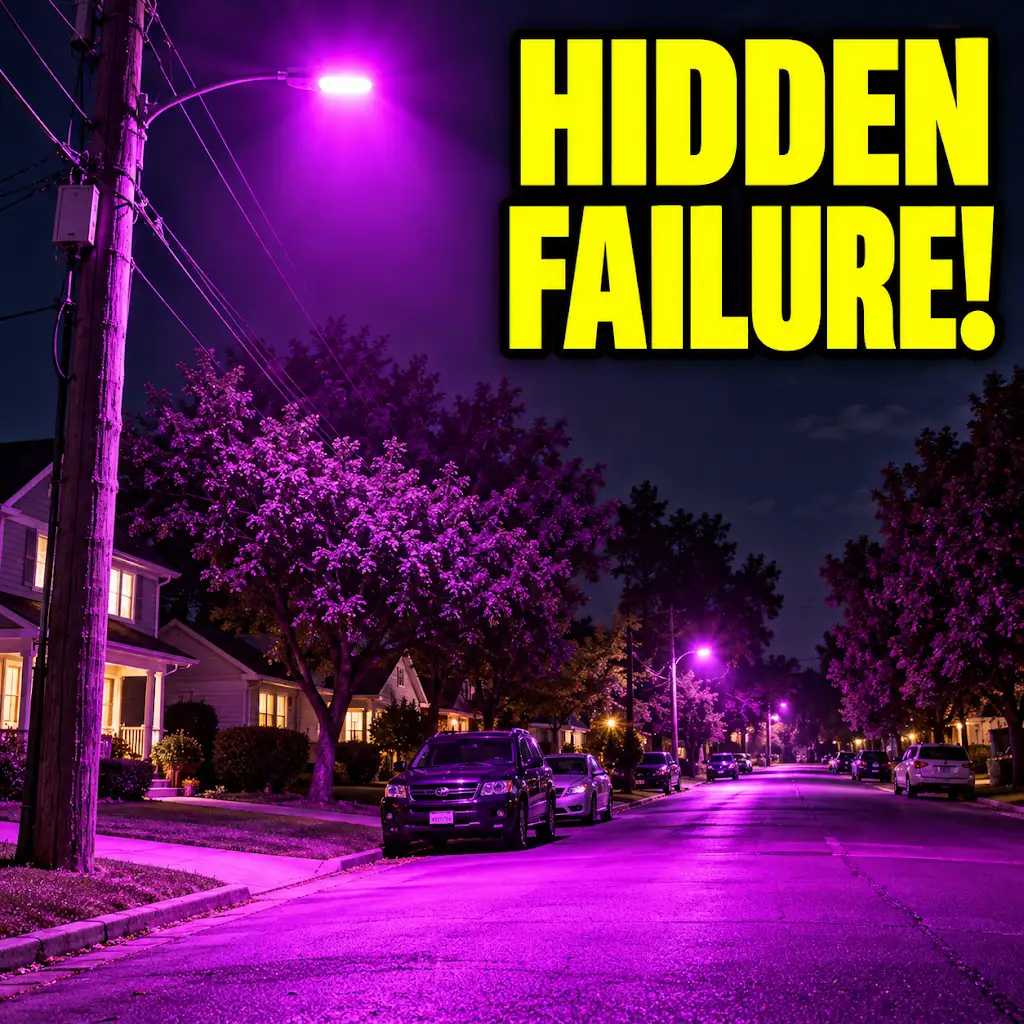
Why The Streetlights Are Turning Purple
FAQs
Why do LED lights turn purple?
LED lights can turn purple due to a variety of reasons, such as a poor quality LED chip, overheating, or a mismatch between the LED chip and the phosphor coating.
Can the color of LED lights change over time?
Yes, the color of LED lights can change over time due to factors like aging of the LED chip, exposure to high temperatures, or a decrease in phosphor efficiency.
How can I prevent my LED lights from turning purple?
To prevent LED lights from turning purple, it is important to choose high-quality LED products, ensure proper ventilation to prevent overheating, and avoid using incompatible components that can cause color shifts.
Are there specific types of LED lights more prone to turning purple?
Some lower quality or older LED lights may be more prone to turning purple compared to newer, higher quality LED lights that are designed to maintain their color consistency over time.
Can I fix LED lights that have turned purple?
In some cases, it may be possible to fix LED lights that have turned purple by replacing the LED chip or adjusting the components causing the color shift. However, it is recommended to consult a professional for proper diagnosis and repair.