
You’re standing in your kitchen, a symphony of sizzling sounds emanating from your induction cooktop. You lift the pot of pasta, anticipation building for that perfect al dente bite. And then, it happens. The heat vanishes. The comforting hum ceases. The cooking stops. You’re left with a slightly bewildered silence where deliciousness was moments before. Why? Why does your magical induction cooktop abandon its culinary quest the instant you lift the pan? It’s not magic, though it certainly feels like it. It’s a fascinating interplay of electromagnetism, material science, and intelligent design. Let’s delve into the science behind this seemingly abrupt halt.
Your induction cooktop isn’t a traditional heating element that glows red-hot or emits infrared radiation. Instead, it harnesses a completely different principle: electromagnetic induction. This is where the magic, or rather, the science, truly begins.
The Coil: Generating the Invisible Force
Beneath the smooth ceramic surface of your induction cooktop lies a finely wound coil of copper wire. This coil is the engine of the entire operation. When you turn on the cooktop, an alternating electric current is passed through this coil. Think of it like a rapidly oscillating wave of electrical energy. This oscillating current is the crucial first step.
The Magnetic Field: The Invisible Hand at Work
As the alternating current flows through the copper coil, it generates a fluctuating magnetic field. This magnetic field extends upwards, perpendicular to the surface of the cooktop. It’s this rapidly changing magnetic field that is the key to induction cooking. Crucially, this magnetic field is invisible and doesn’t directly heat the cooktop surface itself. It’s designed to interact specifically with the cookware.
The Frequency Factor: The Speed of the Oscillation
The alternating current used in induction cooktops operates at a specific high frequency, typically in the range of 20 to 100 kHz (kilohertz). This high frequency is essential for efficiently generating the fluctuating magnetic field and for inducing the necessary electrical currents within the cookware. If the frequency were too low, the magnetic field wouldn’t change rapidly enough to induce sufficient current, and therefore, no significant heating would occur.
Induction cooking relies on electromagnetic fields to generate heat directly in the cookware, which is why it stops functioning when the pan is removed. This phenomenon is explained in detail in a related article that discusses the principles of induction cooking and the safety features built into these appliances. For more information on how induction technology works and why it ceases operation without a pan, you can read the article here: Understanding Induction Cooking.
The Special Sauce: Why Only Certain Pans Work
You’ve probably experienced the frustration of trying to use a beloved aluminum pot on your induction cooktop, only to be met with a blank stare (or rather, no heat at all). This is because induction cooking relies on a specific type of cookware. Not all metals are created equal when it comes to interacting with a magnetic field.
Ferromagnetic Properties: The Key Ingredient
The crucial characteristic that makes cookware induction-compatible is its ferromagnetic property. This means the material of the pan must be attracted to a magnet. Common ferromagnetic materials include iron and steel (especially stainless steel with a high iron content). Aluminum, copper, glass, and ceramics are not ferromagnetic and therefore will not heat up on an induction cooktop.
Eddy Currents: The Unseen Heat Generators
When a ferromagnetic pan is placed on the induction cooktop, the fluctuating magnetic field from the coil penetrates the base of the pan. This rapidly changing magnetic field induces small circulating electrical currents within the metal of the pan’s base. These currents are known as eddy currents.
Resistance and Heat: The Ohm’s Law Connection
Metals, while excellent conductors of electricity, still possess some electrical resistance. As these eddy currents flow through the pan’s material, they encounter this resistance. According to Ohm’s Law (V = IR, or in this context, power dissipated as heat is proportional to current squared and resistance, P = I²R), the flow of electrical current through a resistive material generates heat. This is the Joule heating effect, and it’s the primary mechanism by which induction cooktops heat your food. The more resistance the material has, and the stronger the eddy currents, the more heat is generated.
Magnetic Alignment: The Direction Matters
Ferromagnetic materials have a specific atomic structure that allows them to be easily magnetized. In the presence of an external magnetic field, the magnetic domains within the material align themselves, leading to attraction. This alignment is what allows the magnetic field from the induction coil to effectively induce eddy currents within the pan.
The Safety Switch: Detecting the Pan’s Presence
Now, we arrive at the core of your question: why does the heat vanish when you remove the pan? It’s not an arbitrary decision by your cooktop; it’s a deliberate and sophisticated safety feature built into the system. This feature relies on the cooktop’s ability to detect the presence and characteristics of the cookware.
The Sensor Array: Feeling the Cookware
Induction cooktops are equipped with sophisticated sensors, often located within the ceramic surface directly above the induction coil. These sensors are designed to monitor the electromagnetic field and its interaction with the cookware. They are essentially “listening” to the electromagnetic conversation between the coil and the pan.
The Magnetic Circuit: A Continuous Loop
When a ferromagnetic pan is in place, it completes a magnetic circuit. The magnetic field generated by the coil passes through the pan and then effectively returns to the coil. This continuous loop allows the eddy currents to be induced efficiently. The sensors can detect the presence of this completed magnetic circuit and the resulting energy transfer.
The Interruption: Breaking the Circuit
The moment you lift the pan, even by a fraction of an inch, you break this magnetic circuit. The ferromagnetic pan is no longer in direct contact and alignment with the induction coil. This disruption is immediately detected by the sensors.
The “No Pan” Signal: The Command to Stop
Once the sensors detect that the magnetic circuit is broken or that the interaction with the cookware has ceased, they send a signal to the cooktop’s control system. This signal essentially tells the cooktop, “The pan is gone. Stop generating heat.” The control system then immediately cuts off the power supply to the induction coil, halting the generation of the magnetic field and consequently the induction of eddy currents.
The Efficiency Advantage: Why This Precision Matters

This precise “pan detection” mechanism isn’t just a clever gimmick; it’s a fundamental aspect of why induction cooking is so incredibly efficient. Imagine a traditional stovetop: even when there’s no pot on it, the heating element is still on, radiating heat into the surrounding air.
Energy Transfer: Directing the Power
Induction cooking’s primary advantage is its ability to transfer energy directly to the cookware, rather than heating the air around it. The magnetic field is specifically designed to interact with the ferromagnetic base of the pan. When the pan is removed, the magnetic field is still being generated, but there’s no ferromagnetic material to interact with and thus no significant energy transfer or heat generation.
Minimizing Heat Loss: No Wasted Energy
By stopping the heating process the instant the pan is removed, your induction cooktop prevents the wasted dissipation of energy. There’s no need for the heating element to continue generating heat when there’s nothing to cook. This contributes significantly to its energy efficiency compared to gas or conventional electric cooktops, where residual heat continues to be a factor.
Faster Response Times: Instantaneous Adjustments
The quick detection and shutdown mechanism also allows for incredibly fast response times. If you accidentally boil your sauce dry, lifting the pan for a moment immediately stops the cooking. Similarly, when you place a cold pan back down, the heating begins almost instantaneously. This precision in temperature control is a hallmark of induction technology.
Induction cooking relies on electromagnetic fields to heat pots and pans directly, which is why the process stops almost immediately when the pan is removed from the cooktop. This phenomenon is explained in detail in a related article that discusses the science behind induction cooking and its efficiency. For more insights into this technology, you can read about it here. Understanding how induction works can help you appreciate its advantages in the kitchen, particularly its safety and speed.
Beyond the Basic: Sophisticated Safety and User Features
| Metric | Description | Value/Explanation |
|---|---|---|
| Induction Heating Principle | How induction cooktops generate heat | Electromagnetic induction creates eddy currents in the pan, producing heat |
| Pan Presence Detection | Sensor mechanism to detect if a pan is on the cooktop | Induction cooktops use magnetic sensors to detect ferromagnetic cookware |
| Power Supply to Coil | Whether the induction coil is energized | Power is supplied only when a compatible pan is detected |
| Heat Generation | Heat produced in the pan | Heat stops immediately when pan is removed as coil power is cut off |
| Safety Feature | Reason for stopping induction when pan is removed | Prevents energy waste and reduces risk of burns or damage |
The “pan detection” system is just one layer of the intelligent design found in modern induction cooktops. Manufacturers have incorporated numerous features to enhance safety, usability, and cooking performance.
Automatic Shut-off: The Fallback Safety Net
While the primary detection is about stopping when you lift the pan, there’s also a secondary automatic shut-off feature. If you leave a pan on the cooktop but forget to turn it on, or if the pan is left unattended for an extended period with no cooking activity, the cooktop will eventually shut itself off. This prevents accidental overheating or fires.
Pan Size Recognition: Optimizing Heat Distribution
More advanced induction cooktops can even recognize the size and diameter of the pan. This allows them to optimize the magnetic field generation and heat distribution accordingly, ensuring more even cooking across the entire base of the pan. They might adjust the area of the induction coil that is activated based on the pan’s size.
Boil-Dry Detection: Preventing Damage
Some high-end models incorporate boil-dry detection. They can sense if the contents of the pan have evaporated and the pan is overheating. In such cases, they will automatically reduce the heat or shut off the cooktop to prevent damage to both the cookware and the cooktop itself.
Pot-on-Pot Detection: Preventing Accidental Heating
Another interesting feature is pot-on-pot detection. If you accidentally place a second, non-ferromagnetic pot or lid directly on top of an already heating ferromagnetic pot, the cooktop’s sensors can often detect this anomaly. They understand that the intended magnetic circuit is being interfered with and will often shut off to prevent potential hazards or inefficient heating.
User Interface Integration: Seamless Control
The pan detection system is seamlessly integrated with the user interface. You don’t need to actively “tell” the cooktop to detect the pan; it’s an automatic process that happens as soon as you place suitable cookware onto the surface. This user-friendliness is a key aspect of the induction cooking experience.
In conclusion, the seemingly abrupt cessation of heat when you remove your pan from an induction cooktop is a testament to sophisticated engineering. It’s not a capricious act, but rather a precisely calibrated response from a system designed for efficiency, safety, and intuitive operation. By understanding the principles of electromagnetism, the ferromagnetic properties of cookware, and the role of intelligent sensors, you can appreciate the scientific ballet that transforms raw electrical energy into perfectly cooked meals, and how that dance gracefully halts when the dancers—your pans—take a bow.
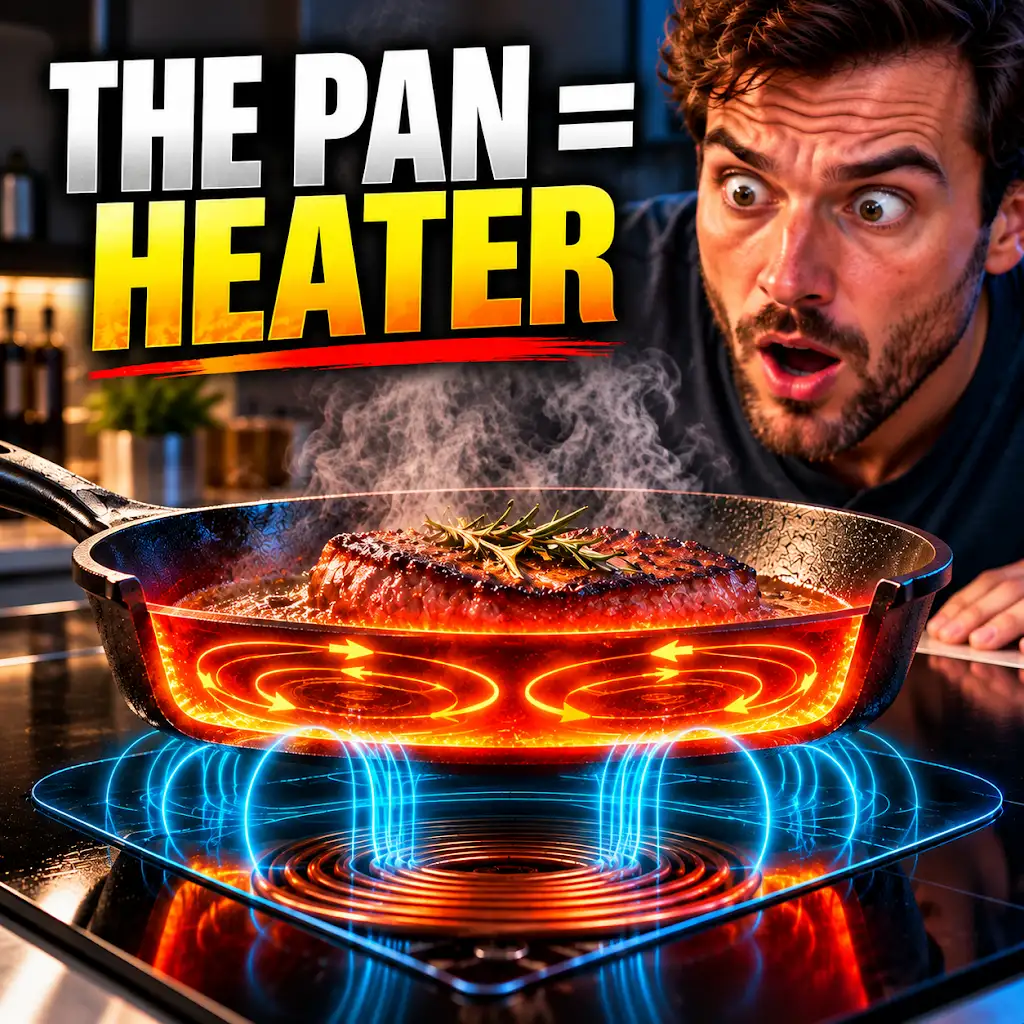
The Pan Is the Heater: How Induction Cooking Really Works
FAQs
1. Why does induction cooking stop when the pan is removed?
Induction cooking relies on a magnetic field to heat the pan directly. When the pan is removed, there is no longer a magnetic field to induce heat, causing the cooking process to stop.
2. Can induction cooktops be used without a pan on them?
No, induction cooktops require a magnetic surface, such as a pan, to generate heat. Without a pan, the cooktop will not produce any heat.
3. Is it safe to leave an induction cooktop on without a pan?
It is not recommended to leave an induction cooktop on without a pan as it can waste energy and potentially cause damage to the cooktop. Always ensure there is a pan on the cooktop when it is in use.
4. How quickly does induction cooking stop when the pan is removed?
Induction cooking stops almost immediately when the pan is removed from the cooktop. The lack of a magnetic field causes the heat generation to cease quickly.
5. Can induction cooktops detect when a pan is removed?
Most modern induction cooktops are equipped with sensors that can detect when a pan is removed. Once the cooktop detects the absence of a pan, it automatically shuts off to prevent any safety hazards.