You’ve likely experienced it – you finish cooking a delicious meal on your induction cooktop, slide your hand near the surface, and feel a surprising warmth. Perhaps you’ve even touched it accidentally and recoiled, wondering, “Why does this glass get hot?” It’s a common question, and one that often leads to confusion. After all, induction cooktops are advertised as being cooler than their electric or gas counterparts, and while that’s true in many respects, the glass surface does absorb heat. Understanding this phenomenon isn’t just about satisfying curiosity; it’s about ensuring your safety and maximizing the efficiency and longevity of your appliance. Let’s delve into the fascinating science behind why your induction cooktop’s glass gets hot.
At its core, induction cooking is a marvel of electromagnetic science. Unlike traditional electric cooktops that rely on resistive heating elements beneath a ceramic glass surface, or gas cooktops that project flames directly onto cookware, induction works on an entirely different principle. It’s about creating a direct energy transfer to your pots and pans.
How Induction Generates Heat
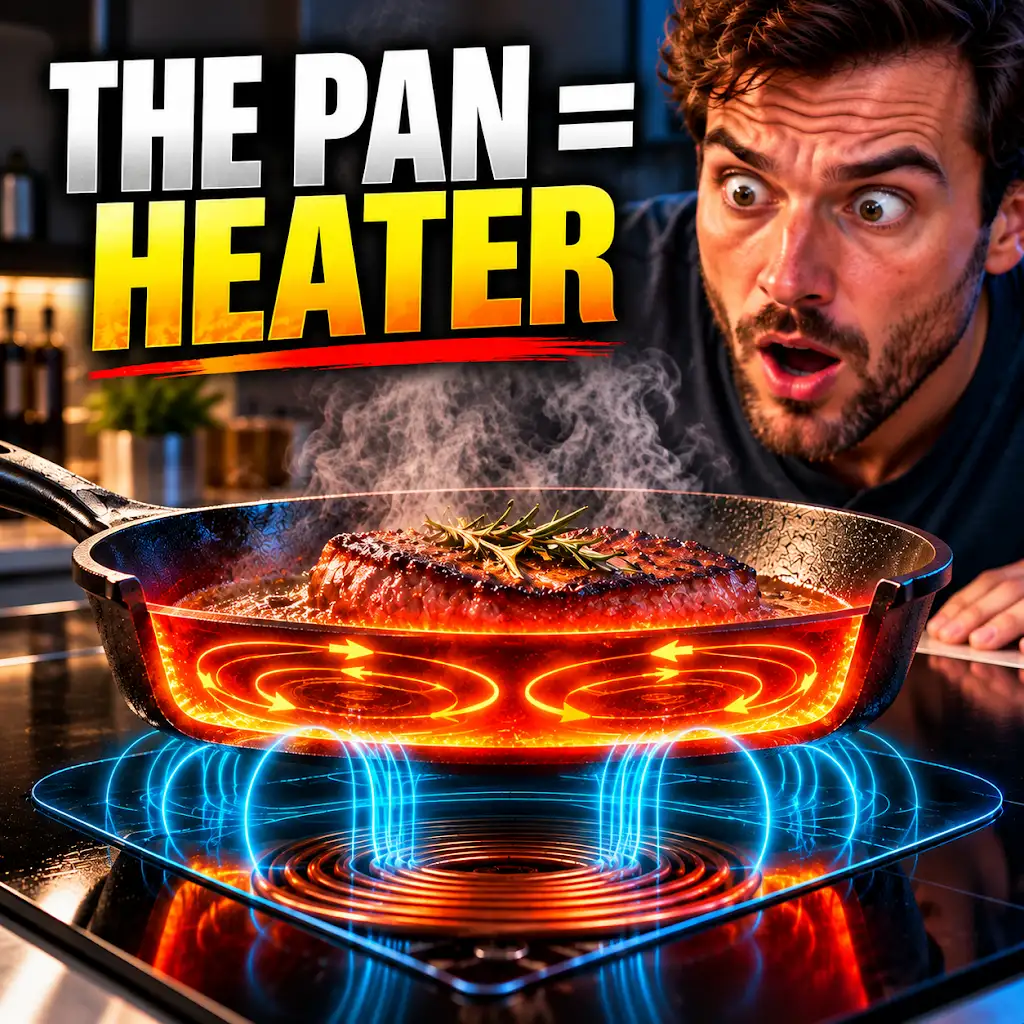
The key to induction lies in the electromagnetic coil situated directly beneath the glass surface. When you turn on your induction burner and place a magnetic pot or pan on it, an alternating electric current is passed through this coil. This current generates a rapidly changing magnetic field.
The Role of the Electromagnetic Coil
This coil is the engine of your induction cooktop. It’s typically made of copper, chosen for its excellent conductivity. When the electricity flows, it creates a magnetic field that oscillates back and forth at high frequencies. Think of it like a tiny, powerful electromagnet that’s constantly flipping its polarity. This rapid change is crucial for the next step in the process.
The Importance of Alternating Current
The fact that the current is alternating is what makes the magnetic field dynamic. A constant, direct current would create a static magnetic field, which wouldn’t induce any current in your cookware. It’s the continuous switching of the magnetic poles that allows energy to be transferred.
The Principle of Electromagnetic Induction
This is where the “induction” in induction cooktop truly comes into play. When the dynamic magnetic field generated by the coil passes through the base of your magnetic cookware, it induces a flow of electrons within the metal of the pot or pan itself. This induced flow of electrons is, in essence, an electric current.
Faraday’s Law of Induction
This phenomenon is governed by Faraday’s Law of Induction, a fundamental principle in electromagnetism. Simply put, a changing magnetic field through a circuit (in this case, the metal of your cookware) will induce an electromotive force (voltage), which drives an electric current. The faster the magnetic field changes, the greater the induced current.
Eddy Currents: The Tiny Tornadoes of Heat
The induced electric currents within the cookware are called “eddy currents.” These currents are not uniform; they flow in small, swirling patterns within the metal. As these eddy currents travel through the electrical resistance of the cookware material, they generate heat. This is the primary mechanism by which your food cooks.
Why Magnetic Cookware is Essential
You might have noticed that not all pots and pans work on an induction cooktop. This is because the cookware itself must be ferromagnetic, meaning it can be magnetized. This is why stainless steel, cast iron, and many enameled cast iron cookware are ideal. Aluminum, copper, and glass cookware, which are not magnetic, will not work with induction unless they have a special ferromagnetic layer added to their base.
The Ferromagnetic Requirement Explained
The magnetic field needs to be able to interact with the material of the pot or pan to induce eddy currents. Non-magnetic materials simply don’t have the right atomic structure for this magnetic interaction to occur effectively, so the magnetic field passes through them without generating significant heat.
Testing Your Cookware
A simple way to test if your cookware is induction-compatible is to hold a magnet to its base. If the magnet sticks firmly, it will likely work on your induction cooktop. If it doesn’t stick at all, or only weakly, it’s probably not induction-friendly.
Induction cooktops are known for their efficiency and speed, but many users often wonder why the glass surface gets hot during cooking. An insightful article that delves into this phenomenon can be found at Freaky Science. It explains that while the cooktop itself uses electromagnetic energy to heat pots and pans directly, residual heat from the cookware can transfer to the glass surface, causing it to become warm. Understanding this process can help users make informed decisions about safety and cooking techniques when using induction technology.
The Glass Barrier: More Than Just a Pretty Surface
The glass surface of your induction cooktop is not just a decorative element; it’s a carefully engineered component that plays a vital role in the cooking process. While it acts as a barrier between the electromagnetic coils and your cookware, it’s not an insulator in the traditional sense, and it’s this interaction that leads to the heat you feel.
The Function of the Ceramic Glass
The glass used in induction cooktops is typically a type of tempered ceramic glass, often referred to by brand names like Schott Ceran or EuroKera. This material is chosen for its durability, heat resistance, and smooth, easy-to-clean surface.
Durability and Heat Resistance
This specialized glass can withstand significant temperature fluctuations and is remarkably resistant to scratches and thermal shock. This means it can handle the intense heat generated by the cookware above it without cracking or breaking.
Smooth, Non-Porous Surface
The smooth, non-porous nature of the ceramic glass makes it incredibly hygienic and easy to wipe clean. Spills and splatters don’t seep into the surface, making cleanup a breeze.
The Glass as a Conductor (and Insulator)
Here’s where the nuance lies. The ceramic glass is primarily an electrical insulator. This is important because you don’t want the electricity flowing from the coil to reach you or your surroundings. However, it’s not a perfect thermal insulator. Heat is transferred through it, albeit less efficiently than through direct contact with a hot element.
Electrical Insulation Properties
The glass prevents direct electrical contact between the electromagnetic coil and your cookware, which is a crucial safety feature. You won’t get an electric shock from touching the cooktop while it’s in use.
Thermal Conductivity of Ceramic Glass
While it’s an insulator against electricity, ceramic glass does have thermal conductivity. This means that heat can transfer through it. The primary way heat transfers to the glass is through conduction from the hot cookware above it.
Direct vs. Indirect Heating
This is a key distinction. Induction cooktops heat the cookware directly. The glass itself does not have heating elements. Therefore, the heat you feel on the glass surface is predominantly a byproduct of the cooking process in your pot or pan.
The Absence of Direct Heating Elements
Unlike traditional electric coil or radiant glass-ceramic cooktops, where the heating element itself gets red-hot and transfers heat to the glass, induction bypasses this. There are no exposed heating elements. The heat originates within the cookware.
Heat Transfer to the Glass Surface
As your cookware heats up through eddy currents, it then transfers a portion of that heat to the glass surface through direct contact. This is the most significant contributor to the glass becoming warm.
Heat Transfer Mechanisms: How Warmth Spreads
Understanding how heat moves is fundamental to grasping why your induction cooktop glass gets hot. Several mechanisms are at play, with conduction being the most dominant factor in warming the glass.
Conduction: The Direct Touch of Heat
Conduction is the transfer of heat through direct physical contact. When your hot pot or pan sits on the glass, heat energy is transferred from the metal of the cookware to the glass molecules at the point of contact.
Molecular Vibrations and Energy Transfer
When the molecules in the cookware get hot, they vibrate more vigorously. These vibrations are then passed on to the adjacent molecules in the glass, causing them to vibrate and warm up as well. This process continues through the thickness of the glass.
The Role of Contact Area and Temperature Difference
The greater the surface area of contact between the hot cookware and the glass, and the larger the temperature difference between them, the faster and more efficient the conduction of heat will be. This is why heavier, flatter-bottomed pans tend to transfer more heat to the glass.
Radiation: The Unseen Waves of Warmth
While less significant than conduction, radiation also plays a role. All objects above absolute zero temperature emit thermal radiation in the form of infrared waves. Your hot cookware emits these waves, and some of them will be absorbed by the glass surface.
Infrared Radiation from Hot Cookware
Think of it like the warmth you feel radiating from a hot stove burner or a campfire, even if you’re not directly touching it. Your hot pan is doing something similar, emitting infrared energy that can be absorbed by the surrounding materials, including the glass.
The Glass’s Absorption of Infrared Waves
The ceramic glass, while transparent to visible light, can absorb certain wavelengths of infrared radiation. This absorption converts the radiant energy into heat within the glass itself.
Convection: The Air’s Gentle Hug
Convection involves heat transfer through the movement of fluids, in this case, air. While your induction cooktop doesn’t generate superheated air like a gas flame, there’s still some ambient air movement around the cooktop.
Air Currents Around the Cooktop
The heat from the cookware and the cooktop surface can cause the surrounding air to become warmer. This warmer air can then circulate, contributing to a general increase in the ambient temperature around the cooktop.
Minimal Direct Convective Heating of the Glass
However, direct convective heating of the glass surface from the cooking process is minimal compared to conduction. The primary heat source is the cookware itself.
Why Induction is Still “Cooler” Than Other Methods

Despite the glass getting warm, induction cooktops are demonstrably cooler to the touch than their electric resistance or gas counterparts. This is a crucial advantage that makes them safer and more energy-efficient.
Superior Energy Transfer Efficiency
Induction technology is highly efficient at transferring energy directly to the cookware. A significant majority of the energy consumed by the cooktop is converted into heat within your pots and pans.
Minimizing Energy Waste
In contrast, electric coil and radiant glass-ceramic cooktops lose a considerable amount of energy to the surrounding air through radiation and convection. The heating elements themselves become very hot, and this heat is largely wasted.
Direct Heating of the Cookware
Because induction heats the cookware directly through electromagnetic fields, there’s less energy wasted heating the cooktop surface or the air around it. This direct transfer is key to its efficiency.
The Cookware as the Primary Heat Source
As emphasized before, the cookware is the primary heat source in induction cooking. The glass is merely a barrier. This means that once you remove the cookware, the heat source is gone, and the glass will start to cool down much faster than a hot element on a traditional electric stove.
Rapid Cooling After Cookware Removal
When you lift your pot or pan off an induction cooktop, the generation of eddy currents stops almost instantaneously. This means the direct heating of the glass ceases immediately. While the glass retains some residual heat from conduction, it cools down significantly faster than a glowing-hot electric element.
Contrast with Residual Heat in Traditional Stoves
On a traditional electric cooktop, the heating element continues to glow red-hot for some time after it’s turned off, radiating significant heat onto the glass surface. This residual heat can persist for a considerable period, posing a burn risk.
Safety Features and Reduced Burn Risks
The inherent cooler surface temperature of induction cooktops translates to enhanced safety, especially in households with children or pets.
Reduced Risk of Accidental Burns
While the glass can get warm, it rarely reaches the extreme temperatures that can cause severe burns on traditional cooktops. This significantly reduces the risk of accidental contact injuries.
Visual Cues for Residual Heat
Many modern induction cooktops feature indicator lights that alert you when the surface is still hot, even after the burner has been turned off. This provides an extra layer of safety and informs you when it’s safe to clean or touch the surface.
Induction cooktops are known for their efficiency and speed, but many users wonder why the glass surface gets hot during cooking. This phenomenon occurs due to the heat generated by the cookware itself, which transfers to the glass as it comes into contact with the induction coils. For a deeper understanding of how induction cooking works and the science behind it, you can explore this informative article on the topic. To learn more about the fascinating principles of induction cooking, visit this link.
Practical Implications: Safety, Cleaning, and Maintenance
| Reason | Description | Typical Temperature Range (°C) | Impact on Glass Surface |
|---|---|---|---|
| Heat Transfer from Cookware | Heat generated in the cookware transfers to the glass surface through conduction. | 50 – 150 | Glass surface becomes warm to hot depending on cookware temperature. |
| Electromagnetic Induction | Induction coil creates magnetic field that induces current in ferromagnetic cookware, not in glass. | N/A (Glass itself not heated by induction) | Glass remains cool initially but heats up due to cookware contact. |
| Radiant Heat from Cookware | Hot cookware radiates infrared heat that warms the glass surface. | 40 – 120 | Glass surface temperature rises due to radiant heat. |
| Residual Heat Retention | Glass retains heat after cooking due to its thermal mass and insulation properties. | 30 – 80 | Glass remains warm for some time after cooking stops. |
| Cookware Material | Ferromagnetic materials heat efficiently, increasing heat transfer to glass. | Varies by material | Higher heat transfer leads to hotter glass surface. |
Understanding why your induction cooktop glass gets hot has direct implications for how you use and care for your appliance, ensuring both safety and longevity.
Safe Handling Practices
Always be mindful of the cooktop surface after cooking. Even though it’s cooler than other types of cooktops, it can still be warm enough to cause discomfort or minor burns.
Allowing the Surface to Cool
Give the cooktop surface adequate time to cool down after cooking, especially if you’ve been using high heat for an extended period. The residual heat will dissipate over time.
Using Oven Mitts or Pot Holders
When removing hot cookware, always use oven mitts or pot holders, not just for handling the cookware itself, but also to avoid accidentally brushing against the warm cooktop surface.
Effective Cleaning Techniques
The warmth of the glass can actually make cleaning easier in some cases, but it’s important to use the right methods.
Cleaning While Warm (with Caution)
Many manufacturers recommend cleaning spills and splatters while the cooktop is still slightly warm (but not hot). This is because the warmth can help loosen dried-on food particles. However, extreme caution is advised, and you should always consult your appliance’s manual.
Avoiding Abrasive Cleaners
Never use abrasive scouring pads, steel wool, or harsh chemical cleaners on your ceramic glass cooktop. These can scratch and damage the surface. Stick to specialized ceramic cooktop cleaners or mild dish soap and water.
Wiping Away Residue
After cooking, wipe down the surface to remove any food particles or grease. This prevents them from baking onto the surface and becoming harder to remove later.
Maintaining Your Induction Cooktop
Proper care will ensure your induction cooktop functions optimally and looks its best for years to come.
Protecting the Glass Surface
Avoid sliding heavy pots and pans across the glass surface, as this can cause scratches. Always lift cookware when moving it.
Regular Inspection
Periodically inspect the glass surface for any signs of damage, such as cracks or chips. If you notice any damage, it’s important to have it repaired or replaced to prevent further issues.
Following Manufacturer Guidelines
Always refer to your specific induction cooktop’s user manual for detailed instructions on cleaning, maintenance, and safe operation. Each model may have unique recommendations.
In conclusion, the warmth you feel on your induction cooktop’s glass surface is a normal and expected consequence of its direct heating mechanism. It’s a testament to the efficient transfer of energy to your cookware, which then, through the principles of conduction and radiation, warms the glass. While it’s not as hot as the surfaces of traditional electric or gas cooktops, it’s important to remain aware of this residual heat for your safety. By understanding the science behind induction and adhering to safe practices, you can confidently enjoy the speed, efficiency, and convenience of your modern induction cooking experience.
The Pan Is the Heater: How Induction Cooking Really Works
FAQs
Why does induction cooktop glass get hot?
Induction cooktops work by creating a magnetic field that heats up the cookware directly. The glass surface of the cooktop can get hot due to the heat transfer from the heated cookware.
Is it normal for induction cooktop glass to get hot?
Yes, it is normal for the glass surface of an induction cooktop to get hot during cooking. The heat is transferred from the cookware to the glass surface through the magnetic field generated by the cooktop.
Can the hot glass surface of an induction cooktop cause burns?
Yes, the hot glass surface of an induction cooktop can cause burns if touched directly. It is important to be cautious and avoid touching the glass surface while cooking or immediately after use.
How can I prevent the glass surface of my induction cooktop from getting too hot?
To prevent the glass surface of your induction cooktop from getting too hot, make sure to use cookware with flat bottoms that are compatible with induction cooking. Avoid using oversized cookware that extends beyond the cooking zone as it can cause overheating of the glass surface.
Are there any safety features in induction cooktops to prevent overheating of the glass surface?
Most modern induction cooktops come with safety features such as automatic shut-off functions that help prevent overheating. These features help protect the glass surface from excessive heat and ensure safe cooking experience.