
You’ve likely experienced it. A moment of minor triumph, reaching into the carton, your hands steady as you select the perfect egg for your omelet or baking project. Then, the inevitable. A slight slip, a clumsy tilt, and crack. The pristine oval shatters, its yolky contents spilling onto the counter. You sigh, perhaps muttering about faulty packaging or flimsy shells. But have you ever truly considered why eggs are so inherently, frustratingly fragile? It’s not just bad luck, you know. There’s a fascinating, delicate dance of chemistry, physics, and biology happening within that seemingly simple calcium carbonate shell, and today, you’re going to learn all about it.
You might see an eggshell as merely a protective barrier, a inert container for future life. But to truly understand its fragility, you need to delve into its very creation. The journey begins long before the egg ever enters your kitchen, deep within the intricate biological machinery of a hen.
The Avian Architect: Gallus Gallus Domesticus and Its Marvelous Metabolism
Your average laying hen, Gallus gallus domesticus, is a biological marvel. Her body is a highly efficient factory, designed to produce a nutrient-rich package ready for the next generation. The process of egg formation is a testament to this efficiency, and the shell is a critical component of that production line.
The Oviduct: A Biological Assembly Line
The creation of an egg is a multi-stage process that occurs within the hen’s oviduct. This long, coiled tube is where the yolk develops, is coated with albumen (the egg white), and finally, the shell is formed. Each stage is precisely timed, with the entire process taking roughly 24 to 26 hours to complete. The shell formation itself takes a significant chunk of this time, around 20 hours. This extended period is crucial for building a structure that, while strong enough to protect the developing embryo, is also porous to allow for gas exchange and ultimately, is capable of being broken by a newly hatched chick.
The Building Blocks: Calcium Carbonate Symphony
The primary component of an eggshell is calcium carbonate (CaCO₃). This is not a random choice of material; it’s a substance that strikes a remarkable balance between strength and the biological needs of the egg. The hen’s body meticulously extracts calcium from her diet, a process that is incredibly demanding. A hen can consume up to 2 grams of calcium per day, and a single eggshell can contain as much as 2 grams of calcium itself! This highlights the significant metabolic effort involved.
The Role of Diet: More Than Just Grains
It’s not just about a hen eating calcium-rich food. Her digestive system and skeletal structure are adapted to mobilize and transport this vital mineral. The calcium is absorbed in her intestines and then transported to the shell gland in her oviduct. Interestingly, hens also possess specialized bone tissues called medullary bones, which serve as a reservoir of calcium that can be quickly mobilized when needed for shell formation. This internal storage system is another fascinating adaptation for efficient egg production.
The Microscopic Structure: A Crystalline Marvel
When you look at an eggshell, you see a smooth, relatively uniform surface. However, under a microscope, it reveals a complex, crystalline structure. The calcium carbonate is primarily deposited in the form of calcite crystals, arranged in a specific, layered pattern. This intricate arrangement is not haphazard; it’s a carefully engineered architecture that provides the shell with its characteristic properties. The crystals are not perfectly aligned, and the presence of organic matter interwoven within the mineral matrix plays a crucial role in its overall strength and flexibility.
The phenomenon of why eggs stay broken is an intriguing topic that delves into the structural integrity of eggshells and the forces acting upon them. For a deeper understanding of this subject, you can explore the related article that discusses the science behind eggs and their properties. To read more, visit this article for insights into the fascinating world of eggs and their unique characteristics.
The Paradoxical Strength of a Porous Prison
The eggshell’s primary function is to protect the developing embryo from external threats – bacteria, physical damage, and dehydration. Yet, it must also allow for the essential exchange of gases (oxygen in, carbon dioxide out) and permit water vapor to escape. This inherent conflict between protection and permeability is elegantly resolved through the shell’s unique structure, but this very structure also contributes to its susceptibility to breakage.
Porosity: The Breaths of an Egg
You might not realize it, but the surface of an eggshell, while appearing solid, is riddled with thousands of tiny pores. These pores are microscopic openings that allow for the vital exchange of gases between the egg’s interior and the external environment.
The Stomata Analogues: Breathing Through Stone
These pores are often referred to as analogous to stomata on plant leaves. They are essential for the survival of the embryo. Without them, the developing chick would suffocate, unable to respire. The number and distribution of these pores can vary between eggs, and even within different regions of the same shell, influenced by factors such as breed, age of the hen, and even diet.
The Role of the Cuticle: A Delicate Seal
On the outermost layer of the eggshell lies a thin, organic coating called the cuticle. This invisible layer acts as a natural sealant, helping to reduce the rate of water loss and preventing the ingress of bacteria into the pores. However, the cuticle is delicate and can be easily damaged or washed away during washing and disinfection processes, leaving the underlying shell more vulnerable. This is why unwashed eggs generally have a longer shelf life.
Structural Weaknesses: Where the Stress Begins
While the crystalline structure of the eggshell provides a degree of strength, it also possesses inherent weaknesses that make it prone to fracture. These weaknesses are not flaws but rather a consequence of its biological design.
The Columnar Layer: A Foundation of Crystals
Beneath the cuticle, you find a layer composed of calcite crystals oriented in a columnar fashion. These columns are not perfectly bonded together, and the interfaces between them represent potential fracture points. Think of it like a wall built of stacked bricks without mortar – it can withstand some pressure, but a sharp impact can easily dislodge them.
The Mammillary Layer: The Underside of Strength
Deeper within the shell is the mammillary layer, composed of cone-shaped mineralizing cores. This layer anchors the larger prismatic layer of the shell. While providing a base, the interface between these layers also presents a potential area of weakness.
The Physics of Fracture: How Force Meets Form
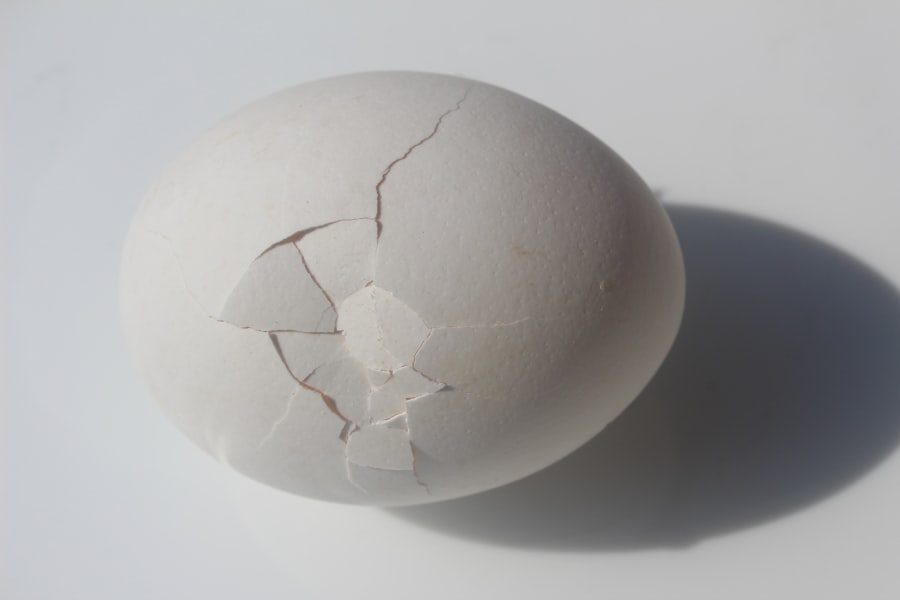
The fragility of an eggshell is not solely about its internal structure; it’s also about how that structure interacts with external forces. Understanding the physics of fracture is key to appreciating why even a slight bump can lead to an egg’s demise.
Stress and Strain: The Unseen Pressures
When you handle an egg, you are applying forces to its surface. These forces create stress within the shell material. Stress is the force applied per unit area, and strain is the resulting deformation.
Uniformity is Key: Why a Gentle Touch Matters
The eggshell is strongest when stress is distributed uniformly across its surface. This is why an egg can withstand significant pressure when squeezed evenly in your hand. However, even a small amount of pressure applied to a concentrated point, or a sudden impact, can create localized stress that exceeds the shell’s tensile strength, leading to fracture.
The Role of Impact Force: More Than Just Weight
It’s not just the weight of an object that breaks an egg; it’s the force of impact. A small object falling from a height can generate a significant impact force, concentrating stress on a tiny area of the shell. This is why dropping an egg, even from a short distance, is almost always disastrous. The energy of the fall is rapidly dissipated upon impact, and the shell’s capacity to absorb this energy is limited.
The Geometry of Fragility: A Curved Conundrum
The oval shape of the egg, while biomechanically advantageous for incubation and nesting, also plays a role in its fragility when subjected to external forces.
The Arch Effect: Nature’s Ingenuity
The curved nature of the eggshell is a remarkable feat of biological engineering. It allows the shell to distribute external pressure evenly around its surface, much like an arch bridge can support heavy loads. This is why a whole egg can withstand more pressure than a flat piece of shell. However, this arch effect is dependent on maintaining the integrity of the entire structure.
The Point of Vulnerability: Where Curves Meet
The ends of the egg, where the curves are more pronounced, can sometimes be areas of increased vulnerability. A sharp rap to the pointed end, or a sudden impact perpendicular to the curve, can create a concentrated stress point that rapidly propagates through the shell, leading to a cascade of fractures.
The Invisible Enemies: Factors That Compromise Shell Integrity

Beyond the inherent properties of the shell itself, several external factors can further weaken its structure, making it even more susceptible to breakage. These are the hidden saboteurs that can turn a seemingly sound egg into a ticking time bomb.
Environmental Influences: The Weather Within and Without
The conditions under which eggs are stored and handled can significantly impact their shell strength.
Temperature Fluctuations: A Shell’s Thermal Shock
Rapid and significant temperature changes can cause the egg’s contents to expand and contract. As the egg white and yolk respond to these changes, they exert pressure on the shell. Repeated or extreme temperature fluctuations can weaken the shell’s microscopic structure, creating stress points and making it more prone to cracking. Think of it like repeatedly bending a piece of metal – eventually, it will fatigue and break.
Humidity Levels: The Dehydrating Touch
While eggs need to lose some moisture through their pores, extreme dryness can also be detrimental. In low humidity environments, the internal membranes of the egg can shrink, pulling on the shell and potentially creating micro-fractures. This is particularly true for eggs that are stored for extended periods.
The Life Cycle of the Egg: Age and Attrition
As an egg ages, its shell composition and integrity can change, making it more vulnerable.
Physiological Changes: A Hen’s Decline
Even with optimal nutrition, the shell quality produced by older hens may decline. Their ability to efficiently absorb and deposit calcium can diminish, leading to thinner, weaker shells. This is a natural part of the aging process in laying hens.
Microbial Invasion: The Silent Dissolution
Over time, even with intact pores, some degree of microbial activity can occur within the egg. Bacteria, if present, can begin to metabolize components of the shell matrix, gradually weakening its structure from the inside out. This is another reason why proper storage and handling are crucial for maintaining egg quality.
Eggs can be quite fascinating, especially when considering why they tend to stay broken once cracked. The structure of an egg’s shell and the properties of its contents play a significant role in this phenomenon. For a deeper understanding of the science behind eggs and their unique characteristics, you might find this article on Freaky Science particularly interesting. It explores various aspects of eggs, including their composition and the forces at play when they break, shedding light on why they don’t simply return to their original state.
The Broader Implications: From Chickens to Construction
“`html
| Reasons for Broken Eggs | Explanation |
|---|---|
| Thin Shell | Eggs with thin shells are more likely to break under pressure. |
| Improper Handling | Rough handling during transportation or storage can cause eggs to break. |
| Old Eggs | Eggs that are past their expiration date are more fragile and prone to breaking. |
| High Pressure | Applying too much pressure when cracking an egg can cause it to break. |
“`
The science behind eggshell fragility isn’t just a quirky biological observation; it has broader implications that extend far beyond the breakfast table. Understanding how a brittle, calcium-based material can be both strong and weak offers insights into various fields.
Biomimicry: Learning from Nature’s Designs
The intricate, layered structure of the eggshell is a prime example of biomimicry. Scientists study these natural designs to create new materials with enhanced properties.
Novel Composites: Building Stronger, Lighter Materials
The way organic matter is interwoven with mineral crystals in an eggshell creates a composite material that is surprisingly tough for its weight. Researchers are exploring similar layered architectures to develop advanced composites for aerospace, automotive, and construction industries. The goal is to create materials that are lightweight yet incredibly strong and resistant to fracture.
Fracture Mechanics: Preventing Catastrophic Failure
The way an eggshell cracks – often in a radiating pattern from the point of impact – provides valuable data for understanding fracture mechanics. This knowledge can be applied to designing structures that are more resistant to sudden, catastrophic failure, from bridges to aircraft wings. By understanding how fractures propagate in brittle materials, engineers can develop strategies to mitigate damage and improve safety.
Food Safety and Quality: Protecting the Precious Cargo
The fragility of eggshells directly impacts food safety and the quality of the eggs we consume.
Preventing Contamination: A Critical Barrier
The potential for shell breakage means that safeguarding the egg from the moment it is laid is paramount. Strict hygiene practices on farms, appropriate handling during transport, and careful inspection at processing plants are all designed to minimize the risk of contaminated eggs reaching consumers. A cracked egg is a compromised egg, an open invitation for harmful bacteria.
Consumer Education: Understanding the Risks
Educating consumers about proper egg handling and storage is also crucial. Understanding that eggshells are porous and fragile helps people appreciate the importance of keeping eggs refrigerated, avoiding washing them unless necessary, and discarding any eggs with visible cracks. This simple knowledge can significantly reduce the risk of foodborne illnesses.
The Unsung Hero: A Delicate Balance for Life
Ultimately, the fragility of the eggshell is not a flaw but a fundamental aspect of its biological purpose. It’s a carefully orchestrated compromise between protection and the very essence of life itself. The shell must be strong enough to endure its journey from hen to nest, yet ultimately yield to the determined efforts of a hatching chick. Next time you witness an egg’s untimely demise, take a moment to appreciate the complex science that made it so perfectly, and sometimes tragically, fragile. You’re not just seeing a broken shell; you’re witnessing the intricate interplay of biology, chemistry, and physics, all working in delicate concert to bring new life into the world.

Where Does Yesterday Come From?
FAQs
1. Why do eggs break easily?
Eggshells are fragile and can break easily due to their thin and delicate nature. The shell is made up of calcium carbonate crystals, which can easily crack under pressure.
2. What factors contribute to eggs breaking?
Several factors can contribute to eggs breaking, including rough handling, impact, pressure, and age. Eggs that are older tend to have thinner shells, making them more susceptible to breaking.
3. How can eggs be stored to prevent breakage?
To prevent eggs from breaking, it is important to store them properly. Keeping eggs in their original carton, in the refrigerator, and away from other heavy items can help protect them from breakage.
4. Can eggs be repaired if they break?
If an egg breaks, it cannot be repaired. Once the shell is cracked, the egg is no longer safe to consume. It is best to discard the broken egg to avoid any risk of contamination.
5. Are there any techniques to handle eggs to prevent breakage?
When handling eggs, it is important to do so with care. Avoid dropping or banging eggs against hard surfaces, and use gentle pressure when storing or transporting them. Additionally, using proper egg-handling techniques can help minimize the risk of breakage.