You step into your home, seeking refuge from the oppressive heat, and your air conditioner hums to life, a promise of cool relief. But have you ever paused, perhaps on a particularly sweltering afternoon, to wonder about the magic happening within that humming box? Specifically, why does that seemingly inert substance, the refrigerant, choose to evaporate within your AC system? It’s a fundamental process, and understanding it unlocks a deeper appreciation for the technology that keeps you comfortable.
The Hidden Heartbeat: Understanding Refrigerant’s Role
Your air conditioner isn’t just a fan blowing air; it’s a sophisticated refrigeration cycle in action, and the refrigerant is its lifeblood. Imagine it as a tireless courier, constantly moving heat from one place to another. This courier, however, has a peculiar talent: it can effortlessly change its state from liquid to gas and back again. This phase change, this ability to evaporate and condense, is the very essence of how your AC cools your home. Without this property, your air conditioner would be nothing more than a noisy box, incapable of drawing heat out of your living space.
The Crucial Chemistry of Coolness
At its core, cooling is about heat transfer. Your AC unit doesn’t create coolness; it removes heat. The refrigerant is the medium that facilitates this heat removal. Think of it like a sponge for heat. When it’s in its liquid state, it’s ready to absorb heat. As it flows through the evaporator coil in your indoor unit, it encounters the warm air from your home. This warmth is transferred to the refrigerant, causing it to absorb energy and, crucially, to transition from a liquid to a gas. This evaporation is an energy-intensive process; it requires a significant amount of heat to break the bonds holding the liquid molecules together and set them free as a gas. Where does this heat come from? It comes directly from the air in your home. As the refrigerant evaporates and absorbs this heat, the air that surrounds the evaporator coil loses its heat, becoming cooler, and then that cooler air is circulated back into your rooms.
The Thermodynamic Dance: Pressure and Temperature
The magic of refrigerant evaporation is deeply rooted in the laws of thermodynamics. Specifically, it’s about the relationship between pressure, temperature, and the state of matter. Refrigerants are chosen for their specific thermodynamic properties, meaning they have a low boiling point at low pressures and a high boiling point at high pressures. In your AC system, the pressure is carefully manipulated to encourage evaporation at the precise moment and location needed. When the refrigerant enters the evaporator coil, it is at a low pressure. This low pressure allows it to evaporate at a temperature well below what you would normally consider room temperature. This is why the evaporator coil feels cold to the touch, even when the outside air is scorching. The refrigerant is essentially boiling, or evaporating, at a frigid temperature, drawing heat from the surrounding air.
Understanding why refrigerant evaporates in an air conditioning system is crucial for maintaining its efficiency and performance. The process of evaporation is essential for cooling, as it allows the refrigerant to absorb heat from the indoor air. For a deeper insight into the science behind this phenomenon, you can refer to a related article that explores the principles of refrigeration and the role of refrigerants in HVAC systems. To learn more, visit Freaky Science.
The Evaporator Coil: Where the Magic Begins
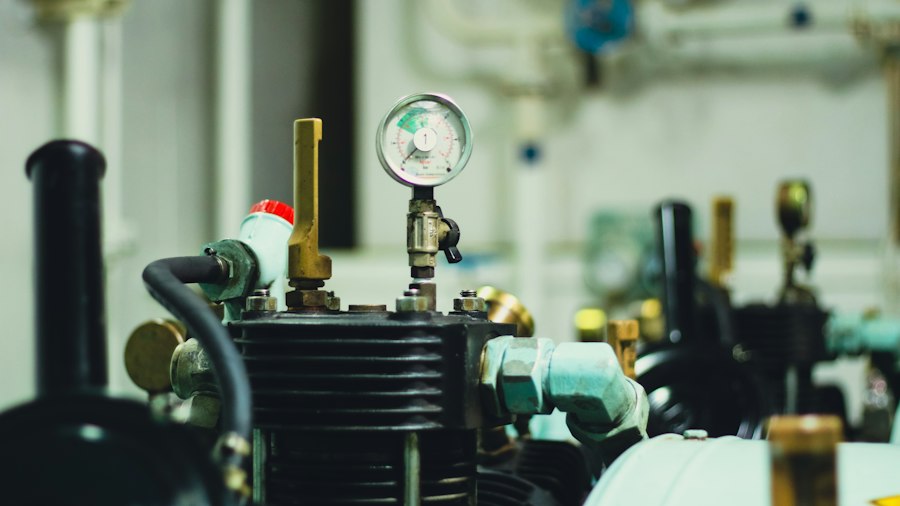
The evaporator coil, usually found in your indoor air handler unit, is the primary stage for refrigerant evaporation. This is where the heat exchange that cools your home truly takes place. It’s a network of thin, finned tubes through which the refrigerant flows. The design of the evaporator coil is optimized to maximize surface area, allowing for efficient heat transfer between the air and the refrigerant. As warm air from your home is blown across these coils by your fan, it encounters the cold, low-pressure refrigerant within.
The Low-Pressure Playground
Inside the evaporator coil, the refrigerant is at its lowest pressure within the entire system. This low pressure is critical. According to basic physics, the boiling point of a liquid decreases as the pressure decreases. Think about cooking at high altitudes; water boils at a lower temperature. The same principle applies here, but to a much greater extent. The refrigerant is engineered to have a very low boiling point even at typical indoor atmospheric pressures. By reducing the pressure in the evaporator coil, the refrigerant is induced to boil and turn into a gas at a temperature significantly below the temperature of the air passing over it. This creates the necessary temperature difference for heat to flow from the warmer air to the colder refrigerant.
Absorbing the Warmth of Your Home
As the refrigerant boils and evaporates, it’s not just changing state; it’s actively pulling heat energy from the air. This process is called absorption. The heat energy from the air is used to provide the latent heat of vaporization, which is the energy required for a substance to change from a liquid to a gas without a change in temperature. So, as the refrigerant bubbles and turns into a vapor, it is essentially “soaking up” the heat from your indoor environment. The air that has been in contact with the cold evaporator coil has now lost a significant portion of its heat, and it’s this cooled air that is then circulated back into your rooms, making them feel refreshingly cool. This constant cycle of absorption and evaporation is what keeps your home at your desired temperature.
The Compressor: Powering the Evaporation

While the evaporator coil is where the evaporation happens, it’s the compressor that makes it all possible. The compressor, usually located in the outdoor unit, is the heart of the AC system. Its job is to circulate the refrigerant and, critically, to increase its pressure and temperature. Without the compressor, the refrigerant would simply sit in the evaporator coil and eventually reach equilibrium with the indoor air temperature, rendering the AC useless. The compressor is a powerful motor that drives the entire refrigeration cycle.
Compressing the Vapor: A Crucial Step
After the refrigerant has absorbed heat and evaporated in the indoor unit, it flows as a low-pressure, low-temperature gas to the compressor. The compressor then squeezes this gaseous refrigerant, significantly increasing its pressure and, as a direct consequence of the laws of thermodynamics, its temperature. Imagine squeezing a bicycle pump; the air inside gets warmer. This compressed, hot gas then leaves the compressor and heads towards the condenser coil. The compression is vital because it prepares the refrigerant to release the heat it has absorbed. By raising its temperature above that of the outdoor air, the compressor ensures that the refrigerant can then efficiently transfer its heat to the outside environment.
Driving the Cycle Forward
The compressor’s continuous action is what drives the entire refrigeration cycle. It’s like the engine of a car, providing the power needed for everything else to function. By compressing the refrigerant, it creates the pressure difference that allows the refrigerant to flow from the low-pressure evaporator to the high-pressure condenser, and vice-versa. This constant movement ensures that there is always fresh, low-pressure liquid refrigerant ready to absorb heat in the evaporator and always hot, high-pressure gas ready to release heat in the condenser. Without the compressor diligently doing its job, the refrigerant would become stagnant, and the cycle of cooling would grind to a halt.
The Condenser Coil: Releasing the Heat
Once the refrigerant has been compressed by the compressor and has absorbed heat from your home, it needs to release that heat somewhere. This is where the condenser coil, located in your outdoor unit, comes into play. The condenser coil’s primary function is to condense the hot, high-pressure refrigerant gas back into a liquid, a process that involves releasing the heat it has absorbed.
From Gas to Liquid: A Transformative Change
As the hot, pressurized refrigerant gas flows into the condenser coil, it encounters the cooler outdoor air, which is being blown across the coil by your outdoor fan. Because the refrigerant is now at a higher temperature than the ambient air, heat flows from the refrigerant to the air. This loss of heat causes the refrigerant to cool down and, more importantly, to transition from a gaseous state back into a liquid state. This phase change from gas to liquid is called condensation. Just as evaporation absorbs heat, condensation releases heat. The heat that was absorbed by the refrigerant in your home is now being expelled into the outdoor environment.
The Role of the Outdoor Fan
The outdoor fan in your AC unit plays a crucial role in facilitating the condensation process. It constantly draws in the ambient outdoor air and blows it across the condenser coils. This airflow is essential for removing the heat that the refrigerant is shedding. Without sufficient airflow, the refrigerant would not be able to cool down and condense effectively, leading to reduced cooling performance and potentially system damage. The continuous movement of air across the condenser coils ensures that the heat absorbed from your home is efficiently dissipated into the atmosphere, allowing the refrigerant to return to its liquid state, ready to begin the cycle anew.
Understanding why refrigerant evaporates in an air conditioning system is crucial for maintaining optimal performance and efficiency. The process of evaporation allows the refrigerant to absorb heat from the indoor air, which is essential for cooling. For a deeper dive into the science behind this phenomenon, you can explore a related article that explains the principles of thermodynamics in refrigeration systems. This resource provides valuable insights into how refrigerants function and the factors that influence their evaporation rates. To read more about it, visit this informative article.
The Metering Device: Controlling the Flow
| Metric | Description | Relevance to Refrigerant Evaporation |
|---|---|---|
| Boiling Point | The temperature at which a liquid turns into vapor | Refrigerants evaporate at low boiling points to absorb heat efficiently |
| Pressure | Force exerted by the refrigerant per unit area | Lower pressure in the evaporator causes refrigerant to evaporate |
| Heat Absorption | Amount of heat absorbed by refrigerant during phase change | Evaporation absorbs heat from indoor air, cooling the environment |
| Latent Heat of Vaporization | Energy required to convert liquid refrigerant to vapor without temperature change | Key property enabling refrigerant to absorb heat during evaporation |
| Temperature Difference | Difference between refrigerant temperature and surrounding air | Drives heat transfer causing refrigerant to evaporate |
| Evaporator Coil Surface Area | Area of coil where refrigerant evaporates | Larger surface area improves heat exchange and evaporation rate |
Between the condenser and the evaporator, there’s a critical component known as the metering device. This component is responsible for regulating the amount of refrigerant that enters the evaporator coil, ensuring that the system operates efficiently and effectively. It’s a crucial regulator in the overall process, influencing the pressure and flow rate of the refrigerant.
Precise Flow for Optimal Cooling
The metering device, which can be a capillary tube or a thermal expansion valve, acts like a bottleneck. It restricts the flow of the high-pressure liquid refrigerant from the condenser, causing a significant drop in pressure as it enters the evaporator coil. This sudden pressure drop is essential for initiating the evaporation process. If too much refrigerant were to enter the evaporator, it might not all evaporate, leading to a buildup of liquid refrigerant in the wrong parts of the system. Conversely, if too little refrigerant enters, the evaporator coil will not be fully utilized, and the cooling capacity will be diminished. The metering device ensures that just the right amount of refrigerant is delivered to the evaporator coil at the right time.
Maintaining the Pressure Differential
The metering device is key to maintaining the necessary pressure differential between the high-pressure side (condenser) and the low-pressure side (evaporator) of the AC system. This pressure difference is what drives the refrigerant through the system. By carefully controlling the flow, the metering device ensures that the evaporator coil remains at a low pressure, promoting efficient evaporation, and that the condenser coil remains at a higher pressure, facilitating effective condensation. It’s a silent but vital guardian of your AC’s performance, ensuring that the refrigerant is always in the optimal state for heat absorption and rejection.

Your AC Blows Hot Air Outside. Is That Heat From Your Room?
FAQs
1. What is refrigerant in an AC system?
Refrigerant is a chemical compound used in air conditioning systems to absorb heat from the indoor air and release it outside, allowing the air inside to be cooled.
2. Why does refrigerant evaporate in an AC system?
Refrigerant evaporates in an AC system because it undergoes a phase change from a liquid to a gas in the evaporator coil. This process absorbs heat from the indoor air, cooling it down.
3. What factors can affect the rate of refrigerant evaporation in an AC system?
The rate of refrigerant evaporation in an AC system can be affected by factors such as the temperature and pressure levels in the system, the condition of the evaporator coil, and the amount of airflow passing over the coil.
4. Is it normal for refrigerant to evaporate in an AC system?
Yes, it is normal for refrigerant to evaporate in an AC system as part of the cooling process. However, if there is a refrigerant leak in the system, it can lead to a decrease in cooling efficiency and potential damage to the system.
5. How can I tell if there is a refrigerant leak in my AC system?
Signs of a refrigerant leak in an AC system include reduced cooling performance, hissing or bubbling noises coming from the unit, ice buildup on the refrigerant lines, or a noticeable decrease in airflow. If you suspect a refrigerant leak, it is important to contact a professional HVAC technician for inspection and repair.