You’ve probably experienced it yourself. You’re digging into a bowl of something hearty, maybe cereal or a steaming bowl of soup, and suddenly, a tiny flash of light, a miniature fireworks display right there on your plate. You pull your fork back, a little startled, and then you try a spoon. Nothing. Just smooth, quiet scooping. You might have thought it was a fluke, a trick of the light, but you’ve likely wondered: why does a fork spark, but a spoon doesn’t? It’s a question that delves into the fascinating intersection of everyday objects and fundamental physics, and the answer, while not overly complex, reveals a surprising amount about how things work.
The first and perhaps most crucial element in understanding this sparking phenomenon lies in the very substance of your cutlery. When you look at a fork and a spoon side-by-side, they might seem identical in their function and often in their appearance. However, their composition is key to their differing behaviors when interacting with your food and, more importantly, with the environments they encounter.
Stainless Steel: The Ubiquitous Choice
The vast majority of the forks and spoons you encounter in your kitchen drawer are made from stainless steel. This isn’t just a random alloy; it’s a carefully engineered material designed for durability, hygiene, and resistance to corrosion. Stainless steel is primarily composed of iron, chromium, and nickel, with varying percentages of other elements like manganese, carbon, and molybdenum. The chromium content is what gives stainless steel its characteristic “stainless” property, forming a passive oxide layer on the surface that prevents rust.
The Carbon Content Conundrum
While stainless steel is the common denominator, the specific grade of stainless steel can vary. For forks and spoons, particularly those intended for everyday use, a common choice is 18/8 or 18/10 stainless steel. The numbers refer to the percentage of chromium and nickel, respectively. However, some less expensive or older utensils might have a slightly different composition, and critically, a different carbon content. Carbon is a vital element in steel. It plays a crucial role in hardening the metal. In general, a higher carbon content leads to a harder, more brittle steel. This subtle difference in carbon can be a significant factor in how a utensil interacts with other surfaces.
Other Materials: A Rare But Possible Exception
While stainless steel is dominant, you might occasionally come across forks or spoons made from other materials. Silver or silver-plated cutlery is a classic example, often reserved for special occasions. These are generally softer than stainless steel and less prone to sparking due to their metallic properties. Similarly, some novelty or specialty utensils might be made from plastics or other polymers. These materials, lacking the metallic conductivity and specific crystalline structures of metals, will not spark in the way that metallic cutlery can. For the purposes of understanding sparking, we’ll focus on the most common culprit: stainless steel.
When exploring the fascinating reasons behind why a fork sparks while a spoon does not, one can refer to a related article that delves into the science of metal conductivity and the geometry of utensils. The article explains how the sharp tines of a fork can create a higher concentration of electrical fields, leading to the phenomenon of sparking, whereas the rounded surface of a spoon does not facilitate the same effect. For more in-depth information, you can read the article here: Freaky Science.
The Physics of Friction: Where the Spark Begins
Now that we’ve established the material, let’s delve into the physical process that leads to those surprising little flashes. The spark isn’t magic; it’s a consequence of friction, a fundamental force that opposes motion between surfaces in contact. When you use a fork, especially to scrape against something, you’re creating friction.
Understanding Friction: More Than Just Rubbing
Friction arises from the microscopic irregularities present on the surfaces of any two objects in contact. Even seemingly smooth surfaces are rough at a microscopic level. When these irregularities interlock, they create resistance to sliding. The force of friction depends on the nature of the surfaces (their composition and texture) and the normal force pressing them together.
The Role of Surface Irregularities and Micro-Fractures
A fork, by its very design, has edges and tines that are relatively thin and sharp. When you scrape a fork against a hard surface – a ceramic plate, a glass bowl, or even certain types of food – these thin edges are subjected to significant pressure. This pressure can cause microscopic fractures or slivers to break off from the fork’s surface. Think of it like very, very fine shavings being peeled away from the metal.
The High-Speed Impact: Igniting the Spark
These tiny metal fragments, dislodged by friction, are not just inert particles. They are still at room temperature, but as they are scraped and detached, they are subjected to rapid acceleration and impact. When these microscopic metal shards are broken off and then rapidly scraped against another surface, they experience intense friction and deformation. This intense local friction generates a significant amount of heat. If the temperature of these tiny fragments reaches their ignition point, they can momentarily oxidize rapidly in the air, producing a visible spark. It’s a rapid, exothermic chemical reaction.
The Electric Current Connection (A Common Misconception and Nuance)
It’s a common misconception that sparks are always electrical in nature. While static electricity can cause sparks, the sparks from a fork are primarily tribochemical – a result of chemical reactions occurring due to friction. However, there’s a subtle electrical component involved. When metal surfaces rub against each other, electrons can be transferred from one surface to another. This creates a small electrical potential difference. If enough charge builds up and can overcome the insulating properties of the surrounding air, it can discharge as a spark. In the case of a fork, the friction dislodging metal particles can also facilitate this charge transfer. The rapid movement and impact of these particles can lead to localized electrical discharges that, combined with the heat from friction, contribute to the visible spark. So, while not solely electrical, there’s an interplay.
Why the Fork’s Geometry Matters: Sharp Edges vs. Smooth Surfaces

This is where the fundamental difference between a fork and a spoon becomes most apparent. The distinct shapes and the way they interact with surfaces are the primary reasons for their divergent sparking behaviors.
The Fork’s Edge: Designed for Penetration and Scraping
A fork is designed to pierce, lift, and separate food. Its tines are essentially a series of thin, relatively sharp edges. When you use a fork to scrape the bottom of a bowl or plate, or even to cut through softer food, these edges are in direct, high-pressure contact with the surface. This concentrated pressure on a small area is what allows for the micro-fracturing of the metal. The sharper the edge, and the harder the surface it’s scraping against, the greater the likelihood of these tiny metal fragments being dislodged.
The Spoon’s Curve: Designed for Scooping and Gliding
A spoon, on the other hand, has a smooth, concave bowl. Its primary function is to scoop and hold liquids or loose solids. When you use a spoon to scrape a surface, the entire underside of the bowl makes contact. This contact is spread over a much larger area, and the edges of the spoon’s bowl are typically rounded and blunt, not sharp. Consequently, the pressure per unit area is significantly lower.
Reduced Micro-Fracturing: The Spoon’s Advantage
Because the pressure is distributed and the edges are less aggressive, a spoon is far less likely to cause those tiny metal fragments to break off. The smooth, rounded surface allows the spoon to glide over the plate or bowl with minimal disruption to the underlying material. Even if there is some friction, it’s less intense and less likely to lead to the dislodging of metal particles that can then ignite.
The Impact of Food Consistency
It’s also worth noting that the type of food you’re eating can influence sparking. A hard, dry piece of food that a fork might scrape against with force is more likely to induce sparking than the smooth, wet surface of soup that a spoon is designed to navigate. However, the fundamental geometrical difference between the fork and spoon is the primary driver of the sparking difference.
The Surfaces You Interact With: A Crucial Variable
While the fork itself is the potential spark-starter, the surface it interacts with plays an equally vital role in whether or not a spark actually occurs. You’ve likely noticed that your fork sparks more readily on certain plates than others.
Ceramic and Porcelain: The Classic Sparking Surfaces
Many plates, especially those made from ceramic or porcelain, have a hard, somewhat abrasive glazed surface. This glaze, while intended to be smooth, can still create enough friction and pressure points for the tines of a fork to dislodge micro-particles. The hardness of the glaze is a key factor. If the glaze is particularly hard and brittle, it can also contribute to the fracturing process, making it easier for metal fragments to break away.
Glassware: Another Common Culprit
Similar to ceramic, glass surfaces, especially tempered glass, can also be hard enough and present subtle imperfections that can lead to friction-induced sparking when scraped by a fork. You might have seen sparks fly when using a fork against the rim of a wine glass, for instance.
Metal Cookware and Utensils: A Different Kind of Interaction
Scraping a fork against other metal surfaces, like a non-stick frying pan with a worn coating or even another metal utensil, can also produce sparks. However, the nature of the spark might be slightly different. If the other metal is softer, it might be the fork that loses material. If both are similarly hard, the interaction can be more about material transfer and friction.
Softer Surfaces: The Anti-Sparking Zones
Materials like plastic plates, wooden cutting boards, or even softer foods like mashed potatoes or yogurt are much less likely to cause your fork to spark. These surfaces are generally softer and more yielding, absorbing the pressure and friction without causing significant damage or dislodging metal particles from the fork’s tines. The spoon’s smooth surface works even better on these materials, ensuring a virtually spark-free experience.
When considering why a fork sparks but a spoon does not, it’s fascinating to explore the science behind metal conductivity and the shape of these utensils. The design of a fork, with its pointed tines, can create a more concentrated electrical field, leading to the phenomenon of sparking when it comes into contact with certain surfaces or materials. For a deeper understanding of this topic, you can read more in this insightful article about the properties of metals and their interactions. Check it out here to learn more about the intriguing world of everyday objects and their surprising behaviors.
Safety and Practicality: When to Worry About Your Sparks
| Reasons | Fork | Spoon |
|---|---|---|
| Metal Composition | Usually made of stainless steel or other conductive metals | Often made of non-conductive materials like plastic or wood |
| Shape | Has pointed tines that can easily create a spark when struck against a hard surface | Has a rounded and smooth surface that does not create friction to spark |
| Usage | Often used for piercing and cutting food, creating opportunities for friction and sparks | Primarily used for scooping and stirring, with less potential for friction |
While the sparks from a fork are generally a harmless, albeit surprising, phenomenon, it’s worth considering when this behavior might indicate a larger issue or simply be an annoyance.
The Innocuous Spark: A Normal Occurrence
For most people, the occasional spark from a fork is nothing to be concerned about. It’s a normal consequence of the physics involved when a hard, finely-edged metal utensil interacts with a hard surface. It’s a sign that your fork is doing its job by being made of a sufficiently hard metal, and that your plate has a surface that can create that friction.
Potential for Damage: To Your Utensils and Surfaces
While not a safety hazard in the traditional sense, consistent and vigorous scraping can, over time, lead to visible wear and tear on both your fork tines and the surface of your plates. You might notice tiny scratches or a dulling of the glaze on your plates where your fork consistently sparks. Similarly, your fork tines might subtly wear down or develop tiny nicks from repeated aggressive scraping.
When to Consider a Different Utensil or Surface
If you find that your fork is sparking excessively, or if you’re concerned about damaging your favorite tableware, consider using a different utensil. A softer material like a plastic scraper or even a different type of spoon might be more appropriate for certain tasks. Alternatively, if you’re frequently sparking, it might be worth inspecting your forks for any particularly sharp or damaged tines that could be exacerbated by continued use.
The “Sparking Spoon” Scenario: A Sign of Wear
While rare, it is possible for a spoon to spark, though it would require a significant deviation from normal use or design. If a spoon’s edge becomes incredibly worn down, developing sharp points or significant nicks, or if it’s made of an unusually brittle material, it could theoretically cause sparks. In such a case, it’s likely an indicator that the spoon is significantly damaged and should be replaced.
Ultimately, the sparking of a fork is a little reminder that the objects we use every day are governed by the same physical laws that shape the universe. It’s a testament to the power of friction, the properties of materials, and the elegant simplicity of everyday science. So, the next time you see that little flash, you’ll know it’s not a glitch in the matrix, but simply physics at play in your kitchen.
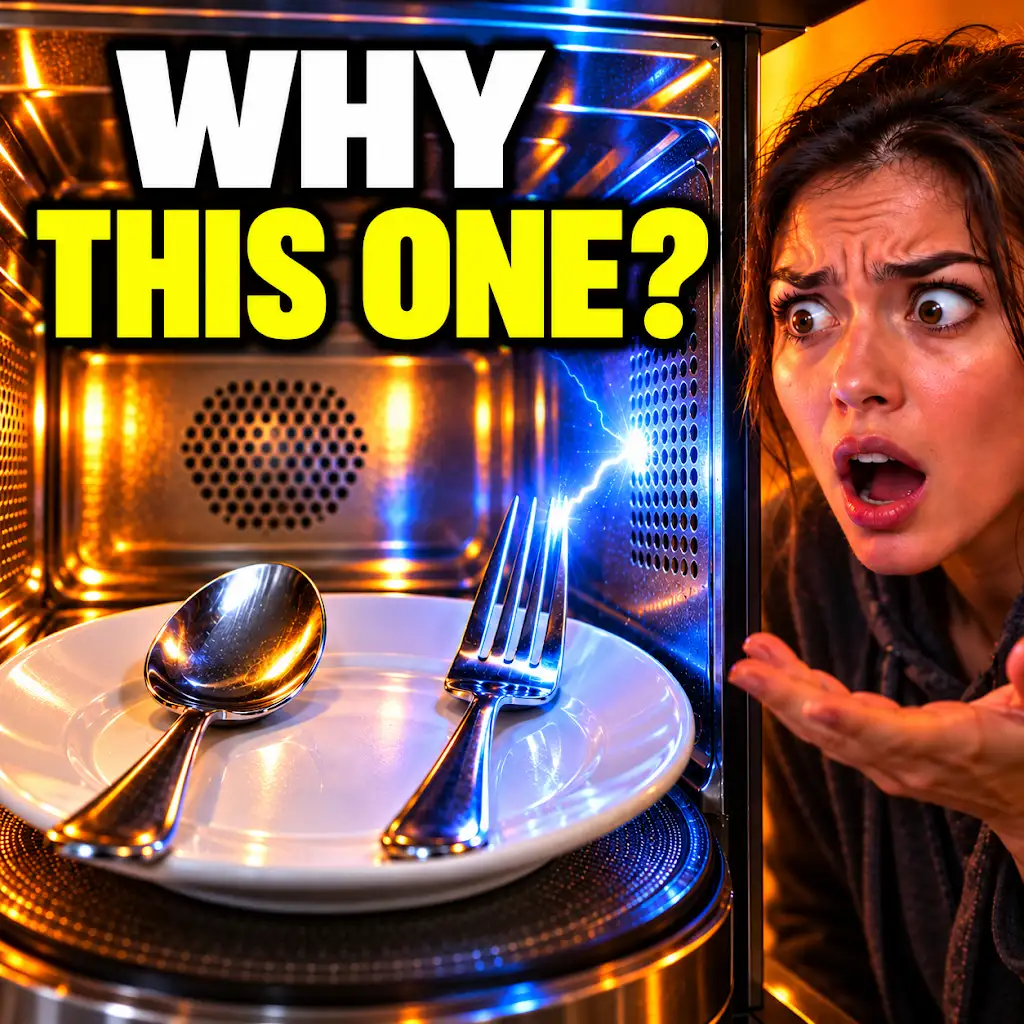
A Fork and a Spoon React Differently in a Microwave. Why?
FAQs
1. Why does a fork spark but a spoon does not?
When a fork is used to cut or scrape against a hard surface, such as a plate, the tines of the fork can create friction and generate static electricity. This static electricity can then discharge as a spark when it reaches a certain level.
2. What causes the static electricity in a fork?
The static electricity in a fork is caused by the friction between the metal tines of the fork and the hard surface it comes into contact with. This friction causes the transfer of electrons between the two surfaces, resulting in a build-up of static electricity.
3. Why doesn’t a spoon spark like a fork?
A spoon does not spark like a fork because it does not have the same potential for creating friction and generating static electricity. The smooth, rounded surface of a spoon does not create the same level of friction as the tines of a fork, so there is no build-up of static electricity to discharge as a spark.
4. Is it safe to use a fork that sparks?
While the sparks from a fork are generally harmless, it is best to avoid using a fork that consistently sparks, as it may indicate damage or wear to the utensil. Additionally, if the sparking is occurring in a microwave, it can be a fire hazard and should be avoided.
5. Can static electricity from a fork cause harm?
The static electricity generated by a fork is typically not strong enough to cause harm to a person. However, it is always a good idea to exercise caution and avoid using utensils that consistently generate sparks, as this may indicate a potential safety hazard.