
So, you’ve noticed it, right? That little flicker, that subtle shift in the color of the streetlights as you walk or drive by. It’s not your imagination, and it’s not some quirky design choice gone rogue. Streetlights change color for a few pretty interesting and practical reasons, mostly boiling down to the technology used to create the light and sometimes to convey information.
The Evolution of Streetlight Illumination
Streetlights haven’t always been the consistent glow we often take for granted. Their history is a fascinating journey from flickering gas lamps to the sophisticated LED systems we see today. Understanding this evolution helps explain why color changes occur.
From Open Flames to Incandescent Glow
The earliest forms of street lighting were, quite literally, open flames. Torches and candles were used in ancient times, but these were unreliable and dangerous for widespread use. The real beginning of street lighting as we know it started with gas lamps in the late 18th and early 19th centuries. These produced a yellowish, flickering light, not exactly ideal for modern visibility, but a vast improvement for its time.
The invention of the incandescent light bulb in the late 19th century revolutionized illumination. These early bulbs produced a warm, yellowish-white light, similar to what you might still find in some older homes. While a significant leap forward, their efficiency was relatively low, and they produced a lot of heat.
The Reign of High-Intensity Discharge (HID) Lamps
For much of the 20th century, street lighting was dominated by High-Intensity Discharge (HID) lamps. These are the workhorses that brought us that distinctive, often slightly greenish or yellowish light.
Mercury Vapor Lamps
These were among the first HID lamps used for street lighting. They produce a bluish-white light, but over time, as the phosphors on the inside of the bulb degrade, they can take on a greenish hue. They were energy-efficient for their time but had a relatively short lifespan and produced light in a limited spectrum.
Metal Halide Lamps
A significant improvement over mercury vapor, metal halide lamps produce a brighter, whiter light. They contain a mixture of metal halides (salts of metals like sodium, thallium, and indium) along with mercury and argon. The specific mixture of halides determines the color output. While generally producing a whiter light, some formulations can lean towards a slightly cooler, bluer tone, while others might appear warmer. The color can also shift slightly over the lamp’s life.
High-Pressure Sodium (HPS) Lamps
These became incredibly popular for street lighting due to their excellent energy efficiency and long lifespan. However, they are known for their characteristic orange-yellow light. This intense, monochromatic light is very effective for visibility in many conditions, but it can distort color perception, making everything look a bit sepia-toned. You’ve likely seen these everywhere – that classic, warm glow.
The Rise of Light Emitting Diodes (LEDs)
The real game-changer in street lighting technology is the LED. LEDs offer unparalleled efficiency, a much longer lifespan, and, importantly for our question, incredible control over color output. This is where the color-changing aspect becomes most prominent.
Streetlights often change color to indicate different statuses or functions, which can be intriguing to many. For a deeper understanding of this phenomenon, you can explore the article titled “The Science Behind Streetlight Colors” available at Freaky Science. This article delves into the reasons behind the color changes, including their implications for traffic management and safety.
The Science of Light Color
To understand why streetlights change color, we need a basic grasp of how light works and how we perceive color.
Wavelengths and Perception
Visible light is a spectrum of electromagnetic radiation, each with a different wavelength. Our eyes perceive these different wavelengths as different colors. The shortest visible wavelengths appear as violet and blue, while the longest appear as red and orange. White light, like sunlight, is a combination of all these colors.
Color Temperature
When we talk about the “color” of artificial light, we often use the term “color temperature,” measured in Kelvin (K).
- Warm white (around 2700K-3000K) has more red and yellow tones, similar to an incandescent bulb.
- Neutral white (around 3500K-4000K) is a balance, often described as pure white.
- Cool white (5000K and above) has more blue tones, appearing brighter and crisper.
How Different Lights Produce Color
- Incandescent bulbs produce light by heating a filament until it glows. This process naturally creates a broad spectrum of wavelengths, resulting in a warm, yellowish light.
- HID lamps (mercury vapor, metal halide, HPS) generate light by passing an electric arc through a gas or vapor. The specific gases and materials used determine the wavelengths emitted. For example, sodium vapor produces a very narrow band of yellow light.
- LEDs produce light through a semiconductor process. An electric current passes through a semiconductor material, causing it to emit light. The color of the light depends on the semiconductor material itself or on phosphors that coat the LED chip and convert the initial blue light into other colors.
Why LEDs Enable Color Shifting
LED technology is the primary driver behind modern streetlights that can change color, and it comes down to their fundamental design and controllability.
The Versatility of LEDs
Unlike older technologies where the color was inherent to the bulb’s composition, LEDs offer much more flexibility.
White Light from Blue LEDs and Phosphors
Most white LEDs are actually blue LEDs coated with a phosphor material. When the blue light from the LED hits the phosphor, it excites the phosphor, causing it to emit light in other wavelengths. By carefully selecting the phosphor mix, manufacturers can create different shades of white light, from warm to cool. The quality and type of phosphor can influence the color rendering index (how accurately colors appear under the light) and the perceived hue.
Multiple Chips for Tunable White
More advanced LED systems use multiple LED chips, each emitting a different color (e.g., red, green, blue, amber). By precisely controlling the intensity of each chip, the system can create a vast range of colors, including various shades of white. This is known as “tunable white” or “dynamic white” technology. This allows for adjustments in color temperature throughout the night or for specific purposes.
RGB and RGBW LEDs
For even greater color flexibility, some LED fixtures incorporate Red, Green, and Blue (RGB) chips, or RGB with a dedicated White (RGBW) chip. By mixing these primary colors in different proportions, they can generate virtually any color of the visible spectrum. This is why you might see streetlights displaying colors beyond just shades of white.
Practical Reasons for Color Changes
The ability of modern streetlights, particularly LEDs, to change color isn’t just a technological novelty. It serves several practical purposes, ranging from efficiency to safety and even aesthetic considerations.
Energy Efficiency and Adaptive Lighting
One of the most significant advantages of color-changing LEDs is their potential for energy savings through adaptive lighting strategies.
Dimming and Color Temperature Adjustment
LEDs can be dimmed much more effectively than older technologies. Dimming reduces energy consumption. More importantly, studies have shown that humans perceive lower light levels better at warmer color temperatures. Therefore, as the night progresses and traffic or pedestrian activity decreases, streetlights can be dimmed and their color temperature shifted to a warmer hue (more yellow/orange), further reducing energy use while maintaining adequate visibility. This is a subtle shift, often not consciously noticed, but it contributes to significant energy savings over time.
Reduced Light Pollution
The ability to tune the color temperature can also help reduce light pollution. Cooler, bluer light scatters more easily in the atmosphere, contributing to skyglow. Shifting to warmer, more yellowish light at night can help mitigate this effect, making it easier to see stars and reducing the impact on nocturnal wildlife.
Safety and Signaling
The ability to change color offers new possibilities for signaling and enhancing public safety in ways that were impossible with static lights.
Dynamic Warning Systems
Imagine streetlights that can change color to indicate specific conditions. For instance, they might turn red if a pedestrian crossing is active, amber to warn of an approaching emergency vehicle, or blue to highlight a hazardous area or construction zone. This provides immediate, visual cues without relying solely on static signage or audible alerts.
Adaptive Lighting for Specific Tasks
In certain areas, like near schools or busy intersections, streetlights might be programmed to emit a brighter, cooler white light during peak hours to maximize visibility for drivers and pedestrians. As activity subsides, the color and intensity can be adjusted.
Deterrence and Mood Setting
While not always the primary reason, dynamic lighting can sometimes be used for deterrence. For example, certain colors or flashing patterns could theoretically be used to make an area feel less welcoming to illicit activity. Conversely, in public spaces, softer, warmer colors might be used to create a more inviting ambiance during evening hours.
Maintenance and Operational Information
In some advanced smart city implementations, the color of a streetlight can even be used to communicate information to maintenance crews or city officials.
Status Indicators
A streetlight might subtly change color to indicate it’s due for maintenance, has a fault, or is part of a network that requires attention. This allows for proactive management and quicker response times to issues.
Network Connectivity and Control
In a wirelessly connected city infrastructure, a streetlight’s color could indicate its network status – whether it’s connected, disconnected, or undergoing an update. This provides a visual confirmation of the smart city network’s health.
Streetlights changing color can often leave pedestrians curious about the reasons behind this phenomenon. A related article that delves into the science and technology of streetlights can be found on Freaky Science, which explains how different colors indicate various functions and statuses of the lights. For those interested in understanding more about this topic, you can explore the article here. This resource provides insights into the mechanisms that govern streetlight operations and the implications for urban safety and efficiency.
Why You Might Notice Color Changes
| Reason for Color Change | Description | Common Colors | Impact on Visibility |
|---|---|---|---|
| Energy Efficiency | Switching to LED or other energy-saving bulbs that emit different colors. | White, Yellow, Amber | Improves visibility and reduces energy consumption. |
| Light Pollution Reduction | Using colors that minimize glare and skyglow to protect night environment. | Amber, Warm White | Reduces glare and improves night sky visibility. |
| Maintenance and Aging | Old bulbs change color as they age or degrade over time. | Yellow to Orange, Fading White | Decreases visibility and may require replacement. |
| Safety and Traffic Control | Color changes to indicate different zones or alert drivers. | Red, Blue, Green | Enhances driver awareness and pedestrian safety. |
| Technological Upgrades | Adoption of smart lighting systems with dynamic color changes. | Multiple colors (RGB LEDs) | Allows adaptive lighting for different conditions. |
The reasons you personally observe streetlights changing color can vary from the specific technology being used to the time of night and even your own visual perception.
The Shift from HID to LED
Many cities are in a transitional phase, upgrading their infrastructure from older HID lamps (like high-pressure sodium or metal halide) to modern LED systems. During this transition, you’ll encounter a mix of both. The static, consistent color of HID lamps will be interspersed with the dynamic, potentially changing colors of LEDs. This juxtaposition makes the color changes of LEDs more noticeable.
Subtle Adjustments in LED Systems
Even within LED systems, color shifts can be subtle. The color temperature might change by a few hundred Kelvin, which might not be dramatic but can be perceived by the human eye, especially if you’re paying attention. These adjustments are often programmed to occur gradually over time, perhaps in 15-minute or 30-minute intervals, to optimize energy use and light quality.
Environmental Factors and Aging
The environment can also play a role. Extreme temperatures can sometimes affect the performance and color output of lighting systems, although modern LEDs are designed to be quite robust. Over a long period, the phosphors in LEDs can degrade, which might lead to slight shifts in color over the years, though this is a slow process.
Your Own Perception
Our perception of color is subjective and can be influenced by surrounding light conditions, our own mood, and even what we’ve been looking at previously. If you’ve just come from an area with a different color light, the current streetlight’s color might seem more pronounced. Additionally, as mentioned, warmer colors are often perceived as dimmer, so a shift to a warmer tone might make the light seem less bright, even if the actual lumen output hasn’t changed drastically.
The Future of Streetlight Color
The evolution of street lighting is far from over. As technology advances and cities become “smarter,” the role and capabilities of streetlights, including their color-changing abilities, will continue to expand.
Predictive and Responsive Lighting
Future streetlights might be even more sophisticated, employing sensors to detect ambient light, weather conditions, and even the presence of people or vehicles. This data could inform real-time adjustments to color, intensity, and even light patterns to optimize visibility, safety, and energy efficiency. For instance, lights could dynamically brighten and shift to a cooler color temperature as a cyclist approaches.
Integration with Smart City Networks
Streetlights are increasingly becoming integral nodes in larger smart city networks. Their ability to change color could be leveraged for a wide range of applications beyond basic illumination. They might communicate with autonomous vehicles, provide localized environmental data, or even act as navigational aids.
Personalized and Human-Centric Lighting
There’s a growing interest in “human-centric lighting,” which aims to mimic natural light patterns to positively impact human health and well-being. This could involve streetlights that adjust their color temperature throughout the night to align with our natural circadian rhythms, potentially improving sleep quality for residents living nearby.
Artistic and Aesthetic Applications
While practicality is the primary driver, the ability to generate a spectrum of colors also opens up possibilities for artistic expression in urban design. Streetlights could be programmed for dynamic light shows during festivals or holidays, or to subtly enhance the architectural features of buildings and public spaces, adding a new dimension to the urban nighttime environment. The focus will likely remain on functionality, but the potential for aesthetic enhancement is undeniable.
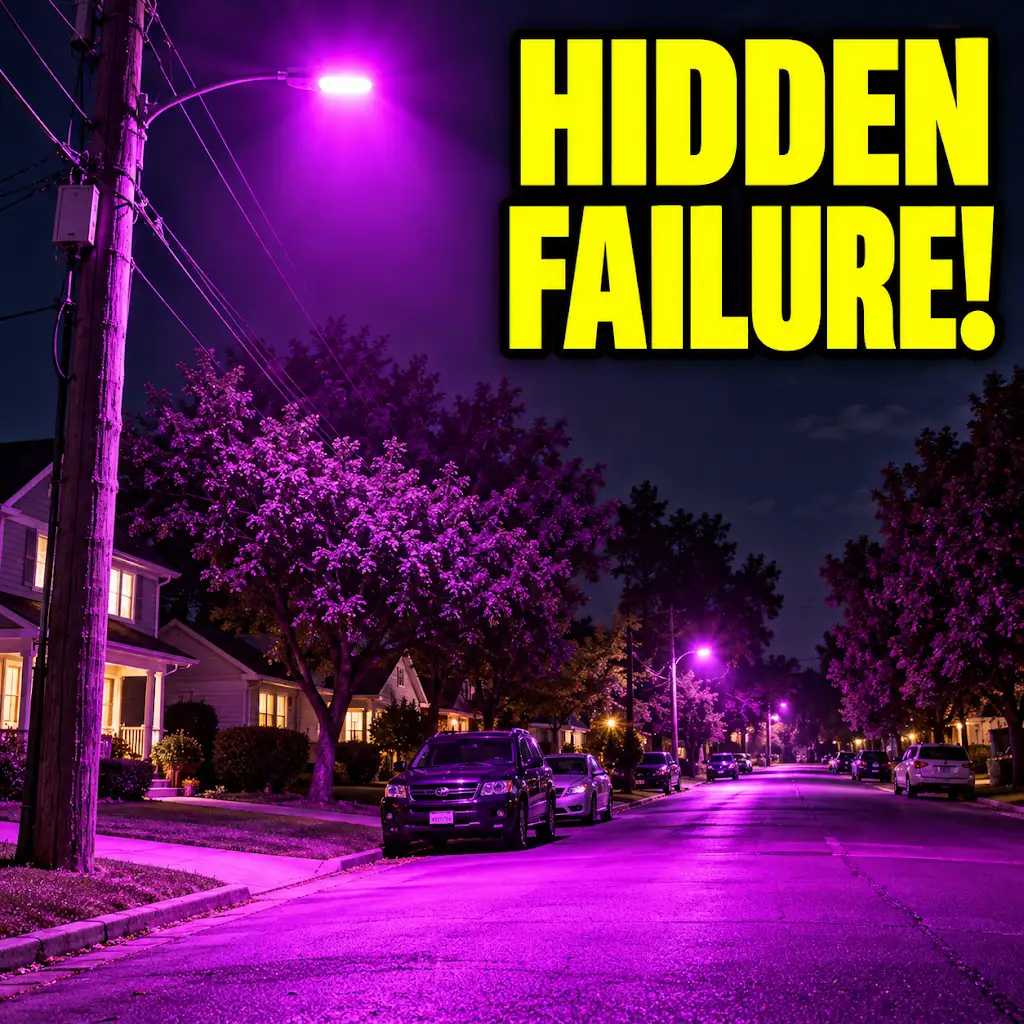
Why The Streetlights Are Turning Purple
FAQs
Why do streetlights change color?
Streetlights change color due to different types of bulbs being used. Traditional streetlights use high-pressure sodium bulbs, which emit a yellowish-orange light. However, many cities are now switching to LED bulbs, which can emit a range of colors including white, blue, and even purple.
What are the benefits of streetlights changing color?
Changing streetlight colors can help improve visibility at night, enhance the aesthetics of the area, and even have a positive impact on public safety. Different colors can also be used to create specific atmospheres for events or holidays.
How are streetlights able to change color?
Streetlights can change color through the use of smart technology that allows for remote control or automated adjustments. This technology can adjust the color temperature and brightness of the lights based on factors such as time of day, weather conditions, or specific needs of the area.
Are there any drawbacks to streetlights changing color?
One potential drawback of streetlights changing color is the impact on wildlife, particularly nocturnal animals that may be sensitive to certain colors of light. Additionally, frequent changes in color could be distracting or confusing for drivers and pedestrians.
Can changing streetlight colors help reduce energy consumption?
Yes, changing streetlight colors to more energy-efficient options like LED bulbs can help reduce energy consumption and lower maintenance costs. LED bulbs are known for their longevity and energy efficiency compared to traditional bulbs, making them a popular choice for many cities looking to save on energy expenses.