You might be wondering, as you pop your leftover pizza into the microwave for a quick reheat, why that specific humming appliance in your kitchen operates at precisely 2.45 GHz. It’s not some arbitrary number picked from a hat; there’s a fascinating blend of physics, engineering, and even a touch of historical happenstance behind this ubiquitous frequency. This article will delve into the scientific reasons and practical considerations that make 2.45 GHz the reigning champion of home microwave ovens.
To understand why 2.45 GHz is so effective, you first need to grasp the basic mechanism by which microwaves heat your food. It all boils down to the interaction of electromagnetic radiation with water molecules.
Water: The Key Player
Your food, especially the parts you want to heat, contains a significant amount of water. Water molecules (H₂O) are polar, meaning they have a slight positive charge on the hydrogen atoms and a slight negative charge on the oxygen atom. This polarity makes them behave like tiny magnets.
Dipole Rotation and Molecular Friction
When electromagnetic waves at the microwave frequency hit these water molecules, they cause them to rapidly rotate and align themselves with the oscillating electric field of the waves. Imagine the water molecules constantly trying to dance in sync with an invisible, rapidly changing force. This frantic rotation and reorientation generates friction between the molecules. It’s this molecular friction that converts the electrical energy of the microwaves into thermal energy – heat – which then cooks your food from the inside out.
Other Polar Molecules
While water is the primary target, other polar molecules commonly found in food, such as fats and sugars, also contribute to the heating process, though generally to a lesser extent than water. Non-polar molecules, like many plastics and ceramics, are largely unaffected by microwaves and are therefore used for microwave-safe cookware.
Microwave ovens operate at a frequency of 2.45 GHz primarily because this frequency is effective for agitating water molecules, which is essential for heating food. The choice of this frequency is not arbitrary; it falls within the microwave range of the electromagnetic spectrum, where water absorbs energy efficiently. For a deeper understanding of the science behind microwave technology and its applications, you can read more in this related article on Freaky Science: Freaky Science.
The Resonance Frequency of Water
The effectiveness of microwave heating is directly tied to how well the microwave frequency matches the natural resonance frequency of the water molecule. This is where 2.45 GHz truly shines.
Understanding Resonance
In physics, resonance occurs when an object is subjected to a driving force at its natural frequency of vibration. When this happens, the amplitude of the object’s vibration increases dramatically. Think of pushing a child on a swing: if you time your pushes correctly with the swing’s natural rhythm, you can send them soaring. If you push randomly, it’s much less effective.
The Dielectric Relaxation of Water
Water molecules, due to their polar nature, exhibit a phenomenon called dielectric relaxation. This refers to the process by which the polar molecules reorient themselves in response to an oscillating electric field. Water has a dielectric relaxation frequency that peaks in the microwave range, meaning it absorbs microwave energy most efficiently at these frequencies.
Why 2.45 GHz is a Sweet Spot
The dielectric relaxation of water has a peak absorption around 2.45 GHz at room temperature. At this frequency, the water molecules are able to rotate and align with the oscillating electric field with remarkable speed and efficiency. This leads to rapid and effective heating. If the frequency were much lower, the water molecules wouldn’t have enough time to fully reorient themselves before the field reversed, leading to less efficient energy transfer. If the frequency were much higher, the water molecules might not be able to keep up with the rapid oscillations, again reducing efficiency.
Temperature Dependence
It’s important to note that the exact peak absorption frequency of water is slightly temperature-dependent. However, 2.45 GHz remains the most efficient frequency across the typical temperature ranges encountered during cooking.
Practical Considerations and Regulations

Beyond the pure physics of water molecule interaction, several practical and regulatory factors have cemented 2.45 GHz as the standard for microwave ovens.
Efficiency and Penetration Depth
At 2.45 GHz, microwave energy penetrates food to a sufficient depth to cook it effectively without overcooking the surface or leaving the interior raw. The penetration depth is inversely related to frequency; higher frequencies penetrate less deeply. A balance is needed for efficient cooking.
Safety and Containment
Microwave ovens are designed to contain the electromagnetic radiation within the cooking cavity. The magnetron, the component that generates the microwaves, operates at a specific frequency. This frequency, along with the oven’s construction (metal cavity, mesh door), ensures that the microwaves are reflected back into the oven and are not emitted into your kitchen. The 2.45 GHz frequency is also within a range that can be effectively contained by standard microwave oven designs without posing a significant external radiation hazard.
Regulatory Standards and Global Harmonization
International regulatory bodies, such as the International Telecommunication Union (ITU), have allocated frequency bands for various uses, including industrial, scientific, and medical (ISM) applications. The 2.4 GHz ISM band, which includes 2.45 GHz, is widely designated for microwave ovens. This global harmonization has been crucial for the widespread adoption and manufacturing of microwave ovens worldwide. Manufacturers can produce ovens that comply with regulations in most countries, ensuring a global market.
Interference with Other Devices
The 2.4 GHz band is also used for other wireless communication technologies, such as Wi-Fi and Bluetooth. However, microwave ovens are designed to operate with very tight emission standards, minimizing interference with these other devices. While some minor interference can occasionally occur, it’s generally not a significant issue due to the localized and intermittent use of microwave ovens. The specific frequency of 2.45 GHz was chosen as part of the ISM band allocation, balancing its effectiveness for heating with the need to coexist with other burgeoning wireless technologies.
The Magnetron: The Heart of the Microwave

The device that generates the microwaves within your oven is called a magnetron. Its design and operation are intrinsically linked to the 2.45 GHz frequency.
How a Magnetron Works
A magnetron is a high-power vacuum tube that uses a combination of electric and magnetic fields to generate microwave radiation. Electrons are emitted from a heated cathode and are then accelerated towards an anode. Strong magnetic fields cause these electrons to travel in circular paths. As the electrons interact with resonant cavities within the anode structure, they produce high-frequency electromagnetic waves, which are then directed into the cooking chamber.
Designing for 2.45 GHz
The physical dimensions and electrical characteristics of the resonant cavities within the magnetron are precisely engineered to oscillate at 2.45 GHz. This is a fundamental aspect of its design. If you were to change the frequency, you would need to redesign the internal structure of the magnetron significantly.
Power Output and Frequency Stability
Magnetrons designed for 2.45 GHz can efficiently produce the high power output required for cooking. Furthermore, they are designed to maintain a stable output frequency, ensuring consistent heating performance. The manufacturing processes and materials used are optimized for this specific frequency band.
Microwave ovens operate at a frequency of 2.45 GHz primarily because this wavelength is particularly effective at agitating water molecules, which is essential for heating food. The choice of this frequency is not arbitrary; it strikes a balance between efficient energy absorption and minimal interference with other communication devices. For a deeper understanding of the science behind this frequency and its implications, you can read more in this insightful article on the topic. To explore further, check out this related article.
Historical Development and Economic Factors
| Reason | Explanation |
|---|---|
| Water Molecules | 2.45 GHz frequency is absorbed by water molecules, causing them to vibrate and generate heat, which is ideal for heating food. |
| Penetration | 2.45 GHz frequency has good penetration properties, allowing it to effectively heat the entire volume of the food. |
| Safety | 2.45 GHz frequency is within the ISM (Industrial, Scientific, and Medical) band and is considered safe for consumer use. |
While the physics points strongly to 2.45 GHz, historical context and economic considerations also played a role in its standardization.
Early Microwave Oven Development
The development of microwave ovens began in the mid-20th century, with pioneers like Percy Spencer at Raytheon making groundbreaking discoveries. Early research and development focused on identifying the most effective frequencies for heating food.
The Rise of the 2.45 GHz Standard
Through experimentation and the allocation of the 2.4 GHz ISM band, 2.45 GHz emerged as a practical and efficient choice. This frequency offered a good balance between heating effectiveness, penetration depth, and the ability to be generated by the available magnetron technology of the time.
Economies of Scale
Once a standard frequency was established, manufacturers could invest in mass production of magnetrons and other components specifically for that frequency. This led to economies of scale, making microwave ovens more affordable and accessible to consumers. Imagine the logistical nightmare and increased costs if every manufacturer used a different, non-standard frequency.
The Internet and Wi-Fi Coexistence
While the 2.4 GHz band is now heavily utilized by Wi-Fi and Bluetooth, the microwave oven’s use of 2.45 GHz predates the widespread adoption of these technologies in homes. The initial decision to use this band was not influenced by the need for Wi-Fi coexistence but rather by the scientific and engineering considerations of the time. The subsequent widespread use of Wi-Fi in the same band has required careful engineering of both technologies to minimize interference.
Beyond 2.45 GHz: Future Possibilities?
While 2.45 GHz is deeply entrenched, research into alternative frequencies for microwave heating does exist.
Exploring Other Frequencies
Scientists and engineers have investigated other microwave frequencies for heating applications. Some research suggests that frequencies slightly higher or lower than 2.45 GHz might offer marginal improvements in certain specific applications or with specific types of food.
The Challenges of Change
However, changing the industry standard would be an immense undertaking. It would require redesigning and re-certifying all microwave ovens, as well as potentially re-allocating frequency bands, which is a complex international process. The economic cost and logistical hurdles would be significant.
Specialized Applications
In some highly specialized industrial or scientific applications, other microwave frequencies might be employed for specific heating or processing needs. These are typically not consumer-facing and are optimized for very particular tasks. For the vast majority of home cooking, 2.45 GHz remains the most practical and widely adopted solution.
In conclusion, the seemingly simple choice of 2.45 GHz for your microwave oven is a testament to the elegant interplay of scientific principles, engineering ingenuity, and practical considerations. From the resonant dance of water molecules to the robust design of the magnetron and the global harmonization of radio frequencies, this specific frequency has been finely tuned to efficiently and safely bring warmth to your meals. So, the next time you hear that familiar hum, you can appreciate the sophisticated science at play.
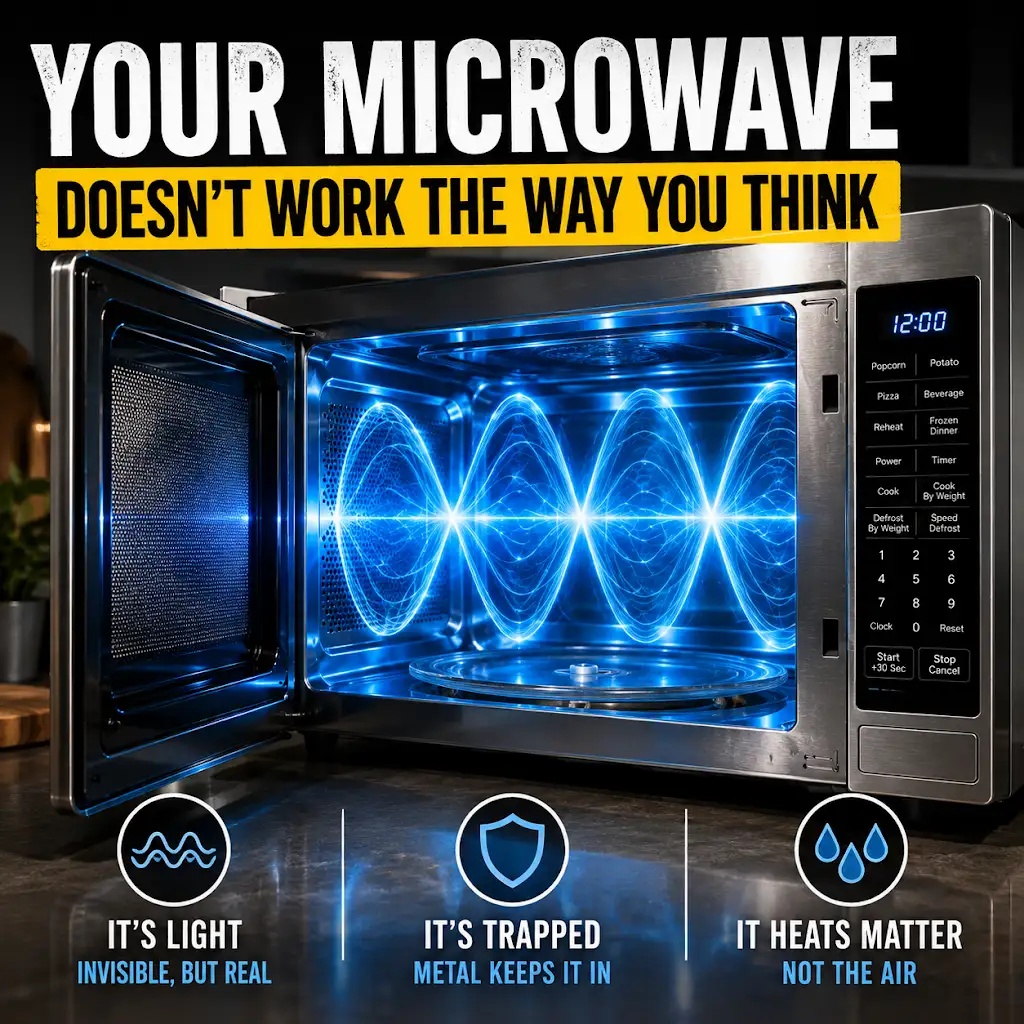
Your Microwave Doesn’t Work the Way You Think
FAQs
What is the significance of 2.45 GHz in microwave ovens?
2.45 GHz is the frequency at which water molecules resonate, causing them to heat up. This makes it the ideal frequency for cooking or heating food in a microwave oven.
Why do microwave ovens use 2.45 GHz specifically?
2.45 GHz is the frequency at which water molecules absorb microwave energy most efficiently, leading to rapid heating of the food. This frequency also penetrates food effectively, allowing for more even heating.
Are there any safety concerns related to the use of 2.45 GHz in microwave ovens?
Microwave ovens are designed with safety features to prevent leakage of 2.45 GHz radiation. When used according to the manufacturer’s instructions, microwave ovens are safe for heating and cooking food.
Can other devices interfere with the operation of microwave ovens at 2.45 GHz?
Other devices that operate at the same frequency, such as some wireless routers and cordless phones, can potentially cause interference with microwave ovens. However, proper shielding and design of microwave ovens minimize this interference.
Is 2.45 GHz the only frequency used in microwave ovens?
While 2.45 GHz is the most common frequency used in household microwave ovens, some commercial and industrial microwave ovens may operate at different frequencies for specific applications.