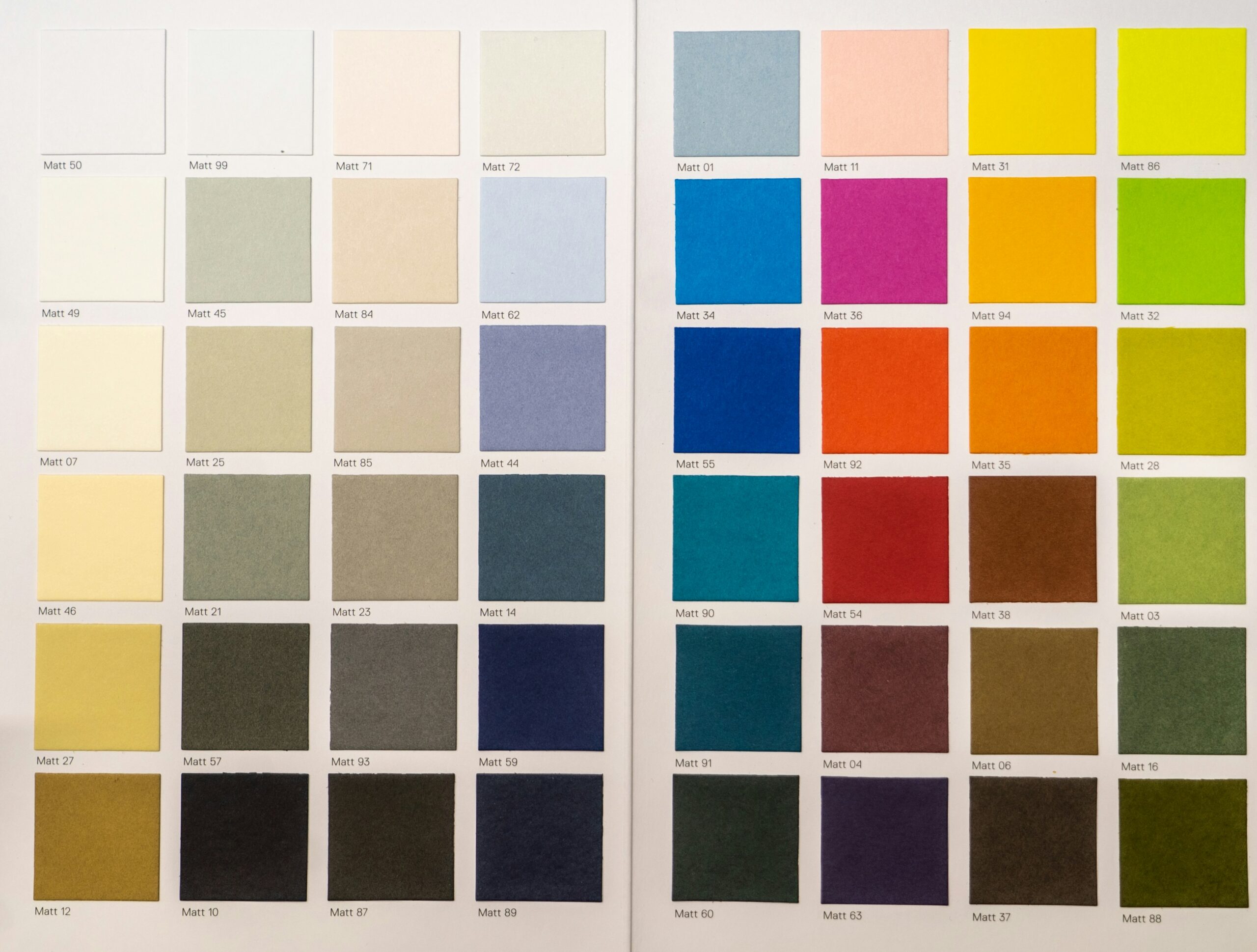
You’ve probably stood in front of a store window, admiring a vibrant red sweater, only to pick it up and notice it appears a slightly different shade under the harsh fluorescent lights of the changing room. Or perhaps you’ve painted a room, meticulously matching a swatch under natural daylight, only to find the finished walls look unexpectedly muted or even a touch purple when your evening lamps are on. It’s a common experience, and one that can be surprisingly baffling. You’re seeing the same object, the same paint, yet the color seems to shift and play tricks on you. You might wonder why colors don’t just… stay the same. Why can’t a color just be a color, regardless of the light bathing it?
The answer, as it turns out, is a testament to the remarkable biological and neurological machinery that is your brain and your eyes working in concert. The consistency of color you perceive, despite radical changes in illumination, isn’t some magical property of the objects themselves. Instead, it’s a sophisticated perceptual phenomenon, a carefully orchestrated dance between incoming light and your brain’s interpretation of it. You are not simply registering raw light wavelengths; you are actively constructing a stable, meaningful visual world. This ability is called color constancy, and it’s a fundamental aspect of your visual experience, allowing you to navigate your environment with a sense of reliable color information.
The Illusion of Objectivity: What You See Isn’t Pure Light
It’s easy to fall into the trap of thinking that color is an inherent, objective property of an object, like its weight or its texture. You might believe that a red apple is always red, and that the light merely illuminates that inherent redness. While it’s true that the physical properties of an object, such as the pigments or dyes it contains, determine which wavelengths of light it reflects or absorbs, the color you perceive is not solely a product of those reflected wavelengths.
Consider this: a bright red apple under direct sunlight will reflect a very different amount of light, and potentially a slightly different distribution of wavelengths, than the same apple in a dim, tungsten-lit room. If your vision were a simple camera, recording raw light data, the apple would indeed appear drastically different. However, your brain is far more sophisticated than a camera. It doesn’t just record; it interprets, corrects, and makes assumptions. This constant recalibration is what allows you to recognize that the apple remains an “apple” – a consistently colored object – despite the shifting visual cues.
The Spectrum of Light: A Foundation of Color Perception
At its core, color perception begins with light. Visible light is a form of electromagnetic radiation that exists as a spectrum of wavelengths. When light strikes an object, the object absorbs some wavelengths and reflects others. The wavelengths that are reflected are what reach your eyes, and your brain then translates these wavelengths into the sensation of color. For example, an object that appears red to you is reflecting primarily the longer wavelengths of visible light (around 620-750 nanometers) and absorbing most of the shorter and middle wavelengths. A blue object reflects shorter wavelengths (around 450-495 nanometers), and so on.
Objects as Selective Reflectors
Each object in your environment possesses unique physical and chemical properties that dictate its interaction with light. These properties determine how much of each wavelength of light is absorbed and how much is reflected. A tomato, with its lycopene pigment, absorbs most wavelengths except for the longer ones, which it reflects, leading to your perception of redness. A patch of grass, with its chlorophyll, absorbs the red and blue parts of the spectrum and reflects the green wavelengths, hence its verdant appearance. This selective reflection is the physical basis for color, but it’s only half the story.
Understanding why colors appear consistent under different lighting conditions is a fascinating topic in the field of color perception. An insightful article that delves into this phenomenon can be found at Freaky Science, where it explores the science behind color constancy and how our brains interpret colors despite varying light sources. This concept is crucial for artists, designers, and anyone interested in the interplay between light and color in our everyday lives.
Your Eyes: The Sophisticated Sensors
Your eyes are not passive receivers of light. They are dynamic, complex organs designed to gather and process visual information. Within your eyes, specialized cells called photoreceptors play a crucial role in converting light into electrical signals that your brain can understand.
Rods and Cones: The Photoreceptor Duo
You have two main types of photoreceptors: rods and cones. Rods are highly sensitive to light and are responsible for vision in low-light conditions (scotopic vision). They don’t contribute to color vision. Your cones, on the other hand, are responsible for color vision (photopic vision) and function best in brighter light. You have three types of cones, each sensitive to different ranges of wavelengths:
- Short-wavelength cones (S-cones): Primarily sensitive to blue light.
- Medium-wavelength cones (M-cones): Primarily sensitive to green light.
- Long-wavelength cones (L-cones): Primarily sensitive to red light.
The ratio of the signals generated by these three types of cones is what your brain uses to interpret color. For instance, if your S-cones are stimulated strongly, your M-cones moderately, and your L-cones weakly, your brain might interpret that as a shade of blue.
The Trichromatic Theory: A Foundation for Color
The understanding of how cones contribute to color perception is often described by the trichromatic theory of color vision. This theory posits that our color vision is based on the combined activity of these three types of cone cells, each responding to different parts of the light spectrum. While it’s a simplification, it provides a fundamental framework for understanding how your eyes detect color. The relative stimulation of your S, M, and L cones under a particular light source is the initial step in generating a color sensation.
The Brain: The Master Interpreter and Corrector
While your eyes are the sensors, your brain is the architect of your perceived reality. It takes the raw data from your eyes and performs complex calculations to create a stable and meaningful visual experience. Color constancy is a prime example of this interpretive power.
The Role of Chromatic Adaptation
One of the key mechanisms behind color constancy is chromatic adaptation. This is a process where your visual system adjusts its sensitivity to different wavelengths of light in response to the overall color of the illumination. Imagine you’re in a room illuminated by a strong yellowish light. Your eyes and brain will, over time, adapt to this yellowish hue. They effectively “discount” the yellow, so that white objects in the room still appear white to you, rather than yellowish.
When the light source changes, your visual system doesn’t immediately revert to its previous state. It’s a dynamic process. This adaptation is crucial because it allows you to perceive the intrinsic color of an object rather than the color of the light illuminating it. If you didn’t have chromatic adaptation, everything would appear tinted with the color of the light source. The world would constantly look like you’re viewing it through a stained-glass window.
The “Illuminant” as a Reference Point
Your brain doesn’t just process the light reflected from an object in isolation. It also tries to infer the color of the light source – the illuminant. This is a remarkable feat, as you rarely have a direct perception of the illuminant’s color. Your brain uses contextual cues, such as the colors of surrounding objects, to make an educated guess about the illuminant. Once it has an estimate of the illuminant, it can then “subtract” that information from the light reflected by an object, revealing what it perceives as the object’s “true” color.
For example, if you are in a room with a reddish light, your brain might infer that the illuminant is reddish. It then adjusts your perception of all objects in the room to compensate for this reddish cast. This is why a white piece of paper under reddish light will still look white to you, even though the reflected light from it is indeed tinted red. Your brain is essentially saying, “I know the light is red, so this object that reflects a lot of red light must be white.”
The Importance of Context and Surrounding Colors
The colors of objects surrounding the target object play a significant role in color constancy. Your brain uses these neighboring colors as references to help determine the color of the illuminant. This is why it can be difficult to judge the true color of an object when it’s isolated or viewed against a neutral background, or when the surrounding colors are unusual.
Simultaneous Contrast: A Visible Demonstration
A phenomenon called simultaneous contrast offers a visible, albeit sometimes exaggerated, demonstration of how surrounding colors influence our perception. If you place a gray square on a red background, the gray square will appear to have a greenish tint. Conversely, if you place the same gray square on a green background, it will appear to have a reddish tint. This occurs because your visual system exaggerates the differences between neighboring colors, a mechanism that, in a more subtle way, contributes to color constancy. Your brain is trying to highlight boundaries and differences, which can be useful for object recognition.
The “Gray World” and “White Patch” Hypotheses
There are several theories that attempt to explain how the brain might achieve color constancy. The “gray world” hypothesis suggests that the brain assumes that, on average, the world’s surface reflects neutral (gray) light. Therefore, if it detects a particular color cast in the overall scene, it assumes that the illuminant is responsible for that cast and compensates for it. The “white patch” hypothesis is similar, suggesting the brain looks for the whitest object in the scene and assumes it is truly white, then uses that as a reference to determine the illuminant’s color. While these are simplifications, they highlight the brain’s reliance on contextual information.
Understanding why colors appear consistent under varying lighting conditions is a fascinating topic in the field of color science. An insightful article that delves into this phenomenon can be found on Freaky Science, which explores how our perception of color is influenced by the surrounding light. This resource provides a deeper look into the mechanisms of color constancy and how our brains interpret colors despite changes in illumination. For more information, you can read the article here.
When Color Constancy Fails: Optical Illusions and Limitations
Despite the remarkable robustness of color constancy, it’s not foolproof. There are instances where our perceptual system can be tricked, leading to the striking discrepancies we see in some optical illusions, or the frustrations of paint colors appearing different in different rooms.
The Dress: A Famous Example of Constancy Failure
The infamous “The Dress” phenomenon, where people vehemently disagreed on whether the dress was blue and black or white and gold, is a classic example of color constancy breaking down. The image was ambiguous, and people’s brains made different assumptions about the illuminant. Some interpreted the lighting as yellowish, leading them to see white and gold (discounting the yellow to see white). Others interpreted the lighting as bluish, leading them to see blue and black (discounting the blue to see black). This ambiguity highlights that color constancy is an inference, not an absolute guarantee.
The Impact of Unusual Illuminants
When you are exposed to highly unusual or saturated light sources, like a deep red or green theatrical spotlight, your color constancy can be overwhelmed. In such extreme conditions, the illuminant’s color is so dominant that your brain struggles to discount it effectively. This is why a person under a red spotlight will appear flushed and reddish, and a white wall will look distinctly colored. Your visual system is trying its best, but it has limits.
Changes in Object Reflectance
If the actual reflective properties of an object change – for instance, if a red apple starts to rot and its pigment changes – then even with perfect color constancy, it will appear a different color. Color constancy deals with the same object under different lights, not with changes in the object’s inherent properties.
In conclusion, the reason colors remain consistent in different lighting conditions is a testament to the sophisticated interplay between your eyes and your brain. You aren’t passively registering light; you are actively interpreting, adapting, and inferring. Your visual system works tirelessly to ensure that you perceive a stable, recognizable world, allowing you to identify objects, navigate your surroundings, and experience the richness of color, even when the light is constantly shifting. It’s a subtle, ever-present marvel of human perception, turning the chaotic flux of light into a reliable and ordered visual experience.

Why Your Brain Had to Invent Magenta
FAQs

1. Why do colors appear different in different lighting?
Colors appear different in different lighting because the light source can affect the way our eyes perceive the colors. Different types of lighting, such as natural sunlight, incandescent, fluorescent, and LED lights, emit different wavelengths of light, which can alter the way colors are reflected and absorbed.
2. Why do some colors appear more vibrant in certain lighting conditions?
Some colors may appear more vibrant in certain lighting conditions because the light source can enhance or diminish certain wavelengths of light. For example, natural sunlight can make colors appear more vibrant due to its full spectrum of light, while fluorescent lighting may make colors appear duller.
3. Why do some colors appear more muted in certain lighting conditions?
Certain colors may appear more muted in certain lighting conditions because the light source may not emit the full spectrum of light, causing certain wavelengths to be absorbed or reflected differently. This can result in colors appearing less vibrant or muted under specific lighting.
4. Why do some colors appear the same in different lighting?
Some colors may appear the same in different lighting because they have consistent reflective properties across various light sources. Additionally, the human eye and brain are capable of adjusting to different lighting conditions, allowing us to perceive certain colors as consistent despite changes in lighting.
5. How can we ensure colors stay consistent across different lighting conditions?
To ensure colors stay consistent across different lighting conditions, it is important to use standardized lighting and color management techniques. This can include using color-calibrated lighting, selecting color-accurate materials and finishes, and utilizing color management tools to maintain consistency in various lighting environments.