You’re standing in your kitchen, ready to whip up a culinary masterpiece. You’ve got your trusty cast iron skillet, seasoned to perfection, gleaming under the kitchen lights. But then you look at your new induction cooktop, its sleek, modern surface promising lightning-fast heat and precise control. A question flickers in your mind: Will these two seemingly disparate technologies play well together? The answer, you’ll discover, is a resounding yes, and the science behind it is fascinating.
The first and most crucial reason your cast iron pan dances beautifully on an induction cooktop is its inherent magnetic property. Induction cooking doesn’t generate heat directly through the element itself, like a gas flame or a coiled electric burner. Instead, it uses a magnetic field to induce an electric current within the cookware, and it’s this current that generates heat. Think of it like a magical, invisible force that only works with certain materials.
The Power of Magnetism: Ferrous Metals are Key
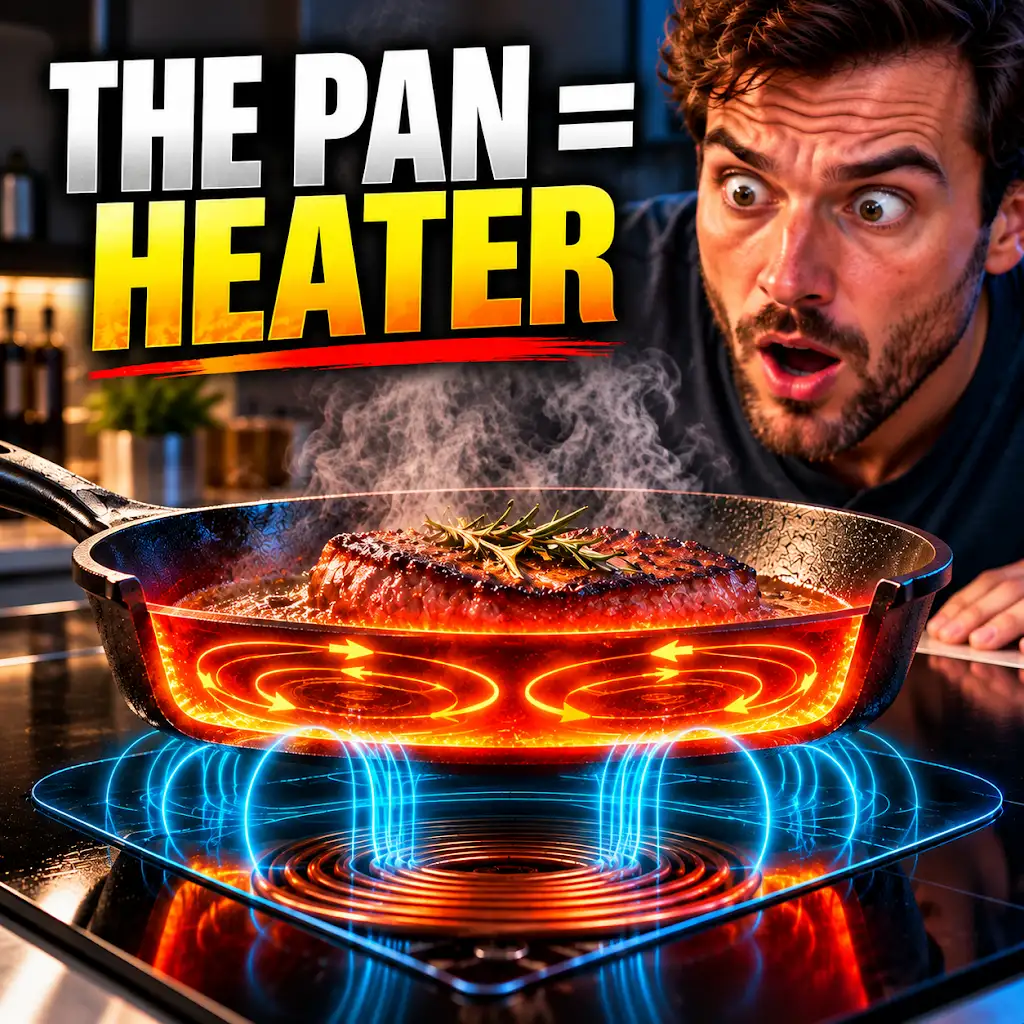
Induction cooktops rely on a phenomenon called electromagnetic induction. Beneath the smooth glass surface of your cooktop, there’s a coil of copper wire. When you turn on the burner, an alternating electric current flows through this coil, creating a fluctuating magnetic field. For this magnetic field to interact with your cookware and generate heat, the cookware must contain a ferrous material – that is, iron.
Cast Iron’s Magnetic Heart: A Natural Fit
Cast iron, by its very composition, is rich in iron. This makes it naturally ferromagnetic, meaning it readily responds to magnetic fields. When you place your cast iron skillet on an active induction burner, the fluctuating magnetic field generated by the cooktop penetrates the base of the pan. This creates tiny electrical currents, known as eddy currents, within the iron. These eddy currents encounter resistance as they flow through the metal, and this resistance is what produces heat. It’s a direct conversion of electrical energy into thermal energy, happening right where the food meets the pan.
Other Cookware Companions (and Why They Don’t Cut It)
You might be wondering about your other pots and pans. Stainless steel cookware can work on induction, but only if it has a magnetic base. Many high-quality stainless steel pans have a layer of aluminum or copper sandwiched between stainless steel layers for better heat distribution, but if the outer layers aren’t magnetic, they won’t work. Aluminum, copper, glass, and ceramic cookware, while excellent on their own, are not ferromagnetic and therefore will not heat up on an induction surface. They simply don’t have the necessary magnetic properties to be excited by the cooktop’s magnetic field.
Cast iron cookware has gained popularity for use on induction cooktops due to its magnetic properties, which allow it to efficiently transfer heat. For a deeper understanding of why cast iron works so well with induction technology, you can explore this related article on the topic. It provides insights into the science behind induction cooking and the materials that are best suited for it. To read more, visit Freaky Science.
The Efficiency Equation: How Induction Makes Cast Iron Even Better
Beyond just compatibility, induction cooking elevates the performance of your cast iron. The efficiency of this pairing is a significant advantage for any home cook who values speed, precision, and energy savings.
Direct Energy Transfer: No Wasted Heat
Traditional stovetops lose a considerable amount of heat to the surrounding air. Think about the heat rising around a gas burner or the radiant heat emanating from an electric coil. This wasted energy means your food takes longer to cook, and your kitchen gets hotter. Induction, on the other hand, is incredibly efficient because it transfers energy directly to the cookware. The magnetic field bypasses the air and heats the pan itself. This means virtually all the energy generated by the cooktop is used to cook your food.
Rapid Heating: From Zero to Sizzling in Seconds
Because of this direct energy transfer, cast iron on induction heats up remarkably fast. That thick, heavy cast iron skillet that might take a while to come to temperature on a gas stove will reach its desired heat level with astonishing speed on an induction cooktop. This is a game-changer for searing meats, sautéing vegetables, and any recipe where quick, intense heat is crucial for achieving the perfect texture and flavor. You’ll spend less time waiting for your pan to heat and more time enjoying the cooking process.
Energy Savings: A Greener Way to Cook
The efficiency of induction cooking translates directly into energy savings. By minimizing wasted heat, your induction cooktop uses less electricity to achieve the same cooking results as a conventional stovetop. This not only benefits your utility bills but also contributes to a more sustainable approach to cooking. Your cast iron, already known for its durability and longevity, becomes part of an even more environmentally conscious kitchen setup.
Temperature Control: Precision That Matters
One of the most celebrated aspects of induction cooking is its unparalleled temperature control. When paired with cast iron, this precision unlocks new levels of culinary mastery.
Instantaneous Adjustments: Like a Thermostat for Your Pan
Unlike gas or electric, which have a lag time in their response to temperature changes, induction offers near-instantaneous adjustments. When you turn the dial up or down on your induction cooktop, the heat output changes almost immediately. This is because the power delivered to the magnetic coil is adjusted directly, and consequently, the eddy currents in your cast iron respond in kind.
The Cast Iron Advantage in Temperature Control
Cast iron, with its excellent heat retention properties, is the perfect partner for this precise control. While it heats up quickly, it also holds onto that heat evenly. This means that when you adjust the temperature on your induction cooktop, your cast iron pan will reflect that change almost immediately, and then maintain that new temperature steadily.
Fine-Tuning Your Cooking: From Gentle Simmer to Searing Hot
This dynamic duo allows you to fine-tune your cooking with incredible accuracy. Need to gently simmer a delicate sauce? You can dial down the induction to a low setting, and your cast iron will maintain a consistent, low heat without scorching. Ready to sear a steak for a perfect crust? Crank up the induction to its highest setting, and your cast iron will reach searing temperatures in a flash, delivering that coveted Maillard reaction. This level of control is something that was traditionally more difficult to achieve with cast iron on less responsive cooktops.
Heat Distribution: Evenness You Can Count On

While cast iron is renowned for its inherent ability to distribute heat evenly, induction cooking further enhances this characteristic, leading to more consistent and predictable cooking results.
Cast Iron’s Natural Radiance
The thick, dense nature of cast iron allows it to absorb and distribute heat across its entire surface. This means that hot spots, which can plague cookware made of thinner materials, are minimized. Food placed in a cast iron pan is more likely to cook evenly, reducing the chances of burnt edges and undercooked centers.
Induction’s Helping Hand
Induction amplifies this even heat distribution. Because the heat is generated directly within the pan’s base, the entire magnetic surface of the cast iron becomes a heat source. There’s no longer reliance on radiating heat from an external element. The eddy currents flow throughout the ferrous base of the cast iron, ensuring that the heat is generated uniformly.
The Synergy of Evenness: Perfect Searing and Gentle Cooking
This synergy between cast iron’s natural properties and induction’s direct heating mechanism is a culinary dream. When you’re searing, you get a beautiful, even crust across the entire surface of your steak or chicken. When you’re sautéing vegetables, they all cook at the same rate, preventing some from becoming mushy while others remain raw. Even delicate tasks like making pancakes or crepes benefit, as you get consistently golden-brown results every time.
Cast iron is known for its excellent heat retention and even cooking surface, making it a favorite among chefs. One of the reasons it works effectively on induction cooktops is due to its ferromagnetic properties, which allow it to generate heat through magnetic fields. If you’re interested in learning more about the science behind this, you can check out a related article that delves deeper into the mechanics of induction cooking and the materials that work best with it. For further insights, visit this article to explore how different cookware interacts with induction technology.
Beyond the Basics: Advanced Induction Techniques with Cast Iron
| Metric | Description | Value/Explanation |
|---|---|---|
| Magnetic Permeability | Ability of cast iron to support magnetic field | High (due to iron content) |
| Electrical Conductivity | Conductivity of cast iron affecting eddy current generation | Moderate (enables efficient induction heating) |
| Induction Compatibility | Whether the material works on induction cooktops | Yes (cast iron is ferromagnetic) |
| Heat Retention | Ability to retain heat after induction heating | Excellent (due to dense structure) |
| Surface Resistance | Resistance to wear and corrosion on induction cooktops | Good (requires seasoning to prevent rust) |
| Induction Efficiency | Efficiency of heat transfer from induction coil to cast iron | High (due to magnetic and conductive properties) |
Once you’ve experienced the magic of cast iron on induction, you’ll want to explore its full potential. This pairing opens up a world of advanced cooking techniques that were once the domain of professional kitchens.
Deglazing with Ease: Capturing Every Flavor
Deglazing is a crucial step in building flavor in many dishes. It involves adding liquid to a hot pan to loosen and dissolve the browned bits (fond) left behind after searing. With induction’s rapid heating and precise temperature control, deglazing becomes incredibly efficient. As soon as you’ve seared your protein, you can lower the induction to a medium heat, add your liquid, and the cast iron will quickly come back up to temperature to facilitate the deglazing process without burning the fond.
Maintaining Temperature for Long Simmers: The Set-and-Forget Advantage
For recipes that require long, slow simmering, like stews or braises, cast iron on induction is an ideal combination. Once your stew has reached its simmering point, you can set the induction cooktop to a very low power setting. The cast iron’s excellent heat retention will ensure that the temperature remains remarkably stable throughout the long cooking period, preventing the need for constant monitoring and adjustments. You can essentially “set it and forget it,” knowing your dish will cook gently and evenly.
Pan Roasting with Confidence: Achieving Perfect Crusts
Pan roasting, a technique that involves searing meat or vegetables in a hot pan and then transferring it to the oven, is another area where cast iron on induction shines. You can achieve a beautiful, even sear on the stovetop thanks to the rapid and uniform heating. Then, if your cast iron skillet is oven-safe (most are), you can confidently move it directly to a preheated oven to finish cooking. The cast iron will continue to radiate heat evenly, ensuring your food cooks through without drying out.
The Future of Your Kitchen: A Powerful Partnership
In conclusion, the compatibility of cast iron with induction cooktops is not a happy accident; it’s a testament to the scientific principles at play. The magnetic properties of cast iron, combined with the efficient and precise energy transfer of induction, create a culinary partnership that offers speed, control, and exceptional cooking results. So, the next time you’re reaching for your beloved cast iron skillet, rest assured that it’s not only welcome on your modern induction cooktop but will likely perform better than ever before. It’s a fusion of old-world craftsmanship and cutting-edge technology, promising a future of delicious and effortless cooking for you.
The Pan Is the Heater: How Induction Cooking Really Works
FAQs
1. How does cast iron work on induction cooktops?
Cast iron works on induction cooktops because it is a ferrous metal that contains iron, which is magnetic and can be heated through electromagnetic induction.
2. Is all cast iron cookware compatible with induction cooktops?
Not all cast iron cookware is compatible with induction cooktops. To work on induction, the bottom of the cast iron cookware must be flat and have a magnetic property.
3. Why is cast iron a good choice for induction cooking?
Cast iron is a good choice for induction cooking because it has excellent heat retention and distribution properties, making it ideal for even cooking on induction cooktops.
4. Are there any limitations to using cast iron on induction cooktops?
One limitation of using cast iron on induction cooktops is that it can be heavy, which may make it difficult to handle for some individuals. Additionally, cast iron cookware may scratch the glass surface of some induction cooktops.
5. How should cast iron cookware be cared for when used on induction cooktops?
When using cast iron on induction cooktops, it is important to avoid sliding the cookware on the surface to prevent scratching. Additionally, regular seasoning and proper cleaning are essential to maintain the quality and performance of the cast iron cookware.