You’ve probably done it. Maybe you were in a hurry, or perhaps you just forgot. You pop your leftovers into the microwave, and then, a startling flash of light erupts from within. The culprit? That innocent-looking sheet of aluminum foil you absentmindedly placed inside. It’s a common kitchen mishap, and one that often leaves you wondering, “Why on earth does aluminum foil spark in the microwave?” It’s a question that delves into the fascinating intersection of everyday materials and the invisible forces at play within your kitchen appliance. This article will unravel the science behind this electrifying phenomenon, explaining exactly what’s happening and why you should absolutely avoid it.
Before we can understand why aluminum foil dances with electricity in your microwave, you need to grasp how these culinary workhorses actually function. Microwaves aren’t magic; they operate on well-established scientific principles involving electromagnetic radiation.
How Microwaves Heat Your Food
Your microwave oven is essentially a box designed to contain and direct electromagnetic waves. These waves are generated by a component called a magnetron. The magnetron converts electrical energy into high-frequency radio waves, specifically in the microwave range, typically around 2.45 gigahertz.
The Role of the Magnetron
The magnetron is the heart of your microwave. It’s a vacuum tube that uses strong magnetic fields to accelerate electrons. These accelerated electrons then interact with resonant cavities within the tube, producing the microwave radiation. Think of it as a highly specialized radio transmitter, tuned to a very specific frequency.
Electromagnetic Radiation and Water Molecules
The magic of microwave heating lies in its interaction with food molecules. Specifically, water molecules, which are abundant in most foods, are particularly susceptible to these microwaves. Water molecules have a polar nature; they have a slight positive charge on one side and a slight negative charge on the other, like tiny magnets.
The Dipole Moment of Water
The water molecule (H₂O) has a bent shape. The oxygen atom is more electronegative than the hydrogen atoms, meaning it pulls electrons towards itself. This uneven sharing of electrons creates a partial negative charge on the oxygen side and partial positive charges on the hydrogen sides. This uneven distribution of charge is what makes water a polar molecule, possessing a “dipole moment.”
Vibrational Excitation
When microwaves enter the food, their oscillating electric field exerts a force on these polar water molecules. The electric field rapidly flips back and forth, causing the water molecules to try and align themselves with the changing field. This frantic attempt to reorient results in the water molecules vibrating and rotating at incredibly high speeds. This rapid molecular motion generates heat through friction, effectively cooking your food from the inside out.
The Wavelength and Frequency of Microwaves
The specific frequency of microwaves used in ovens (around 2.45 GHz) is chosen for a good reason: it’s effectively absorbed by water, fat, and sugar molecules, which are common components of food. The wavelength of these microwaves is also important, typically around 12.2 centimeters. This wavelength is short enough to be contained within the oven cavity but long enough to penetrate food to a reasonable depth.
Penetration Depth
It’s crucial to understand that microwaves don’t instantly heat the entire piece of food. They have a penetration depth, meaning they only reach a certain distance into the food. For many foods, this depth is about 2-3 centimeters. This is why larger items might require stirring or turning to ensure even cooking. The outer layers absorb most of the energy, and the heat then conducts inwards.
Aluminum foil can spark in microwaves due to its metallic properties, which reflect microwaves and create electrical arcs. This phenomenon is not only fascinating but also potentially dangerous, as it can lead to fires or damage to the microwave. For a deeper understanding of this topic, you can read a related article that explores the science behind why aluminum foil sparks in microwaves and offers safety tips for microwave use. Check it out here: Freaky Science.
Aluminum Foil: A Conductor of Electricity
Aluminum foil, that everyday kitchen staple, is made of a thin sheet of aluminum. Aluminum is a metal, and metals, as you likely know, are excellent conductors of electricity. This property is the key to understanding why it reacts so dramatically in a microwave.
The Nature of Metallic Conduction
Metals have a unique atomic structure that makes them highly conductive. In a metal atom, the outermost electrons, known as valence electrons, are not tightly bound to individual atoms. Instead, they form a “sea of electrons” that can move freely throughout the entire metallic lattice.
The “Sea of Electrons” Model
Imagine a solid block of metal as a grid of positively charged atomic nuclei. The valence electrons are not attached to any specific nucleus but are free to roam throughout this grid. This free movement of electrons is what allows electric current to flow easily through metals. When an electric field is applied, these electrons are pushed and pulled, creating a directed flow of charge.
High Electrical Conductivity
Due to this “sea of electrons,” metals like aluminum have very low electrical resistance. This means that very little energy is lost as heat when electricity flows through them. This is why you see metal wires used for power transmission and why metal pots and pans are used on stovetops (though in a microwave, their interaction is very different).
The Thinness of Aluminum Foil
The effectiveness of aluminum foil as a conductor in a microwave is amplified by its extreme thinness. A standard sheet of aluminum foil is typically only about 0.016 millimeters thick. This incredibly thin layer means that there’s very little material for the microwaves to interact with before they encounter the conductive surface.
Surface Area and Charge Accumulation
The vast surface area of a crumpled or folded piece of aluminum foil, relative to its thickness, plays a significant role. When microwaves, with their oscillating electric fields, interact with the conductive surface of the foil, they cause these free electrons to move rapidly. This rapid movement of electrons leads to a significant accumulation of electric charge on the surface of the foil.
The Electrifying Interaction: Sparking and Arcing
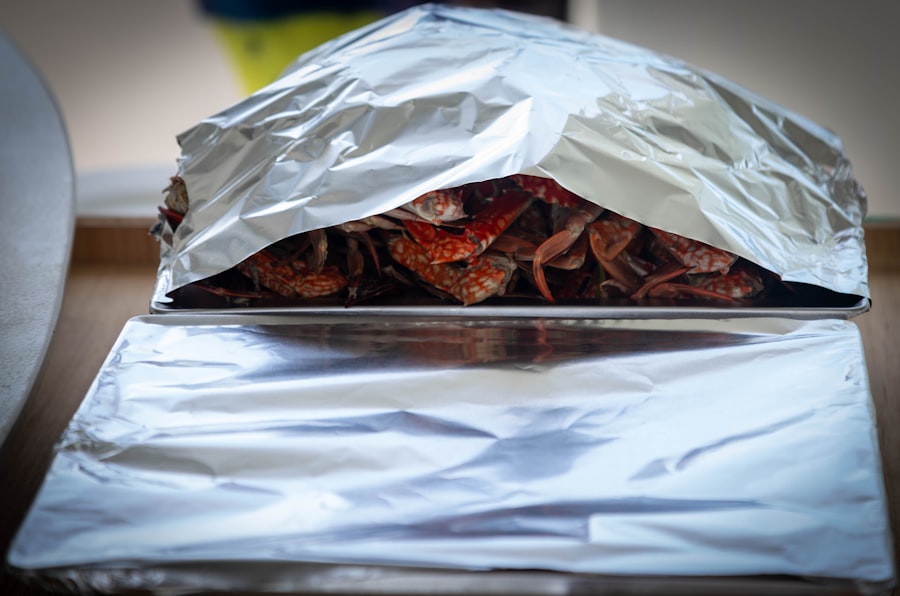
Now, let’s put it all together: microwaves, aluminum foil, and the resulting sparks. When you introduce aluminum foil into a functioning microwave, you are placing a highly conductive material into an environment filled with intense electromagnetic radiation.
Electric Fields and Charge Displacement
The microwaves generate powerful, rapidly changing electric fields within the oven cavity. When these electric fields encounter the conductive surface of the aluminum foil, they exert forces on the free electrons within the aluminum. These forces cause the electrons to redistribute themselves across the foil’s surface.
Rapid Electron Movement
Because the electric field of the microwaves is constantly oscillating, the electrons on the foil’s surface are also being pushed and pulled back and forth at the same high frequency. This creates a situation where electric charge is rapidly accumulating and dissipating across the foil.
Charge Accumulation and Breakdown Voltage
The issue arises when this charge accumulation becomes too concentrated. Think of it like trying to squeeze too much water through a narrow pipe; eventually, the pressure builds up to a point where something has to give. Similarly, the electric field within the microwave can induce a very high voltage on the surface of the foil.
The Air Gap as an Insulator
The space between the aluminum foil and the walls of the microwave, or between different parts of the foil itself, is filled with air. Air, under normal circumstances, acts as an electrical insulator; it resists the flow of electricity. However, insulators have a limit, known as their “dielectric strength” or “breakdown voltage.”
Dielectric Strength of Air
This breakdown voltage is the maximum electric field strength that a material can withstand before it starts to conduct electricity. For air at sea level, this is roughly 3 million volts per meter. When the electric field created by the accumulating charges on the aluminum foil exceeds this breakdown voltage of the surrounding air, the air suddenly becomes conductive.
Arcing: The Birth of the Spark
When the air’s insulating properties are overcome, a rapid discharge of electricity occurs. This is known as an arc, or a spark. The electrons suddenly jump from an area of high charge concentration on the foil to another area (either the microwave wall, another part of the foil, or even just through the air itself), creating a visible flash of light and often a crackling sound.
The Visible Flash and Sound
The intense heat generated by the electrical discharge ionizes the air particles, making them glow brightly. This is the visible spark you see. The rapid expansion of superheated air also produces the characteristic crackling or popping sound.
The Nature of the Discharge
These arcs are essentially mini lightning bolts happening inside your microwave. They are localized and extremely intense. The energy from the microwaves is being concentrated into these small, high-voltage discharges, leading to the dramatic visual and auditory effects.
Why Some Materials Are Less Problematic

You might wonder if all metals cause this same dramatic effect. While many metals can cause problems, the specific shape, thickness, and even the presence of food can influence the outcome.
The Role of Shape and Crumpling
A smooth, flat sheet of aluminum foil, if it somehow managed to avoid direct contact with the microwave walls, might not spark immediately. However, any crumpling, folding, or creasing creates sharp edges and points where electric charge can concentrate more easily. These sharp points act as natural “charge accumulators,” making them prime locations for exceeding the breakdown voltage of the air.
Sharp Edges and Electric Field Concentration
At sharp points or edges, the electric field lines tend to converge. This means that the electric field strength is significantly higher at these locations compared to a smooth, rounded surface. When microwaves interact with these concentrated electric fields, the voltage buildup is more rapid and pronounced, making arcing more likely.
The “Safe” Use of Foil in Microwaves (and Why It’s Still Risky)
There are sometimes instances where small pieces of foil are used to shield certain parts of food from overcooking, like the tips of chicken wings. Manufacturers sometimes provide guidance on how to do this safely. However, this advice often comes with caveats and is generally discouraged because the risk of error is high.
The Faraday Cage Principle (Misapplied)
The idea behind using foil to shield food is related to the concept of a Faraday cage. A Faraday cage is an enclosure made of conductive material that blocks external electromagnetic fields. In theory, a well-constructed foil enclosure could block microwaves. However, in the context of a microwave oven, a poorly executed or incomplete shield can do more harm than good.
Limitations of a Partial Shield
If the foil doesn’t completely enclose the food or has gaps, microwaves can still penetrate and interact with the foil in unpredictable ways. Furthermore, even if a small piece of foil is used, if it’s too close to the oven walls or has sharp edges, it can still lead to arcing. The presence of food itself can also alter the microwave field distribution, making predictions difficult.
Other Materials and Their Microwave Interactions
Not all metals behave identically. Thicker, more robust metal objects are generally less prone to immediate sparking than thin foil because they can better dissipate the induced currents. However, they can still interfere with the microwave’s operation and potentially cause damage. Plastic, glass, and ceramic materials, on the other hand, are generally transparent to microwaves and are therefore safe to use.
Dielectric Heating in Non-Metallic Materials
Materials like plastic, glass, and ceramic do not have the free electrons that metals do. While the microwaves still interact with the molecules within these materials, the mechanism of heating is different. Instead of electric currents flowing on the surface, the polar molecules within the material itself vibrate and generate heat. This is known as dielectric heating.
When using a microwave, many people may wonder why aluminum foil can create sparks, a phenomenon that can be both alarming and puzzling. A related article explores the science behind this occurrence, explaining how the metal interacts with microwaves and the potential hazards involved. For a deeper understanding of the topic, you can read more in this informative piece on Freaky Science, which delves into the reasons behind these sparks and offers safety tips for microwave use.
Damage to Your Microwave and the Danger of Arcing
| Reasons for Aluminum Foil Sparks in Microwaves |
|---|
| Aluminum is a good conductor of electricity |
| Thin edges of the foil can create sparks |
| Electric currents can be induced in the foil |
| Sparks can damage the microwave and cause fire hazards |
The sparks you see are not just a visual spectacle; they represent a potentially damaging and dangerous interaction between the aluminum foil and your microwave. The consequences can range from minor cosmetic issues to more serious internal damage.
Overheating and Damage to the Magnetron
The most significant concern is damage to the magnetron, the crucial component that generates the microwaves. The intense electrical discharges (arcing) can send powerful electromagnetic pulses back into the magnetron, causing it to overheat and potentially burn out. This is a costly repair.
Feedback Loops and Circuitry
The arcing can create transient overvoltages and currents that can travel back through the microwave’s internal circuitry. These surges can damage sensitive electronic components, including the magnetron itself, the transformer, and other control boards.
Fire Hazards
In extreme cases, the intense heat generated by arcing can ignite nearby flammable materials, such as paper towels, food packaging, or even the food itself. This poses a serious fire risk, which is why it’s so important to immediately stop the microwave if you see sparks.
The Ignition of Food and Packaging
The concentrated energy of an arc can easily reach temperatures high enough to char and ignite materials. If the sparks occur directly next to food or packaging, a fire can start very quickly, leading to significant damage and potential danger.
Warped or Damaged Interior Surfaces
Repeated or severe arcing can also cause physical damage to the interior surfaces of the microwave, such as the turntable or the oven walls. The intense heat can warp or discolor these surfaces, making them more susceptible to further damage.
How to Avoid the Sparks and Use Your Microwave Safely
Understanding the science behind the sparks is the first step to preventing them. Fortunately, avoiding this common kitchen hazard is straightforward.
Never Use Metal in the Microwave (with rare exceptions)
The golden rule is simple: never put aluminum foil or any other metal in your microwave unless the appliance’s manual explicitly states otherwise for specific, limited applications. This includes all forms of metal, from forks and spoons to decorative metallic trim on dishes.
Exception: Specific Microwave-Safe Metal Cookware
Some specialized cookware is designed for microwave use and may incorporate small amounts of metal, often with specific shielding or design features. However, these are exceptions and should always be used according to the manufacturer’s instructions. General-purpose aluminum foil is not in this category.
Read Your Microwave’s Manual
Your microwave oven’s user manual is your best friend when it comes to understanding its capabilities and limitations. It will often contain specific warnings and guidelines about what materials are safe to use and what to avoid.
Understanding Manufacturer Guidelines
Manufacturers invest in safety testing and will provide clear instructions on how to operate their appliances safely. If you’re unsure about a particular item, consulting the manual is always the safest course of action.
Use Microwave-Safe Containers
Opt for containers specifically labeled as “microwave-safe.” These are typically made of glass, ceramic, or certain types of plastic that are designed to withstand microwave radiation without reacting negatively.
Identifying Microwave-Safe Plastics
Look for the “microwave-safe” symbol, which is often a microwave with wavy lines inside. Not all plastics are created equal; some can melt or leach chemicals into your food when heated.
Remove All Metal Traces
Before microwaving, always double-check your food and containers for any stray metal objects. This includes twist ties, foil seals on jars, metallic decorations on dishes, and even small labels with metallic ink.
A Final Inspection Before Activation
Take an extra moment to scan your food and its container. A quick visual check can prevent a potentially dangerous situation.
What to Do If You See Sparks
If you do happen to see sparks emanating from your microwave:
- Immediately stop the microwave. Do not hesitate. Press the “stop” or “cancel” button.
- Open the door.
- Carefully remove the offending item (the aluminum foil or metal object) using oven mitts, as it may be hot.
- Inspect your microwave for any signs of damage. If you notice any charring, warping, or unusual smells, it’s best to have your microwave inspected by a qualified technician before using it again.
By understanding the science behind why aluminum foil sparks in microwaves, you can make informed decisions in your kitchen and ensure the safe and efficient use of your appliance. The invisible forces at play are powerful, and respecting them is key to avoiding a shocking and potentially damaging experience.
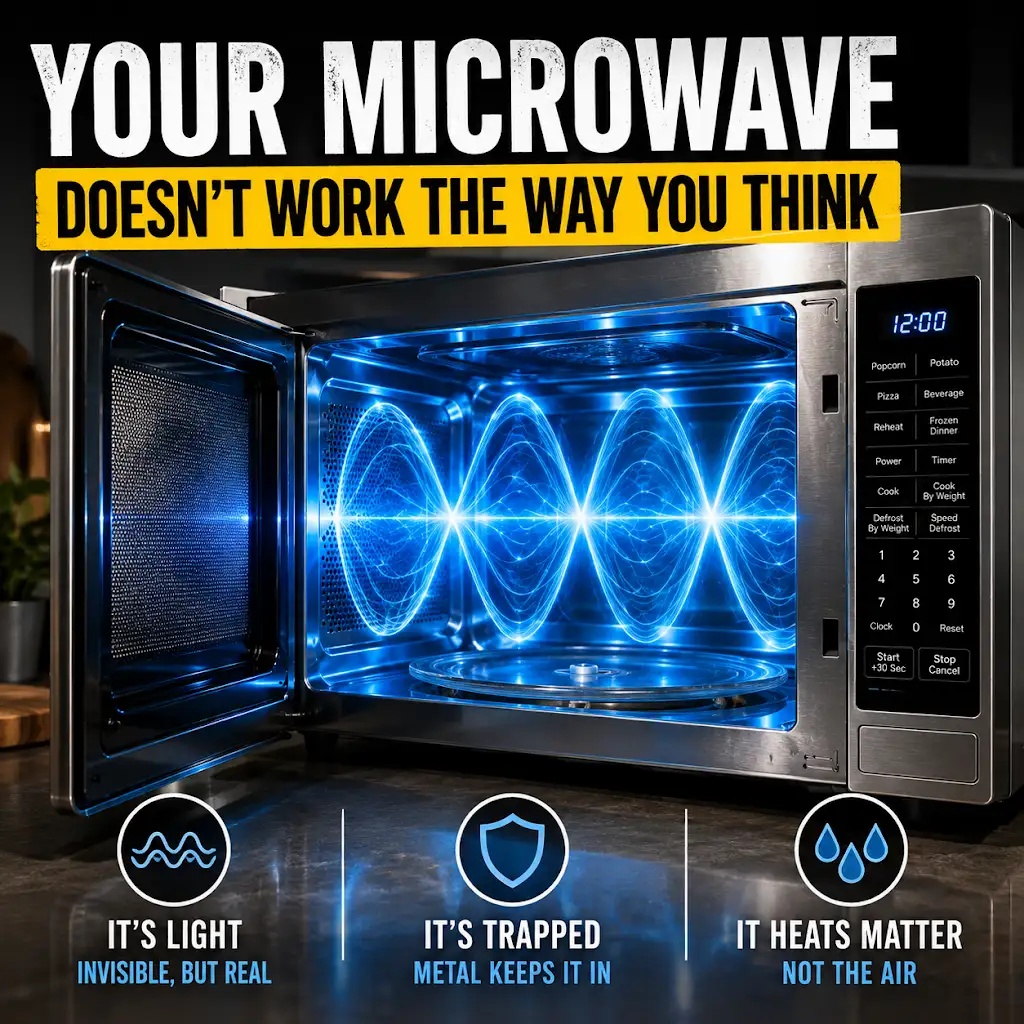
Your Microwave Doesn’t Work the Way You Think
FAQs
What causes aluminum foil to spark in microwaves?
Aluminum foil sparks in microwaves due to the thinness of the foil, which can create a build-up of electrical charges. When these charges become too concentrated, they can discharge as sparks.
Is it safe to put aluminum foil in the microwave?
It is not safe to put aluminum foil in the microwave, as it can cause sparks and potentially damage the microwave or create a fire hazard.
What happens when aluminum foil is placed in the microwave?
When aluminum foil is placed in the microwave, the metal can reflect the microwaves and create a build-up of electrical charges, leading to sparking and potential damage to the microwave.
Can aluminum foil catch fire in the microwave?
If aluminum foil sparks in the microwave, it can potentially lead to a fire hazard. It is important to never put aluminum foil in the microwave to avoid this risk.
How can I safely use aluminum foil in the microwave?
To safely use aluminum foil in the microwave, it is best to avoid using it altogether. If necessary, consult the microwave’s manual for specific guidelines on using aluminum foil safely.