You’ve probably seen it happen, perhaps with a guilty jolt of surprise. You’re reheating leftovers, maybe wrapping a piece of food in that familiar, shiny sheet of aluminum foil. You confidently slide it into the microwave, press start, and then – CRACKLE! POP! – a cascade of miniature lightning bolts dances across the surface of the foil, casting an eerie glow within the otherwise mundane appliance. It’s a dramatic spectacle, and one that immediately brings your culinary adventure to an abrupt halt. But why, precisely, does aluminum foil spark in microwave ovens? It’s a question that touches on the fundamental principles of how microwaves work and the peculiar properties of metals.
To understand the sparks, you first need to grasp what’s happening inside your microwave oven. It’s not just a box that magically heats food. Instead, it employs a sophisticated technology that uses electromagnetic radiation to agitate the molecules within your food.
How Microwaves Generate Heat
Your microwave oven contains a component called a magnetron. This is the heart of the operation, responsible for generating high-frequency radio waves, specifically in the microwave frequency range (typically around 2.45 gigahertz). These waves are then directed into the cooking cavity through a waveguide. Inside the oven, a stirrer or turntable ensures that the microwaves are distributed as evenly as possible, preventing hot and cold spots in your food.
The Role of Water Molecules
The magic of microwave heating lies in its interaction with water molecules. Water is a polar molecule, meaning it has a positive and a negative end, much like a tiny bar magnet. When the electromagnetic waves from the magnetron encounter water molecules in your food, they cause these molecules to vibrate and rotate at an incredibly high speed. This rapid molecular motion generates friction, and it’s this friction that produces heat. Because most foods contain a significant amount of water, they are heated efficiently by microwaves. Other molecules like fats and sugars also absorb microwave energy, contributing to the heating process, albeit to a lesser extent than water.
The Electromagnetic Spectrum
It’s worth noting that microwaves are just one part of the broader electromagnetic spectrum. This spectrum includes everything from radio waves and visible light to X-rays and gamma rays. Microwaves fall between radio waves and infrared radiation. They are non-ionizing radiation, meaning they don’t have enough energy to remove electrons from atoms or molecules, unlike ionizing radiation like X-rays, which can be harmful. This is why microwave ovens are considered safe for heating food when used properly.
Have you ever wondered why aluminum foil sparks when placed in a microwave? This phenomenon occurs due to the interaction of microwaves with the metal, which can create electric fields that lead to arcing. To learn more about this intriguing topic, you can read a related article that delves deeper into the science behind it. For further insights, check out this informative piece at Freaky Science.
The Electric Nature of Metals
Now, let’s bring metal into the picture. Aluminum foil, while a thin sheet, is undeniably a conductor of electricity. This fundamental property is the key to understanding the sparking phenomenon.
Free Electrons and Conductivity
Metals, like aluminum, have a unique atomic structure. Their outermost electrons, called valence electrons, are not tightly bound to individual atoms. Instead, they form a “sea” of delocalized electrons that can move relatively freely throughout the metallic lattice. This free movement of electrons is what makes metals excellent conductors of electricity. When an electrical current flows through a wire, it’s these free electrons that are being pushed along.
Metals as Reflectors of Microwaves
Because metals are excellent conductors, they interact very differently with microwaves compared to food. Instead of absorbing microwave energy and converting it into heat, metals tend to reflect these waves. Think of it like shining a flashlight on a mirror – the light bounces off. Similarly, the free electrons in the aluminum foil are highly sensitive to the oscillating electric field of the microwaves. They readily absorb this energy and start to move, but instead of dissipating it as heat through friction, they create their own oscillating electric fields that push back against the incoming microwaves. This reflection is crucial to the sparking process.
The Faraday Cage Effect
In some instances, a larger, smooth piece of metal can actually act as a Faraday cage, shielding the contents within from external electromagnetic fields. However, the thin, crinkled nature of aluminum foil, especially when placed inside the confined space of a microwave, disrupts this shielding effect and leads to more direct interaction with the microwaves.
The Sparking Mechanism: A Microscopic Electrical Show
So, what happens when these reflective, electrically charged metal surfaces are bombarded by the intense electromagnetic energy of a microwave oven? The sparks are a dramatic manifestation of this interaction.
Charge Accumulation and Discharge
The microwaves’ oscillating electric field induces a charge on the surface of the aluminum foil. As the field rapidly reverses direction, the charges on the foil are also rapidly accumulating and rearranging. This rapid change can lead to significant differences in electrical potential across small areas of the foil, particularly at sharp edges, creases, or points. When this potential difference becomes sufficiently large, it can exceed the breakdown voltage of the air surrounding the foil.
Dielectric Breakdown of Air
Air, while generally an insulator, is not a perfect one. Under normal conditions, its molecules are relatively stable. However, when subjected to a strong enough electric field, the molecules in the air can be ripped apart, creating ions and free electrons. This process is called dielectric breakdown. Once this breakdown occurs, the ionized air becomes conductive, allowing electricity to flow. This flow of electrical current through the air is what you perceive as a spark or a miniature lightning bolt.
The Role of Foil’s Shape
The shape of the aluminum foil plays a significant role. Sharp edges, creases, and crumpled sections create points of concentrated electric field. These points act as “electron emitters,” making it easier for a discharge to occur. Think of a lightning rod; its pointed tip is designed to concentrate the electric field, facilitating a controlled discharge into the ground. In the microwave, these sharp points on the foil concentrate the field, leading to localized dielectric breakdown and sparking.
Arcing and Plasma Formation
The sparks are essentially small arcs of electricity. These arcs heat the air they pass through to extremely high temperatures, creating a temporary plasma – an ionized gas. The intense heat and light emitted by this plasma are what make the sparks so visible and sometimes alarming. The rapid heating and cooling associated with these discharges can also lead to the characteristic crackling sounds you hear.
Why Certain Foil Shapes are Worse Than Others

Not all aluminum foil use in a microwave is equally prone to sparking. The geometry of the foil plays a crucial role in determining the intensity and likelihood of these discharges.
Smooth vs. Crinkled Foil
A perfectly smooth, flat sheet of aluminum foil might reflect microwaves effectively and not spark as readily. However, in practical use, aluminum foil is rarely perfectly smooth. It’s often wrinkled, creased, or folded. These imperfections create the high-stress points mentioned earlier, where electric fields concentrate. A heavily crumpled piece of foil will present numerous sharp edges and points, significantly increasing the probability of sparking.
Edges and Corners
The edges and corners of a piece of foil are particularly vulnerable. These are regions where the electric field lines tend to converge, leading to higher charge densities and a greater likelihood of dielectric breakdown. If you’ve ever seen sparks originating from a specific corner of a foil-wrapped item, it’s likely due to this concentration of the electric field at that point.
Multiple Layers and Proximity
Using multiple layers of aluminum foil can also exacerbate the problem. Each layer can accumulate charge independently, and the proximity of these charged layers can lead to even more intense electric fields between them. This can result in more powerful discharges. Similarly, if the foil is placed very close to the metal walls of the microwave cavity, it can create a more contained and intense electric field, increasing the risk of arcing.
When using a microwave, many people may wonder why aluminum foil can create sparks, a phenomenon that can be both surprising and concerning. This occurs because the metal reflects microwaves, leading to electrical arcing. For a deeper understanding of this topic and to explore the science behind it, you can read a related article that delves into the intricacies of microwave behavior and safety. Check it out here for more fascinating insights.
The Dangers and Best Practices for Microwave Use
| Reason | Explanation |
|---|---|
| Thinness of the foil | Aluminum foil is very thin and can easily create sparks when exposed to the electric fields in a microwave. |
| Sharp edges | If the foil has sharp edges, it can create high electric fields and lead to sparking. |
| Reflection of microwaves | Aluminum foil reflects microwaves, causing the electric fields to concentrate in certain areas and potentially create sparks. |
| Damage to the microwave | Sparks from aluminum foil can damage the interior of the microwave and affect its performance. |
While the sparking of aluminum foil in a microwave might seem like a minor inconvenience, it’s important to understand the potential dangers and to adopt best practices to avoid these issues.
Potential for Damage to the Microwave
The intense electrical discharges, or arcs, can potentially damage the magnetron or other sensitive components within your microwave oven. While a single, minor spark might not cause irreparable harm, repeated or severe arcing can degrade the appliance’s performance and shorten its lifespan. The high-energy discharges can also leave scorch marks on the interior walls of the microwave.
Fire Hazard
In severe cases, the sparks can ignite food particles or grease splatters that may have accumulated inside the microwave. This can lead to a small fire within the appliance, which, if unchecked, can spread and pose a significant safety risk. The rapid heating of the air within the sparks can also be enough to ignite very dry or flammable materials.
Safely Using Metal in Microwaves
The general rule of thumb is to avoid putting metal in the microwave oven unless explicitly stated as safe in your appliance’s manual. However, there are some exceptions, and understanding them is crucial.
- Browning Wraps: Some microwave-safe cookware or browning wraps are designed with specific metal alloys that allow them to be used safely. These are engineered to reflect microwaves in a controlled manner without causing excessive sparking. Always check the packaging and instructions carefully.
- Smooth, Small Metal Elements: Very small, smooth metal elements, such as the handle of a utensil or the decorative trim on certain dishes, might not cause significant sparking if they are not in direct contact with other metal surfaces or the microwave walls. However, it’s generally safer to err on the side of caution.
- Manufacturer’s Instructions: Always refer to your microwave oven’s user manual. Manufacturers provide specific guidelines on what materials are safe to use inside their appliances. If it says no metal, then stick to that advice.
Alternatives to Aluminum Foil
When you’re looking to cover food in the microwave, there are several safe and effective alternatives to aluminum foil.
- Microwave-Safe Plastic Wrap: Many plastic wraps are designed to withstand microwave temperatures and allow steam to escape. Ensure the packaging indicates “microwave safe” and avoid letting the plastic touch the food directly if it’s a fatty item, as this can cause melting.
- Paper Towels: A simple paper towel can be used to cover food, absorbing excess moisture and preventing splatters.
- Microwave-Safe Lids and Covers: You can purchase reusable microwave-safe lids made of plastic or silicone that fit over your dishes. These are excellent for trapping steam and ensuring even heating.
- Glass or Ceramic Dishes with Lids: Many glass and ceramic dishes come with matching lids that are safe for microwave use.
In conclusion, the captivating, and sometimes alarming, phenomenon of aluminum foil sparking in your microwave oven is a direct consequence of the interplay between electromagnetic radiation and conductive materials. The microwaves, designed to excite water molecules and heat your food, instead find a reflective surface in the aluminum foil. This reflection, combined with the foil’s tendency to accumulate electrical charge, particularly at its sharp edges and creases, leads to the buildup of significant electrical potential. When this potential exceeds the breakdown voltage of the surrounding air, a visible spark is created – a miniature electrical discharge. Understanding this process not only demystifies the sparking but also highlights the importance of adhering to safe microwave practices, protecting both your appliance and your home from potential damage or hazards. Next time you reach for that familiar roll of foil, remember the invisible dance of microwaves and the electric potential waiting to be unleashed, and opt for a safer alternative.
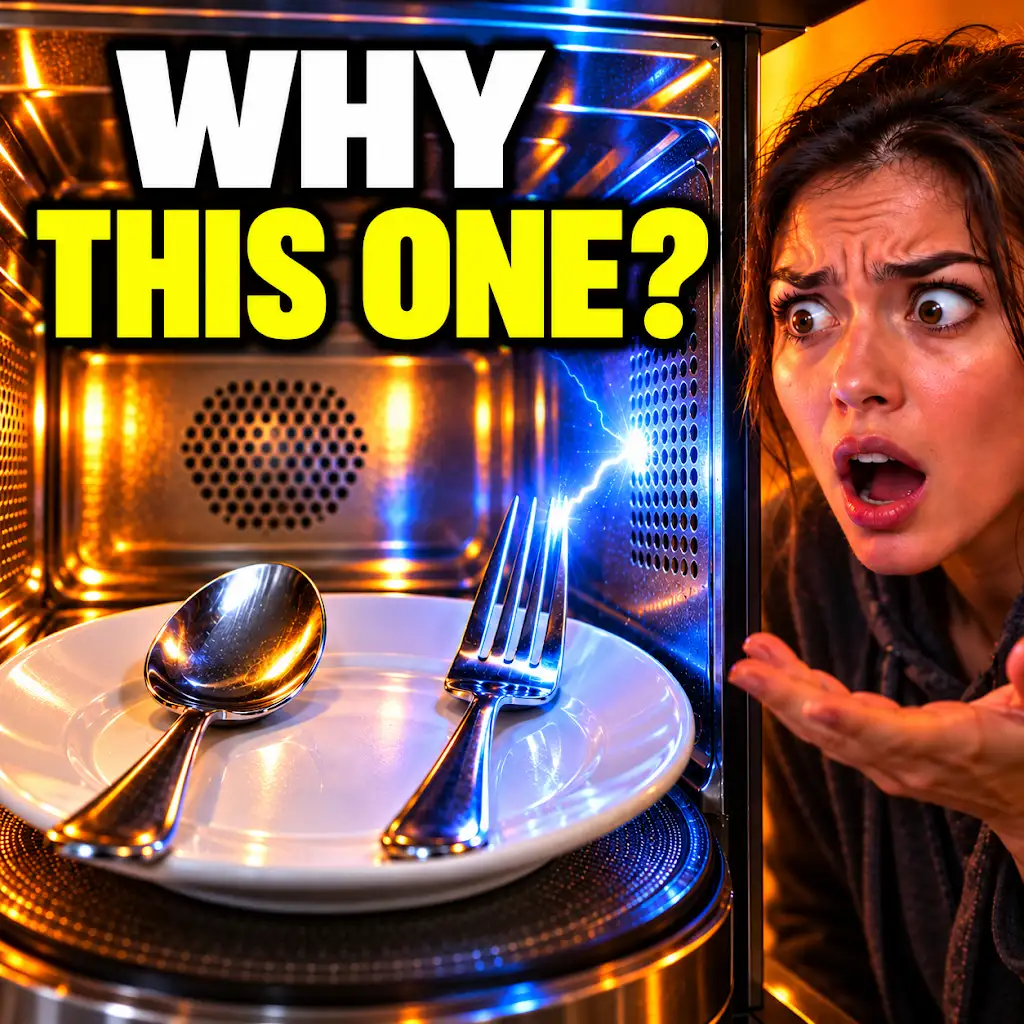
A Fork and a Spoon React Differently in a Microwave. Why?
FAQs
What causes aluminum foil to spark in a microwave?
Aluminum foil sparks in a microwave due to the thinness of the foil, which can create a build-up of electrical charges. When these charges become too strong, they can discharge and create sparks.
Is it safe to put aluminum foil in a microwave?
It is not safe to put aluminum foil in a microwave, as it can cause sparks and potentially damage the microwave or even start a fire. It is important to only use microwave-safe materials in the microwave.
What happens when aluminum foil sparks in a microwave?
When aluminum foil sparks in a microwave, it can cause damage to the microwave, create a fire hazard, and potentially cause injury. It is important to never put aluminum foil in a microwave.
How can I safely use aluminum foil in the microwave?
To safely use aluminum foil in the microwave, it is important to only use it in small amounts to cover certain areas of food, and to ensure that it does not come into contact with the walls or the heating element of the microwave.
What are some alternatives to using aluminum foil in the microwave?
Some alternatives to using aluminum foil in the microwave include using microwave-safe lids or covers, microwave-safe containers, and microwave-safe parchment paper. It is important to always follow the manufacturer’s guidelines for using materials in the microwave.