The Illusion of Heat: Unpacking the Rolling Boil
The kitchen is a laboratory of transformation, where raw ingredients are coaxed into culinary delights through the application of heat. Among the most fundamental processes is boiling water, a seemingly straightforward act that, upon closer inspection, reveals a fascinating interplay of physics and chemistry. Many cooks, from seasoned chefs to novice home cooks, operate under a common misconception: that a vigorous, rolling boil signifies a hotter temperature than a gentler simmer. This article aims to demystify this phenomenon, delving into the scientific principles that govern the behavior of water at its boiling point and explaining why the intensity of the boil is not a direct indicator of increased temperature.
The act of boiling is characterized by the formation of vapor bubbles within the liquid, which rise to the surface and escape into the atmosphere. The visual spectacle of this process can be quite dramatic, with large bubbles rapidly ascending and the water surface appearing turbulent. This visual intensity, coupled with the common association of vigorous activity with high energy, naturally leads to the conclusion that the water must be at its absolute hottest when exhibiting this behavior. However, this intuitive leap overlooks a crucial scientific fact: water’s boiling point is a fixed temperature under a given pressure. Understanding this fundamental principle is the key to unraveling the illusion of a hotter rolling boil.
Many people often assume that a rolling boil indicates that water is at its hottest temperature, but this is a common misconception. In fact, water can only reach a maximum temperature of 100 degrees Celsius (212 degrees Fahrenheit) at sea level, regardless of how vigorously it is boiling. For a deeper understanding of this phenomenon, you can explore the article on the science behind boiling water and temperature at this link: Freaky Science. This article delves into the principles of boiling and the factors that influence water temperature, providing valuable insights into why a rolling boil does not equate to hotter water.
The Steadfast Boiling Point: A Constant Under Pressure
The temperature at which a liquid boils is known as its boiling point. For pure water at standard atmospheric pressure (sea level), this temperature is precisely 100 degrees Celsius or 212 degrees Fahrenheit. This is not a variable quantity that fluctuates based on the vigor of the bubbling. Instead, it is a thermodynamic constant, determined by the equilibrium between the vapor pressure of the liquid and the external pressure exerted upon it.
Vapor Pressure: The Internal Urge to Evaporate
Every liquid has a property called vapor pressure. This is the pressure exerted by the gas phase of the substance in equilibrium with its liquid phase in a closed system. As a liquid is heated, its molecules gain kinetic energy. Some of these molecules at the surface have enough energy to overcome the intermolecular forces holding them in the liquid state and escape into the gaseous state, becoming vapor. This process is evaporation. The higher the temperature, the more molecules have sufficient energy to escape, and thus, the higher the vapor pressure.
External Pressure: The Atmospheric Hand on the Scale
The external pressure, typically atmospheric pressure, acts as a physical barrier, pushing down on the surface of the liquid. For boiling to occur, the vapor pressure of the liquid must equal or exceed the external pressure. At this point, vapor bubbles can form not just at the surface but also within the bulk of the liquid, as the internal pressure of the vapor within the bubble can overcome the external pressure and the surrounding liquid’s pressure. Once this equilibrium is reached, adding more heat does not raise the temperature of the liquid; instead, it provides the energy needed to convert the liquid into vapor. This energy is known as the latent heat of vaporization.
The Latent Heat of Vaporization: The Energy of Transformation
The latent heat of vaporization is the amount of energy required to convert a unit mass of a substance from the liquid phase to the gaseous phase at its boiling point, without any change in temperature. In the case of water, this is a significant amount of energy. When water is boiling, any additional heat supplied is used to break the intermolecular bonds holding the water molecules together in the liquid state, allowing them to transition into the gaseous state as steam. This is why the temperature of boiling water remains constant at 100°C (212°F) at standard pressure, regardless of how vigorously it is boiling. The energy is being consumed in the phase change, not in raising the temperature.
The Mechanics of the Boil: More Than Just Heat
The visual differences between a gentle simmer and a rolling boil are a direct consequence of the rate at which heat is being supplied to the water and the efficiency of bubble formation and release. While the temperature remains constant, the dynamics of the boiling process change significantly.
Bubble Formation and Rise: A Race Against Time
In a gentle simmer, heat is supplied at a lower rate. This means fewer molecules have enough energy to form vapor bubbles within the liquid. The bubbles that do form are typically smaller and may collapse before reaching the surface due to insufficient internal pressure to overcome the surrounding liquid pressure and the external atmospheric pressure. The few bubbles that do reach the surface rise slowly and release their vapor with less turbulence.
The Roaring Symphony of a Rolling Boil
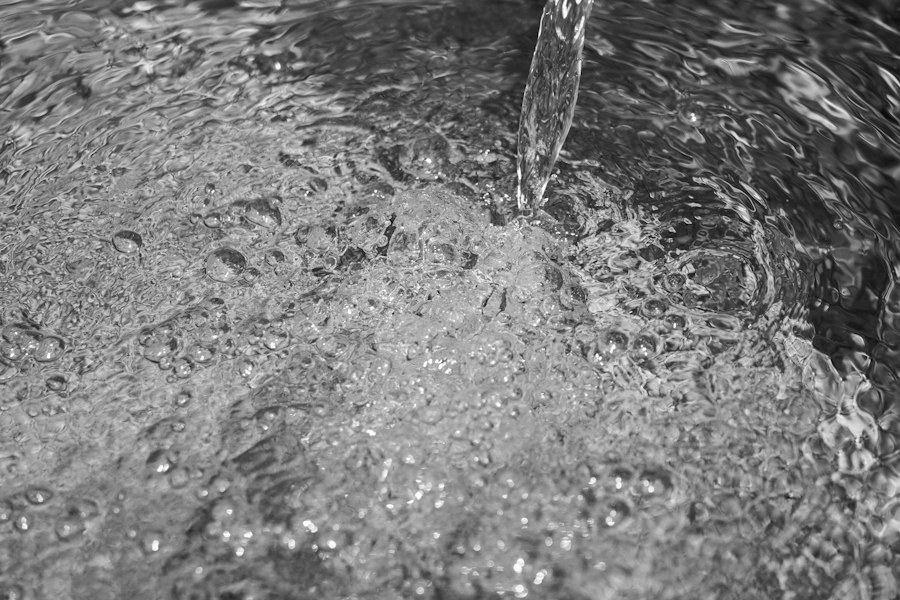
A rolling boil, on the other hand, is indicative of a higher rate of heat input. This increased energy supply leads to a more rapid and widespread formation of vapor bubbles throughout the body of the water. These bubbles are larger and more numerous, and they ascend to the surface with considerable force and speed. The rapid expulsion of these bubbles from the liquid creates the characteristic turbulence and splashing associated with a rolling boil. The vigorous bubbling is essentially a visual manifestation of a higher rate of energy transfer into the water, driving the phase change from liquid to gas more rapidly. It’s a visual cue for the rate of energy input, not the maximum temperature achieved.
The Influence of Dissolved Solids: A Subtle Modifier
It is worth noting that impurities or dissolved solids in water can subtly affect the boiling process. For example, adding salt to water increases its boiling point slightly. This is because the dissolved ions interfere with the water molecules’ ability to escape into the vapor phase, requiring a slightly higher temperature to achieve the necessary vapor pressure. However, even with dissolved solids, the boiling point remains a specific temperature under a given pressure. The rate of boiling in the presence of dissolved solids might also appear different, but this doesn’t negate the fundamental principle of a fixed boiling point.
Pressure’s Role: The Altitude Factor
The pressure exerted on the surface of the water is a critical determinant of its boiling point. As has been established, for boiling to occur, the vapor pressure of the water must equal the external pressure. Therefore, changes in external pressure will directly alter the boiling point.
Boiling at High Altitudes: A Cooler Kettle
At higher altitudes, atmospheric pressure is lower. This means that water requires less energy to reach a vapor pressure equal to the external pressure. Consequently, water boils at a lower temperature at higher altitudes. For instance, in Denver, Colorado, which is about a mile above sea level, water boils at approximately 95°C (203°F). This lower boiling point affects cooking times, as food will cook more slowly in water that is not as hot. The same principles of bubble formation and vapor pressure still apply; it’s just that the threshold temperature for reaching equilibrium with the lower atmospheric pressure is reduced.
Boiling Under Pressure: A Hotter Pot
Conversely, if water is heated in a sealed container, such as a pressure cooker, the pressure inside the container increases. This higher external pressure necessitates a higher temperature for the water to boil. In a pressure cooker, water can reach temperatures well above 100°C (212°F), significantly reducing cooking times for foods that benefit from high temperatures. The increased pressure is forcing the water molecules to remain in their liquid state until they reach a much higher energy level.
Many people believe that a rolling boil indicates that water is at its hottest point, but this is a common misconception. In reality, water can only reach a maximum temperature of 100 degrees Celsius at sea level, regardless of how vigorously it is boiling. For a deeper understanding of this phenomenon, you can explore a related article that discusses the science behind boiling water and its temperature dynamics. This insightful piece can be found at Freaky Science, where you can learn more about the fascinating principles of heat and boiling.
Practical Implications: Cooking with Understanding
| Metric | Description | Value/Explanation |
|---|---|---|
| Boiling Point of Water | Temperature at which water boils at standard atmospheric pressure | 100°C (212°F) at 1 atm |
| Temperature During Rolling Boil | Maximum temperature water reaches while boiling vigorously | Approximately 100°C (212°F) |
| Effect of Atmospheric Pressure | Boiling point changes with altitude and pressure | Lower pressure = lower boiling point; higher pressure = higher boiling point |
| Heat Energy Input | Energy added to water during boiling | Used to convert liquid water to steam, not to increase temperature |
| Latent Heat of Vaporization | Energy required to convert water at boiling point to steam without temperature change | Approximately 2260 kJ/kg |
| Temperature Stability at Boiling | Water temperature remains constant during boiling despite heat input | Temperature plateaus at boiling point until phase change completes |
| Misconception | Rolling boil indicates hotter water | Incorrect; rolling boil indicates vigorous boiling but temperature remains at boiling point |
The distinction between a rolling boil and its temperature is not merely an academic exercise; it has tangible implications for culinary practices. Understanding this science can lead to more efficient and successful cooking.
Achieving the Right Temperature for Different Tasks
Many cooking techniques rely on specific water temperatures. For instance, when poaching eggs, a gentle simmer is ideal to prevent the egg white from toughening and disintegrating. A rolling boil would be far too aggressive. Conversely, when blanching vegetables, a rapid, rolling boil ensures quick cooking and preserves the vegetables’ vibrant color and crispness. Knowing that the rolling boil doesn’t mean hotter water allows a cook to select the appropriate heat level for the desired outcome, rather than simply aiming for the most vigorous bubbling.
Optimizing Cooking Times and Methods
Understanding the fixed boiling point and the effect of pressure can help in adjusting recipes, especially when cooking at different altitudes or using specialized equipment like pressure cookers. If a recipe calls for boiling water for a certain duration, and you are at a high altitude, you may need to extend that time because the water is at a lower temperature. Conversely, a pressure cooker allows for significant reductions in cooking times because it operates at elevated temperatures.
The Importance of Patience in Cooking
Sometimes, the most effective cooking methods require patience and precise temperature control, not just brute force heat. Allowing water to reach a gentle simmer and maintaining it, rather than constantly pushing it to a rolling boil unnecessarily, can lead to more delicate and flavorful results. This is particularly true for stocks, sauces, and slow-cooked dishes where tender extraction of flavors is paramount. The visual of a rolling boil can be tempting, but understanding the science behind it empowers the cook to make informed decisions based on the actual thermal properties of the water, not just its appearance. The energy is conserved in the phase change, and that conserved energy is what ultimately cooks the food.
Debunking Common Kitchen Myths: Beyond the Bubbles
The misconception about rolling boils being hotter is just one of many culinary myths that persist despite scientific explanations. Recognizing the science behind everyday kitchen phenomena can help to elevate cooking from a series of rote actions to a more deliberate and effective art.
The Salt-in-Water Debate: A Nuance of Boiling Points
The common belief that adding salt to water makes it boil faster is largely untrue. While salt does slightly elevate the boiling point, as discussed earlier, this effect is minimal for the amount of salt typically added to pasta water. The perceived faster boiling is more likely due to the increased turbulence caused by the dissolved salt disrupting bubble formation and release. The primary benefit of salting pasta water is for seasoning the pasta itself, not for accelerating the boiling process.
The Power of Steam: A High-Temperature Medium
Steam, the gaseous form of water, is often perceived as being hotter than boiling water, and in a practical sense, it is. This is because steam at 100°C (212°F) is still actively absorbing latent heat as it forms. If steam is allowed to cool slightly and condense, it releases this latent heat. Furthermore, in many cooking scenarios, steam can be superheated, meaning it is heated beyond its standard boiling point under increased pressure. However, when we refer to “boiling water,” we are typically referring to liquid water at its boiling point. The latent heat of vaporization is the key here – steam at 100°C possesses significantly more energy than liquid water at 100°C. This is why steam can cause severe burns.
The Role of Heat Transfer in Cooking
Ultimately, the effectiveness of boiling water in cooking is about heat transfer. The heat from the stove is transferred to the water, which then transfers that heat to the food. The rate of this heat transfer is influenced by the temperature of the water and the efficiency of contact between the water and the food. While a rolling boil indicates a higher rate of heat input from the stove, the temperature of the water itself remains constant. Therefore, understanding this principle allows for more nuanced approaches to cooking, focusing on the quality of heat transfer rather than solely on the visual intensity of the boil. The constant temperature of boiling water is a powerful tool when used with an understanding of its underlying science, allowing for predictable and repeatable cooking results.
Why This Water Doesn’t Boil at 100°C
FAQs
1. Why does a rolling boil not mean hotter water?
A rolling boil occurs when water reaches its boiling point, which is 212°F (100°C) at sea level. At this temperature, water cannot get any hotter, so the rolling bubbles are simply water vapor escaping into the air.
2. Does a rolling boil make food cook faster?
No, a rolling boil does not make food cook faster. Once water reaches its boiling point, the temperature remains constant until all the water has evaporated. The rolling bubbles do not increase the temperature of the water.
3. Can water reach a higher temperature than 212°F (100°C) at sea level?
No, water cannot reach a higher temperature than 212°F (100°C) at sea level because it will immediately turn into steam once it reaches its boiling point. Any additional heat added will only cause more water to evaporate, not increase the temperature.
4. How can you tell if water is boiling without a thermometer?
You can tell if water is boiling by observing the bubbles forming and rising to the surface. A rolling boil is characterized by large bubbles constantly breaking the surface of the water. The steam rising from the pot is also a clear indicator of boiling water.
5. Does a rolling boil affect the taste of food?
A rolling boil does not affect the taste of food, as the temperature of the water remains constant at 212°F (100°C). The rolling bubbles are simply a visual indicator that the water has reached its boiling point and is converting to steam.