
You’re standing in your kitchen, the hum of the refrigerator a comforting presence. You open the door, and a blast of cool air greets you. But have you ever stopped to wonder where that cold comes from, and more importantly, where the heat it’s removing actually goes? It’s not magic; it’s a sophisticated cycle involving refrigerant, a special fluid that’s the workhorse of your cooling appliance. Understanding this process isn’t just for HVAC technicians; it offers a fascinating glimpse into thermodynamics and how we manipulate it to make our lives more comfortable. This guide will delve into the core of refrigeration, specifically focusing on the seemingly paradoxical question: where does refrigerant release heat?
The journey of refrigerant is a continuous loop, and its ability to absorb and release heat is paramount to its function. It’s not about creating cold, but rather about moving heat from one place to another. Your refrigerator, or your air conditioner, is essentially a heat pump, and the refrigerant is the medium that facilitates this transfer. We’ll explore the different stages of this cycle, identifying the key components and the thermodynamic principles at play that dictate where the heat is ultimately dissipated.
The Thermodynamics of Heat Transfer in Refrigeration
At its heart, refrigeration relies on the fundamental laws of thermodynamics, particularly the concept of heat flow. Heat naturally moves from warmer objects to cooler objects. Refrigeration systems exploit this principle by creating a temperature difference that forces heat to move in a desired direction. The refrigerant, with its unique properties, is the key to achieving this. It undergoes phase changes – from liquid to gas and back again – which are crucial for absorbing and releasing large amounts of thermal energy.
The Role of Phase Changes in Heat Absorption
The ability of a substance to absorb heat when it changes from a liquid to a gas is known as latent heat of vaporization. This is a significant amount of energy. In your refrigerator, the refrigerant, in a low-pressure liquid state, enters the evaporator coils, which are located inside the refrigerator compartment. The air inside the refrigerator is warmer than the refrigerant. This temperature difference causes heat to transfer from the air to the refrigerant. As the refrigerant absorbs this heat, it boils and turns into a low-pressure gas. This process effectively removes heat from the interior of the refrigerator, making it cold. The lower the pressure, the lower the boiling point of the refrigerant, allowing it to vaporize at the low temperatures inside your fridge.
The Principles of Condensation and Heat Release
Conversely, when a gas changes back into a liquid, it releases the latent heat of vaporization it previously absorbed. This process is called condensation. After leaving the evaporator as a gas, the refrigerant travels to the compressor. The compressor increases the pressure of the refrigerant gas, which in turn raises its temperature significantly, well above the ambient temperature of your kitchen. This superheated gas then flows into the condenser coils, typically located on the back or bottom of your refrigerator. These coils are exposed to the warmer air in your kitchen. Because the refrigerant in the condenser is now hotter than the surrounding air, heat is transferred from the refrigerant to the kitchen air. As the refrigerant loses heat, it condenses back into a high-pressure liquid. This is the primary location where the heat removed from inside your refrigerator is released into your home.
In understanding the process of where refrigerant releases heat, it’s essential to explore the broader context of thermodynamics and heat transfer in refrigeration systems. A related article that delves deeper into these concepts can be found at Freaky Science, which discusses various scientific principles that govern the behavior of refrigerants and their role in heat exchange. This resource provides valuable insights into how refrigerants absorb and release heat, making it a useful reference for anyone looking to enhance their knowledge in this area.
The Refrigeration Cycle: A Step-by-Step Breakdown

The refrigeration cycle is a continuous, closed loop. The refrigerant circulates through a series of components, each playing a vital role in moving heat. Understanding the function of each part helps clarify where and why heat is absorbed and released.
The Evaporator: Absorbing the Cold
The evaporator is the component responsible for absorbing heat from the space you want to cool. Inside your refrigerator, these are the coils that feel cold to the touch. As mentioned, the refrigerant enters the evaporator as a low-pressure liquid. The internal temperature of the refrigerator is higher than the boiling point of the refrigerant at this low pressure. Heat flows from the refrigerator’s interior air to the refrigerant, causing it to evaporate into a low-pressure gas. This absorption of heat is what cools the inside of your appliance. In an air conditioning system, the evaporator coils are located inside your home, usually in an air handler unit.
The Compressor: The Heart of the System
The compressor is often referred to as the “heart” of the refrigeration system. Its primary function is to increase the pressure and temperature of the refrigerant gas. As the low-pressure gas leaves the evaporator, it enters the compressor. The compressor mechanically squeezes this gas, forcing it into a smaller volume. This action not only increases the pressure but also significantly raises the temperature of the refrigerant. This elevated temperature is crucial because it ensures that the refrigerant will be hotter than the surrounding environment (your kitchen air) in the next stage, enabling heat to be released.
The Condenser: Releasing the Heat to the Environment
The condenser is where the heat that was absorbed in the evaporator is released. In a refrigerator, the condenser coils are typically on the back or underneath. As the hot, high-pressure refrigerant gas from the compressor flows through these coils, it is exposed to the ambient air of your kitchen. Because the refrigerant is hotter than the kitchen air, heat transfers from the refrigerant to the air. As the refrigerant loses heat, it condenses from a gas back into a high-pressure liquid. You might feel warm air coming from the back or bottom of your refrigerator – this is the heat being released by the condenser. In an air conditioning system, the condenser is usually located in an outdoor unit, releasing the heat into the outside environment.
The Expansion Valve: Preparing for the Next Cycle
After leaving the condenser as a high-pressure liquid, the refrigerant passes through an expansion valve (also known as a metering device or capillary tube). This device restricts the flow of the refrigerant, causing a sudden drop in pressure. This pressure drop is critical because it lowers the boiling point of the refrigerant, preparing it to absorb heat again in the evaporator. As the liquid refrigerant passes through the expansion valve, a portion of it flashes into a gas due to the sudden pressure drop, and the mixture of liquid and gas then enters the evaporator to begin the cycle anew.
Where the Heat is Discharged: Focusing on the Condenser
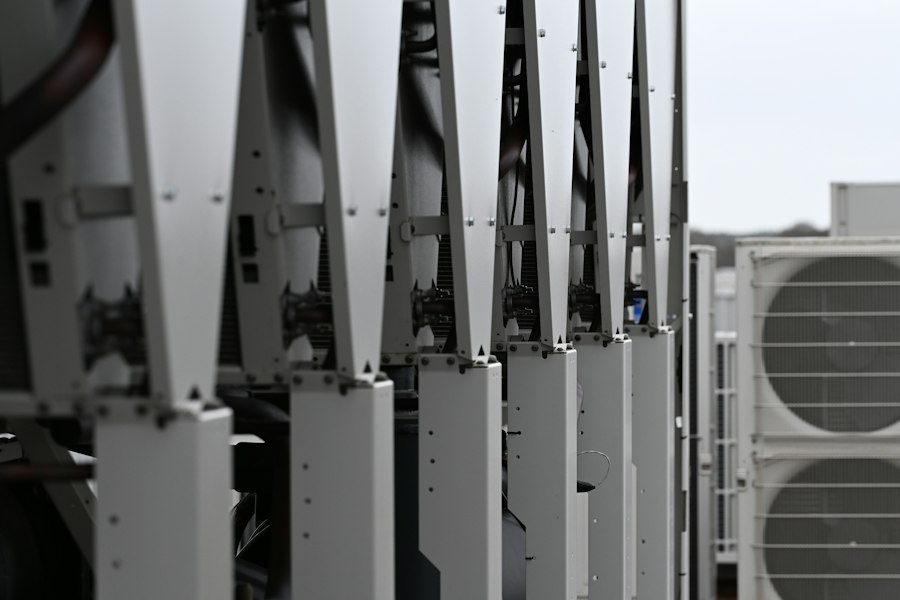
The question of where refrigerant releases heat points directly to the condenser. This component is the designated site for heat dissipation. It’s the crucial link that moves the thermal energy from the cool interior of your appliance to the warmer exterior environment. Without an effective condenser, the refrigeration cycle would cease to function.
The Physics of Heat Dissipation in the Condenser
The heat dissipation in the condenser is a direct application of Newton’s Law of Cooling, which states that the rate of heat loss of a body is directly proportional to the difference in temperatures between the body and its surroundings. The hotter the refrigerant in the condenser is compared to the surrounding air, the faster heat will transfer. The design of the condenser coils – their surface area and configuration – is optimized to maximize this heat transfer. The greater the surface area exposed to the air, the more efficiently heat can be released. This is why you’ll often see large, finned coils in refrigeration and air conditioning systems.
Factors Influencing Condenser Efficiency
Several factors can influence how efficiently the condenser releases heat. The most obvious is the temperature difference between the refrigerant and the ambient air. In a hot kitchen or on a hot day, the condenser has to work harder to dissipate heat because the temperature difference is smaller. Dust and debris accumulating on the condenser coils can act as an insulator, hindering heat transfer. Therefore, regular cleaning of condenser coils is essential for maintaining the efficiency of your refrigerator or air conditioner. Proper ventilation around the condenser is also crucial; if the hot air released by the condenser is trapped and recirculated, the unit will struggle to cool effectively.
The Practical Implications of Heat Release
Understanding where the heat is released has practical implications for how you operate and maintain your appliances, and even how you design your living spaces. It’s not just about theoretical concepts; it directly affects performance, energy consumption, and longevity.
Placement and Ventilation of Appliances
The location of your refrigerator is important. Placing it near a heat source, like an oven or a sunny window, will force the condenser to work harder, consuming more energy and potentially reducing its lifespan. Similarly, ensuring adequate clearance around the back or bottom of your refrigerator allows for proper airflow to the condenser, facilitating efficient heat release. For air conditioning systems, ensuring that the outdoor unit’s condenser has unobstructed airflow is paramount for effective cooling. Blocking the condenser can lead to overheating and system failure.
Energy Consumption and Efficiency
The efficiency of your refrigerator or air conditioner is directly tied to how well its condenser can release heat. If the condenser is struggling, the compressor will have to run for longer periods to maintain the desired temperature. This increased run time translates to higher electricity bills. Maintaining clean condenser coils and ensuring proper ventilation are simple yet effective ways to improve energy efficiency and reduce operating costs. Newer appliances often feature more efficient condenser designs and variable-speed compressors that can further optimize energy usage.
In understanding the process of how refrigerants release heat, it’s essential to explore the various phases of refrigeration cycles and their applications. For a deeper insight into the science behind these processes, you can refer to a related article that discusses the principles of thermodynamics and heat transfer in refrigeration systems. This article can be found at Freaky Science, where you will discover more about the fascinating mechanisms that govern heat exchange in different environments.
Beyond the Kitchen: Refrigerant Heat Release in Other Applications
| Component | Location of Heat Release | Typical Temperature Range (°C) | Function | Heat Transfer Medium |
|---|---|---|---|---|
| Condenser Coil | Outside unit (outdoor coil) | 30 – 60 | Releases heat from refrigerant to ambient air | Air or water (in water-cooled condensers) |
| Receiver/Drier | Between condenser and expansion valve | Similar to condenser temperature | Stores liquid refrigerant and removes moisture | Ambient air |
| Heat Exchanger (in heat pumps) | Outdoor coil (in heating mode) | 20 – 50 | Releases heat absorbed from indoor air to outside | Air |
The principles of heat release by refrigerant are not confined to your kitchen appliance. This fundamental thermodynamic process is the backbone of numerous cooling technologies that impact our daily lives in profound ways.
Air Conditioning Systems: Cooling Homes and Buildings
Air conditioners work on the same fundamental principles as refrigerators. The evaporator coils are located inside your home, absorbing heat from the indoor air. The refrigerant then travels to the compressor, and finally to the condenser, which is typically located in an outdoor unit. Here, the heat absorbed from your home is released into the outside atmosphere. The effectiveness of the outdoor condenser is crucial for keeping your home cool and comfortable, especially during hot weather. Poorly maintained outdoor units can lead to insufficient cooling and increased energy consumption.
Industrial Refrigeration and Cryogenics
The same thermodynamic cycle is employed in much larger-scale applications. Industrial refrigeration systems, used in food processing plants, warehouses, and cold storage facilities, rely on refrigerants to maintain specific low temperatures. These systems often involve sophisticated controls and larger, more robust compressors and condensers. Furthermore, the principles extend to cryogenics, the study and production of very low temperatures. While the refrigerants and operating conditions are vastly different, the core concept of using phase changes to absorb and release heat remains the same. Specialized refrigerants are used, and the heat release often occurs in specialized heat exchangers designed for extreme temperature differences.
Heat Pumps: Reversing the Flow
Heat pumps are a fascinating application that utilizes the same refrigeration cycle but can operate in reverse. In cooling mode, they function like an air conditioner, absorbing heat from indoors and releasing it outdoors. However, in heating mode, the cycle is reversed. The outdoor unit acts as the evaporator, absorbing heat from the cold outdoor air (even in freezing temperatures, there is still thermal energy available). This heat is then transferred via the refrigerant to the indoor unit, where it is released into your home. In this scenario, the refrigerant releases heat indoors to warm your living space. This demonstrates the versatility of the refrigeration cycle and how the location of the evaporator and condenser determines whether you are cooling or heating. The fundamental principle of refrigerant releasing heat when it condenses remains constant, but the location of that heat release can be manipulated.

Your AC Blows Hot Air Outside. Is That Heat From Your Room?
FAQs
1. How does refrigerant release heat in a refrigeration system?
Refrigerant releases heat in a refrigeration system through a process called heat exchange. As the refrigerant absorbs heat from the indoor air, it becomes a gas and carries the heat outside to be released.
2. Where does the heat released by the refrigerant go?
The heat released by the refrigerant is expelled outside the building through the condenser coils of the air conditioning unit or refrigerator. The heat is dissipated into the surrounding air.
3. What is the role of the condenser in releasing heat from the refrigerant?
The condenser is a component in the refrigeration system where the hot, high-pressure refrigerant gas is condensed into a liquid. During this process, heat is released from the refrigerant and transferred to the surrounding air.
4. Why is it important for refrigerant to release heat efficiently?
Efficient heat release by the refrigerant is crucial for the proper functioning of the refrigeration system. If the heat is not effectively released, the system may not cool properly, leading to higher energy consumption and potential damage to the components.
5. Are there any environmental concerns related to the release of heat by refrigerant?
Yes, there are environmental concerns related to the release of heat by refrigerant. Some refrigerants used in older systems, such as CFCs and HCFCs, are ozone-depleting substances and contribute to global warming. It is important to use environmentally friendly refrigerants and ensure proper disposal of old refrigerants to minimize environmental impact.