You flip the switch, and the lights blaze to life. Your phone charges, your computer hums, your refrigerator keeps your food cold. All of it powered by that invisible force we call electricity, specifically AC electricity. But have you ever stopped to wonder where it all comes from, and more importantly, where it ends up? It’s a journey that’s both incredibly complex and astonishingly efficient, a vast network designed to deliver power precisely when and where you need it.
The Genesis: From Motion to Mains
Your journey with AC electricity begins long before it reaches your wall socket. It’s a story of transformation, starting with raw energy and culminating in the alternating current that flows through your home. The vast majority of AC electricity you use is generated in power plants, massive facilities that harness various forms of energy and convert them into electrical power.
Spinning the Dynamos: The Heart of Power Generation
At the core of most power generation lies a fundamental principle: electromagnetic induction. This is the phenomenon where a changing magnetic field can induce an electric current in a conductor. In power plants, this is achieved through massive generators, essentially giant motors working in reverse. These generators are composed of coils of wire (conductors) placed within a powerful magnetic field. The key is to make one of these components move relative to the other.
In traditional thermal power plants, whether fueled by coal, natural gas, or nuclear reactions, this motion is achieved by a turbine. Think of a giant, sophisticated pinwheel. Steam, superheated under immense pressure, is directed at the blades of the turbine, causing it to spin at incredible speeds. This spinning turbine is directly connected to the rotor of the generator, which is a powerful electromagnet. As the rotor spins within the stationary coils of the stator, the magnetic field sweeps past the wires, inducing an alternating current. The “alternating” aspect arises from the way the magnetic poles interact with the coils as the rotor turns, causing the direction of the induced current to reverse periodically.
For hydroelectric power, the principle is similar, but the driving force is water. Dams create reservoirs, and when water is released, it flows through turbines, causing them to spin. These spinning turbines are then connected to generators, producing AC electricity. Even wind turbines, those iconic structures dotting landscapes and coastlines, operate on the same fundamental principle. The wind turns the blades of the turbine, which in turn spins a generator, producing AC power.
Renewable energy sources like solar photovoltaic (PV) panels generate DC (Direct Current) electricity directly from sunlight. However, for integration into the grid and transmission over long distances, this DC power is typically converted to AC using inverters. Geothermal and tidal power also contribute, utilizing heat from the Earth’s core or the movement of ocean tides to spin turbines and drive generators. Regardless of the initial energy source, the conversion to AC electricity in generators is a universal first step in its journey to your home.
Stepping Up the Voltage: The Crucial Role of Transformers
Once generated, the AC electricity is at a relatively low voltage. Transmitting electricity at low voltages over long distances would be incredibly inefficient. As electricity flows through wires, it encounters resistance, and this resistance causes a loss of energy in the form of heat. The amount of power lost due to resistance is proportional to the square of the current. Therefore, to minimize power loss, you want to minimize the current. The relationship between power, voltage, and current is given by the formula P = VI (Power = Voltage x Current). To transmit the same amount of power with a lower current, you need to significantly increase the voltage.
This is where transformers come in. Transformers are ingenious electrical devices that use electromagnetic induction to increase or decrease voltage. They consist of two coils of wire, a primary coil and a secondary coil, wound around a common iron core. When AC current flows through the primary coil, it creates a changing magnetic field in the iron core. This changing magnetic field then induces a current in the secondary coil. The ratio of the number of turns in the primary coil to the number of turns in the secondary coil determines whether the voltage is stepped up or stepped down.
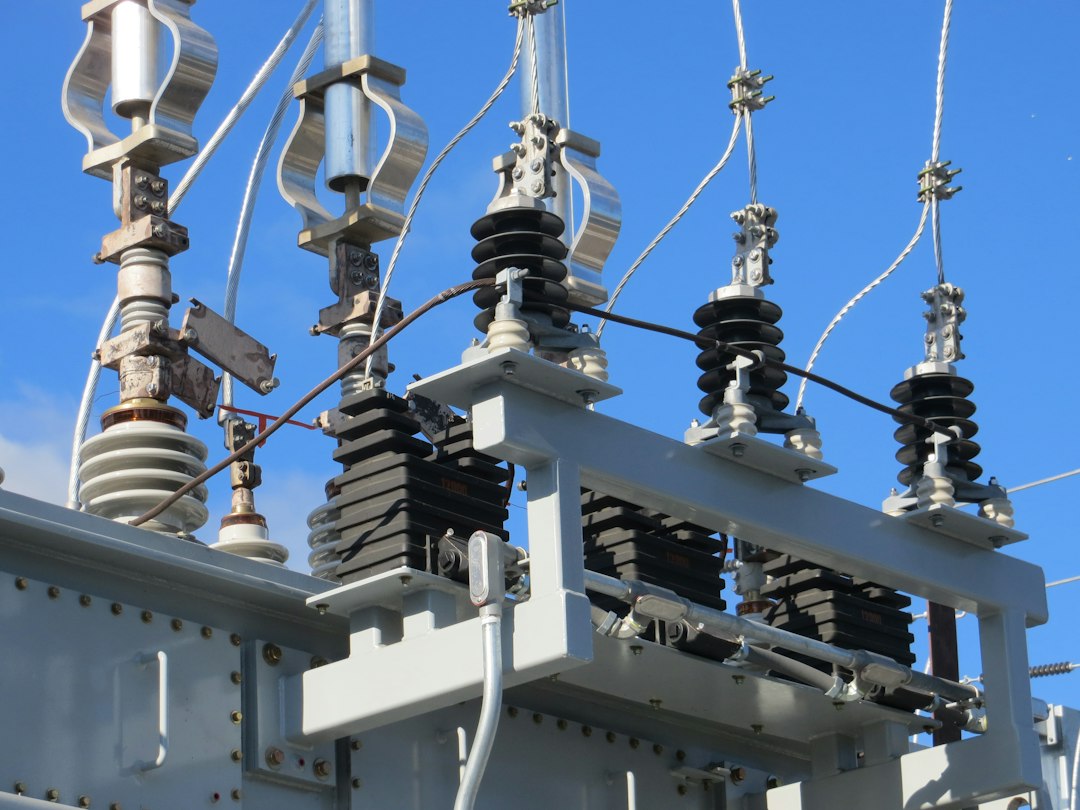
At the power plant, step-up transformers are used to increase the voltage of the generated electricity to extremely high levels, often hundreds of thousands of volts (kilovolts). This high voltage allows the electricity to be transmitted efficiently across vast distances through the transmission lines, minimizing energy loss. You’ll see these massive transformers at substations, looking like large metal drums.
The electricity used by air conditioning systems plays a crucial role in understanding energy consumption and its environmental impact. For a deeper insight into how electricity is generated and the broader implications of energy use, you can explore a related article on this topic at Freaky Science. This resource delves into various aspects of energy production and consumption, providing valuable information that complements the discussion on air conditioning and electricity usage.
The Great Transmission: A Network of Power Highways
The journey of electricity from the power plant to your neighborhood is facilitated by an intricate and robust electrical grid. This grid is a complex network of power lines, substations, and control systems designed to deliver electricity reliably and efficiently. It’s a marvel of engineering, constantly managed and optimized to meet fluctuating demand.
Striding Across the Land: High-Voltage Transmission Lines
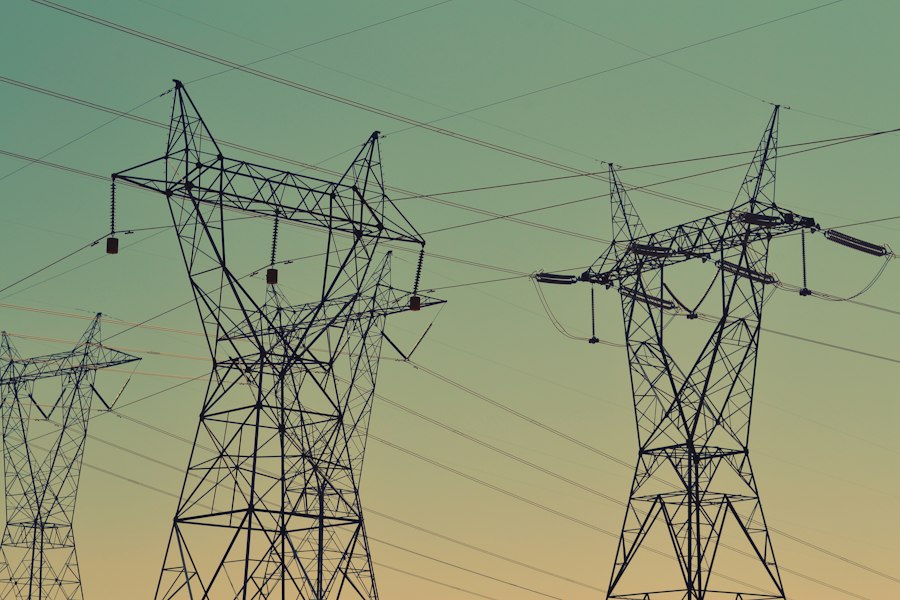
The electricity, now at very high voltages, travels across the country on massive transmission lines. These are the tall, imposing towers you see carrying thick bundles of wires. These lines are designed to carry large amounts of power over long distances with minimal loss. The conductors are typically made of aluminum or copper, chosen for their conductivity and relatively low weight. They are suspended from insulators made of porcelain or polymer to prevent the electricity from grounding.
The AC electricity flowing through these lines is not a simple, steady stream. It’s an oscillating wave, with the voltage and current constantly changing direction. This oscillation is the defining characteristic of AC power, and it’s what makes it so suitable for long-distance transmission and easy voltage transformation. The frequency of this oscillation is typically 50 or 60 Hertz (Hz), meaning the current reverses direction 50 or 60 times every second, depending on the region.
The sheer scale of the transmission grid is awe-inspiring. It’s a vast web connecting power generation sites to population centers, ensuring that electricity can be dispatched from where it’s produced to where it’s needed, even if those locations are hundreds or thousands of miles apart. This interconnectedness also provides resilience; if one power plant goes offline, electricity can often be rerouted from other sources to maintain supply.
The Role of Substations: Interconnecting and Transforming
As the high-voltage electricity travels across the land, it passes through numerous substations. These are critical nodes in the grid where voltage levels are adjusted and power flows are managed. Substations are like intelligent intersections for electricity.
Within a substation, you’ll find more transformers, but these are typically step-down transformers. As the electricity approaches populated areas, its voltage needs to be reduced for safety and practical reasons. So, the extremely high voltages of the transmission lines are gradually reduced in stages. Larger substations might take power from the very high-voltage transmission lines and step it down to a lower, but still substantial, voltage suitable for distribution to smaller towns or industrial areas. Smaller substations within cities will further reduce the voltage to levels that can be handled by local distribution networks.
Substations also house circuit breakers, switches, and other protective equipment. Circuit breakers are essential safety devices that can automatically interrupt the flow of electricity in the event of a fault, such as a short circuit or an overload. This prevents damage to equipment and minimizes the risk of fires or other hazards. The intelligent management of these substations, often through sophisticated control systems, is crucial for maintaining the stability and reliability of the entire electrical grid.
Bringing it Home: The Local Distribution Network
Once the AC electricity has been sufficiently stepped down, it enters the local distribution network, the final leg of its journey to your doorstep. This is a more intricate and widespread system, designed to deliver power to individual homes and businesses.
Branching Out: The Power Lines in Your Neighborhood
You’re familiar with these power lines. They are the poles and wires that run along your streets, often with smaller lines branching off to individual houses. These are the distribution lines, operating at a lower voltage than the transmission lines, typically ranging from a few thousand volts to a few hundred volts, depending on the specific system.
These distribution lines are essentially a network of smaller arteries feeding the capillaries of the grid. The transformers you see mounted on poles or on concrete pads in your neighborhood are the final step-down transformers before the electricity enters your home. They take the voltage from the distribution lines and reduce it to the standard household voltages you use – typically 120 volts (in North America) or 230 volts (in many other parts of the world), and sometimes a higher voltage for specific appliances like ovens or dryers.
The complexity of the distribution network lies in its sheer density. It has to reach every single building, requiring a vast and interconnected web of wires. The design and maintenance of this network are critical to ensuring reliable power delivery. Issues like downed power lines due to storms, equipment failures, or overloads can lead to localized outages, which are a stark reminder of the intricate system at play.
The Meter: Your Personal Power Account
At the point where the electricity enters your home, you’ll find your electric meter. This device is your personal gateway to the electrical grid and the tool that measures your consumption. The meter essentially counts the amount of electrical energy you’ve used. Traditionally, these were mechanical devices with spinning discs, but increasingly, they are digital smart meters that can communicate your usage data wirelessly to the utility company.
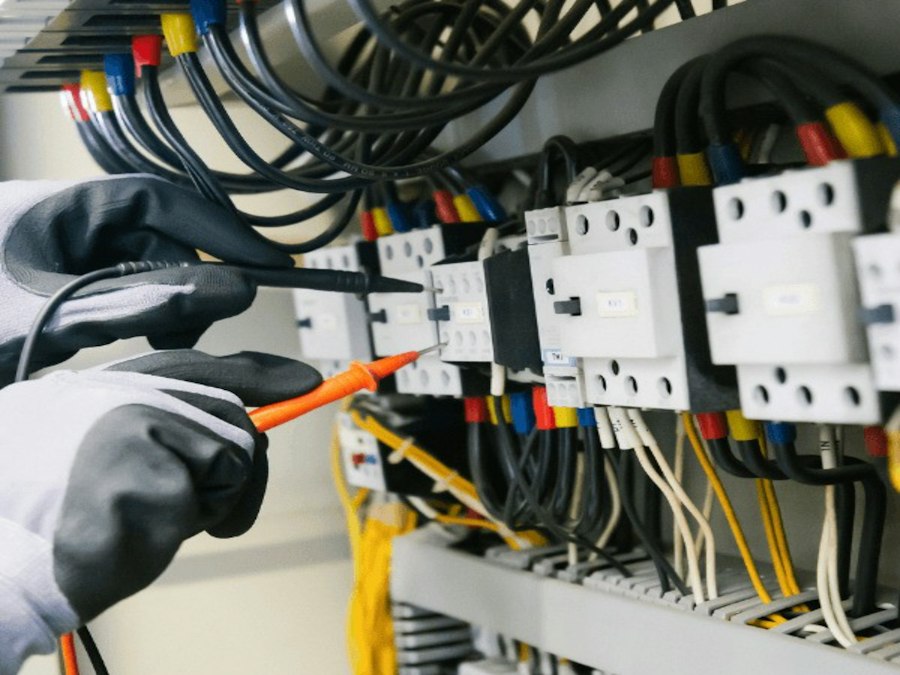
The meter is connected to your home’s electrical panel, also known as the breaker box or fuse box. This panel is the central hub for all the electrical circuits within your house. From the meter, the power flows into the main breaker or fuse, which provides a primary layer of protection. From there, individual circuits branch out to power different parts of your home – lighting, outlets in the living room, the kitchen appliances, and so on. Each circuit is protected by its own breaker or fuse, designed to trip or blow if that specific circuit is overloaded, preventing damage to your wiring and appliances and reducing fire hazards.
The Usage: Where Your AC Electricity Finds Its Purpose
Once the AC electricity has arrived at your home, it embarks on its final and most vital mission: powering your life. It’s here, in the mundane and the extraordinary, that the true purpose of this invisible force is realized.
Powering the Everyday: Appliances and Devices
The most immediate destination for AC electricity is your array of appliances and electronic devices. Your refrigerator hums continuously, keeping your food fresh. Your lights illuminate your rooms at the flick of a switch. Your washing machine and dryer churn, cleaning and preparing your clothes. Your microwave heats your meals in minutes. These are all direct consumers of the AC power that flows through your walls.
Many of these appliances are designed to run directly on AC power. The motors in your washing machine or blender, for example, are built to operate with the alternating nature of the current. The heating elements in your toaster or oven convert electrical energy directly into heat through resistance.
The Digital Realm: The Role of AC in Your Electronics
Even for devices that seem to run on DC power, like your smartphone, laptop, or television, AC electricity is still the initial fuel. These devices contain power adapters or internal power supplies that perform a crucial function: converting the AC power from your wall socket into the DC power that their sensitive electronic components require.
This AC-to-DC conversion is a fundamental process in modern electronics. The adapter, often a black box that plugs into the wall, contains a transformer to step down the voltage, a rectifier to convert the AC to pulsating DC, and a filter and regulator to smooth out the DC to a stable, usable level. This allows the delicate integrated circuits and microprocessors within your gadgets to function correctly. Without the initial AC supply, these devices wouldn’t be able to start their conversion process.
When considering the impact of air conditioning on energy consumption, it’s important to understand where the electricity used by AC systems ultimately ends up. This energy is primarily converted into heat, which is expelled into the environment, contributing to the urban heat island effect. For a deeper exploration of how energy consumption affects our surroundings, you might find this article on energy efficiency insightful. You can read more about it here. Understanding these dynamics can help us make more informed decisions about energy use in our homes and communities.
The End of the Line? Reimagining Consumption and Return Paths
| Energy Destination | Description | Approximate Percentage |
|---|---|---|
| Heat Released Outside | The compressor and condenser release heat absorbed from inside the building plus the heat generated by the AC’s electrical components to the outside environment. | 70-80% |
| Heat Removed from Indoors | Heat absorbed from the indoor air, which cools the interior space. | 20-30% |
| Electrical Energy Converted to Heat Inside | Some electrical energy is converted to heat inside the unit and building due to inefficiencies and electrical resistance. | Small fraction (included in above) |
The concept of AC electricity “ending up” is a bit of a misnomer, as it’s a continuous flow. However, we can think about the end of its useful journey and emerging concepts that alter this flow.
The Constant Demand: The Never-Ending Flow
The fundamental nature of AC electricity is that it’s constantly being generated and consumed. The grid is a dynamic system, balancing supply and demand in real-time. When you turn off a light, the demand on that circuit decreases, and the overall demand on the grid slightly reduces. Conversely, when you turn on a new appliance, the demand increases, and the power generation must increase to match.
The “end” of its journey for a particular electron might be when it flows through your light bulb, exciting the filament and producing light and heat. Or it might be the end of its useful life when it powers a motor and causes it to spin. But the electricity itself, as a flow of energy, is perpetually moving through the system.
Emerging Concepts: What Happens When Demand Changes?
The way we consume electricity is evolving. The rise of electric vehicles (EVs) means a new, significant demand on the grid. However, EVs also present an opportunity for a more dynamic relationship with the grid through Vehicle-to-Grid (V2G) technology. In a V2G system, EV batteries can not only draw power from the grid but also feed it back during periods of high demand, effectively acting as distributed energy storage.
Similarly, the increasing adoption of rooftop solar panels means that homes can become not just consumers but also producers of electricity. When your solar panels generate more power than you’re using, the excess AC electricity can be sent back into the grid for others to use. This bidirectional flow of power is a significant shift from the traditional one-way model of electricity delivery.
The concept of “ending up” is also being redefined by energy storage solutions. Batteries, both large-scale grid-connected systems and smaller home-based units, can store excess electricity generated during periods of low demand or high production (like midday solar) and release it when demand is high or generation is low. This essentially creates a temporary “end point” for the electricity, holding it until it’s needed, and then reintroducing it into the flow.
Ultimately, AC electricity is a continuous, dynamic force. It originates in motion, travels vast distances through an engineered network, and then finds its purpose in powering our modern lives. While the journey might seem abstract, it’s a fundamental thread woven into the fabric of our daily existence, a testament to human ingenuity in harnessing and distributing one of the most vital forms of energy we possess. Your interaction with it is constant, from the moment you wake up to the time you go to sleep, a silent, invisible partner in nearly everything you do.

Your AC Blows Hot Air Outside. Is That Heat From Your Room?
FAQs
1. What happens to the electricity used by an air conditioner?
Electricity used by an air conditioner is converted into heat energy to cool the air inside a building or home.
2. Does the electricity used by an air conditioner disappear after it is used?
No, the electricity used by an air conditioner does not disappear. It is transformed into heat energy and released into the surrounding environment.
3. Can the electricity used by an air conditioner be recycled or reused?
The electricity used by an air conditioner cannot be recycled or reused. Once it is converted into heat energy, it dissipates into the atmosphere.
4. How does the electricity used by an air conditioner impact the environment?
The electricity used by an air conditioner contributes to the overall energy consumption and carbon footprint of a building or home. It indirectly affects the environment through the generation of electricity at power plants.
5. Is there a way to reduce the amount of electricity used by an air conditioner?
Yes, there are ways to reduce the amount of electricity used by an air conditioner, such as using energy-efficient models, proper insulation, regular maintenance, and setting the thermostat at optimal temperatures.