You’re standing there, a perfectly good meal poised for reheating, when suddenly, a horrifying spectacle unfolds within your microwave. A cascade of bright, crackling sparks erupts, illuminating the usually mundane interior with an alarming light show. Your stomach clenches – is the appliance about to explode? Is your food contaminated? You instinctively hit the stop button, the whirring hum ceasing abruptly, leaving you with a lingering scent of ozone and a healthy dose of apprehension.
This dramatic event, often referred to as arcing, is more common than you might think. While it can be startling and even a little frightening, understanding what causes these sparks can help you prevent them and ensure your microwave operates safely and efficiently. It’s not a sign of impending doom, but rather a consequence of specific interactions between the microwave’s electromagnetic waves and certain materials.
Before we delve into what causes sparks, it’s crucial to grasp the fundamental principle behind how your microwave oven works. It’s not magic; it’s physics, specifically the manipulation of electromagnetic radiation.
Generating the Waves: The Magnetron’s Role
At the heart of every microwave oven lies a component called the magnetron. Think of it as the engine that generates the very energy that cooks your food. When you switch on your microwave, electricity flows through the magnetron. This electricity, interacting with powerful magnets, excites electrons within a vacuum tube. These excited electrons then oscillate at a very high frequency, producing microwave radiation.
The Wavelength and Frequency: A Specific Kind of Energy
Microwaves are a form of electromagnetic radiation, sitting within the electromagnetic spectrum between radio waves and infrared radiation. The microwaves generated by your oven typically have a frequency of around 2.45 gigahertz (GHz). This specific frequency is chosen because it’s particularly effective at interacting with water molecules.
Heating by Oscillation: The Key to Cooking
When these microwaves are emitted into the cooking cavity, they bounce off the metallic walls of the oven. They then penetrate your food. The magic happens because water molecules, which are abundant in most foods, are polar. This means they have a slightly positive charge on one end and a slightly negative charge on the other.
As the microwaves pass through the food, their oscillating electric field causes these polar water molecules to vibrate and rotate rapidly. This constant agitation creates friction between the molecules, and this friction generates heat. It’s this heat that cooks your food from the inside out, a far cry from the surface heating of conventional ovens.
Beyond Water: Other Molecules and Their Responses
While water is the primary driver of microwave heating, other molecules with polar properties, like fats and sugars, also contribute to the cooking process. However, the efficiency of heating varies. This is why some foods cook faster or unevenly in a microwave.
Sparks inside a microwave can be caused by various factors, including the presence of metal objects, food with high moisture content, or even certain types of containers. For a deeper understanding of the science behind these sparks and how to prevent them, you can read a related article on this topic at Freaky Science. This resource provides valuable insights into the mechanisms that lead to sparking and offers tips for safe microwave use.
The Culprits Behind the Crackle: Understanding Conductors and Insulators
Now that you understand the basic mechanism of microwave heating, let’s explore what happens when things go awry. Sparks, or arcing, occur when there’s an unintended electrical discharge within the microwave cavity. This discharge is fundamentally an electrical current trying to find a path, and it’s often initiated by the presence of materials that either conduct electricity or have properties that disrupt the normal flow of microwaves.
Metal: The Primary Offender
The most common cause of sparking in a microwave is the introduction of metal objects. This is why you’ll find prominent warnings on your microwave, advising against placing metallic items inside. But why is metal so problematic?
Reflecting and Concentrating Waves
Metal surfaces are excellent reflectors of microwaves. Instead of allowing the waves to penetrate and heat your food, they bounce them back. This reflection itself isn’t the direct cause of sparks, but it’s the first step in a problematic chain reaction.
Eddy Currents and Electron Excitation
When microwaves strike a metal object, especially one with thin edges or points, they induce electrical currents within the metal itself. These are known as eddy currents. These currents can become incredibly concentrated, particularly at sharp points or edges. As the electrons within the metal are forced to move rapidly by these induced currents, they can become excited and jump across tiny gaps in the air. This jump is essentially a miniature lightning bolt – a spark.
Thin Foils and Edges: A Double Threat
Very thin pieces of metal, like aluminum foil, are particularly prone to arcing. The thinness means the metal can heat up very quickly and become more volatile. Similarly, objects with sharp edges or points act as natural focal points for the microwave energy. Imagine the tips of a fork or the crinkled edges of foil – these become intense hotspots where the electric field is strongest, making arcing more likely.
Small Metal Objects: Even a Spoon Can Cause Trouble
It’s not just large metallic items that are a concern. Even small metal objects, such as silverware accidentally left in a dish, or decorative metallic trim on plates, can cause sparks. The key is the conductivity of the material and the presence of edges or points where the microwave energy can concentrate.
The Paradox of Paper: Is it Always Safe?
You might have noticed that some microwave-safe packaging includes metallic elements, or that you’ve seen people use paper products in their microwaves. This can be confusing. Not all paper is problematic, but certain types, especially those with metallic coatings or accents, can indeed cause sparks.
Metallic Coatings and Accents
Many microwave-friendly paper products, particularly those for convenience meals or popcorn bags, have specially designed metallic coatings. These are engineered to interact with microwaves in a controlled way, often to enhance browning or crisping. However, if these coatings are damaged, torn, or if the design is not specifically microwave-optimized, they can still lead to arcing. The key here is the controlled nature of the metallic interaction, which is absent in everyday metallic objects.
Dry Paper and Sharp Edges
Very dry paper, especially with torn or jagged edges, can also theoretically contribute to arcing, though it’s far less common than with metal. The dry fibers might offer less resistance to the buildup of static electricity, which could then discharge. However, this is usually a very minor effect compared to the powerful electrical currents induced in metal.
Beyond Metal: The Unlikely Sparkers
While metal is the usual suspect, other materials and scenarios can also lead to sparking in your microwave. These are less frequent but equally important to be aware of.
Ceramic and Glass with Metallic Trim
Many beautiful ceramic and glass dishes are adorned with decorative metallic trim, often gold or silver in color. These are, in essence, thin lines of metal applied to the surface of the dish. As with any metal, these decorative elements will reflect microwaves and can lead to arcing, particularly if the trim is uneven or has sharp edges.
Identifying Risky Dinnerware
Always check your dinnerware for any metallic embellishments before placing it in the microwave. Even a thin band of gold or silver around the rim of a plate can be enough to cause problems.
Certain Food Packaging: Not All Bags Are Equal
As mentioned earlier, some food packaging is designed for microwave use. However, not all packaging is created equal. Some packaging might contain small amounts of metal in the seals or adhesives that are not intended for microwave exposure. If you’re unsure, it’s always best to remove the food from its original packaging and place it in a microwave-safe dish.
Overheating and Arc Formation: A Vicious Cycle
In some rare instances, prolonged or intense microwaving of certain foods, especially those with very low moisture content, can lead to conditions that promote arcing. If a food item begins to char or burn, the carbonized material can become conductive. This conductive char can then attract and concentrate microwave energy, leading to sparks.
When to Worry: Signs of Serious Microwave Problems
While most instances of sparking are due to user error (introducing metal), there are times when the sparks might indicate a more serious underlying issue with your microwave oven itself.
Persistent Arcing: Even Without Metal
If you consistently experience sparking, even when you are absolutely certain you haven’t placed any metal inside the microwave, it’s a cause for concern. This could indicate a problem with the magnetron or other internal components.
Damaged Cavity Walls
The interior of your microwave cavity is lined with metal, but it’s designed to contain the microwaves. If there are dents, rust, or any damage to the cavity walls, these damaged areas can become hotspots for arcing. The damaged surface can disrupt the smooth reflection of microwaves, leading to concentration and discharge.
Faulty Door Seal
The microwave door has a special seal that helps to contain the microwave radiation within the cavity. If this door seal is damaged or compromised, it can allow microwaves to escape, and in some cases, this leakage can be associated with arcing.
Internal Component Failure
The magnetron, the waveguide (which directs microwaves into the cavity), or other internal electronic components could malfunction. A failing magnetron, for example, might not generate microwaves at the correct frequency or intensity, leading to unpredictable behavior and potentially arcing.
Unusual Smells and Sounds
Beyond the visual spectacle of sparks, pay attention to other warning signs. A persistent burning smell, crackling noises that aren’t sparks, or a significant decrease in cooking power can all indicate a problem that requires professional attention.
Microwaves can sometimes produce unexpected sparks, which can be alarming for users. These sparks are often caused by metal objects or certain types of food packaging that contain metallic elements. For a deeper understanding of this phenomenon and its underlying causes, you might find it interesting to read a related article that explores the science behind microwave sparks. You can check it out here: this article.
Prevention is Key: Keeping Your Microwave Safe and Spark-Free
| Cause of Sparks | Description |
|---|---|
| Metal objects | Placing metal objects such as aluminum foil or metal utensils inside the microwave can cause sparks. |
| Non-microwave safe containers | Using containers that are not labeled as microwave safe can lead to sparks due to the materials used in their construction. |
| Food with high sugar or fat content | Heating foods with high sugar or fat content for too long can cause sparks due to the rapid heating and potential for overheating. |
| Dirty interior | Accumulation of food particles or grease inside the microwave can lead to sparks during heating. |
The good news is that preventing sparks in your microwave is largely straightforward. By following a few simple guidelines, you can avoid this common annoyance and ensure your appliance functions as it should.
The Golden Rule: No Metal, Ever!
This is the most crucial rule. Before you press start, take a moment to scan the contents of your microwave. Ensure there are no stray forks, spoons, metal twist ties, or decorative metallic trim. When in doubt, err on the side of caution and remove the item.
Use Microwave-Safe Cookware
Invest in a set of microwave-safe dishes. Look for the microwave-safe symbol on the bottom of your dishes. This symbol typically looks like a microwave oven with wavy lines radiating from it. If you’re unsure if a dish is microwave-safe, it’s best to use a different one.
Be Mindful of Packaging
As discussed, not all packaging is microwave-friendly. Always check the packaging for instructions. If it says “microwave-safe,” follow those instructions precisely. If you’re unsure, transfer the food to a microwave-safe dish.
Inspect Your Microwave Regularly
Periodically inspect the interior of your microwave for any signs of damage, such as dents, rust, or peeling paint. Also, check the door seal to ensure it’s intact and closing properly. If you notice any damage, it’s advisable to have it inspected by a qualified technician.
Don’t Over-Microwave
Avoid setting your microwave for excessively long periods, especially with foods that are prone to drying out or charring. If a food item is taking longer than expected to cook, it’s better to stop, stir, and continue microwaving in shorter intervals.
When in Doubt, Stop and Think
If you’re ever unsure about whether a particular item is safe to microwave, or if you notice any unusual behavior from your appliance, the safest course of action is always to stop the microwave immediately. A moment of caution can prevent potential damage and ensure your safety.
By understanding the physics behind microwave heating and the common culprits that lead to sparking, you can navigate the use of this incredibly convenient appliance with confidence and avoid those startling, electrifying moments. Your microwave is a powerful tool, and with a little care and knowledge, it will continue to serve you well for years to come.
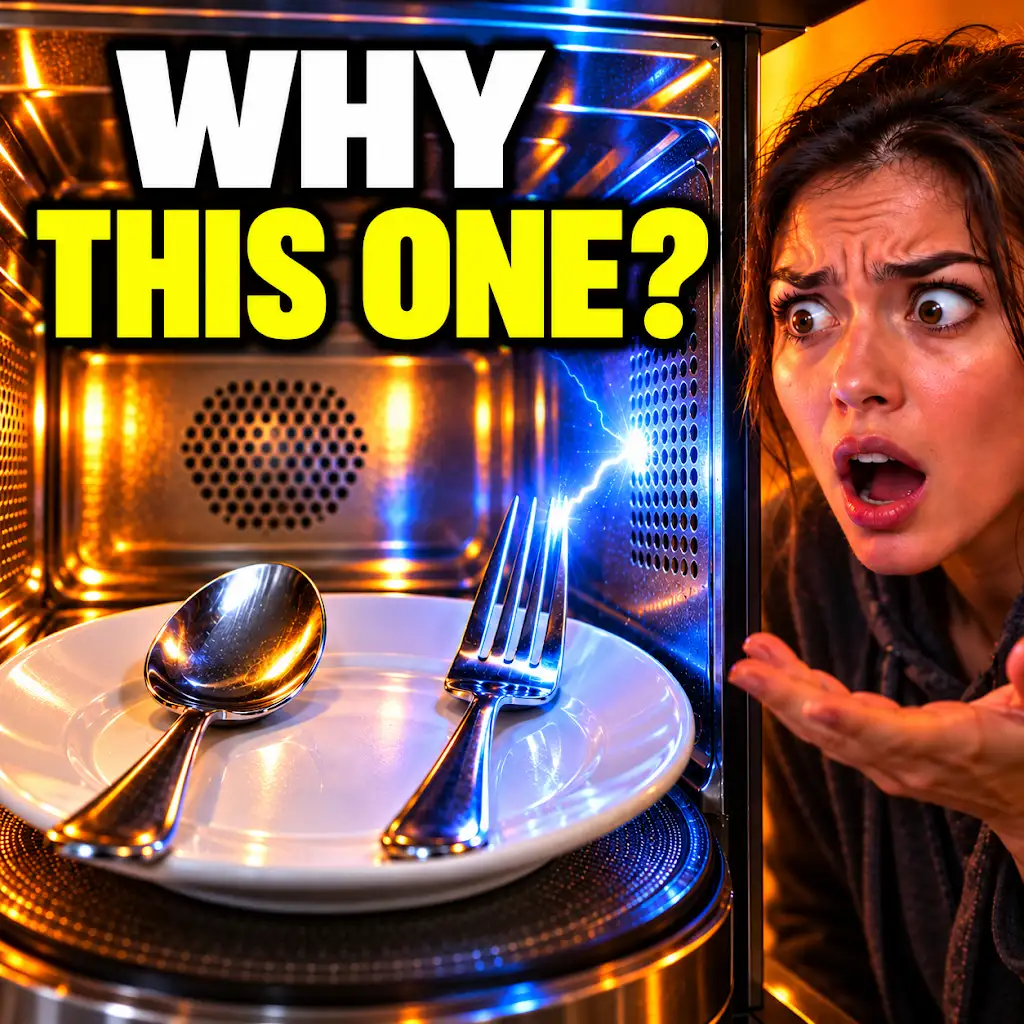
A Fork and a Spoon React Differently in a Microwave. Why?
FAQs
What causes sparks inside a microwave?
Sparks inside a microwave are typically caused by metal objects or containers with metal trim being placed inside the microwave. Metal reflects microwaves and can cause arcing, which produces sparks.
Can food cause sparks inside a microwave?
Food itself does not cause sparks inside a microwave. However, if the food is wrapped in aluminum foil or contains metal components, it can lead to sparking.
Is it safe to use metal in a microwave?
It is not safe to use metal in a microwave, as it can cause sparks and potentially damage the microwave. Always use microwave-safe containers and avoid putting any metal objects inside the microwave.
What should I do if I see sparks inside my microwave?
If you see sparks inside your microwave, immediately turn it off and remove the source of the sparking. Check for any metal objects or containers with metal trim and remove them before continuing to use the microwave.
How can I prevent sparks inside my microwave?
To prevent sparks inside your microwave, avoid putting any metal objects or containers with metal trim inside. Use microwave-safe containers and utensils, and always follow the manufacturer’s guidelines for safe microwave use.