The Mysterious “Water Weirdness”: Unraveling Low-Pressure Phenomena
The common perception of water is one of steadfast reliability. It flows downhill, fills containers predictably, and boils at a familiar temperature. Yet, under certain conditions, water can exhibit behaviors that seem almost mystical, defying everyday expectations. These peculiar manifestations are often attributed to the effects of low atmospheric pressure. When the usual crushing weight of the air above a liquid is significantly reduced, the very nature of its behavior can be altered, leading to phenomena that have intrigued and even baffled observers for centuries. Understanding these “water weirdnesses” requires a deeper dive into the fundamental principles of physics, particularly the interplay between pressure, temperature, and the molecular forces that govern liquids.
Water exhibits some peculiar behaviors, especially under low pressure conditions, which can lead to fascinating phenomena such as boiling at lower temperatures. This intriguing aspect of water’s properties is explored in detail in the article found at Freaky Science. Understanding these behaviors not only enhances our knowledge of physical science but also has practical implications in various fields, including meteorology and engineering.
Understanding Pressure: The Unseen Force on Liquids
Pressure, in its simplest form, is force applied over an area. In the context of liquids exposed to the atmosphere, this force is primarily exerted by the column of air above. The atmosphere, though invisible, possesses considerable weight, and this weight translates into atmospheric pressure. At sea level, this pressure is approximately 101.3 kilopascals (kPa), or 1 atmosphere (atm). This constant downward force influences how liquids behave, affecting their boiling point, their tendency to evaporate, and even their structural integrity under extreme conditions.
The Weight of the Air Above
The air is a mixture of gases, primarily nitrogen and oxygen, which are subject to gravity. This gravitational pull on the air molecules creates a substantial weight, which is then distributed across the Earth’s surface. Imagine a tall column of air extending from sea level all the way to the edge of space. The cumulative weight of this entire column presses down on everything beneath it, including bodies of water. This omnipresent force plays a critical role in everyday phenomena, from keeping our lungs functioning to influencing weather patterns.
Molecular Collisions and Kinetic Energy
Liquids are composed of molecules in constant, random motion. These molecules possess kinetic energy, meaning they are moving and colliding with each other and with the surfaces they interact with. In a liquid, these collisions are frequent, and the molecules are held together by intermolecular forces. When a liquid is at a certain temperature, its molecules have a specific average kinetic energy. The higher the temperature, the more energetic the molecules, leading to more vigorous movement and collisions.
The Boiling Point: A Delicate Equilibrium
Boiling is the process by which a liquid transforms into a gas. This occurs when the vapor pressure of the liquid equals the surrounding atmospheric pressure. Vapor pressure is the pressure exerted by the vapor of a liquid in equilibrium with its liquid phase in a closed system. As a liquid is heated, its molecules gain kinetic energy, and more molecules escape from the liquid surface to become vapor. This increases the vapor pressure. When the vapor pressure matches the external pressure, the liquid boils.
Low Pressure’s Influence on Boiling: The Art of “Boiling” at Room Temperature
One of the most striking effects of reduced pressure on liquids is the lowering of their boiling point. This phenomenon is not merely an academic curiosity; it has practical implications in various scientific and industrial applications. When the external pressure decreases, the liquid no longer needs to reach as high a temperature for its vapor pressure to equal the surrounding pressure. This means that a liquid can transition into a gaseous state at temperatures significantly below its normal boiling point.
Superheating and the Birth of Vapor Bubbles
Under normal atmospheric pressure, when a liquid reaches its boiling point, the formation of vapor bubbles within the bulk of the liquid is usually initiated by nucleation sites – imperfections on the container walls or dissolved impurities. These sites provide a surface for vapor to form and expand. However, in a low-pressure environment, even without external heating, the increased molecular motion due to reduced confinement can lead to a condition known as superheating. In superheated liquids, the temperature rises above the boiling point, but no bubbles form. This state is metastable, meaning it is unstable and can transition abruptly to boiling if disturbed.
The Vacuum Chamber Experiment: Witnessing the Unseen
A compelling demonstration of low-pressure boiling can be achieved using a vacuum chamber. In this setup, a container of water is placed inside a sealed chamber, and an air pump is used to evacuate the air. As the pressure within the chamber decreases, the water will begin to boil vigorously, even if it is at room temperature. The vapor bubbles will form and expand rapidly, creating a dramatic visual spectacle. This experiment vividly illustrates how external pressure dictates the energy required for a liquid to transition into its gaseous state. The lower the external pressure, the less energy (and thus lower temperature) is needed for this phase change.
Implications for Altitude Cooking and Space Exploration
The reduced boiling point of water at higher altitudes has long been a consideration for chefs. At elevations where atmospheric pressure is lower, food takes longer to cook because the water used in cooking boils at a lower temperature, meaning it is not as hot as it would be at sea level. This necessitates adjustments in cooking times and methods. Looking further afield, the principles of low-pressure boiling are crucial for space exploration. In the vacuum of space, water would boil instantaneously if exposed. Understanding these behaviors is essential for designing life support systems, managing waste, and even for the potential for future extraterrestrial habitation where pressure conditions may differ significantly from Earth’s.
Beyond Boiling: Other Low-Pressure Liquid Anomalies
The influence of low pressure extends beyond just altering the boiling point. Liquids can exhibit other peculiar behaviors when the external pressure is significantly reduced, often leading to visual phenomena that seem counterintuitive. These effects arise from the delicate balance of forces that normally govern a liquid’s stability.
Cavitation: The Birth of Bubbles from Thin Air
Cavitation is a phenomenon that occurs when the pressure within a liquid drops below its vapor pressure, causing localized vaporization and the formation of tiny bubbles or cavities. These bubbles are not formed by heating but by mechanical stress. As these bubbles form and then collapse under higher pressure, they can generate shock waves and intense localized heat, leading to erosion and damage in machinery, particularly in pumps, propellers, and turbines. This is a common issue in fluid dynamics and is a direct consequence of pressure fluctuations.
Surface Tension Under Duress: A Less Resilient Surface
Surface tension is the cohesive force between liquid molecules at the surface, creating a “skin” that resists external forces. This tension is a result of the net inward pull experienced by surface molecules. While surface tension is a fundamental property of liquids, its ability to maintain the integrity of a liquid surface can be challenged by extreme low-pressure conditions. In a near-vacuum, the tendency for molecules to escape into the gas phase is significantly amplified. This can lead to a thinning or even rupture of the surface, making the liquid more susceptible to fragmentation and atomization.
Evaporation Rates: A Race to Escape
In a low-pressure environment, the rate of evaporation from a liquid’s surface increases dramatically. This is because there are fewer gas molecules pressing down on the liquid’s surface, hindering the escape of liquid molecules into the gaseous phase. In a vacuum, evaporation can be so rapid that it can cause significant cooling, even to the point of freezing the remaining liquid. This principle is utilized in freeze-drying, where food is frozen and then placed in a vacuum, allowing the ice to sublimate directly into vapor, preserving the food’s structure and nutrients.
Water exhibits some truly fascinating behaviors under low pressure conditions, which can be explored further in a related article. For instance, when water is subjected to low pressure, it can boil at lower temperatures, leading to intriguing phenomena such as the formation of vapor bubbles in liquids. This behavior is not only essential in understanding various scientific principles but also has practical applications in fields like cooking and engineering. To delve deeper into these captivating aspects of water, you can read more about it in this interesting article.
Practical Applications and Scientific Investigations
| Parameter | Typical Range | Effect on Water Behavior | Notes |
|---|---|---|---|
| Pressure | 0.1 – 0.5 atm (Low Pressure) | Water exhibits anomalous density and viscosity changes | Low pressure can induce unusual molecular arrangements |
| Temperature | 0°C – 25°C | Influences hydrogen bonding and water structure | Lower temperatures enhance weird behavior under low pressure |
| Density | ~0.95 – 1.00 g/cm³ | Density decreases with low pressure, affecting buoyancy | Density anomalies are more pronounced at low pressure |
| Viscosity | 0.8 – 1.2 mPa·s | Viscosity may increase or decrease unexpectedly | Viscosity changes impact flow and diffusion rates |
| Surface Tension | 60 – 72 mN/m | Surface tension can decrease under low pressure | Alters droplet formation and capillary action |
| Hydrogen Bonding | Variable | Strength and number of bonds fluctuate | Key factor in water’s anomalous properties |
The study of how liquids behave under low pressure has led to numerous practical applications and continues to be an active area of scientific research. From preserving food to understanding the conditions on other planets, these investigations are vital for technological advancement and scientific discovery.
Freeze-Drying: Preserving Perishables
As mentioned, freeze-drying, or lyophilization, is a direct application of low-pressure evaporation. Food items are frozen, and then the pressure is reduced significantly. The ice crystals within the food then sublimate (transition directly from solid to gas) into the surrounding vacuum. This process removes water without damaging the delicate cellular structure of the food, resulting in a lightweight, shelf-stable product that retains much of its original nutritional value and flavor when rehydrated. This technique is widely used for preserving fruits, vegetables, coffee, and even pharmaceuticals.
Spacecraft Design and Life Support Systems
The harsh vacuum of space presents unique challenges for spacecraft design and the maintenance of life support systems. Understanding how liquids behave in such an environment is paramount. For instance, engineers must design systems that prevent water from boiling off uncontrollably or freezing solid. The management of wastewater, the storage of potable water, and the operation of cooling systems all rely on a thorough understanding of low-pressure liquid physics.
Research into Exotic States of Matter
Beyond Earth’s atmosphere, low-pressure environments are the norm. Studying the behavior of liquids under extreme low-pressure conditions, often in conjunction with varying temperatures, can lead to the discovery of novel phases of matter or unusual molecular arrangements. Scientists use specialized equipment, such as cryostats and vacuum chambers, to simulate these conditions and observe phenomena that might not be possible to replicate on Earth’s surface. This research contributes to our fundamental understanding of matter and its diverse properties.
The Unseen Wonders of Fluid Dynamics
The seemingly simple act of water exhibiting “weird behavior” under low pressure is a profound demonstration of the intricate laws of physics that govern our universe. It highlights how subtle changes in external conditions can lead to dramatic shifts in the observable properties of matter. From the everyday experience of cooking at altitude to the advanced technologies of space exploration, the principles of low-pressure liquid behavior are woven into the fabric of modern life and scientific progress. These phenomena are not just curiosities; they are windows into the fundamental forces that shape the world around us, reminding us that even the most familiar substances can hold hidden depths of complexity waiting to be explored. The continued investigation into these “water weirdnesses” promises further insights into the nature of liquids and their interactions with their environment, pushing the boundaries of our knowledge and enabling new technological innovations.
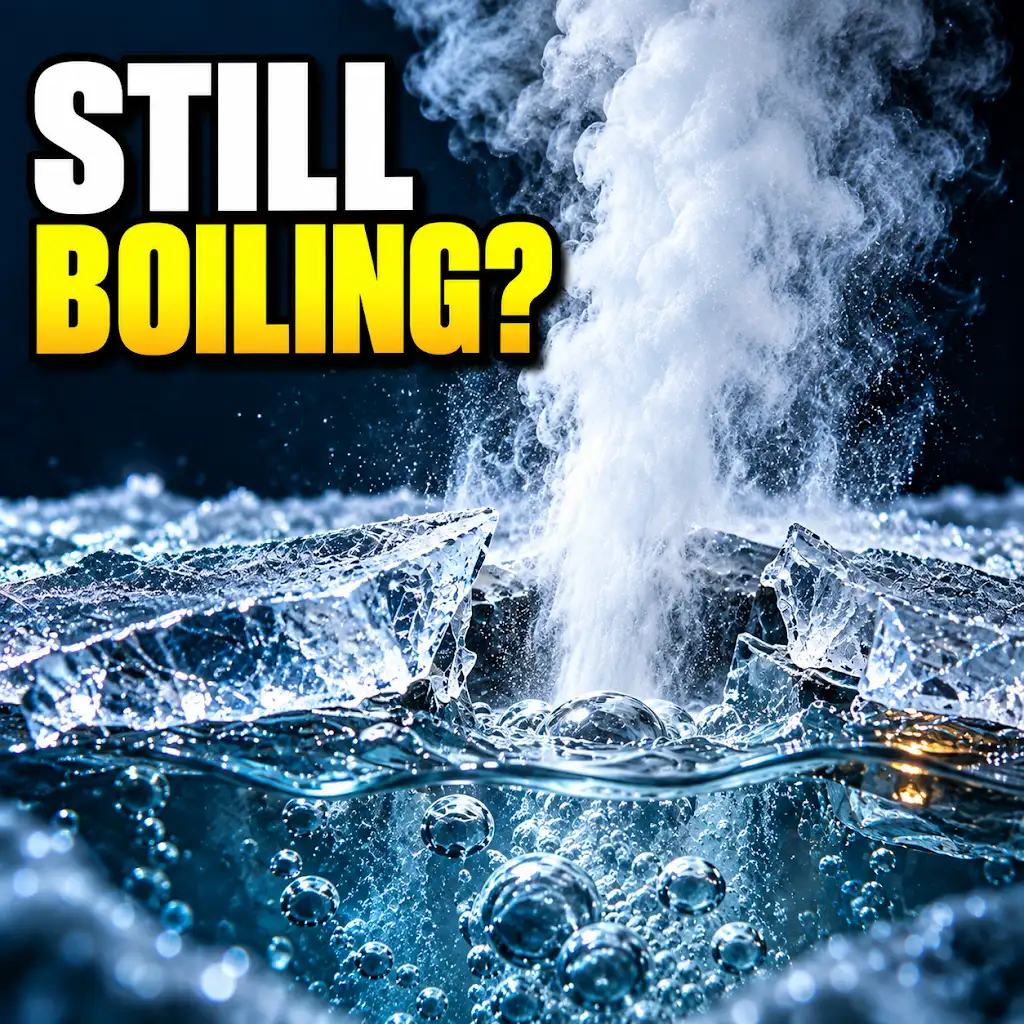
Water Boiled While Ice Formed. Could a Lander Sink Into It?
FAQs
What are some common signs of low water pressure in a home?
Common signs of low water pressure in a home include slow-flowing faucets, weak water flow in showers, sputtering or inconsistent water flow, and difficulty filling up containers quickly.
What could be causing low water pressure in a household?
Low water pressure in a household can be caused by various factors such as clogged pipes, a malfunctioning pressure regulator, water leaks, mineral build-up in pipes, or issues with the municipal water supply.
How can I troubleshoot low water pressure in my home?
To troubleshoot low water pressure in your home, you can check for any visible leaks, inspect the pressure regulator, clean out aerators on faucets, ensure all shut-off valves are fully open, and consider contacting a professional plumber for further assistance.
Is low water pressure a common issue in households?
Yes, low water pressure is a common issue that many households experience at some point. It can be a frustrating problem that affects daily activities such as showering, washing dishes, and doing laundry.
Can water conservation efforts lead to low water pressure in a home?
Yes, water conservation efforts such as installing low-flow fixtures or using water-saving appliances can sometimes contribute to low water pressure in a home. These measures restrict water flow to reduce water usage, which may result in lower pressure at the faucets.