The Impact of Ambient Water Temperature on Ice Melting Dynamics
The seemingly simple act of ice melting, a common occurrence in everyday life, is governed by a complex interplay of physical principles. Understanding how the temperature of the surrounding water influences the rate at which ice succumbs to its environment is crucial for a variety of applications, from industrial processes and food preservation to environmental science and climate modeling. This exploration delves into the fundamental reasons why warmer water accelerates the melting of ice, examining the molecular mechanisms, heat transfer processes, and observable phenomena associated with this transformation. By dissecting the factors at play, one can gain a deeper appreciation for the scientific underpinnings of a process often taken for granted.
In exploring the fascinating effects of water temperature on various chemical reactions, you might find the article on Freaky Science particularly insightful. It delves into the science behind temperature variations and their impact on solubility and reaction rates. For more detailed information, you can read the article here: Freaky Science. This resource complements your understanding of the principles behind your water temperature experiment and offers additional experiments to try.
Foundations of Heat Transfer and Phase Change
The melting of ice is a phase transition from a solid state to a liquid state, driven by the absorption of energy. This energy, in the form of heat, directly influences the kinetic energy of the water molecules within the ice crystal lattice. At the molecular level, ice exists as a highly ordered structure where water molecules are held together by hydrogen bonds. As heat energy is introduced, these molecules begin to vibrate more vigorously. When the temperature of the ice reaches its melting point (0 degrees Celsius or 32 degrees Fahrenheit at standard atmospheric pressure), the absorbed energy is no longer used to increase the kinetic energy of the molecules but is instead used to overcome the intermolecular forces holding the crystal structure together. This energy is known as the latent heat of fusion. Once these bonds are broken, the molecules are free to move past one another, transitioning into the liquid state. The surrounding water acts as the primary source of this heat energy.
The Role of Kinetic Energy
The temperature of a substance is a direct measure of the average kinetic energy of its constituent molecules. In the context of ice melting in water, the water molecules, possessing higher kinetic energy due to their higher temperature, collide with the surface of the ice. These collisions transfer energy from the warmer water molecules to the colder ice molecules. At the interface between the ice and water, this energy transfer leads to an increase in the vibrational energy of the water molecules within the ice structure. As more energy is absorbed, the molecular motion intensifies, eventually reaching a point where the hydrogen bonds holding the ice in its solid form are weakened and ultimately broken, initiating the melting process.
Latent Heat of Fusion: The Energy Barrier
The transition from solid to liquid water requires a significant amount of energy to break the hydrogen bonds that maintain the rigid structure of ice. This energy requirement is known as the latent heat of fusion. For water, this value is approximately 334 joules per gram. This means that for every gram of ice to melt, it must absorb 334 joules of energy from its surroundings, regardless of whether the surrounding water is just above freezing or significantly warmer. While the latent heat of fusion is a constant value for water, the rate at which this energy is supplied is directly influenced by the temperature difference between the ice and the surrounding water. A higher water temperature means a greater driving force for heat transfer and thus a faster absorption of the latent heat of fusion, leading to a quicker melting rate.
Mechanisms of Heat Transfer to Ice
The primary mechanism by which heat is transferred from the surrounding water to the ice is through convection and conduction. Both processes are significantly influenced by the temperature of the water. Convection, the transfer of heat through the movement of fluids, plays a dominant role in this scenario, while conduction, the transfer of heat through direct molecular contact, also contributes, particularly at the ice-water interface. Understanding the interplay of these mechanisms is key to comprehending why warmer water accelerates melting.
Convection: The Dominant Heat Mover
Convection is the most significant mode of heat transfer when ice melts in water. As the ice cools the surrounding water immediately in contact with it, this cooler water becomes denser and tends to sink. Warmer, less dense water from other parts of the container then moves in to replace the cooled water, creating a continuous circulation or convective current. This circulation effectively brings fresh, warmer water into contact with the ice surface, facilitating a continuous and efficient transfer of heat. The warmer the bulk water temperature, the greater the temperature gradient driving these convective currents. Faster moving and more vigorous convective currents can erode the ice surface more effectively, leading to a more rapid melting rate compared to scenarios with slower or less pronounced convection.
Conduction: The Interface Effect
While convection drives the bulk movement of heat, conduction plays a crucial role at the immediate interface between the ice and the water. When warmer water molecules come into direct contact with the ice surface, they transfer kinetic energy through collisions to the water molecules within the ice structure. This direct transfer of energy is essentially conduction. The rate of conduction is directly proportional to the temperature difference across the interface and the thermal conductivity of the materials involved. Although water’s thermal conductivity is relatively low, the sheer number of molecular collisions occurring at the ice-water boundary contributes to the overall heat transfer. In warmer water, the higher kinetic energy of the water molecules results in more energetic collisions, thereby increasing the rate of heat transfer via conduction at the ice surface.
The Influence of Water Temperature Gradients
The temperature of the surrounding water is not always uniform. In many practical scenarios, temperature gradients exist, with some regions being warmer than others. These gradients can significantly impact the local melting rate of the ice. Understanding these variations helps explain why different parts of an ice mass might melt at different speeds, even within the same body of water.
Localized Warming and Accelerated Melting
When a body of ice is submerged in water that has localized warmer pockets, these warmer regions will exert a greater thermal influence on the ice. For instance, if a stream of warmer water flows over a portion of an ice floe, that specific area will experience a more rapid influx of heat. This leads to a faster rate of molecular vibration within the ice in that region, accelerating the breaking of hydrogen bonds and thus the melting process. This can result in irregular melting patterns, with some parts of the ice eroding much faster than others, potentially leading to the fragmentation or disintegration of the ice structure. This phenomenon is observed in natural environments where currents can create warmer upwellings or where solar radiation heats surface waters differentially.
Buoyancy-Driven Effects and Meltwater Stratification
As ice melts, it forms a layer of cold, fresh meltwater at its surface. This meltwater is less dense than the surrounding saltwater (or even colder freshwater in some scenarios) and tends to float on top of it, creating a layer of stratification. If the surrounding water is significantly warmer, it can push this colder meltwater layer aside, allowing warmer water to directly contact the ice. This effect is particularly pronounced in marine environments where the density differences between freshwater and saltwater are significant. Conversely, in freshwater environments, a substantial layer of cold meltwater can act as an insulating barrier, slowing down the rate at which warmer ambient water can reach the ice surface. The dynamics of this meltwater layer are heavily influenced by the overall water temperature and any mixing that occurs due to currents or turbulence.
In exploring the effects of water temperature on various chemical reactions, you may find it interesting to read a related article that delves into the intricacies of thermal dynamics in experiments. This insightful piece provides valuable information on how temperature variations can influence reaction rates and outcomes. For a deeper understanding, check out this related article that complements your knowledge of water temperature experiments.
Observable Phenomena and Experimental Evidence
| Time (minutes) | Water Temperature (°C) | Ambient Temperature (°C) | Temperature Change (°C) |
|---|---|---|---|
| 0 | 25.0 | 22.0 | 0.0 |
| 5 | 30.5 | 22.0 | 5.5 |
| 10 | 35.2 | 22.0 | 10.2 |
| 15 | 38.7 | 22.0 | 13.7 |
| 20 | 40.0 | 22.0 | 15.0 |
| 25 | 40.5 | 22.0 | 15.5 |
| 30 | 40.7 | 22.0 | 15.7 |
The principle that warmer water melts ice faster is not merely a theoretical construct; it is readily observable and has been demonstrated through numerous experiments. From simple classroom demonstrations to more complex scientific investigations, the evidence consistently supports this fundamental concept. Observing these phenomena provides tangible proof of the underlying scientific principles at play.
Simple Ice Melting Experiments
A classic experiment involves placing identical ice cubes into containers filled with water at different temperatures. One container might hold ice water (around 0-4°C), another room-temperature water (around 20-25°C), and a third warm water (around 40-50°C). Observers will consistently note that the ice cube in the warmest water melts the fastest, followed by the room-temperature water, and finally the ice water, which melts the slowest. This observable difference in melting rate directly correlates with the temperature of the surrounding water, providing a clear and intuitive demonstration of the principle. Measurements of the time it takes for each ice cube to completely melt can quantify this effect, yielding data that aligns with scientific predictions.
Industrial and Environmental Applications
The understanding of water temperature’s effect on ice melting has critical implications across various fields. In the food industry, maintaining cold temperatures in storage and transport is paramount to prevent spoilage, and this relies on understanding how ice melts to keep products at desired temperatures. In refrigeration systems, the efficiency of ice production and melting is a key design consideration. Environmentally, the melting of glaciers and ice sheets is a major contributor to sea-level rise, and the temperature of the ocean water plays a significant role in the rate of this melting. Climate models incorporate these principles to predict future sea-level changes and their impacts. Furthermore, in construction and winter maintenance, understanding ice melting rates is important for de-icing roads and managing frozen infrastructure.
Factors Modulating the Melting Rate
While water temperature is a primary driver of ice melting, several other factors can influence the rate at which ice succumbs to its watery environment. These modulating factors can either enhance or impede the melting process, adding layers of complexity to the seemingly straightforward relationship between temperature and melting speed.
Water Flow and Turbulence
The rate of water movement and the degree of turbulence in the water surrounding the ice can significantly affect melting. Fast-flowing or turbulent water is more effective at bringing fresh, warmer water into contact with the ice surface and at carrying away the insulating layer of cold meltwater. This enhanced contact and removal of meltwater leads to a faster melting rate compared to still or slow-moving water. Think of a strong current eroding the base of an iceberg; the constant movement of water constantly replenishes the heat supply. This is why ice in a river or ocean current melts faster than ice in a stagnant pond.
Ice Surface Area and Shape
The surface area of the ice exposed to the water is a critical determinant of its melting rate. A larger surface area allows for a greater area of contact with the warmer water, facilitating more rapid heat transfer. Consequently, ice with a more irregular shape or a shape that maximizes surface area for a given volume will melt faster than a compact, uniformly shaped piece of ice. For example, a jagged ice shard will melt more quickly than a perfect sphere of the same mass. This principle is important in understanding how different forms of ice, such as snow, frost, or hail, interact with their environment.
Salinity of Water
The salinity of the water can also play a role in ice melting, particularly in marine environments. Saltwater has a lower freezing point than freshwater. This means that ice formed in saltwater will melt at a temperature below 0°C, and the melting process in saltwater can be influenced by the concentration of dissolved salts. In general, warmer saltwater will still melt ice faster than colder saltwater, but the absolute temperature at which melting begins and the efficiency of heat transfer can be altered by the presence of salt. The presence of dissolved salts can also affect the density of the water, influencing convective currents.
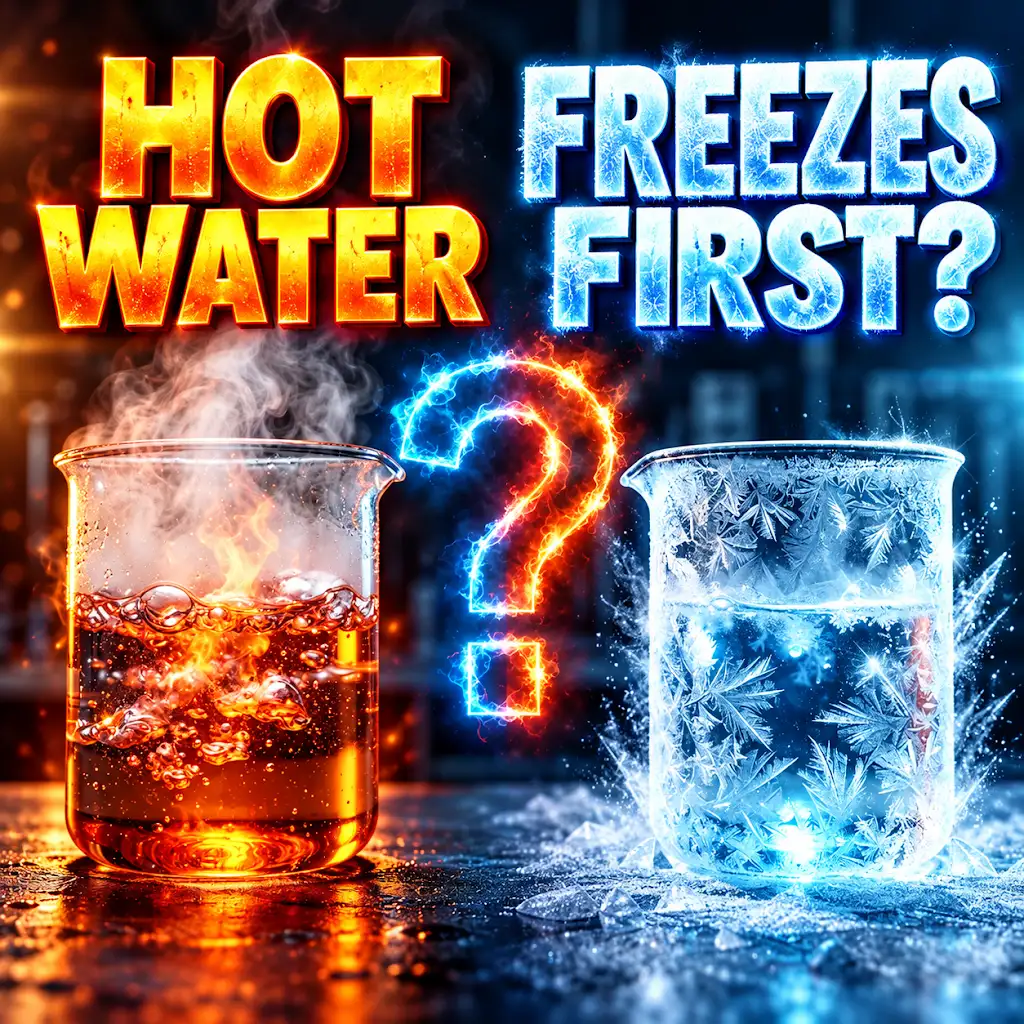
Why Hot Water Freezes Faster Than Cold (The Mpemba Effect)
FAQs
What is the purpose of conducting a water temperature experiment?
The purpose of conducting a water temperature experiment is to observe and analyze how different factors affect the temperature of water, such as time of day, weather conditions, or the addition of ice or heat sources.
How can water temperature experiments be conducted?
Water temperature experiments can be conducted by using a thermometer to measure the temperature of water at different intervals or by using a temperature probe connected to a data logger for continuous monitoring.
What are some variables that can impact the results of a water temperature experiment?
Variables that can impact the results of a water temperature experiment include the initial temperature of the water, the surrounding environment, the presence of external heat sources or ice, and the duration of the experiment.
What are some potential applications of the findings from a water temperature experiment?
The findings from a water temperature experiment can be applied to various fields such as environmental science, climate research, engineering, and agriculture to better understand temperature dynamics and make informed decisions based on the data collected.
How can the results of a water temperature experiment be analyzed and interpreted?
The results of a water temperature experiment can be analyzed by plotting temperature data over time, calculating averages or trends, and comparing different experimental conditions to draw conclusions about the factors influencing water temperature changes.