The seemingly mundane process of water changing its phase – from liquid to gas – takes on a dramatically different character when the surrounding pressure drops to near-vacuum conditions. While evaporation and boiling are familiar phenomena in everyday life, their behavior in a vacuum presents unique thermodynamic challenges and fascinating insights into the fundamental properties of matter. Understanding these phase transitions under such extreme conditions requires a deep dive into the interplay of temperature, vapor pressure, and the absence of external atmospheric resistance.
The Fundamental Forces Driving Phase Change
At its core, the phase transition of water from liquid to gas is a battle between intermolecular forces holding the liquid molecules together and the kinetic energy of those molecules seeking to escape into the gaseous state. In a typical Earth atmosphere, this battle is influenced by external pressure. In a vacuum, however, the landscape shifts dramatically, empowering the escaping molecules and altering the very definition of boiling.
Kinetic Energy and Molecular Escape
Water molecules within a liquid are in constant motion, colliding with each other and possessing a range of kinetic energies. Some molecules at the surface, particularly those with higher kinetic energies, possess enough momentum to overcome the attractive intermolecular forces (primarily hydrogen bonds) that bind them to their neighbors. These energetic molecules can then escape into the surrounding space as water vapor. This process is evaporation, and it occurs continuously at any temperature above absolute zero, albeit at varying rates. In a vacuum, the absence of any opposing atmospheric pressure means that there are no external forces hindering these high-energy molecules from escaping. The rate of evaporation is therefore primarily dictated by the temperature of the water and the available surface area. Higher temperatures mean a greater proportion of molecules have the requisite kinetic energy to break free, and a larger surface area provides more opportunities for escape.
Vapor Pressure: The Internal Driving Force
Every liquid has a property known as vapor pressure, which is the pressure exerted by its vapor when the liquid and vapor are in equilibrium in a closed system. This equilibrium arises because, at any given temperature, some molecules will evaporate, and some vapor molecules will condense back into the liquid. Vapor pressure is directly related to temperature; as temperature increases, the kinetic energy of the molecules increases, leading to a higher rate of evaporation and thus a higher vapor pressure. In a vacuum, where there is no external pressure to counteract the vapor pressure, the liquid will continue to evaporate until all of it has transitioned into the gaseous phase, assuming the system is not replenished. This concept of vapor pressure is critical for understanding why boiling occurs at a specific temperature at a given pressure.
The Role of Intermolecular Forces
The strength of intermolecular forces significantly influences the rate of evaporation and the boiling point of a liquid. Water’s strong hydrogen bonds require a considerable amount of energy to overcome, making it less volatile than liquids with weaker intermolecular forces. However, even with these strong bonds, evaporation is a continuous process. In a vacuum, the absence of atmospheric pressure means that the liquid’s own vapor pressure is the only force that needs to be overcome for molecules to transition into the gas phase. This is a key distinction from boiling under atmospheric pressure, where the external pressure plays a significant role.
The study of water phase change in a vacuum is a fascinating topic that explores how water transitions between solid, liquid, and gas states under reduced pressure conditions. For a deeper understanding of this phenomenon, you can refer to a related article that discusses the implications of phase changes in various scientific applications. To learn more, visit this article.
Evaporation in the Absence of Pressure
When water is placed in a vacuum chamber, the process of evaporation proceeds unimpeded by atmospheric resistance. This leads to a rapid decrease in temperature, a phenomenon known as evaporative cooling, and a situation where boiling can occur at temperatures significantly below the standard 100°C.
Evaporative Cooling: A Dramatic Temperature Drop
As water molecules with higher kinetic energies escape the liquid surface, the average kinetic energy of the remaining liquid molecules decreases. Since temperature is a measure of the average kinetic energy of the molecules, this loss of energetic molecules results in a drop in the water’s temperature. In a vacuum, this evaporative cooling is much more pronounced than in an open atmosphere. Without the pressure of air pushing down, more molecules can escape more readily, leading to a faster rate of cooling. This phenomenon can be so efficient that water can freeze even while it is evaporating in a vacuum. The energy required for the phase change is drawn from the internal thermal energy of the liquid, effectively cooling it down to its freezing point.
The Unimpeded Escape of Vapor
In a vacuum, there is no external pressure to impede the molecules that have escaped into the gaseous phase. They simply diffuse away from the liquid surface into the vast emptiness of the vacuum. This lack of back pressure allows for a much higher rate of evaporation compared to evaporation in an open container. The rate is limited only by the rate at which molecules can gain enough kinetic energy to overcome the intermolecular forces and the available surface area. This is why a spill of water on a spaceship, if not contained, can quickly vaporize and potentially cause problems within the spacecraft’s atmosphere control systems.
The Influence of Surface Area on Evaporation Rate
The surface area of the water exposed to the vacuum plays a crucial role in the rate of evaporation. A larger surface area provides more sites for molecules to escape. Imagine a puddle of water versus a single droplet of the same volume; the puddle will evaporate much faster because of its significantly larger surface area. In a vacuum, this effect is amplified. Even small amounts of water can evaporate rapidly if their surface area is maximized, such as when water is sprayed as a fine mist within a vacuum chamber. This rapid evaporation can lead to significant evaporative cooling, potentially causing the remaining water to freeze.
The Phenomenon of Vacuum Boiling
Boiling, typically associated with reaching 100°C at standard atmospheric pressure, is fundamentally a process driven by vapor pressure exceeding ambient pressure. In a vacuum, this condition is met at much lower temperatures, leading to a unique form of boiling.
Vapor Pressure vs. Ambient Pressure: The Boiling Threshold
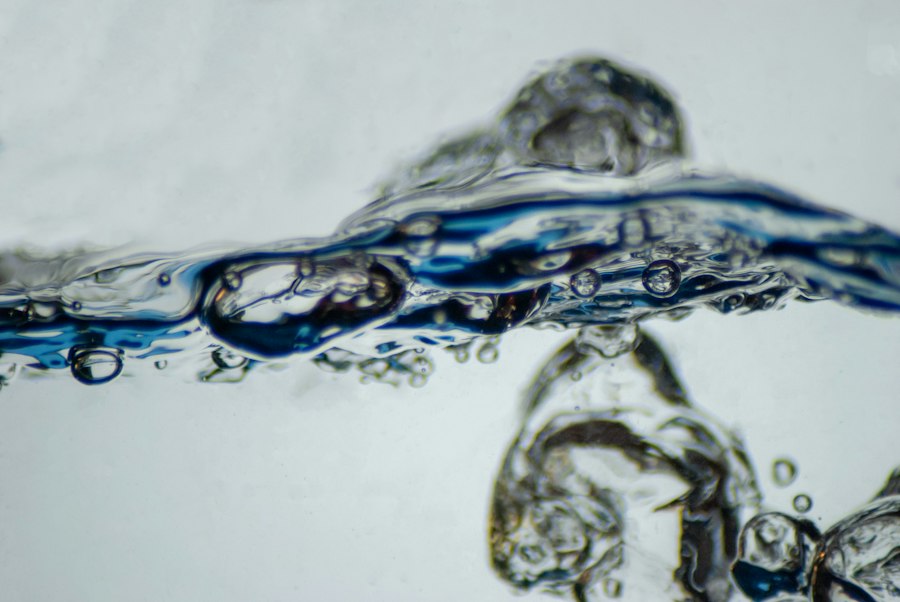
Boiling occurs when the vapor pressure of a liquid equals the surrounding ambient pressure. At this point, vaporization occurs not just at the surface but also within the bulk of the liquid, forming bubbles of vapor. In a vacuum, the ambient pressure is extremely low, often close to zero. Therefore, water can achieve a vapor pressure equal to this near-zero ambient pressure at temperatures significantly below its normal boiling point. For instance, at a pressure of 611 Pascals (approximately 0.006 atmospheres), water boils at 0°C. As the vacuum becomes more perfect, the boiling point continues to decrease.
Sublimation and the Triple Point
Water’s unique behavior is also illustrated by its phase diagram, which depicts the conditions of temperature and pressure at which its different phases (solid, liquid, gas) can coexist. The triple point of water is a specific temperature and pressure where all three phases are in equilibrium. Below the triple point pressure (0.006 atmospheres), ice does not melt into liquid water but directly transitions into water vapor through a process called sublimation. In a vacuum, if water is cooled below its freezing point (0°C) and the vacuum is sufficiently strong, it can sublimate rather than melt. However, if water is initially in its liquid state and the vacuum is applied, it will boil until it freezes, and then the ice will sublimate.
The Appearance of Vacuum Boiling
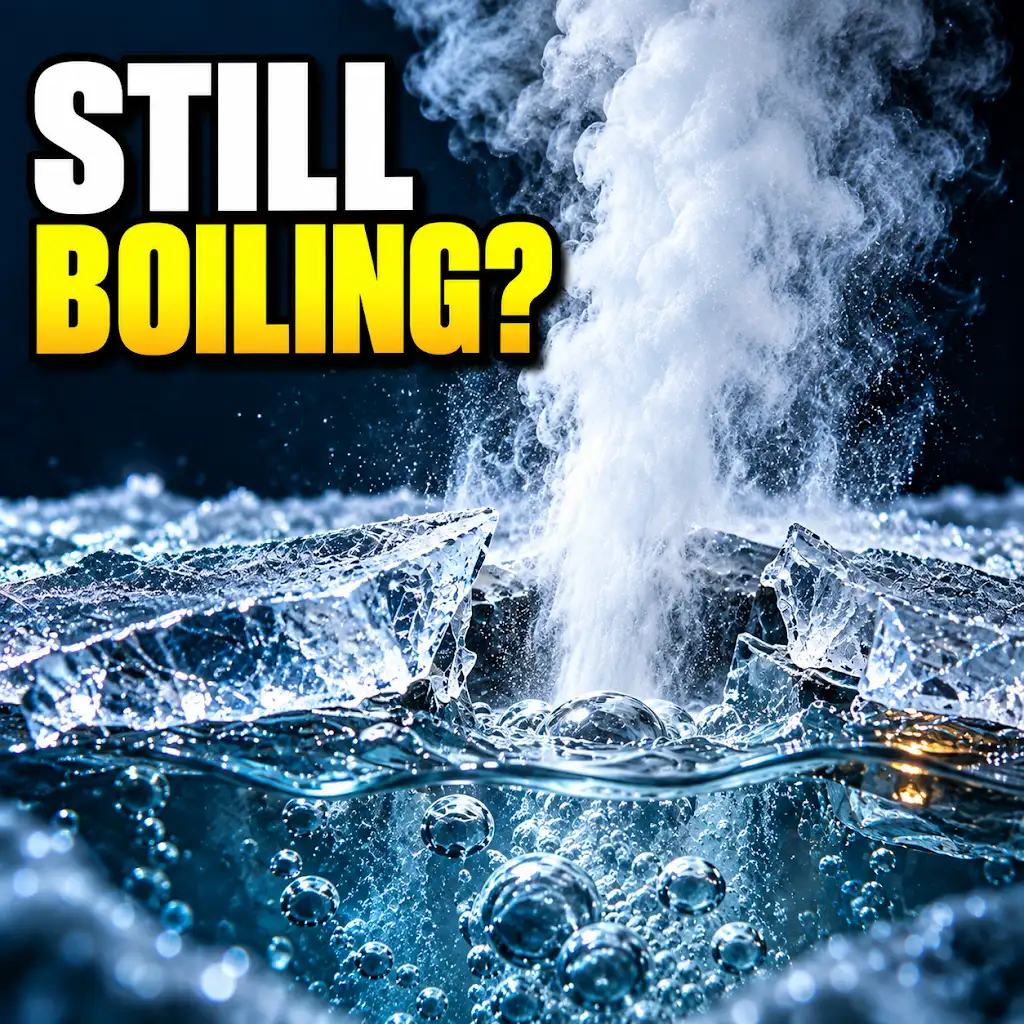
Boiling in a vacuum is often a dramatic and visually striking phenomenon. Instead of the vigorous, rolling boil seen at atmospheric pressure, vacuum boiling can appear as a rapid effervescence, with bubbles forming and collapsing almost instantaneously. This is because the low pressure allows for rapid vaporization, but the absence of external pressure also means that the vapor bubbles can expand and dissipate very quickly. The rapid evaporation and subsequent cooling can lead to the formation of ice crystals within the remaining liquid, creating a spectacle of boiling, freezing, and sublimation occurring simultaneously.
Factors Influencing Vacuum Phase Change
While the vacuum itself is the primary driver, other factors significantly influence how water behaves during phase transitions in the absence of external pressure. Understanding these variables is crucial for predicting and controlling such processes.
Purity of the Water
The presence of dissolved solutes in water, such as salts or minerals, can significantly affect its vapor pressure and therefore its boiling point, even in a vacuum. Dissolved solutes tend to lower the vapor pressure of a liquid because some of the solute particles occupy space at the liquid surface, hindering the escape of solvent molecules. This phenomenon is known as boiling point elevation. In a vacuum, while the effect might be less pronounced than in atmospheric boiling due to the extremely low ambient pressure, the presence of impurities will still necessitate a slightly higher vapor pressure, and thus a slightly higher temperature, for boiling to occur compared to pure water. This means that “vacuum boiling” might occur at slightly different temperatures for different water sources.
Initial Temperature and Volume
The initial temperature of the water is a direct determinant of its initial vapor pressure and kinetic energy. Water at a higher initial temperature will have a higher vapor pressure and more energetic molecules, leading to a faster rate of evaporation and a quicker onset of vacuum boiling. Similarly, the initial volume of water influences the duration of the phase change. A larger volume of water contains more thermal energy, and it will take longer for it to evaporate or freeze in a vacuum, but the underlying principles of evaporative cooling and vacuum boiling remain the same. The cooling rate, however, might be influenced by the surface-area-to-volume ratio, which changes with the initial volume and shape of the water.
The Rate of Vacuum Pumping
The rate at which the vacuum is established and maintained is a critical factor. A faster pumping rate will create a lower ambient pressure more quickly, accelerating the evaporation and boiling processes. Conversely, a slower pumping rate will allow for a more gradual transition. If the vacuum system is not efficient enough to remove the water vapor as quickly as it is formed, the ambient pressure within the chamber might rise, slowing down or even stopping the vacuum boiling process. This highlights the dynamic equilibrium that exists between the rate of evaporation and the effectiveness of the vacuum pump.
The study of water phase change in a vacuum is a fascinating topic that reveals the complexities of thermodynamics and molecular behavior. For those interested in exploring this subject further, a related article can be found at Freaky Science, which delves into the unique properties of water under varying pressure conditions. Understanding how water transitions between its solid, liquid, and gaseous states in a vacuum can provide valuable insights into various scientific and industrial applications.
Applications and Implications of Vacuum Phase Change
| Parameter | Value | Unit | Notes |
|---|---|---|---|
| Boiling Point of Water in Vacuum | 10 – 40 | °C | Depends on vacuum pressure (typically 1-10 kPa) |
| Pressure Range for Phase Change | 0.6 – 10 | kPa | Lower than atmospheric pressure (101.3 kPa) |
| Latent Heat of Vaporization | 2257 | kJ/kg | At 100°C and 101.3 kPa, slightly varies with pressure |
| Density of Liquid Water | 1000 | kg/m³ | At room temperature |
| Density of Water Vapor in Vacuum | 0.6 – 2 | kg/m³ | Varies with temperature and pressure |
| Heat Transfer Coefficient (Evaporation) | 10 – 100 | W/m²·K | Depends on system setup and vacuum level |
| Time for Complete Phase Change | Varies | Minutes to hours | Depends on volume, temperature, and vacuum pressure |
The understanding and manipulation of water’s phase change in a vacuum have significant implications across various scientific and technological fields, from space exploration to industrial processes.
Spacecraft Life Support and Water Management
Onboard spacecraft, where water is a precious resource, managing its phase is crucial. Water is used for drinking, hygiene, and in some life support systems. In the vacuum of space or within the controlled environments of a space station, water can readily evaporate or boil. This property is leveraged in some water purification systems where contaminated water is vaporized and then condensed, leaving impurities behind. However, uncontrolled evaporation can lead to water loss and potential issues with humidity control. Therefore, spacecraft designers must account for and manage water’s phase behavior in near-vacuum conditions to ensure crew safety and mission success.
Freeze-Drying and Preservation Techniques
Freeze-drying, also known as lyophilization, is a widely used method for preserving food, pharmaceuticals, and biological samples. This process relies heavily on the principles of sublimation, which is a form of phase change in a vacuum. In freeze-drying, the material is first frozen, and then the surrounding pressure is reduced to a vacuum. Under these conditions, the ice within the material directly converts into water vapor, bypassing the liquid phase. This process is highly effective because it preserves the structure and chemical integrity of the material, as the absence of liquid water prevents the degradation that can occur during conventional drying methods. The low temperatures also minimize thermal damage.
Industrial Applications and Material Processing
Beyond life support and preservation, the ability to induce phase changes in water under vacuum conditions finds utility in various industrial processes. For example, in certain chemical reactions or manufacturing processes, precise control over the water content and its phase is essential. Vacuum evaporation can be used for concentrating solutions or for removing volatile organic compounds. Furthermore, understanding the behavior of water in vacuum is important for designing equipment that operates in low-pressure environments, such as vacuum distillation apparatus or sterilization chambers. The rapid cooling associated with vacuum evaporation can also be exploited in specific material processing applications where rapid temperature reduction is desired.
Scientific Research and Fundamental Physics
The study of water phase change in vacuum also serves as a valuable tool for fundamental scientific research. By creating near-perfect vacuum conditions, scientists can isolate and study the intrinsic properties of water molecules and their interactions without the complicating influence of atmospheric pressure. Experiments involving vacuum boiling can provide insights into the thermodynamics of liquids, the kinetics of phase transitions, and the behavior of matter at its most fundamental level. These studies contribute to our broader understanding of physics and chemistry, leading to advancements in diverse fields.
Water Boiled While Ice Formed. Could a Lander Sink Into It?
FAQs
What happens to water when it undergoes a phase change in a vacuum?
When water undergoes a phase change in a vacuum, it transitions directly from a solid (ice) to a gas (water vapor) in a process called sublimation. This occurs because the low pressure in a vacuum lowers the boiling point of water below its freezing point, causing it to skip the liquid phase.
Can water boil in a vacuum?
Yes, water can boil in a vacuum. In a vacuum, the pressure is so low that the boiling point of water decreases significantly, allowing it to boil at room temperature. This phenomenon is often demonstrated in science experiments using a vacuum chamber.
What is the process called when water vapor turns back into ice in a vacuum?
When water vapor turns back into ice in a vacuum, it undergoes the process of deposition. Deposition is the direct transition of a substance from a gas to a solid without passing through the liquid phase. This is the reverse process of sublimation.
Why does water freeze faster in a vacuum compared to normal conditions?
Water freezes faster in a vacuum compared to normal conditions because the absence of air molecules in a vacuum reduces heat transfer through convection and conduction. This allows the water to lose heat more rapidly, leading to a quicker freezing process.
What practical applications does the understanding of water phase change in a vacuum have?
The understanding of water phase change in a vacuum has various practical applications, such as freeze-drying food, preserving biological samples, and creating vacuum-insulated panels for thermal insulation. It is also essential in industries like pharmaceuticals, food processing, and space exploration.