The vast emptiness of space, a realm of near-absolute vacuum, presents a fundamental challenge to matter as we know it. When a substance like water, so familiar and essential on Earth, encounters this extreme environment, its behavior undergoes a dramatic and often counterintuitive transformation. The absence of atmospheric pressure, the very force that holds water in its liquid state under normal conditions, dictates a startling series of events. Understanding these phenomena is crucial not only for astrobiology and the search for extraterrestrial life but also for the engineering of spacecraft and the preservation of resources in space. The transition of water from liquid to gas in a vacuum is not a simple boiling; it is a complex process driven by the inherent energy of the water molecules and the sudden release from confinement.
The Unraveling of Molecular Bonds
The familiar state of liquid water is a delicate equilibrium maintained by intermolecular forces, primarily hydrogen bonds, which hold the molecules together, and the external atmospheric pressure that acts to suppress their escape. In the vacuum of space, this external pressure is virtually nonexistent. This absence creates a stark difference in the forces acting upon water molecules, fundamentally altering their behavior. The energy that water molecules possess, even at room temperature, is sufficient to overcome the weak intermolecular attractions and the vanishing external pressure.
Vaporization: A Violent Escape
When water is exposed to the vacuum of space, the process of vaporization, or boiling, begins almost instantaneously. This is not a gradual increase in temperature leading to a rolling boil as we experience on Earth. Instead, it is a rapid and energetic escape of molecules from the liquid phase into the gaseous phase. The internal kinetic energy of the water molecules, which in a vacuum no longer needs to contend with significant external pressure, becomes the dominant factor. As soon as the surface of the water is exposed to the vacuum, molecules at the surface with sufficient kinetic energy can break free from their neighbors and transition directly into the gaseous state, forming water vapor. This phenomenon is known as sublimation when it occurs from ice, but from liquid water, it is a form of rapid evaporation or boiling. The rate of this vaporization is dependent on the initial temperature of the water and the degree of vacuum, but in the vacuum of space, it is typically extremely rapid. The visible effect is a frothing or effervescence as large quantities of vapor are generated, often leading to the complete disappearance of the liquid within a short period. This immediate and energetic release of molecules underscores the dramatic impact of pressure on the physical states of matter.
Freezing by Evaporation: A Paradoxical Cooling
A peculiar and counterintuitive consequence of rapid vaporization in a vacuum is the cooling of the remaining liquid. As the most energetic molecules escape from the liquid surface, they carry away a significant amount of heat energy. This removal of kinetic energy from the remaining liquid causes its temperature to drop. If the initial temperature is sufficiently high, or the vacuum sufficiently intense, this evaporative cooling can be so rapid that the remaining water will freeze. This occurs because as the water loses heat, its temperature falls to its freezing point. Once frozen, the ice can then also sublime directly into vapor in the vacuum, though at a generally slower rate than the initial liquid vaporization. This phenomenon is a direct demonstration of the first law of thermodynamics, where energy is conserved. The energy required for vaporization is drawn from the internal energy of the liquid, leading to a decrease in its temperature. This interplay between vaporization and cooling highlights how the lack of pressure can fundamentally alter thermodynamic processes.
In exploring the fascinating effects of water exposed to the vacuum of space, one can gain deeper insights by reading a related article on the subject. This article delves into the unique behaviors of water in extreme environments, highlighting how it reacts when subjected to the harsh conditions of outer space. For more information, you can check out the article at Freaky Science, which provides a comprehensive overview of the scientific principles at play.
The Fate of Water Ice in a Vacuum
The behavior of water ice in the vacuum of space is distinct from that of liquid water, yet it is also dramatically affected by the absence of atmospheric pressure. While ice is already in a solid state, the vacuum still plays a crucial role in its eventual disappearance. The process is not melting and then evaporation, but rather a direct transition from solid to gas.
Sublimation: The Direct Transition
When water ice is exposed to the vacuum of space, it does not melt into liquid water in the way it would on Earth if the temperature were above freezing. Instead, it undergoes sublimation, a process where the solid directly transforms into a gas (water vapor) without passing through the liquid phase. This occurs because the molecules within the ice crystal lattice are still in motion, vibrating with kinetic energy. In a vacuum, these energetic molecules can overcome the forces holding them in the solid state and escape directly into the gaseous phase. The rate of sublimation is influenced by factors such as the temperature of the ice, the surface area exposed to the vacuum, and the ambient radiation. Even at temperatures below freezing, sublimation can occur, albeit at a slower pace than the vaporization of liquid water. This slow but persistent disappearance of ice is a significant consideration for any mission that relies on water ice as a resource, such as for life support or fuel.
Factors Influencing Sublimation Rate
Several factors govern how quickly water ice will sublimate in the vacuum of space. Temperature is perhaps the most significant; warmer ice will sublimate faster than colder ice. Solar radiation plays a critical role, as it can heat the surface of the ice, increasing the kinetic energy of its molecules and thus accelerating sublimation. The surface area of the ice is also important; a larger surface area exposed to the vacuum will lead to a higher sublimation rate. The presence of any contaminants on the surface of the ice can also affect sublimation. For instance, a layer of dust could act as an insulator, slowing down the process, or it could absorb solar radiation and heat the ice beneath, thereby increasing the rate. Understanding these variables is essential for predicting the longevity of water ice deposits on celestial bodies like the Moon or Mars, or for managing water reserves on spacecraft.
The Persistence of Water Vapor
Once water has transitioned into its gaseous form in the vacuum of space, its behavior is governed by the principles of gas dynamics in a near-zero pressure environment. Unlike on Earth, where vapor can be contained by atmospheric pressure, in space, water vapor is free to disperse.
Expansion and Diffusion into the Void
Water vapor, once formed in the vacuum, will expand rapidly and diffuse outwards in all directions. Without any external pressure to impede its movement, the gas molecules will spread out to occupy the available volume. This means that the water vapor will quickly become incredibly dilute, dissipating into the vastness of space. The process is governed by the kinetic theory of gases, where molecules move randomly at high speeds. In a vacuum, there are no significant collisions with other gas molecules to slow down this expansion, allowing for very rapid dispersal. This rapid diffusion is a key reason why any water released into space will not linger as a significant atmospheric component around a spacecraft or celestial body unless there is a continuous source or an external force at play.
The Role of Radiation and Temperature Gradients
While diffusion is the primary mechanism for the dispersal of water vapor, other factors can influence its fate. Solar radiation can heat the water vapor molecules, increasing their kinetic energy and further contributing to their outward expansion. Conversely, in shadowed regions or at significant distances from heat sources, the water vapor molecules will cool. Temperature gradients in space can thus influence the flow and distribution of water vapor, albeit within the overall context of rapid dispersal. This is particularly relevant in the formation of cometary tails, where solar radiation causes ice to sublimate, and the resulting water vapor is then pushed away from the Sun by the solar wind and radiation pressure.
Implications for Space Exploration and Astrobiology
The dramatic behavior of water in a vacuum has profound implications for various aspects of space exploration, from the design of life support systems to the search for life beyond Earth.
Engineering Challenges for Astronauts and Equipment
The rapid vaporization and potential freezing of water in a vacuum present significant engineering challenges for space missions. Water storage tanks and plumbing systems must be designed to withstand the extreme pressure differential. Any leaks or breaches in these systems could lead to a rapid loss of precious water resources. Astronauts’ suits, designed to provide a habitable environment, are essentially self-contained spacecraft, maintaining internal pressure to prevent bodily fluids from boiling. Similarly, scientific instruments that rely on water or that might be damaged by its rapid phase changes need to be carefully protected. The effectiveness of life support systems, which often depend on water for drinking, hygiene, and temperature regulation, is directly tied to the ability to manage water in these harsh conditions. This includes developing robust containment, efficient recycling systems, and contingency plans for unexpected water loss.
The Search for Extraterrestrial Water and Life
The understanding of how water behaves in a vacuum is fundamental to the search for extraterrestrial water and, by extension, for life. On celestial bodies like the Moon and Mars, water ice is found in subsurface deposits. The sublimation of this ice is a slow process, but it can lead to the release of water vapor into the tenuous atmospheres that exist. Detecting these subtle releases is a key objective for missions aiming to assess the habitability of these worlds. Furthermore, the presence of liquid water, even transiently, is considered a prerequisite for life as we know it. Understanding the conditions under which liquid water can exist or form on other planets, particularly concerning atmospheric pressure and temperature, is paramount. The discovery of subsurface liquid water reservoirs, protected from the vacuum, would be a major breakthrough in astrobiology. The study of how water interacts with the space environment also informs our understanding of exoplanets, helping scientists to identify potentially habitable worlds by looking for atmospheric signatures of water.
Recent studies have shown that water exposed to the vacuum of space behaves in fascinating ways, leading to intriguing implications for both astrobiology and the understanding of cosmic phenomena. For a deeper dive into this topic, you can explore an insightful article that discusses the unique properties of water in space and its potential role in the search for extraterrestrial life. To read more about this, visit this article which provides a comprehensive overview of the subject.
Extreme Pressure Differentials: A Cosmic Conundrum
| Property | Value | Unit | Notes |
|---|---|---|---|
| Initial Temperature | 20 | °C | Room temperature before exposure |
| Pressure | 0 | Pa | Vacuum pressure (space vacuum) |
| Boiling Point | ~0 | °C | Water boils immediately in vacuum |
| Evaporation Rate | Very High | n/a | Rapid phase change due to low pressure |
| Freezing Point | -40 to -50 | °C | Water can freeze rapidly due to evaporative cooling |
| Phase Change | Liquid to Vapor and Ice | n/a | Simultaneous boiling and freezing possible |
| Surface Tension | ~0.072 | N/m | At 20°C, affects droplet formation in vacuum |
| Density | 1000 | kg/m³ | At standard conditions, changes rapidly in vacuum |
| Heat of Vaporization | 2260 | kJ/kg | Energy required to vaporize water |
| Time to Complete Evaporation | Seconds to Minutes | n/a | Depends on volume and exposure conditions |
The fundamental difference between Earth’s environment and the vacuum of space lies in the presence or absence of significant atmospheric pressure. This pressure differential is the driving force behind many of the dramatic changes observed when water encounters the vacuum.
The Boiling Point Paradox on Earth vs. Space
On Earth, water boils at 100 degrees Celsius (212 degrees Fahrenheit) at standard atmospheric pressure. However, this boiling point is not a fixed property of water but is dependent on the surrounding pressure. As atmospheric pressure decreases, the boiling point of water also decreases. This is why water boils at a lower temperature at high altitudes. In the vacuum of space, where the pressure is virtually zero, the boiling point of water drops dramatically. At such low pressures, water can boil even at temperatures far below its standard boiling point. In fact, if the temperature is above absolute zero, there is always some vapor pressure associated with water, and in a vacuum, this vapor pressure is sufficient to initiate vaporization. This paradox – that water can “boil” and also “freeze” simultaneously in a vacuum – stems directly from the absence of external pressure. The energy within the water molecules is sufficient to overcome the negligible external forces, leading to rapid phase transitions. This phenomenon is a stark reminder of how interconnected pressure, temperature, and the states of matter are.
Designing for the Void: Containment and Insulation
The extreme pressure differential necessitates robust engineering solutions for any space application involving water. Containment systems must be designed to maintain a pressure differential between the inside of the vessel and the vacuum of space. This often involves strong, leak-proof containers made from materials that can withstand temperature fluctuations and radiation. Insulation is also crucial, not only to maintain desired temperatures for water storage but also to prevent heat transfer that could otherwise accelerate vaporization or sublimation. For example, water tanks on the International Space Station are heavily insulated and equipped with systems to manage pressure. The design considerations extend to the materials used in plumbing and seals, which must be capable of maintaining their integrity under these extreme conditions. Ultimately, the successful management of water in space hinges on a deep understanding of its behavior under zero-pressure conditions and the implementation of sophisticated engineering to counteract these effects.
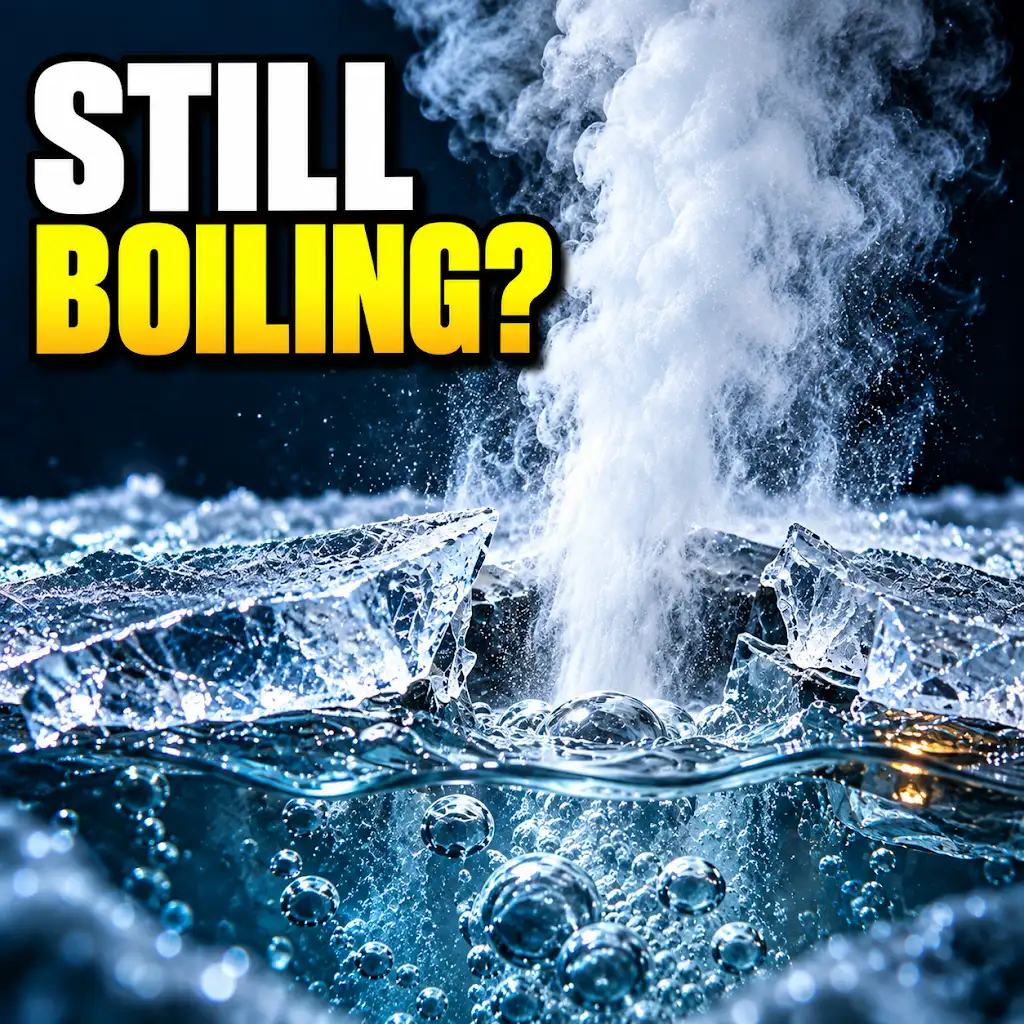
Water Boiled While Ice Formed. Could a Lander Sink Into It?
FAQs
What happens to water exposed to a space vacuum?
When water is exposed to a space vacuum, it will rapidly boil and evaporate due to the lack of atmospheric pressure. The low pressure causes the water to turn into vapor without going through a liquid phase.
Can water freeze in space vacuum?
Water can freeze in space vacuum if it is exposed to extremely low temperatures. However, the freezing process may be different from what we observe on Earth due to the absence of atmospheric pressure.
Does water behave differently in a space vacuum compared to on Earth?
Yes, water behaves differently in a space vacuum compared to on Earth. In the absence of atmospheric pressure, water can boil and freeze at different temperatures and exhibit unique properties that are not typically seen on our planet.
Is it possible for water to exist in liquid form in a space vacuum?
It is highly unlikely for water to exist in liquid form in a space vacuum due to the lack of atmospheric pressure. The low pressure would cause the water to either boil or freeze before it could remain in a liquid state.
How does exposure to a space vacuum affect the molecular structure of water?
Exposure to a space vacuum can affect the molecular structure of water by causing the molecules to break apart and disperse as vapor. The extreme conditions in space can lead to changes in the bonds between the hydrogen and oxygen atoms in water molecules.