He gazed out at the velvet expanse of the night sky, a tapestry woven with countless distant stars and galaxies. For millennia, humanity has looked to the cosmos and pondered its composition. We see the luminous matter – the stars, the gas clouds, the galaxies themselves – but lurking just beyond our direct perception is a vast, invisible scaffolding: dark matter. And the key to understanding this cosmic phantom, a subtle but powerful tool, is weak gravitational lensing.
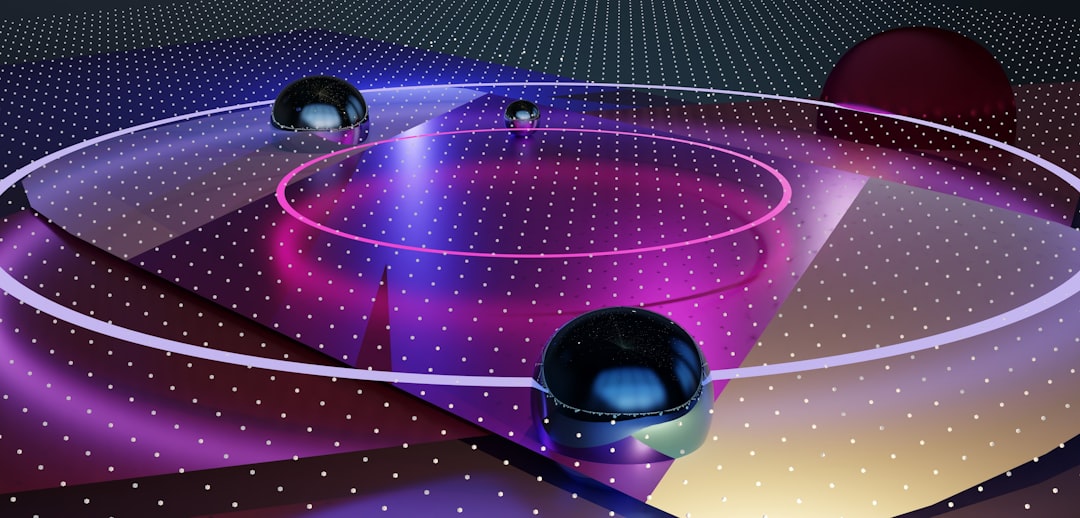
The very fabric of spacetime, as described by Albert Einstein’s theory of General Relativity, is not a static backdrop but a dynamic entity, warped and curved by the presence of mass and energy. Imagine placing a heavy ball on a stretched rubber sheet; the ball creates a dip, and any smaller object rolling nearby will deviate from a straight path, following the curvature. This is the essence of gravitational lensing. Light, traveling through the cosmos, is not immune to this cosmic warping. When light from a distant source, such as a galaxy, passes near a massive object – a galaxy cluster, for instance – its path is bent. This bending of light is what astronomers call gravitational lensing.
The Observable Universe as a Giant Lens
The universe itself acts as a colossal lens. Distant galaxies are the light sources, and massive structures like galaxy clusters or even individual galaxies are the lenses. The light rays emanating from these far-off objects are deflected as they traverse the spacetime distorted by the intervening mass. This deflection can manifest in several ways, from the magnification of distant objects to the creation of multiple images of the same source.
Strong Lensing: A Cosmic Magnifying Glass
When the alignment between the distant light source and the lensing object is particularly precise, and the lensing mass is substantial, the effects of gravitational lensing can be dramatic. This is known as strong gravitational lensing. We can observe multiple, often distorted, images of the same background galaxy appearing around the foreground lensing object. In extreme cases, the background galaxy can be stretched into an arc or even a complete ring, famously known as an Einstein ring. Strong lensing provides direct evidence of the presence of massive objects and allows astronomers to calculate their mass, often revealing significant amounts of dark matter contributing to the observed bending.
Weak Lensing: The Subtle Whisper of Dark Matter
While strong lensing offers a bold declaration of gravity’s power, weak gravitational lensing whispers its presence. In this phenomenon, the bending of light from background galaxies is far more subtle. Instead of creating distinct multiple images or dramatic arcs, the gravitational pull of foreground matter causes slight distortions in the shapes of these background galaxies. These distortions are so minute that they are imperceptible on an individual galaxy basis. However, when we statistically analyze the shapes of thousands, even millions, of distant galaxies within a specific region of the sky, a collective and subtle alignment emerges. This consistent elongation or shearing of galaxy shapes, in a particular direction, is the tell-tale sign of weak gravitational lensing.
Weak gravitational lensing is a fascinating phenomenon that provides crucial insights into the distribution of dark matter in the universe. For a deeper understanding of this topic, you can explore the article on Freaky Science, which delves into the implications of weak gravitational lensing for cosmology and the ongoing efforts to map dark matter. This resource offers valuable information for anyone interested in the intersection of astrophysics and dark matter research. To read more, visit Freaky Science.
Unmasking the Invisible: How Weak Lensing Reveals Dark Matter
Weak gravitational lensing is a powerful tool because it allows us to map the distribution of mass, both visible and invisible, across vast swathes of the universe. While visible matter, like stars and galaxies, contributes to the gravitational pull, it is a surprisingly small fraction of the total mass. The overwhelming majority, we believe, is contributed by dark matter.
The Statistical Approach: Averaging Out the Noise
Imagine trying to discern a single ripple on the surface of a vast ocean. It would be nearly impossible. However, if you could observe the synchronized movement of countless waves, you could detect underlying currents and tides. Weak lensing operates on a similar principle. The distortion of a single background galaxy is a tiny effect, lost in the noise of its intrinsic shape variations and the imperfections of our telescopes. But by averaging the distortions of a massive ensemble of galaxies in a particular direction, any coherent shearing pattern that emerges can be attributed to the gravitational influence of foreground mass.
The Cosmic Web: A Filamentous Structure
This statistical analysis has revealed a startling truth about the distribution of mass in the universe. Dark matter is not uniformly spread. Instead, it forms a vast, intricate network of filaments and nodes, often referred to as the “cosmic web.” Galaxies and galaxy clusters are found embedded within the densest knots of this web, acting as the luminous cities built upon this invisible scaffolding. Weak lensing acts like a cosmic X-ray, allowing us to peer through the luminous veil and map the underlying dark matter skeleton.
Measuring Distortions: The Math Behind the Map
To quantify these subtle distortions, astronomers employ sophisticated algorithms. They measure the ellipticity (how much an ellipse deviates from a perfect circle) of millions of background galaxies. If these galaxies are randomly oriented, their ellipticities will average out to zero. However, if a foreground mass is present, it will cause a slight, systematic alignment in the ellipticities. By analyzing the correlation between the positions of foreground lensing matter (which can be identified by visible galaxies or galaxy clusters) and the averaged ellipticity of background galaxies, astronomers can infer the amount and distribution of dark matter.
Why Dark Matter Matters: The Cosmic Glue

The existence of dark matter is not merely an academic curiosity; it is fundamental to our understanding of the universe’s structure and evolution. Without it, the universe as we know it would not exist.
The Early Universe: Seeds of Structure
In the very early universe, matter was distributed almost uniformly. However, slight density fluctuations existed. Gravity, acting on these initial overdensities, began to pull matter together. The visible matter, interacting strongly with radiation, was smoothed out by the intense energy of the early universe. Dark matter, on the other hand, interacts only gravitationally and thus could begin to clump much earlier and more effectively. These early dark matter clumps acted as gravitational wells, the seeds around which visible matter later accumulated, eventually forming the galaxies and galaxy clusters we observe today.
Galaxy Formation and Evolution: A Dark Matter Framework
Galaxies are not just collections of stars; they are embedded within vast halos of dark matter. These dark matter halos provide the gravitational scaffolding that holds galaxies together and dictates their formation and evolution. Without the gravitational pull of these massive, invisible halos, galaxies would fly apart. Weak lensing allows us to map these dark matter halos around individual galaxies and galaxy clusters, providing crucial data to test and refine our models of galaxy formation.
Understanding Cosmic Expansion: A Dark Matter Influence
The expansion of the universe is a complex phenomenon influenced by its total energy density. Dark matter, being a significant component of this density, plays a crucial role in shaping the expansion history and the eventual fate of the cosmos. By measuring the distribution of dark matter through weak lensing, astronomers can better constrain cosmological models that describe the universe’s expansion.
Observing the Unseen: The Tools of Weak Lensing Astronomy

Detecting and analyzing the subtle distortions caused by weak gravitational lensing requires powerful telescopes and meticulous data analysis techniques.
Advanced Telescopes: Capturing Faint Light
Observatories equipped with large mirrors and sensitive cameras, such as the Hubble Space Telescope, the Subaru Telescope, and ground-based instruments like the Dark Energy Survey (DES) telescope, are essential for weak lensing studies. These telescopes are designed to capture the faint light from billions of distant galaxies, allowing for the statistical analysis required to detect the subtle lensing signals.
Precision Measurement: The Art of Shape Determination
The accuracy with which the shapes of individual background galaxies can be measured is paramount. Astronomers employ sophisticated image processing techniques to precisely determine the ellipticity of each galaxy, accounting for instrumental effects and atmospheric distortions. This precision is the foundation upon which all subsequent statistical analysis is built.
Large-Scale Surveys: Panoramic Views of the Cosmos
Weak lensing studies often rely on analyzing vast regions of the sky, encompassing millions of galaxies. Large-scale sky surveys, which systematically map large portions of the celestial sphere, are thus crucial for collecting the necessary data. These surveys provide the raw material for constructing maps of dark matter distribution over unprecedented scales.
Recent studies in astrophysics have shed light on the intriguing phenomenon of weak gravitational lensing, which provides valuable insights into the distribution of dark matter in the universe. For those interested in exploring this topic further, a related article discusses the implications of weak gravitational lensing on our understanding of cosmic structures and the elusive nature of dark matter. You can read more about it in this informative piece on Freaky Science. This research not only enhances our comprehension of the universe but also opens up new avenues for investigating the fundamental components of cosmic evolution.
The Future of Weak Lensing: Unlocking Deeper Mysteries
| Metric | Description | Typical Value / Range | Unit | Relevance to Weak Gravitational Lensing |
|---|---|---|---|---|
| Shear (γ) | Distortion of background galaxy shapes due to lensing | 0.01 – 0.05 | Dimensionless | Measures the anisotropic stretching caused by dark matter |
| Convergence (κ) | Projected mass density causing magnification | 0.01 – 0.1 | Dimensionless | Related to the surface mass density of dark matter halos |
| Galaxy Number Density | Number of background galaxies per square arcminute | 10 – 30 | galaxies/arcmin² | Higher density improves lensing signal measurement |
| Redshift of Source Galaxies (z_s) | Typical redshift of lensed background galaxies | 0.5 – 2.0 | Dimensionless | Determines lensing geometry and strength |
| Redshift of Lens (z_l) | Typical redshift of foreground dark matter structures | 0.1 – 0.7 | Dimensionless | Location of dark matter halos causing lensing |
| Mass of Dark Matter Halo | Typical mass of lensing dark matter halos | 10^12 – 10^15 | Solar Masses | Determines lensing strength and shear pattern |
| Ellipticity Dispersion (σ_e) | Intrinsic shape noise of galaxies | 0.3 – 0.4 | Dimensionless | Limits precision of weak lensing measurements |
| Signal-to-Noise Ratio (SNR) | Quality of lensing detection | 5 – 20 | Dimensionless | Higher SNR indicates more reliable dark matter mapping |
The field of weak gravitational lensing is continuously evolving, with new technologies and observational strategies promising to unlock even deeper cosmic mysteries.
Next-Generation Observatories: Pushing the Boundaries
Future telescopes, such as the Vera C. Rubin Observatory and the Nancy Grace Roman Space Telescope, are poised to revolutionize weak lensing astronomy. These observatories will have even larger mirrors, wider fields of view, and enhanced sensitivity, allowing for the detection of fainter and more distant galaxies, and thus providing more detailed and precise maps of dark matter.
Combining Lensing with Other Probes: A Multi-Messenger Approach
Weak lensing is not an isolated tool. Astronomers are increasingly combining lensing data with other cosmological probes, such as the cosmic microwave background (CMB) radiation, baryon acoustic oscillations (BAO), and Type Ia supernovae. By synergistically analyzing data from these different sources, researchers can corroborate findings, break degeneracies in cosmological models, and gain a more comprehensive understanding of dark matter and the evolution of the universe.
Probing Dark Energy: The Mysterious Accelerator
While dark matter is the invisible scaffolding, dark energy is the mysterious force accelerating the expansion of the universe. Weak lensing surveys are proving to be powerful probes of dark energy, as the growth of cosmic structures is sensitive to the interplay between dark matter and dark energy. By precisely mapping the distribution of dark matter over cosmic time, weak lensing can help us understand how dark energy has influenced the formation and evolution of these structures.
In conclusion, weak gravitational lensing, though a subtle phenomenon, has become an indispensable tool in our quest to understand the universe. It allows us to map the invisible scaffolding of dark matter, revealing the cosmic web that underpins the luminous structures we see. As our observational capabilities advance and our analytical techniques become more sophisticated, weak lensing will undoubtedly continue to unveil the universe’s deepest secrets, guiding us towards a more complete picture of our cosmic home.

WATCH NOW ▶️ Our Galaxy Is Sliding Toward a Cosmic Drain
FAQs
What is weak gravitational lensing?
Weak gravitational lensing is a phenomenon where the light from distant galaxies is slightly distorted due to the gravitational influence of matter, including dark matter, between the source and the observer. This effect causes subtle changes in the shapes of background galaxies, which can be statistically analyzed to map the distribution of matter in the universe.
How does weak gravitational lensing help in studying dark matter?
Weak gravitational lensing allows scientists to detect and map dark matter because dark matter exerts gravitational forces that bend light, even though it does not emit or absorb light itself. By measuring the distortions in the images of distant galaxies, researchers can infer the presence and distribution of dark matter in galaxy clusters and large-scale cosmic structures.
What distinguishes weak gravitational lensing from strong gravitational lensing?
Weak gravitational lensing causes small, subtle distortions in the shapes of many background galaxies, requiring statistical analysis over large samples to detect. In contrast, strong gravitational lensing produces dramatic effects such as multiple images, arcs, or rings of a single background object, which are easier to observe individually.
What kind of data is used to measure weak gravitational lensing effects?
Astronomers use high-resolution images from telescopes to observe the shapes of millions of distant galaxies. By comparing the observed shapes to expected intrinsic shapes, they identify systematic distortions caused by gravitational lensing. Surveys like the Dark Energy Survey (DES) and the Hyper Suprime-Cam (HSC) survey provide such data.
What are the main challenges in using weak gravitational lensing to study dark matter?
The primary challenges include accurately measuring tiny distortions in galaxy shapes, correcting for atmospheric and instrumental effects, and separating lensing signals from intrinsic alignments of galaxies. Additionally, large datasets and sophisticated statistical methods are required to extract meaningful information about dark matter distribution.