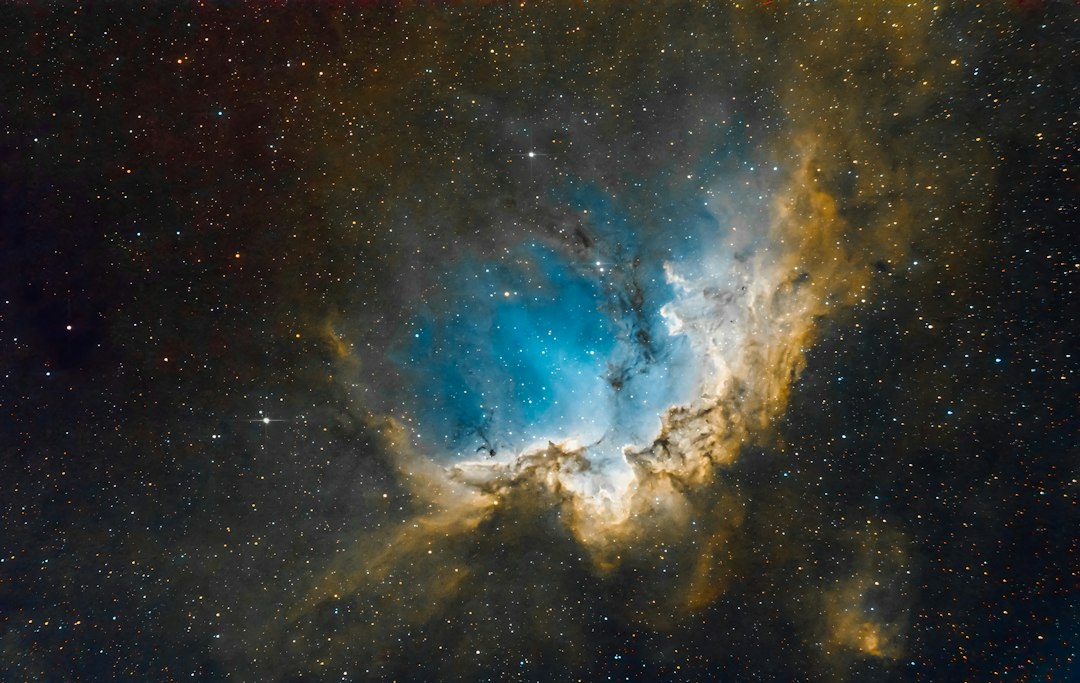
The universe, in its vast and awe-inspiring glory, often reveals itself not through what is readily visible to the human eye, but through the silent whispers of light that has traveled across unfathomable distances. For centuries, humanity has gazed at the stars, limited by the narrow spectrum of visible light. However, a paradigm shift has occurred, transforming our understanding of the cosmos by unveiling its hidden wavelengths. This revolution, powered by advanced technology, allows us to perceive the universe not just as a canvas of stars and galaxies, but as a dynamic tapestry woven with the invisible threads of electromagnetic radiation.
The human eye, a marvel of biological engineering, is exquisitely tuned to a specific portion of the electromagnetic spectrum – the visible light we experience as colors. This range, from the deep reds to the vibrant violets, constitutes a mere sliver of the immense electromagnetic spectrum. Yet, the universe bombards us with a constant deluge of radiation far beyond this limited band. These invisible wavelengths carry invaluable information about celestial objects, their formation, evolution, and the fundamental forces that govern them.
The Electromagnetic Spectrum: A Cosmic Symphony
The electromagnetic spectrum encompasses a vast range of frequencies and wavelengths, each with unique properties and sources. From the lowest energy, longest wavelength radio waves emitted by distant pulsars and the cosmic microwave background radiation, to the high-energy, short-wavelength gamma rays produced by supernovae and active galactic nuclei, every part of the spectrum tells a story. Understanding these different wavelengths is akin to learning a new language, a language spoken by the cosmos itself.
The Limitations of Human Perception
While our eyes are adept at navigating our terrestrial environment, they are fundamentally ill-equipped to perceive the most energetic and energetic phenomena in the universe. For instance, the intense heat of a star is primarily radiated as infrared light, invisible to us. Similarly, the powerful magnetic fields and energetic particles that shape galaxies emit X-rays and gamma rays, energies far beyond our visual comprehension. This inherent limitation necessitates the development of specialized tools to translate these unseen signals into a language we can understand – images.
The Birth of Invisible Astronomy
The realization that the universe emits more than just visible light spurred the development of a new generation of telescopes and detectors. Early pioneers in the 20th century began to explore radio waves, discovering previously unknown celestial objects and phenomena. This marked the dawn of “invisible astronomy,” a field dedicated to studying the universe across its entire electromagnetic spectrum.
Astronomers have developed advanced techniques to transform invisible light into stunning images, allowing us to explore the cosmos in ways previously thought impossible. For a deeper understanding of this fascinating process, you can read more about it in the article found at Freaky Science. This resource delves into the technology and methods used to capture and visualize light that is not visible to the naked eye, shedding light on the mysteries of the universe.
Infrared Astronomy: Peering Through Dust and Seeing Heat
Infrared radiation, just beyond the red end of the visible spectrum, is intimately linked to temperature. All objects with a temperature above absolute zero emit infrared radiation. This makes it an indispensable tool for studying phenomena that are either too cool to emit visible light or are obscured by vast clouds of interstellar dust.
The Dust Curtain: A Barrier to Visible Light
Interstellar dust, composed of tiny particles of ice and carbon, is ubiquitous in galaxies. While it scatters and absorbs visible light, making distant objects appear dim or completely hidden, infrared light can penetrate these obscuring clouds. This allows astronomers to see into the stellar nurseries where new stars are born, regions that are opaque to visible light telescopes.
Stellar Nurseries and Young Stars
Infrared telescopes have provided unprecedented views of star-forming regions, revealing the intricate structures of collapsing gas and dust clouds, protostars, and nascent planetary disks. The heat emitted by these young, developing stars is readily detectable in the infrared, allowing astronomers to study their birth and early evolution in detail.
The Cool Universe: Planets and Brown Dwarfs
Beyond the visible, infrared astronomy is crucial for studying cooler celestial bodies that emit little to no visible light. This includes planets in our own solar system and beyond, as well as brown dwarfs – objects that are more massive than planets but not massive enough to ignite nuclear fusion like stars. Their faint heat signatures are detectable in the infrared, providing vital clues about their composition and atmospheres.
Thermal Imaging of Celestial Objects
Infrared telescopes act like cosmic thermometers, measuring the thermal emission from celestial objects. This allows astronomers to determine the surface temperatures of stars, the composition of exoplanet atmospheres, and even the temperature distribution across planetary surfaces, providing insights into their geological activity.
Radio Astronomy: Listening to the Cosmic Background and Beyond
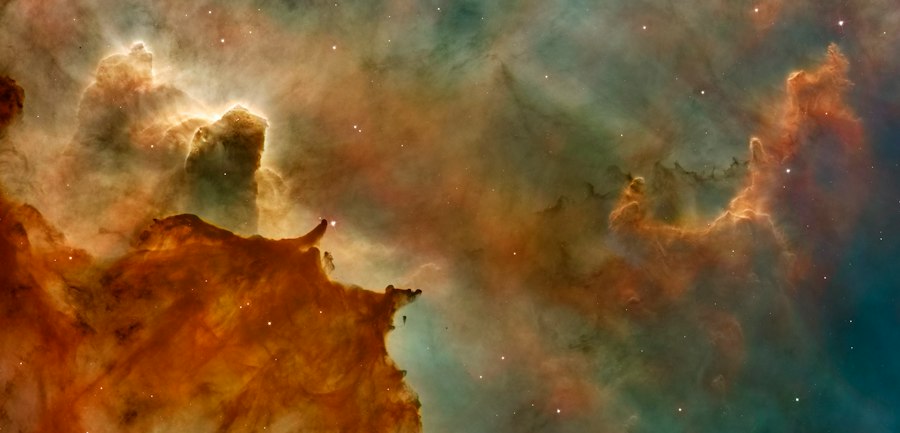
Radio waves, the longest wavelengths in the electromagnetic spectrum, are produced by a wide array of cosmic phenomena. From the faint afterglow of the Big Bang to the energetic jets emanating from black holes, radio astronomy has opened up entirely new vistas of the universe.
The Cosmic Microwave Background Radiation: Echoes of Creation
Perhaps the most profound discovery in radio astronomy is the detection of the Cosmic Microwave Background (CMB) radiation. This faint, uniform glow of microwave radiation pervades the entire universe and is interpreted as the residual heat from the Big Bang. Studying its subtle temperature variations provides a snapshot of the early universe, offering crucial data for understanding its age, composition, and evolution.
Pulsars and Quasars: Cosmic Lighthouses and Energetic Engines
Radio telescopes have been instrumental in discovering and studying pulsars – rapidly rotating neutron stars that emit beams of radio waves, acting like cosmic lighthouses. They have also unveiled the intense radio emissions from quasars, extremely luminous and distant active galactic nuclei powered by supermassive black holes. These objects are the engines of the early universe, and their radio signatures provide insights into the processes of galaxy formation and evolution.
Mapping the Interstellar Medium: The Fabric of Galaxies
Radio waves can penetrate the dense dust and gas clouds that make up the interstellar medium. By observing the emission from neutral hydrogen atoms (the 21-cm line), astronomers can map the distribution and structure of this material, revealing the intricate spiral arms of galaxies and the complex dynamics of gas within them.
The Galactic Center: Unveiling the Invisible
The center of our Milky Way galaxy is obscured by vast amounts of dust in visible light. Radio astronomy, however, can pierce this veil, allowing astronomers to study the supermassive black hole at the galactic core, the dynamic stellar populations surrounding it, and the powerful radio jets emanating from this enigmatic region.
X-ray Astronomy: Witnessing High-Energy Phenomena
X-rays, with their high energies and short wavelengths, are produced by some of the most energetic and violent processes in the universe. Studying X-ray emissions allows astronomers to probe extreme environments such as those around black holes, neutron stars, and supernovae.
Black Holes and Neutron Stars: Cosmic Powerhouses
Black holes, with their immense gravitational pull, accrete matter at incredible rates, heating it to millions of degrees and causing it to emit copious amounts of X-rays. Similarly, the incredibly dense remnants of collapsed stars, neutron stars, often have powerful magnetic fields that accelerate particles, leading to strong X-ray emissions. X-ray telescopes are crucial for studying these exotic objects and testing our understanding of gravity and matter under extreme conditions.
Supernova Remnants: The Aftermath of Stellar Death
When massive stars reach the end of their lives, they explode in spectacular events called supernovae. These explosions expel vast amounts of material into space, creating expanding shockwaves that heat gas to millions of degrees, producing powerful X-ray emissions. Studying supernova remnants provides insights into the processes of stellar death, nucleosynthesis, and the enrichment of the interstellar medium with heavy elements.
Hot Gas in Galaxy Clusters: Cosmic Lighthouses
Galaxy clusters, the largest gravitationally bound structures in the universe, are filled with extremely hot gas that emits X-rays. By studying these X-ray emissions, astronomers can determine the mass of the gas, its temperature, and its distribution, providing crucial information about the evolution of these massive cosmic structures and the distribution of dark matter.
The Sun and Other Stars: Our Closest High-Energy Sources
Even our own Sun emits X-rays, particularly during solar flares and coronal mass ejections. Studying these emissions helps us understand the Sun’s activity and its potential impact on Earth’s technological systems. X-ray observations of other stars also reveal their magnetic activity and atmospheric properties.
Astronomers have developed fascinating techniques to transform invisible light into stunning images, allowing us to explore the universe in ways previously thought impossible. For a deeper understanding of this process, you can read a related article that delves into the methods and technologies used in this groundbreaking field. The article explains how different wavelengths of light, including infrared and ultraviolet, are captured and processed to reveal the hidden details of celestial objects. To learn more about these incredible advancements, check out this insightful piece here.
Ultraviolet Astronomy: Studying Energetic Stellar Processes and Early Galaxies
| Process | Description |
|---|---|
| Observation | Astronomers use telescopes to collect light from celestial objects such as stars, galaxies, and nebulae. |
| Data Collection | The collected light is converted into electronic signals by detectors such as charge-coupled devices (CCDs) or photomultiplier tubes. |
| Data Processing | The electronic signals are processed using computer software to remove noise and enhance the quality of the images. |
| Image Reconstruction | The processed data is used to reconstruct images of the celestial objects, revealing details that are not visible to the human eye. |
Ultraviolet (UV) light, just beyond the violet end of the visible spectrum, carries a significant amount of energy and is produced by hot, young stars and energetic processes. Studying UV emissions is crucial for understanding stellar evolution, the composition of interstellar gas, and the properties of galaxies in the early universe.
Hot Young Stars: The Architects of Galaxies
The hottest and most massive stars, the ones that drive star formation and chemical enrichment in galaxies, emit strongly in the ultraviolet. UV observations allow astronomers to study their spectral characteristics, determining their temperature, composition, and evolutionary stage.
Interstellar Gas and Dust: Revealing Composition
The absorption and emission of UV light by atoms and molecules in the interstellar medium provide detailed information about its composition, temperature, and density. This allows astronomers to trace the flow of gas and metals within galaxies and understand how they are recycled.
Early Galaxies: Glimpsing the Cosmic Dawn
The light from the very first galaxies, formed billions of years ago, is redshifted into the ultraviolet and even optical wavelengths by the expansion of the universe. UV astronomy plays a vital role in observing these early galaxies, helping us understand the epoch of reionization and the initial formation of cosmic structures.
Our Own Sun’s Activity: The UV Connection
The Sun also emits ultraviolet radiation, which plays a significant role in Earth’s atmosphere. Studying solar UV emissions helps us understand space weather and its potential effects on our planet.
Gamma-Ray Astronomy: Probing the Most Extreme Events
Gamma-ray astronomy probes the most energetic and violent phenomena in the universe. Gamma rays are the most energetic form of electromagnetic radiation, produced by processes involving extreme energies and particle acceleration.
The Most Energetic Cosmic Events: Supernovae and Active Galactic Nuclei
Gamma rays are emitted by some of the most powerful cosmic events, including gamma-ray bursts (GRBs) – the most luminous explosions in the universe – and the powerful jets emanating from supermassive black holes at the centers of active galaxies. Studying these emissions provides insights into the physics of extreme energy release and the formation of compact objects.
Dark Matter and Antimatter: Unveiling the Invisible Universe
Certain theoretical models predict that the annihilation of dark matter particles or the interaction of antimatter could produce gamma rays. Gamma-ray telescopes are therefore crucial tools in the search for evidence of dark matter and antimatter in the universe.
Neutron Star Magnetars: Cosmic Powerhouses
Magnetars, a type of neutron star with incredibly strong magnetic fields, are known to emit bursts of gamma rays and X-rays. Studying these emissions helps astronomers understand the physics of ultra-strong magnetic fields and their effects on matter.
Understanding Fundamental Physics
Gamma-ray astronomy pushes the boundaries of our understanding of fundamental physics, allowing us to test theories of gravity, particle physics, and cosmology under extreme conditions not reproducible on Earth.
The Transformative Power of Image Reconstruction
The journey of transforming invisible light into observable images is a complex but crucial endeavor. Unlike visible light telescopes that can often form direct images, instruments observing infrared, radio, X-ray, ultraviolet, and gamma-ray wavelengths often detect signals that need to be meticulously reconstructed into meaningful visual representations. This process involves sophisticated algorithms and computational power, turning raw data into the breathtaking images that have revolutionized our understanding of the cosmos. Each color in these transformed images represents a specific wavelength or intensity, allowing us to discern different physical processes and celestial objects. This ability to visualize the invisible has truly unlocked the universe, revealing its hidden wonders and deepening our connection to the vast cosmic tapestry.

The Space Photos Are Real—But Your Eyes Would See This
FAQs
What is invisible light in astronomy?
Invisible light in astronomy refers to the electromagnetic radiation that is not visible to the human eye. This includes ultraviolet, infrared, and radio waves.
How do astronomers detect invisible light?
Astronomers use specialized instruments such as telescopes equipped with detectors that are sensitive to invisible light. These detectors can capture and record the invisible light, which is then processed into images.
What techniques do astronomers use to turn invisible light into images?
Astronomers use a variety of techniques such as data processing, image enhancement, and color mapping to convert the captured invisible light into visible images that can be studied and analyzed.
Why is it important for astronomers to study invisible light?
Studying invisible light allows astronomers to observe celestial objects and phenomena that are not visible in the visible light spectrum. This provides valuable insights into the composition, temperature, and behavior of distant objects in the universe.
What are some examples of celestial objects that are studied using invisible light?
Astronomers study a wide range of celestial objects using invisible light, including distant galaxies, nebulae, black holes, and exoplanets. Invisible light observations also help in studying cosmic microwave background radiation and the cosmic web structure of the universe.