
Infrared astronomy offers a unique window into the cosmos, allowing us to observe phenomena that are invisible to the naked eye. By detecting infrared radiation, astronomers can study a wide range of celestial objects and processes, from the birth of stars to the evolution of galaxies. This article serves as an introduction to the fascinating world of infrared astronomy, explaining its principles, applications, and the instruments used to explore the universe in this intriguing spectrum.
The electromagnetic spectrum encompasses all forms of light, from radio waves to gamma rays. Visible light, which our eyes can detect, is just a small portion of this spectrum. Infrared radiation lies just beyond the red end of the visible spectrum, with wavelengths longer than visible light but shorter than microwaves. While invisible to humans, infrared radiation is emitted by all objects with a temperature above absolute zero, making it a crucial tool for astronomical observation.
The Nature of Infrared Light
Infrared radiation is essentially heat. The hotter an object, the more infrared radiation it emits. This fundamental principle is what allows infrared astronomy to reveal hidden cosmic processes. Stars, planets, and even dust clouds all emit infrared light, but their temperatures determine the specific wavelengths they radiate. Astronomers can analyze the intensity and wavelengths of this infrared emission to determine the temperature, composition, and physical conditions of celestial objects.
Why Infrared is Different from Visible Light
Visible light telescopes rely on the light we can see. However, many of the most interesting phenomena in the universe are shrouded in dust or emit light primarily in the infrared. For instance, the cores of galaxies, where supermassive black holes reside, are often obscured by thick clouds of gas and dust. Infrared light, with its longer wavelengths, can penetrate these dusty regions, allowing astronomers to peer into the heart of these celestial powerhouses. Similarly, the very first stars and galaxies, born in the early universe, are now so distant that their light has been stretched into infrared wavelengths due to the expansion of the universe. Observing this redshifted infrared light is essential for understanding cosmic origins.
The Human Eye vs. Infrared Detectors
Our eyes are remarkably sensitive to visible light, but they are completely blind to infrared radiation. This is because the photoreceptor cells in our retinas are tuned to the wavelengths of visible light. To detect infrared light, astronomers use specialized instruments called infrared detectors. These detectors, often made of semiconductor materials, are designed to absorb infrared photons and convert them into an electrical signal that can be measured and analyzed.
For those interested in learning more about infrared astronomy, a great resource is the article found at Freaky Science. This beginner-friendly guide breaks down the fundamental concepts of infrared astronomy, explaining how it differs from traditional optical astronomy and highlighting its significance in studying celestial objects that are often obscured by dust and gas. By exploring this article, readers can gain a clearer understanding of how infrared observations contribute to our knowledge of the universe.
Peering Through the Cosmic Veil: Applications of Infrared Astronomy
Infrared astronomy has revolutionized our understanding of the universe, enabling breakthroughs in numerous fields of study. Its ability to penetrate dust and observe cooler objects makes it indispensable for investigating some of the most profound cosmic mysteries.
Revealing the Birthplaces of Stars
The process of star formation is largely hidden from visible light. Young stars are born within dense clouds of gas and dust, which are opaque to visible light. However, these nascent stars, along with the surrounding dust, emit strongly in the infrared. Infrared telescopes can pierce through these dusty cocoons, providing unparalleled views of protostars and the disks of material from which planets are formed. This allows astronomers to directly observe the earliest stages of stellar evolution and gain insights into how stars and planetary systems come into being.
Uncovering the Secrets of Exoplanets
The search for planets beyond our solar system, known as exoplanets, has been significantly advanced by infrared astronomy. While direct imaging of exoplanets is challenging, their presence can often be inferred by observing the light of their host stars. As an exoplanet orbits its star, it can periodically pass in front of it (a transit), causing a slight dip in the star’s brightness. Infrared observations can be particularly useful for detecting these transits, especially for planets that are cooler or more distant from their stars. Furthermore, analyzing the infrared light that passes through an exoplanet’s atmosphere during a transit can reveal the composition of that atmosphere, offering clues about its potential habitability.
Studying Distant Galaxies and the Early Universe
The universe is constantly expanding, causing the light from distant objects to stretch to longer wavelengths, a phenomenon known as redshift. The light from the earliest galaxies, formed just a few hundred million years after the Big Bang, has been stretched so much that it now falls into the infrared part of the spectrum. Infrared telescopes are therefore crucial for observing these ancient galaxies and understanding how the first structures in the universe formed and evolved. By studying the infrared light from these distant cosmic giants, astronomers can piece together the history of cosmic structure formation, from the early universe to the present day.
Investigating the Centers of Galaxies
The centers of galaxies are often brimming with activity, hosting supermassive black holes that consume matter and emit vast amounts of energy. These galactic cores are frequently obscured by thick clouds of dust and gas, making them invisible to optical telescopes. Infrared light, with its longer wavelengths, can penetrate these dusty veils, allowing astronomers to study the energetic processes occurring at the heart of galaxies, including the accretion disks around black holes and the formation of powerful jets.
Tools of the Infrared Trade: Telescopes and Detectors
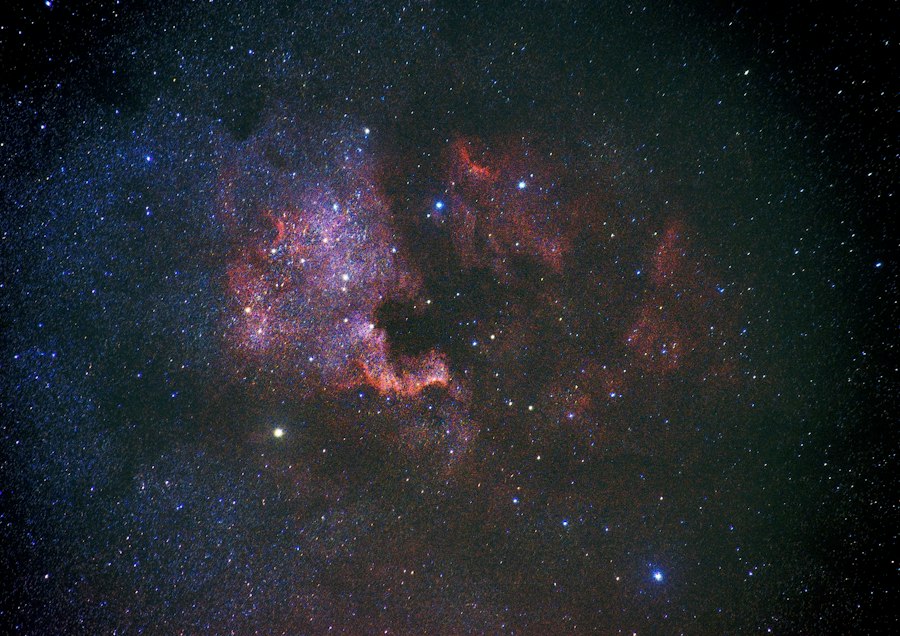
To harness the power of infrared astronomy, specialized telescopes and detectors are required. These instruments are designed to operate in environments where infrared radiation can be observed effectively and to capture the faint infrared signals from celestial objects.
The Challenges of Infrared Observation
Observing infrared radiation from Earth’s surface presents a significant challenge: our own atmosphere. The atmosphere, particularly water vapor, absorbs much of the infrared light that reaches it. This means that ground-based infrared telescopes must be located in high, dry environments, such as mountaintops in deserts, to minimize atmospheric interference. Even then, a portion of the infrared spectrum remains inaccessible from the ground.
Space-Based Infrared Observatories: A Clearer View
To overcome the limitations of Earth’s atmosphere, many powerful infrared telescopes are placed in space. Orbiting above the atmosphere, these observatories have an unobstructed view of the infrared universe. They also benefit from the extreme cold of space, which is crucial for reducing the telescope’s own infrared emission. If a telescope is too warm, its own heat can overwhelm the faint signals from distant cosmic sources.
The Spitzer Space Telescope
The Spitzer Space Telescope, launched in 2003, was a highly successful infrared observatory that operated for over 16 years. Spitzer observed the universe in wavelengths from 3 to 180 micrometers, covering a significant portion of the infrared spectrum. It made groundbreaking discoveries in areas such as exoplanet atmospheres, star formation, and the evolution of galaxies.
The James Webb Space Telescope (JWST)
The James Webb Space Telescope (JWST), launched in 2021, is the most powerful infrared telescope ever built. JWST observes in wavelengths from 0.6 to 28.5 micrometers, which includes near-infrared and mid-infrared light. Its enormous mirror and advanced instruments allow it to see farther back in time than ever before, providing unprecedented views of the early universe, the formation of the first stars and galaxies, and the atmospheres of exoplanets. JWST’s capabilities represent a paradigm shift in our ability to explore the cosmos in infrared light.
Ground-Based Infrared Telescopes
Despite the advantages of space-based observatories, ground-based infrared telescopes continue to play a vital role. These telescopes are often equipped with adaptive optics systems, which use deformable mirrors to correct for the blurring effects of Earth’s atmosphere in real-time, significantly improving image quality.
The Keck Observatory
The Keck Observatory in Hawaii houses two powerful 10-meter optical/infrared telescopes. These telescopes are equipped with advanced infrared instruments and adaptive optics, allowing them to conduct cutting-edge research in various astronomical fields, including exoplanet studies and the investigation of distant galaxies.
The Very Large Telescope (VLT)
The European Southern Observatory’s Very Large Telescope (VLT) in Chile comprises four 8.2-meter optical telescopes that can be used individually or combined to function as a single, larger interferometer. The VLT is also equipped with highly sensitive infrared instruments, making it a formidable tool for observing the universe in infrared light.
Infrared Detectors: The Eyes of the Telescope
At the heart of every infrared telescope are its detectors. These sensitive instruments are crucial for capturing and converting infrared photons into measurable data.
Bolometers
Bolometers work by absorbing incoming radiation and measuring the resulting rise in temperature. They are used to detect infrared radiation over a broad range of wavelengths.
Photoconductors
Photoconductors are semiconductor materials that change their electrical resistance when exposed to infrared light. By measuring these changes, astronomers can determine the intensity of the infrared signal.
Superconducting Tunnel Junctions (STJs)
STJs are extremely sensitive detectors that can measure the energy of individual infrared photons. They are particularly useful for low-light observations.
The Colors of Heat: What Infrared Astronomy Reveals
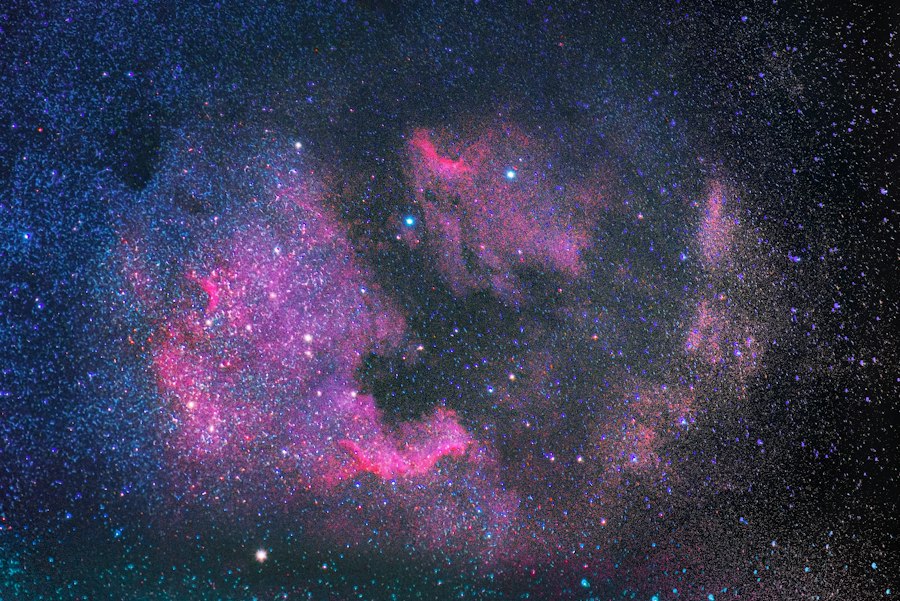
Infrared astronomy doesn’t just show us hidden objects; it reveals the processes of heat and energy transfer throughout the universe. The specific wavelengths of infrared light emitted by an object provide vital clues about its temperature and composition.
Infrared Signatures of Celestial Objects
Every celestial object has a unique infrared “signature” based on its temperature and material composition. For example, cool, dusty objects emit more at longer infrared wavelengths, while warmer, younger stars emit more at shorter infrared wavelengths. By analyzing the spectrum of infrared light from an object – the distribution of light across different wavelengths – astronomers can deduce a great deal about its nature.
Seeing the Unseen: Dust and Gas Clouds
As mentioned earlier, dust and gas clouds are major obstacles for visible light telescopes. However, infrared light can penetrate these clouds, allowing us to see what lies within. This is crucial for understanding the star-forming regions where new stars are being born. The infrared glow from these regions reveals the presence of young, embedded stars and the disks of material from which planets will eventually form.
The Faint Glow of Planets
While stars are bright in visible light, planets are much fainter. However, planets, being cooler than stars, emit strongly in the infrared. Infrared telescopes are essential for detecting and studying exoplanets, especially those that are not directly illuminated by their host stars. By observing the infrared light emitted by a planet, astronomers can learn about its temperature, atmospheric composition, and even search for signs of habitability.
The Heat of Galactic Centers
The intense gravitational forces and energetic processes at the centers of galaxies generate significant amounts of heat, which is often radiated in the infrared. Infrared observations allow astronomers to probe these hidden cores, revealing the activity of supermassive black holes, the formation of stars in dense nuclear star clusters, and the complex dynamics of galactic evolution.
Infrared astronomy is a fascinating field that allows us to explore the universe in ways that visible light cannot. For those looking to understand the basics of this intriguing subject, a great resource is an article that breaks down the principles and applications of infrared observations. You can find it here: this article. It provides a beginner-friendly overview, making complex concepts more accessible and highlighting the importance of infrared technology in modern astronomy.
Looking Ahead: The Future of Infrared Astronomy
| Topic | Explanation |
|---|---|
| Definition | Infrared astronomy is the study of astronomical objects at wavelengths longer than those of visible light, but shorter than radio waves. |
| Importance | Allows astronomers to study objects that are too cool or too obscured by gas and dust to be observed in visible light. |
| Discoveries | Has led to the discovery of new stars, planets, and galaxies, as well as providing insights into the formation and evolution of these objects. |
| Technology | Requires specialized telescopes and detectors that can capture and analyze infrared radiation from space. |
| Applications | Used in various fields such as planetary science, stellar evolution, and cosmology to gain a deeper understanding of the universe. |
The field of infrared astronomy is continuously evolving, with new technologies and ambitious missions promising even more profound discoveries. The insights gained from infrared observations will undoubtedly continue to shape our understanding of the universe.
Next-Generation Observatories
The success of JWST has paved the way for future infrared observatories that will push the boundaries of our cosmic exploration even further. These next-generation telescopes will likely be even larger and more sensitive, enabling them to observe fainter and more distant objects.
The Habitable Exoplanet Observatory (HabEx) and Large Ultraviolet Optical Infrared Surveyor (LUVOIR)
These proposed concepts for future space telescopes aim to significantly advance the search for and characterization of habitable exoplanets. They will be capable of directly imaging Earth-like planets and analyzing their atmospheres for biosignatures.
The Origins Space Telescope
This proposed mission would focus on the study of the early universe, the formation of the first stars and galaxies, and the origins of life. It would be a powerful infrared observatory, complementing the capabilities of JWST.
Advancements in Detector Technology
Ongoing research and development in detector technology are leading to more sensitive, efficient, and versatile infrared detectors. These advancements will enable astronomers to capture fainter signals, observe a wider range of wavelengths, and perform more detailed spectral analysis.
Data Analysis and Computational Power
As the volume and complexity of infrared data continue to grow, so too does the need for sophisticated data analysis techniques and powerful computational resources. Machine learning and artificial intelligence are increasingly being employed to help astronomers sift through vast datasets and extract meaningful scientific insights.
The Ongoing Quest for Knowledge
Infrared astronomy is a dynamic and exciting field that continues to reveal the hidden wonders of the universe. From the birth of stars to the most distant galaxies, the infrared spectrum offers a unique and indispensable perspective. As technology advances and new observatories come online, the future of infrared astronomy holds the promise of answering some of humanity’s most profound questions about our place in the cosmos. The invisible light of heat is, in fact, one of our most powerful tools for unveiling the universe.

The Space Photos Are Real—But Your Eyes Would See This
FAQs
What is infrared astronomy?
Infrared astronomy is the study of celestial objects and phenomena that emit infrared radiation. This includes stars, planets, galaxies, and other astronomical bodies that emit infrared light.
How is infrared astronomy different from other types of astronomy?
Infrared astronomy focuses on studying objects and phenomena that emit infrared radiation, which is not visible to the human eye. This allows astronomers to observe and study celestial objects that may not be visible in visible light.
What can we learn from infrared astronomy?
Infrared astronomy allows astronomers to study the temperature, composition, and motion of celestial objects. It also helps in studying the formation of stars and galaxies, as well as the presence of dust and gas in space.
What are some examples of infrared telescopes and observatories?
Some examples of infrared telescopes and observatories include the Spitzer Space Telescope, the Herschel Space Observatory, and the James Webb Space Telescope. These instruments are specifically designed to observe and study celestial objects in the infrared spectrum.
How does infrared astronomy benefit our understanding of the universe?
Infrared astronomy helps astronomers to gain a more comprehensive understanding of the universe by providing insights into the formation and evolution of stars, galaxies, and planetary systems. It also helps in studying the presence of organic molecules and the conditions for potential habitable planets.