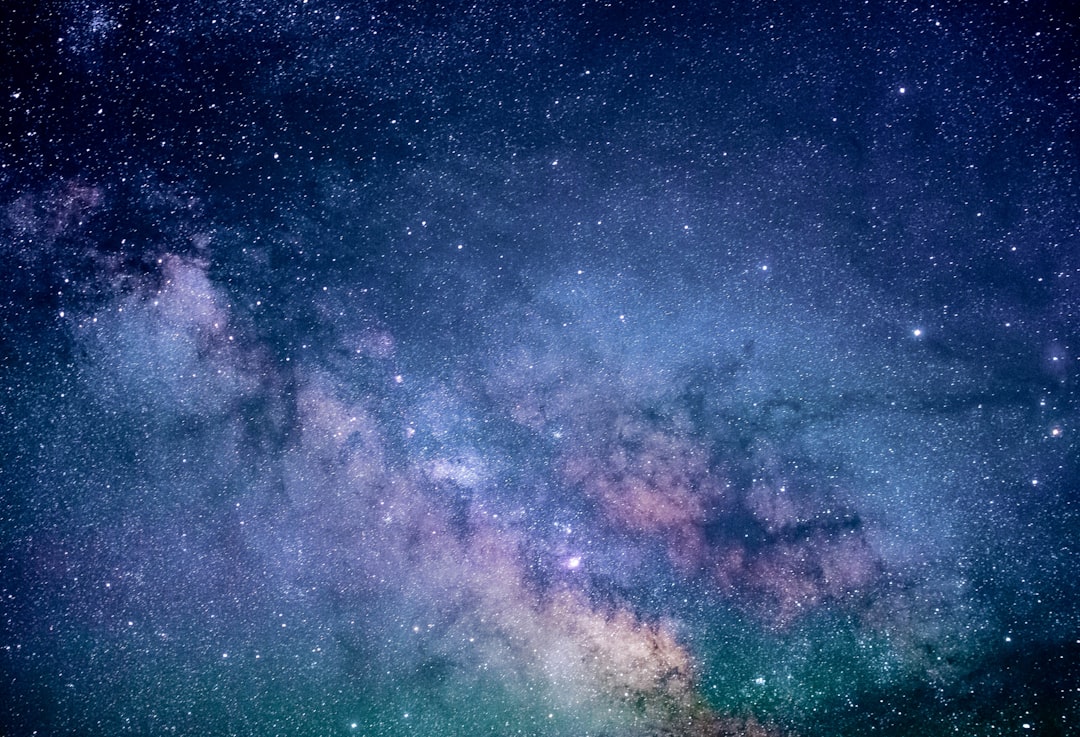
The human fascination with the cosmos is as old as conscious thought. For millennia, we have gazed at the celestial tapestry, seeking to understand our place within its vast expanse. Yet, the more we learn about space, the more its true nature eludes definitive explanation. It is a realm of profound mystery, defying our intuitive grasp of reality and constantly pushing the boundaries of our comprehension. This article aims to peel back the layers of our current understanding, unveiling some of the most compelling and perplexing aspects of the universe.
Our conventional understanding of space as a passive, three-dimensional container in which events unfold has been irrevocably altered by Einstein’s theory of general relativity. Instead of a static backdrop, space is now understood to be an active, dynamic entity, interwoven with time to form a unified four-dimensional fabric known as spacetime.
Gravity as a Geometric Distortion
The Curvature of Spacetime
General relativity posits that mass and energy warp this spacetime fabric, much like placing a heavy ball on a stretched rubber sheet. This curvature is what we perceive as gravity. Objects do not “pull” on each other across a void; rather, they follow the curves in spacetime created by other massive objects. This revolutionary concept explains the orbits of planets, the bending of light around stars, and the very existence of black holes.
Time Dilation and Length Contraction
The dynamic nature of spacetime also leads to some of the most counterintuitive phenomena in physics. Time, for instance, is not absolute. It flows at different rates depending on the gravitational field and the velocity of an observer. This phenomenon, known as time dilation, means that time passes more slowly for someone near a massive object or traveling at speeds close to the speed of light compared to someone in a weaker gravitational field or at rest. Similarly, objects moving at relativistic speeds appear to contract in the direction of their motion, a phenomenon called length contraction. These effects, though imperceptible in our everyday lives, are crucial for the accurate functioning of technologies like GPS satellites.
The Expanding Universe and its Spacetime Implications
The discovery that the universe is not static but is, in fact, expanding, further highlights the dynamic nature of spacetime. Galaxies are not moving through space away from each other; rather, the spacetime fabric itself is stretching, carrying galaxies along with it. This expansion is not happening into anything; it is an intrinsic property of spacetime itself. Understanding this expansion requires us to move beyond our ingrained notions of absolute space and embrace a more fluid, interconnected view of the cosmos.
If you’re curious about the true appearance of space and want to explore more about its vastness and beauty, you might find this article insightful: What Space Really Looks Like. It delves into the stunning visuals captured by telescopes and spacecraft, providing a deeper understanding of the cosmos beyond our planet.
The Mysteries of Dark Matter and Dark Energy
Despite our advances in understanding gravity and spacetime, a significant portion of the universe remains invisible and enigmatic. The visible matter – stars, planets, gas, and dust – accounts for only a tiny fraction of the total mass-energy content of the universe. The overwhelming majority is composed of two mysterious components: dark matter and dark energy.
Dark Matter: The Invisible Scaffolding
Evidence for Dark Matter
Observations of galaxy rotation curves provide compelling evidence for the existence of dark matter. Stars in the outer regions of galaxies orbit much faster than predicted by the visible mass alone, suggesting the presence of an unseen gravitational influence. Gravitational lensing, the bending of light around massive objects, also indicates the presence of more mass than can be accounted for by luminous matter.
The Search for Dark Matter Particles
The exact nature of dark matter remains one of the biggest puzzles in physics. It does not interact with electromagnetic radiation, hence its “darkness,” meaning it cannot be seen, felt, or directly detected with current instruments. Leading candidates for dark matter particles include weakly interacting massive particles (WIMPs) and axions, but despite extensive experimental efforts, no definitive detection has been made. This ongoing search highlights the limitations of our current particle physics models and the vastness of our ignorance regarding the universe’s fundamental constituents.
Dark Energy: The Accelerating Expansion
The Shocking Discovery
In the late 1990s, observations of distant supernovae revealed a startling truth: the expansion of the universe is not slowing down, as expected due to gravity, but is, in fact, accelerating. This acceleration is attributed to a repulsive force, dubbed dark energy, which seems to be an intrinsic property of space itself.
The Cosmological Constant and Beyond
The simplest explanation for dark energy is the cosmological constant, a term Einstein introduced and later famously called his “biggest blunder.” This constant represents a uniform energy density inherent to empty space. However, theoretical calculations of this vacuum energy yield a value vastly larger than what is observed, creating a significant discrepancy. Alternative theories propose dynamic forms of dark energy, such as quintessence, which would vary in density over time and space. Understanding dark energy is crucial, as it appears to be the dominant force shaping the ultimate fate of the universe.
The Quantum Realm: Where Space Becomes Fuzzy
At the smallest scales, our intuitive understanding of space breaks down entirely, giving way to the bizarre and probabilistic world of quantum mechanics. Here, the very notion of a precise location and a definite trajectory becomes problematic.
Quantum Fluctuations and Virtual Particles
Even in what we consider “empty” space, quantum mechanics predicts constant fluctuations. Pairs of virtual particles are thought to spontaneously appear and annihilate each other, drawing energy from the vacuum for fleeting moments. These quantum fluctuations are not mere theoretical curiosities; they have measurable effects, such as the Casimir effect, where two uncharged parallel metal plates in a vacuum experience an attractive force due to the differing vacuum energy between and outside the plates.
The Uncertainty Principle and its Spatial Implications
Heisenberg’s uncertainty principle states that it is impossible to simultaneously know with perfect accuracy both the position and the momentum of a particle. This fundamental limitation means that at the quantum level, an object does not have a single, definite position. Instead, it is described by a probability distribution, meaning there is a certain likelihood of finding it in various locations. This inherent fuzziness challenges our classical notion of a precisely defined spatial reality.
Quantum Foam and the Planck Scale
Extrapolating these quantum principles to the smallest possible scales suggests a turbulent, frothy structure of spacetime itself, often referred to as “quantum foam.” At the Planck length (approximately 1.6 x 10^-35 meters), the very fabric of spacetime is thought to be so violently fluctuating that our current theories of physics break down. Reconciling quantum mechanics with general relativity to describe these extreme conditions remains a monumental challenge, leading to theoretical frameworks like string theory and loop quantum gravity, which attempt to provide a unified description.
The Geometry of the Cosmos: Beyond Euclidean
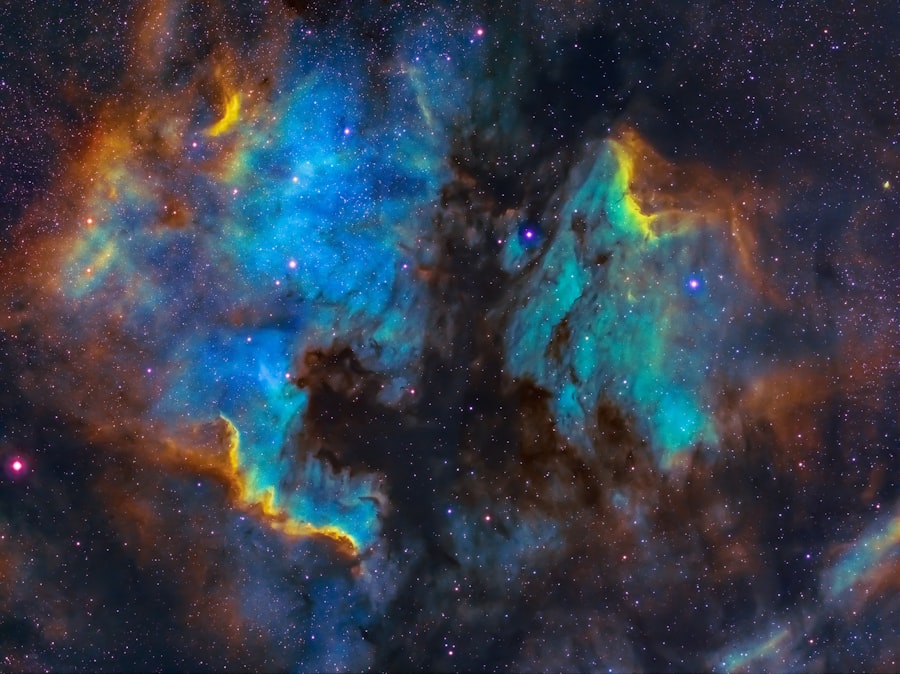
Our everyday experience of space is largely governed by Euclidean geometry, where parallel lines never meet, and the sum of angles in a triangle is always 180 degrees. However, the universe, particularly at cosmic scales and in the presence of gravity, deviates significantly from these simple rules.
Non-Euclidean Geometry and General Relativity
As discussed earlier, general relativity describes gravity as the curvature of spacetime. This curvature implies that the geometry of space is not always Euclidean. In regions of strong gravity, such as near a black hole, spacetime is highly curved, and Euclidean geometry no longer applies.
The Curvature of the Universe
Cosmologists actively investigate the overall curvature of the observable universe. Based on current observations, the universe appears to be remarkably “flat” on large scales, meaning that on average, the geometry closely resembles Euclidean geometry. However, there are still uncertainties, and the universe could have a slight positive (spherical) or negative (hyperbolic) curvature that is difficult to detect.
The Implications of Cosmic Geometry
The geometry of the universe has profound implications for its evolution and its ultimate fate. A positively curved universe would eventually recollapse, while a negatively curved universe would expand forever. A flat universe, as currently favored by evidence, would also expand forever, though its expansion rate would asymptotically approach zero. Understanding the precise geometry of the cosmos is therefore crucial for answering fundamental questions about its past and future.
When exploring the vastness of the universe, many people wonder what space really looks like beyond the stunning images captured by telescopes. A fascinating article that delves into this topic is available at Freaky Science, where you can discover the true nature of cosmic phenomena and the intricate details that often go unnoticed. This resource offers insights into the colors, textures, and dimensions of celestial bodies, providing a deeper understanding of the universe that surrounds us.
The Boundaries of Space: Event Horizons and Beyond
| Aspect | Description |
|---|---|
| Size | Space is vast, with billions of galaxies and trillions of stars. |
| Temperature | Space can be extremely cold, with temperatures near absolute zero, or extremely hot near stars and other celestial bodies. |
| Gravity | Gravity in space can vary depending on the mass of celestial bodies, leading to phenomena like black holes and gravitational waves. |
| Composition | Space is mostly composed of vacuum, but also contains various elements, gases, and cosmic dust. |
| Phenomena | Space is home to various phenomena such as supernovae, pulsars, nebulae, and more. |
The concept of “boundaries” in space becomes particularly intriguing when we consider extreme cosmic objects like black holes. These regions possess event horizons, which are not physical surfaces but rather points of no return, marking the edge of our ability to observe and interact with what lies within.
Black Holes: The Ultimate Gravitational Wells
The Singularity
At the heart of a black hole lies a singularity, a point of infinite density and zero volume where the laws of physics as we understand them break down. It is a region where spacetime is so warped that all paths lead inwards.
The Event Horizon: A Point of No Return
The event horizon is the boundary around the singularity where the escape velocity exceeds the speed of light. Anything that crosses this boundary, including light itself, is trapped forever within the black hole. This means that from our perspective outside the event horizon, we can never see what is happening inside.
The Information Paradox
The existence of event horizons leads to the famous black hole information paradox. Quantum mechanics dictates that information cannot be destroyed, yet a black hole appears to swallow information and then, through Hawking radiation, emit seemingly random particles that carry no information about what was absorbed. Reconciling these two fundamental principles is a major challenge in theoretical physics, suggesting that our understanding of spacetime, gravity, and quantum mechanics at these extreme interfaces is incomplete.
The Multiverse Hypothesis
If the boundaries of our observable universe are defined by the limits of light travel and the finite age of the cosmos, then what lies beyond? The concept of a multiverse, the idea that our universe is just one of many, arises from various theoretical frameworks, including inflation and string theory. While currently untestable, the multiverse hypothesis suggests that “space” as we know it might be a local phenomenon within a much grander, potentially infinite, collection of universes, each with its own unique properties and perhaps even different fundamental laws. This expands the notion of “space” to a scale far beyond our current observational reach.
In conclusion, the true nature of space is not a static, empty void but a dynamic, interwoven fabric of spacetime, shaped by gravity, teeming with invisible matter and energy, and governed by the perplexing rules of quantum mechanics at its most fundamental level. Our journey to unveil its secrets is ongoing, a testament to humanity’s enduring curiosity and our unyielding desire to comprehend our place within the grand cosmic tapestry. Each new discovery, while illuminating, only serves to deepen the mystery, reminding us that the universe is far stranger, more complex, and more wondrous than we can currently imagine.

The Space Photos Are Real—But Your Eyes Would See This
FAQs
What is space?
Space is the vast, seemingly infinite expanse that exists beyond Earth’s atmosphere. It is a vacuum, meaning it contains very little matter, and is filled with various celestial bodies such as stars, planets, moons, asteroids, and comets.
What does space really look like?
Space appears dark to the human eye because there is no atmosphere to scatter light. However, space is not completely black; it is filled with light from stars, galaxies, and other celestial objects. Additionally, space is not silent, as it contains various forms of electromagnetic radiation and cosmic background noise.
How is space depicted in popular media?
In popular media, space is often depicted as a dark, starry expanse with colorful nebulae and galaxies. While these depictions are based on real astronomical observations, they are often enhanced for visual appeal and may not accurately represent the true appearance of space to the human eye.
What are some common misconceptions about space?
One common misconception about space is that it is completely silent. In reality, space is filled with various forms of electromagnetic radiation and cosmic background noise. Another misconception is that space is completely empty, when in fact it contains a very low density of matter and is filled with celestial objects.
How do astronauts experience space?
Astronauts experience space differently depending on their location. Inside a spacecraft, they experience microgravity and may have views of the Earth and stars through windows. During spacewalks, astronauts experience the vastness of space firsthand, with the Earth below and the blackness of space all around them.