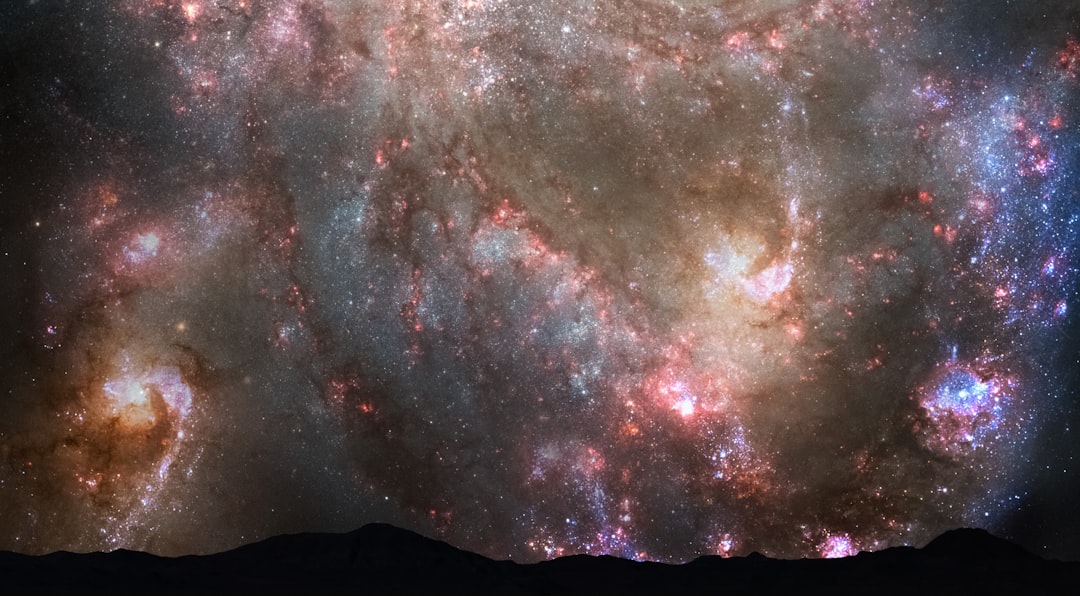
The Hubble Space Telescope, a marvel of human ingenuity, has transcended its initial purpose to become a cosmic storyteller, revealing the universe in breathtaking detail and vibrant color. For decades, it has peered into the depths of space, capturing images that have not only revolutionized our understanding of celestial phenomena but have also ignited the imagination of millions. Through its unwavering gaze, Hubble has unveiled the true colors of the universe, painting a picture of cosmic grandeur that was once confined to the realm of speculation and artistic interpretation. This article delves into the profound impact of Hubble’s observations, exploring the scientific breakthroughs and aesthetic revelations that have reshaped our perception of the cosmos.
Hubble’s ability to capture the universe’s true colors is not a simple matter of pointing and clicking. It involves a sophisticated interplay of advanced technology, meticulous observation strategies, and intricate processing techniques. The telescope is equipped with a suite of highly sensitive instruments, each designed to detect different wavelengths of light. These instruments work in concert to gather a wealth of data, which is then painstakingly analyzed to produce the stunning images that grace our screens and textbooks.
The Spectrum of Vision: Instruments of Discovery
At the heart of Hubble’s color-imaging capabilities lie its advanced scientific instruments. These are not your everyday cameras; they are specialized tools designed to capture the universe’s light across a broad spectrum, from ultraviolet to infrared.
Wide Field Camera 3 (WFC3): The Jewel in the Crown
The Wide Field Camera 3 (WFC3) is one of Hubble’s most versatile and powerful instruments, particularly renowned for its ability to capture stunning, high-resolution images across a wide range of wavelengths. Installed during the Servicing Mission 4 in 2009, WFC3 replaced the aging Wide Field and Planetary Camera 2, bringing with it significantly enhanced capabilities. Its UVIS (Ultraviolet/Visible/Infrared) channel can observe light from ultraviolet through visible to near-infrared wavelengths, allowing astronomers to study a vast array of cosmic objects and processes. For visible light imaging, WFC3 utilizes a set of filters that isolate specific wavelengths, effectively separating the light emitted or reflected by celestial objects into its constituent colors. By taking multiple exposures through different filters – for instance, a filter centered on red light, another on green, and a third on blue – astronomers can then combine these monochromatic images to create a full-color composite. This process is analogous to how a color printer works, layering different colored inks to produce a vibrant image. The resolution and sensitivity of WFC3 are crucial for capturing the subtle color variations that reveal critical information about the composition, temperature, and dynamics of celestial bodies.
Advanced Camera for Surveys (ACS): Pushing the Boundaries of Deep Field Imaging
The Advanced Camera for Surveys (ACS), another crucial instrument for Hubble’s color imaging, was installed in 2002 and has since been instrumental in pushing the frontiers of deep space observation. ACS’s primary mission was to survey large areas of the sky with unprecedented speed and sensitivity. It possesses three main channels: Wide Field Camera (WFC), Solar Blind Camera (SBC), and High Resolution Camera (HRC). The WFC, in particular, is adept at capturing detailed images in visible and near-infrared light, making it a workhorse for generating many of Hubble’s iconic color images. Like WFC3, ACS uses a series of filters to capture light at specific wavelengths. By combining images taken through different filters, astronomers can reconstruct the visible spectrum of distant objects. The sheer depth and clarity of images produced by ACS, such as those from the Hubble Ultra-Deep Field, have been revolutionary, allowing scientists to see galaxies that formed billions of years ago and study their color properties, which offer clues about their age, star formation rates, and chemical composition.
The Role of Filters: Isolating Cosmic Colors
Hubble doesn’t inherently “see” in color in the way human eyes do. Instead, it relies on a sophisticated system of filters. These filters are placed in front of the cameras and allow only specific wavelengths of light to pass through. By taking separate images through filters corresponding to red, green, and blue wavelengths (and sometimes other key spectral lines), scientists can later combine these images in a process called “color composition.” The intensity of light captured through each filter is mapped to a specific color channel (red, green, or blue) in the final composite image. This allows astronomers to represent the invisible light spectrum in a way that is comprehensible to human vision, often revealing details that would be lost in a single, unfiltered exposure. For instance, the distinct colors of nebulae are not just aesthetically pleasing; they are direct indicators of the chemical elements present and the physical conditions within these stellar nurseries.
From Data to Display: The Art of Image Processing
The raw data collected by Hubble’s instruments is not the final product. It is a collection of numbers representing photon counts at specific wavelengths. Transforming this data into the breathtaking images we see requires a dedicated team of image processors, often referred to as “visualizers” or “artists” in the astronomical community. Their work is a delicate balance between scientific accuracy and aesthetic appeal.
Revealing Hidden Details: False Color and True Color
Hubble images are often a fascinating blend of “true color” and “false color.” True color images attempt to represent the colors as they might appear to the human eye, based on the light captured within the visible spectrum. However, even these images often involve enhancements to bring out subtle details. False color images, on the other hand, assign colors to wavelengths that are outside the visible spectrum, or they use colors to highlight specific scientific features, such as temperature gradients or the distribution of certain elements. For example, infrared data, which can reveal cooler objects or penetrate dust clouds, might be assigned a visible color like red or orange to make it stand out in a composite image. This judicious use of color allows scientists to convey complex information in a visually accessible format.
Enhancing Clarity and Contrast: Bringing Out the Cosmic Drama
Image processing also involves techniques to enhance the clarity and contrast of Hubble images. This can include adjusting brightness and color balance to make faint structures more visible or to emphasize the dramatic shapes of celestial objects. Noise reduction is also a crucial step, as long exposures in space can accumulate unwanted electronic noise. The goal is to produce an image that is scientifically accurate while also being visually compelling, drawing viewers into the wonders of the universe. This meticulous process ensures that the “true colors” of the universe are not just captured but also effectively communicated.
The debate surrounding whether Hubble images are true color has intrigued many astronomy enthusiasts and scientists alike. For a deeper understanding of this topic, you can explore the article titled “Are Hubble Images True Color?” which delves into the techniques used in processing these stunning images. To read more about it, visit this article.
The Pillars of Cosmic Knowledge: How Hubble Transformed Astronomy
Hubble’s impact on astronomy is immeasurable. It has not only provided stunning visual confirmation of theoretical models but has also opened up entirely new avenues of research. Its deep and wide-ranging observations have addressed fundamental questions about the age, evolution, and composition of the universe.
Measuring the Universe: The Hubble Constant and Cosmic Expansion
One of Hubble’s most significant contributions has been its role in refining the measurement of the Hubble Constant, a value that describes the rate at which the universe is expanding. By observing distant galaxies and measuring their recession velocities and distances, astronomers using Hubble have been able to significantly narrow down the uncertainty surrounding this crucial cosmological parameter.
Cepheid Variables: Cosmic Yardsticks
Hubble’s sharp vision has been instrumental in identifying and measuring the brightness of Cepheid variable stars in distant galaxies. These pulsating stars have a well-defined relationship between their pulsation period and their intrinsic luminosity. By observing how long it takes for a Cepheid to brighten and dim, astronomers can determine its true brightness. Comparing this to its apparent brightness in the sky allows for the calculation of its distance. Hubble’s ability to resolve individual Cepheids in galaxies tens of millions of light-years away has provided the most precise measurements to date, leading to a more accurate understanding of the universe’s expansion rate.
Type Ia Supernovae: Cosmic Lightbulbs for Measuring Vast Distances
Beyond Cepheids, Hubble has also been crucial in observing Type Ia supernovae. These are a particular type of stellar explosion that occurs when a white dwarf star accretes matter from a companion star and exceeds a critical mass. Because Type Ia supernovae have a remarkably consistent peak luminosity, they serve as “standard candles” – objects of known brightness – allowing astronomers to measure distances to galaxies even further away than those observable with Cepheids. Hubble’s observations of these distant supernovae have provided critical data supporting the discovery of dark energy, the mysterious force accelerating the expansion of the universe.
The Birth and Death of Stars: Nebulae in Full Glory
Hubble has provided unparalleled views of nebulae, the vast clouds of gas and dust where stars are born and where they meet their spectacular end. The vibrant colors and intricate structures captured by Hubble reveal the dynamic processes at play in these stellar nurseries and stellar remnants.
Stellar Nurseries: The Pillars of Creation and Beyond
Hubble’s iconic images of the “Pillars of Creation” in the Eagle Nebula are a testament to its ability to unveil the birthplaces of stars. These colossal structures of gas and dust, illuminated by the intense ultraviolet radiation from massive young stars, showcase the turbulent environment in which new stars ignite. The different colors in these images often represent different chemical compositions and densities within the nebula. For instance, the reddish hues typically indicate ionized hydrogen, a common element in star-forming regions, while bluer tones might suggest the presence of cooler gas or reflected starlight. By studying these colors, astronomers can infer the temperatures, densities, and chemical makeup of these regions, providing insights into the conditions necessary for star formation.
Stellar Graveyards: Supernova Remnants and Planetary Nebulae
At the other end of the stellar life cycle, Hubble has captured breathtaking images of supernova remnants and planetary nebulae. Supernova remnants, the expanding shells of gas and debris left behind after a massive star explodes, display a dazzling array of colors, often indicative of the different elements ejected during the explosion. For example, the presence of oxygen might manifest as green, while sulfur could contribute to red hues. Planetary nebulae, the glowing shells of gas shed by dying low-to-intermediate mass stars, also exhibit a rich palette of colors, reflecting the composition and temperature of the ejected material. These images are not just beautiful; they are invaluable for understanding the chemical enrichment of the universe, as these stellar deaths distribute heavy elements that can later form new stars and planets.
The debate surrounding whether Hubble images represent true color has intrigued both scientists and astronomy enthusiasts alike. Many people wonder how these stunning images are processed and what they reveal about the universe. For a deeper understanding of this topic, you can explore a related article that delves into the intricacies of astronomical imaging and color representation. This insightful piece can be found at Freaky Science, where you will discover more about the techniques used to capture and enhance these breathtaking views of space.
Galaxies Galore: A Cosmic Census in Color
Hubble’s deep field observations have provided a staggering census of galaxies across cosmic time, revealing their diverse shapes, sizes, and evolutionary stages. The colors of these galaxies offer crucial clues about their stellar populations, star formation rates, and merger histories.
The Hubble Deep Fields: A Glimpse into the Early Universe
The Hubble Deep Field, Ultra Deep Field, and eXtreme Deep Field are legendary observational programs that have exposed the universe’s deepest layers. By staring at seemingly empty patches of sky for extended periods, Hubble has revealed thousands of galaxies, many of which are incredibly distant and represent a snapshot of the universe when it was only a fraction of its current age. The colors in these images are particularly informative. Bluer galaxies tend to be younger and still actively forming stars, while redder galaxies often contain older stellar populations or have undergone processes that have suppressed star formation. The presence of different colors within a single galaxy can indicate regions of active star formation alongside older stellar components.
Galactic Collisions and Mergers: Cosmic Dance of Destruction and Creation
Hubble’s detailed images have also captured the dramatic events of galactic collisions and mergers. These cosmic events, often visually spectacular, are crucial drivers of galactic evolution. The vibrant colors in images of interacting galaxies can highlight regions of intense star formation triggered by the gravitational disturbances. Blues often dominate these active regions, indicating young, hot stars. The tidal tails of gas and stars flung out during these interactions also exhibit unique color characteristics, revealing the chemical composition and physical state of the ejected material. Studying these events in color helps astronomers understand how galaxies grow and change over billions of years.
Beyond Visible Light: Hubble’s Infrared and Ultraviolet Insights
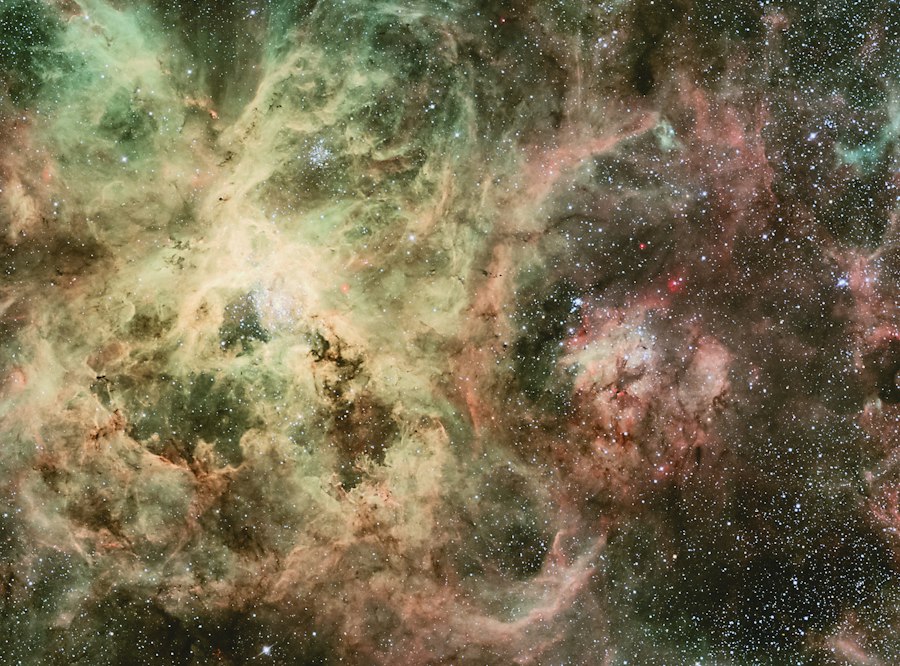
While Hubble is renowned for its stunning visible-light imagery, its ability to observe in infrared and ultraviolet wavelengths opens up entirely different perspectives on the universe, revealing phenomena that are invisible to our eyes.
The Infrared Universe: Peering Through Dust and Seeing the Youngest Stars
Infrared light is crucial for observing objects that are cool or are obscured by dust. Hubble’s instruments, particularly WFC3’s infrared channel, can penetrate these cosmic veils, revealing hidden wonders.
Unveiling Hidden Stars: Infrared’s Penetrating Gaze
Dust clouds, prevalent in star-forming regions and the centers of galaxies, can block visible light, obscuring the objects within. Infrared light, with its longer wavelengths, can pass through these clouds, allowing Hubble to observe nascent stars that are still enshrouded in their cocoons of gas and dust. The color assignments in infrared images often help distinguish between different temperature ranges, with warmer objects appearing bluer and cooler objects appearing redder. This is a fundamental tool for understanding the earliest stages of stellar and planetary formation.
The Infrared Glow of Galaxies: Tracing Star Formation History
The infrared emission from galaxies can provide valuable information about their star formation history. Young, hot stars emit a significant amount of their energy in the infrared. Furthermore, dust grains within galaxies absorb ultraviolet and visible light and re-emit it in the infrared. By analyzing the infrared spectrum and color of galaxies, astronomers can estimate their star formation rates and the amount of dust present, providing a more complete picture of their evolution.
The Ultraviolet Universe: Studying Hot, Energetic Processes
Ultraviolet (UV) light is emitted by hot, energetic objects, such as young, massive stars and active galactic nuclei. Hubble’s UV-sensitive instruments, like the Solar Blind Channel of ACS, are vital for studying these phenomena.
Young Stars and Active Galactic Nuclei: Signatures of Energetic Phenomena
Young, massive stars are extremely hot and emit a significant portion of their radiation in the UV. Studying this UV light allows astronomers to determine the temperature and properties of these stars. Active galactic nuclei (AGN), the supermassive black holes at the centers of galaxies that are actively accreting matter, also emit strongly in the UV. Analyzing the UV spectra of AGN provides crucial information about the conditions in the accretion disk and the surrounding environment.
Interstellar Medium: Tracing the Composition and Dynamics of Gas
The interstellar medium (ISM), the gas and dust between stars, plays a vital role in galactic evolution. UV light is absorbed and emitted by various atoms and molecules in the ISM, making UV observations an excellent tool for studying its composition, temperature, and dynamics. By observing the absorption and emission lines in the UV spectrum, astronomers can identify different elements and their ionization states, providing insights into the chemical processes occurring in space.
Hubble’s Legacy: Shaping Our Cosmic Perspective
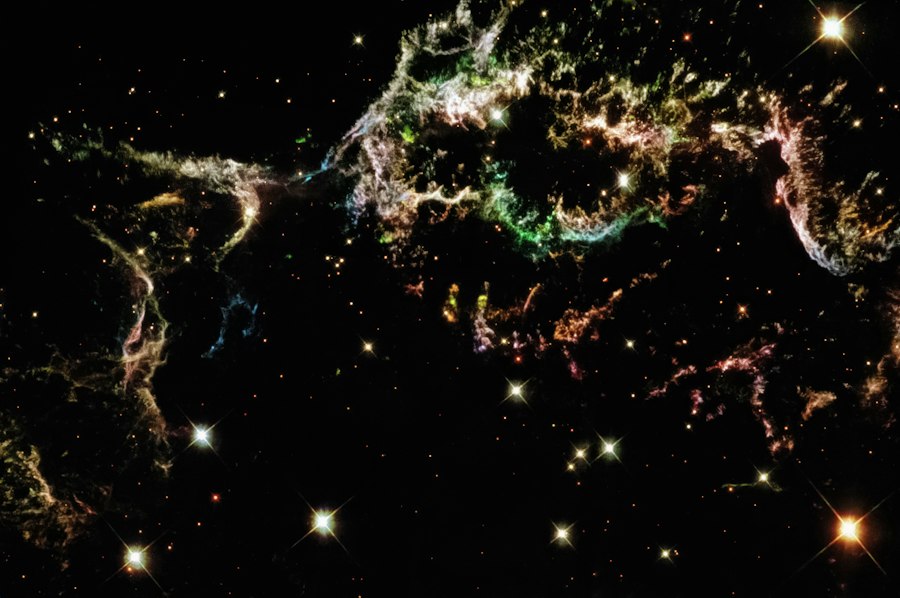
Hubble’s enduring legacy lies not only in its scientific discoveries but also in its profound impact on public perception and imagination. The images it has sent back have become cultural touchstones, inspiring awe and curiosity about our place in the universe.
A Window to Wonder: Inspiring Generations of Scientists and Dreamers
The sheer beauty and wonder of Hubble’s images have captivated audiences worldwide. These images have transcended scientific journals and found their way into art, education, and popular culture, fostering a deeper appreciation for the cosmos. For many, Hubble’s photographs have been the first introduction to the wonders of astronomy, sparking a lifelong interest in space exploration and scientific inquiry. It has undoubtedly inspired countless young minds to pursue careers in science, technology, engineering, and mathematics.
The Ever-Expanding Universe: Ongoing Discoveries and Future Prospects
Hubble continues to be an active and vital observatory, pushing the boundaries of our knowledge. While newer telescopes like the James Webb Space Telescope are building upon its foundations, Hubble’s unique capabilities and its extensive archive of data will continue to be invaluable for years to come. The ongoing analysis of its observations is sure to yield further groundbreaking discoveries, further unraveling the mysteries of the universe and revealing its ever-evolving true colors. The synergy between Hubble and newer observatories promises an even richer and more comprehensive understanding of the cosmos, ensuring that humanity’s quest to unveil the universe’s true colors is an ongoing and ever-expanding journey. Hubble’s enduring presence in the night sky serves as a constant reminder of what can be achieved when human curiosity is combined with technological brilliance, forever changing how we see our place in the vast cosmic tapestry.

The Space Photos Are Real—But Your Eyes Would See This
FAQs
What are Hubble images?
Hubble images are photographs of celestial objects taken by the Hubble Space Telescope, which orbits the Earth and captures high-resolution images of planets, stars, galaxies, and other astronomical phenomena.
Are Hubble images in true color?
Hubble images are not always in true color. The telescope captures images in black and white, and then different filters are used to capture specific wavelengths of light. These filtered images are then combined to create a full-color image, but the colors may not represent what the human eye would see.
How are Hubble images processed?
Hubble images are processed using a technique called “false color” imaging. This involves assigning different colors to the filtered images captured by the telescope in order to represent the various wavelengths of light. This allows scientists and the public to visualize and interpret the data more effectively.
Why are Hubble images not always in true color?
Hubble images are not always in true color because the telescope is designed to capture a wide range of wavelengths of light, including those that are not visible to the human eye. By using false color imaging, scientists can highlight specific features or phenomena that would not be visible in true color.
Can Hubble images still provide valuable scientific information despite not being in true color?
Yes, Hubble images are still valuable for scientific research and discovery, even though they may not always represent true color. The false color images allow scientists to study and analyze the composition, temperature, and other properties of celestial objects, providing important insights into the nature of the universe.