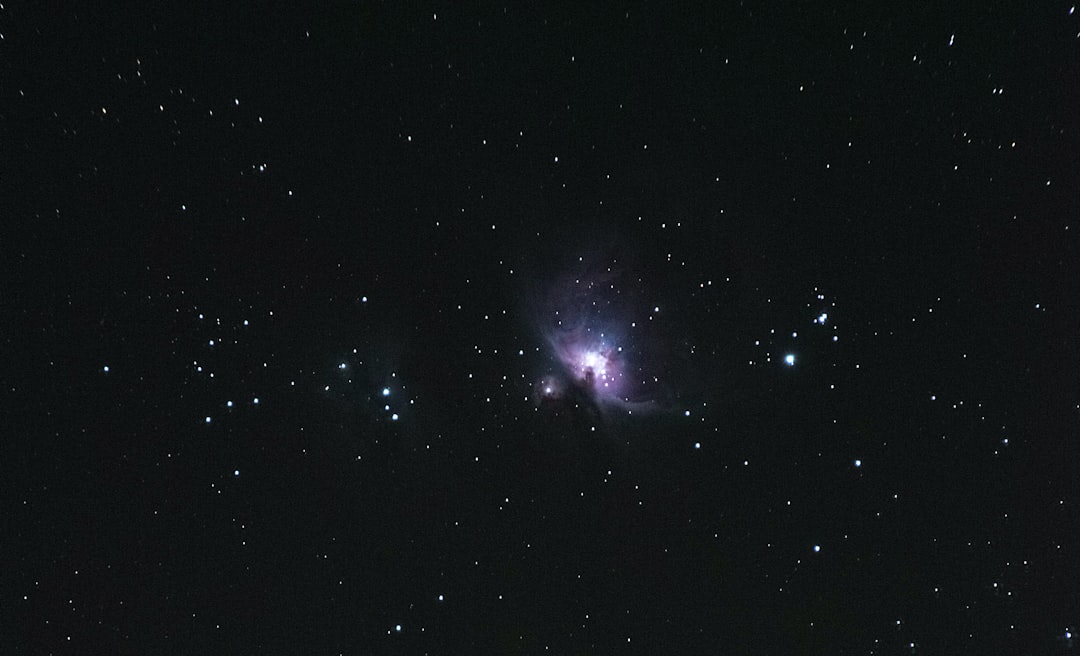
The Orion Nebula, a celestial masterpiece, has long captivated human imagination, appearing as a luminous brushstroke in the night sky. For centuries, it has been a beacon for stargazers, a fuzzy patch of light hinting at the grandeur of the cosmos. Yet, beneath its ethereal glow lies a far more complex and dynamic reality, a stellar nursery brimming with the raw ingredients of creation. This article delves into the unfolding scientific discoveries that are progressively unveiling the true colors of the Orion Nebula, moving beyond mere visual perception to comprehend its intricate physical processes and the profound implications for our understanding of star formation and the origins of planetary systems.
The Orion Nebula, designated Messier 42, is a vast cloud of ionized hydrogen gas and interstellar dust, approximately 1,344 light-years away in the constellation Orion. Its most striking feature, the Sword of Orion, is home to this celestial marvel, visible to the naked eye as a faint nebula. For much of history, its visual representation was limited to monochromatic views through early telescopes, depicting a pale, ghostly illumination. However, as astronomical instruments evolved, so too did our appreciation for its chromatic richness.
The Dominance of Hydrogen: A Red Canvas
The pervasive reddish glow that defines the Orion Nebula is primarily due to the excitation of hydrogen atoms. When ultraviolet radiation from young, hot stars within the nebula strikes hydrogen atoms, it energizes their electrons. As these electrons return to their lower energy states, they emit photons of light, predominantly in the red spectrum (specifically, the H-alpha emission line at 656.3 nanometers). This process, known as nebular emission, paints the vast expanse of the nebula with its characteristic rosy hue, a testament to the immense amounts of hydrogen present.
Ionization Zones: Where Stellar Power Ignites
The distribution of this reddish glow is not uniform. It tends to be most intense in regions closest to the powerful ultraviolet sources – the massive, young stars of the Trapezium cluster at the heart of the nebula. These stars act as cosmic furnaces, their intense radiation ionizing the surrounding gas, causing it to glow. Differences in the intensity and extent of this ionization can reveal variations in the density and composition of the gas itself, offering clues about the ongoing processes of star birth.
The Subtle Blues and Greens: Traces of Other Elements
While red dominates, closer inspection and analysis with more sensitive instruments reveal a spectrum of other colors, each telling a story of different elements and physical conditions. The subtle blues and greens are often associated with emission lines from other ionized elements present in the nebula.
Oxygen’s Contribution: The Emerald Undertones
The greenish hues, particularly prominent in some images, are often attributed to the emission of doubly ionized oxygen. Similar to hydrogen, when ultraviolet radiation strips electrons from oxygen atoms, and these electrons recombine or transition to lower energy states, they can emit light. The green emission lines from oxygen (specifically, the [O III] lines at 500.7 and 495.9 nanometers) add a distinct character to the nebula’s visual tapestry, often highlighting regions of higher temperature and density.
Sulfur’s Role: Deeper Reds and Oranges
In certain areas, deeper reds and orange tinges can be observed, which are sometimes linked to the emission from ionized sulfur. These emissions, while less prominent than hydrogen’s red, contribute to the nuanced color palette of the nebula and can indicate specific chemical environments within the interstellar cloud.
The Orion Nebula, a stunning region of star formation, has captivated astronomers and stargazers alike with its vibrant colors, which are often enhanced through long-exposure photography. However, the colors perceived by the human eye are quite different from those captured by advanced imaging techniques. For a deeper understanding of this phenomenon and to explore the fascinating contrasts between the true colors of celestial objects and our visual perception, you can read a related article at Freaky Science.
The Hidden Depths: Beyond the Visible Spectrum
The true colors of the Orion Nebula extend far beyond what the human eye can perceive. Astronomy’s ability to observe across the electromagnetic spectrum has unlocked a treasure trove of information, revealing the nebula’s thermal emissions, magnetic fields, and molecular intricacies.
Infrared Insights: The Unseen Birth of Stars
The Orion Nebula is a stellar nursery, and many of its youngest and most active star-forming regions are deeply embedded within dense clouds of dust. This dust is opaque to visible light, obscuring the nascent stars from view. However, infrared telescopes are perfectly suited to penetrate these dusty veils.
Warm Dust Reveals Protostars
In the infrared, the nebula glows with the warmth of its dust and the newly formed stars. Protostars, still accreting mass and not yet fully ignited nuclear fusion, radiate strongly in the infrared. Their characteristic glow, often appearing as bright, compact sources in infrared images, allows astronomers to identify and study these embryonic suns, providing crucial data on their mass, temperature, and accretion rates.
Molecular Clouds: The Building Blocks of Stars
Infrared observations also highlight the presence of cold molecular clouds within the nebula. These vast reservoirs of hydrogen molecules (H2), along with other molecules like carbon monoxide (CO), are the raw material from which stars are born. Their spectral signatures in the infrared reveal their composition, temperature, and density, providing a comprehensive picture of the star-forming environment.
Radio Waves: Mapping the Coldest Regions
Radio telescopes offer yet another perspective, probing the coldest and densest regions of the Orion Nebula where molecules are most prevalent. These observations are crucial for understanding the early stages of star formation, before significant heating and ionization occur.
Tracing Molecular Gas Distribution
Radio telescopes can detect the faint radio waves emitted by molecules like carbon monoxide. By mapping the distribution of these molecules, astronomers can delineate the intricate structure of the molecular clouds, identifying dense cores that are likely to collapse under gravity to form new stars. This provides a complementary view to infrared observations, revealing the raw ingredients in their unlit state.
Studying Magnetic Fields
Radio observations can also be used to study the magnetic fields within the nebula. These fields play a crucial role in influencing the collapse of molecular clouds and the formation of protostellar disks, potentially channeling material towards the forming stars and regulating the accretion process.
The Trapezium Cluster: The Heart of the Stellar Nursery
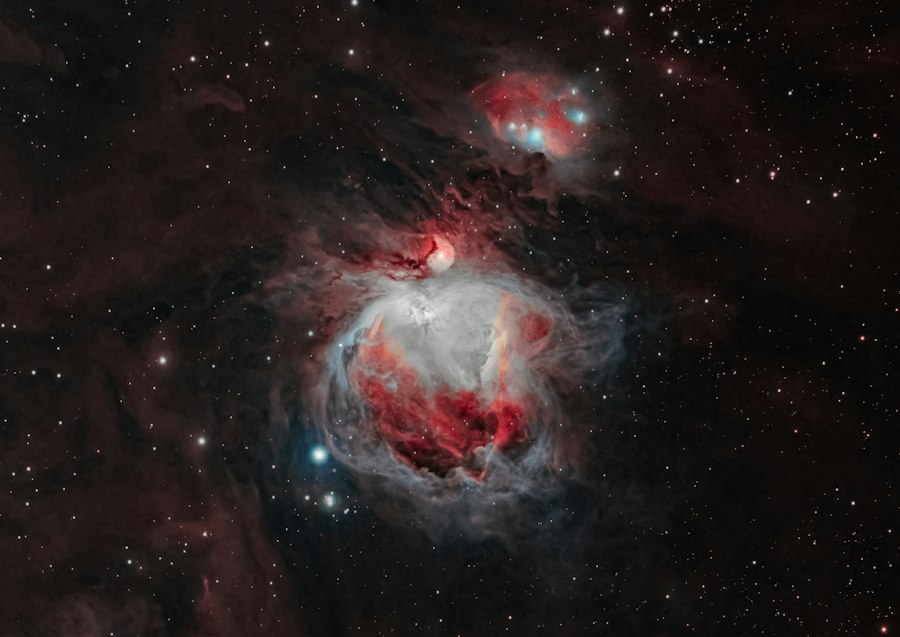
At the very core of the Orion Nebula lies the Trapezium Cluster, a group of young, massive stars that are the primary drivers of the nebula’s luminosity and activity. These stars are responsible for ionizing the surrounding gas, illuminating the nebula and shaping its structure.
The Youngest and Hottest Stars
The Trapezium Cluster consists of several O and B-type stars, the most massive and luminous types of stars known. Their incredibly hot surfaces emit vast amounts of ultraviolet radiation, powerful enough to strip electrons from atoms in the surrounding nebula, a process that generates the spectacular visible light emissions.
Energetic Radiation and Ionization Fronts
The intense ultraviolet flux from these stars creates ionization fronts that sweep through the nebula. These fronts are dynamic boundaries where the gas transitions from a neutral state to an ionized state, generating significant amounts of energy and shaping the intricate filaments and structures observed within the nebula. Studying the movement and structure of these fronts provides insights into the rate of star formation and the interaction between young stars and their natal gas.
Protoplanetary Disks: The Seeds of New Worlds
The very stars that illuminate the Orion Nebula are also in the process of forming their own planetary systems. Evidence of protoplanetary disks, the swirling disks of gas and dust from which planets accrete, has been observed around many of the young stars in the Trapezium Cluster and throughout the nebula.
Direct Observation of Forming Planets
While directly observing planets forming within these disks remains a significant challenge, astronomers are increasingly able to infer their presence and study the characteristics of these disks. Observations from the Hubble Space Telescope and ground-based observatories have revealed structures within these disks, such as gaps and rings, which are strong indicators of the gravitational influence of nascent planets.
Implications for Exoplanet Research
The study of protoplanetary disks in the Orion Nebula provides a unique laboratory for understanding the early stages of planet formation. By observing these systems in their infancy, scientists can gain invaluable insights into the processes that lead to the diversity of exoplanets observed throughout the galaxy, informing our understanding of our own solar system’s origins.
Unraveling the Complex Chemistry: The Molecular Inventory
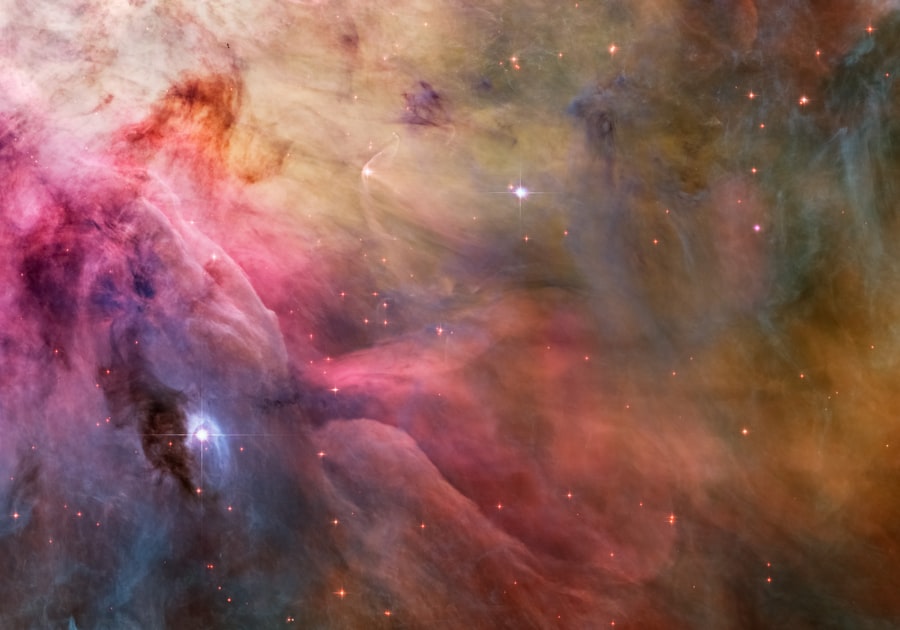
Beyond the bright emission of ionized gases, the Orion Nebula harbors a rich and complex array of molecules, particularly in its colder, denser regions. These molecules are the fundamental building blocks of stars and planets, and their study provides crucial information about the chemical evolution of the nebula.
The Prevalence of Simple Molecules
Hydrogen, of course, is the most abundant molecule, existing as diatomic hydrogen (H2) in the cold molecular clouds. Carbon monoxide (CO) is another ubiquitous molecule, serving as a vital tracer for astronomers mapping the distribution and extent of these cold clouds. Its emission at radio wavelengths is a key tool for understanding the structure and dynamics of the star-forming regions.
Deuterated Molecules: Tracers of Early Conditions
The detection of deuterated molecules, where a hydrogen atom is replaced by its heavier isotope, deuterium, offers particularly intriguing insights. The abundance of deuterium in certain molecules can act as a thermometer, reflecting the temperature conditions at the time of their formation. Studying these deuterated species helps astronomers reconstruct the thermal history of the nebula and the chemical pathways involved in molecule formation.
Complex Organic Molecules: Precursors to Life?
Perhaps the most exciting discovery in recent years has been the detection of increasingly complex organic molecules within the Orion Nebula. These molecules, containing chains of carbon atoms and often incorporating elements like oxygen, nitrogen, and sulfur, are considered precursors to the building blocks of life.
Methanol and Beyond: Astrochemical Discoveries
Molecules like methanol (CH3OH) and even more complex species have been identified in the Orion Nebula. Their presence suggests that the chemical processes occurring within interstellar clouds are capable of forming sophisticated organic compounds, even before the formation of stars and planets. This raises profound questions about the ubiquity of the ingredients for life in the universe.
The Role of Dust Grains
Interstellar dust grains are believed to play a critical role in the formation of these complex molecules. Their surfaces act as catalytic sites, facilitating chemical reactions between gas-phase atoms and molecules that would otherwise be unlikely to occur. Understanding the surface chemistry on dust grains is therefore crucial for deciphering the origin of these organic molecules.
The Orion Nebula, a stunning region of star formation, showcases a breathtaking array of colors that are often more vivid than what the human eye can perceive. To explore the fascinating differences between the actual colors captured by advanced telescopes and those visible to our eyes, you can read a related article that delves into this topic. This article provides insights into how various wavelengths of light reveal the true beauty of celestial objects, enhancing our understanding of the universe. For more information, check out this insightful piece that discusses the Orion Nebula and its vibrant hues.
The Future of Exploration: New Instruments and New Questions
| Aspect | Real Color | Human Eye Perception |
|---|---|---|
| Color | Red, green, and blue hues | Appears as a faint greenish glow |
| Details | Rich in detail and structure | Less detailed due to human eye limitations |
| Brightness | Vibrant and luminous | Appears dimmer to the human eye |
The unveiling of the Orion Nebula’s true colors is an ongoing endeavor, continuously propelled forward by advancements in astronomical technology and theoretical modeling. Future observations promise to reveal even greater detail and unlock deeper mysteries.
Next-Generation Telescopes: Sharper Vision and Broader Spectra
The advent of next-generation telescopes, both ground-based and space-borne, is poised to revolutionize our understanding of the Orion Nebula. Instruments like the James Webb Space Telescope (JWST), with its unparalleled infrared sensitivity, are already providing breathtakingly detailed images and spectral data, allowing astronomers to peer deeper into the dusty heart of the nebula and observe the earliest stages of star and planet formation with unprecedented clarity.
Unprecedented Detail in Protostellar Jets
JWST’s capabilities are revealing intricate details in protostellar jets – powerful outflows of gas and dust ejected from young stars. These jets play a crucial role in regulating the accretion of mass onto protostars and can influence the surrounding interstellar medium. Studying their structure and composition with JWST will provide critical insights into the feedback mechanisms of star formation.
Investigating the Chemistry of Exoplanet Formation
The ability of JWST to analyze the composition of protoplanetary disks in detail will be transformative for exoplanet research. By studying the chemical makeup of these disks, astronomers can gain a better understanding of the raw materials available for planet formation and the conditions that lead to the diversity of planetary systems observed.
Theoretical Modeling: Simulating Cosmic Processes
Complementing observational advances are sophisticated theoretical models that simulate the complex physical and chemical processes occurring within the Orion Nebula. These models allow scientists to test hypotheses, interpret observational data, and predict new phenomena.
Simulating Stellar Evolution and Feedback
Researchers are developing increasingly detailed simulations that model the evolution of stellar populations within nebulae like Orion, including the effects of stellar winds, supernovae, and radiation feedback on the surrounding gas. These simulations help to explain the observed structures and dynamics of the nebula.
Understanding the Formation of Planetary Systems
Theoretical models are also crucial for understanding the intricate process of planet formation within protoplanetary disks. By simulating the gravitational interactions of dust grains and gas, and the accretion of material onto planetary embryos, scientists can shed light on the formation pathways of different types of planets, from rocky terrestrial worlds to gas giants.
The Orion Nebula, once a distant and enigmatic glow, is now a vibrant and dynamic laboratory for understanding the fundamental processes that shape our universe. Each new observation, each spectral analysis, and each theoretical insight adds another layer to its ever-unfolding story, revealing not just its beautiful colors, but the very mechanisms of creation. As our tools and understanding continue to advance, the Orion Nebula will undoubtedly continue to reveal its true colors, offering profound glimpses into the origins of stars, planets, and perhaps even life itself.

The Space Photos Are Real—But Your Eyes Would See This
FAQs
What is the real color of the Orion Nebula?
The real color of the Orion Nebula is predominantly pinkish-red, with some areas appearing bluish due to the presence of ionized oxygen.
Why does the Orion Nebula appear differently to the human eye?
The human eye perceives the Orion Nebula as mostly greenish-gray due to its limited sensitivity to the faint light emitted by the nebula. The colors are also affected by the Earth’s atmosphere and light pollution.
How do scientists capture the real color of the Orion Nebula?
Scientists use specialized telescopes and cameras equipped with filters to capture the real color of the Orion Nebula. These filters help to isolate specific wavelengths of light emitted by the nebula, allowing for a more accurate representation of its true colors.
What causes the pinkish-red color of the Orion Nebula?
The pinkish-red color of the Orion Nebula is primarily caused by the presence of hydrogen gas, which emits light in the red part of the spectrum when energized by nearby stars.
Can the real color of the Orion Nebula be seen with the naked eye?
No, the real color of the Orion Nebula cannot be seen with the naked eye due to its faintness and the limitations of human vision. It requires the use of telescopes and specialized equipment to capture and observe its true colors.