
The cosmic tapestry is vast and filled with wonders, but some regions stand out for their stark emptiness. Among these cosmic deserts, the Szapudi Eridanus Supervoid, also known as the Eridanus Supervoid or the Great Void, commands particular attention. This gargantuan expanse of near-absolute nothingness, located in the constellation Eridanus, challenges our understanding of large-scale structure formation in the universe. It is a region so devoid of matter that its very existence has sparked debate and spurred new avenues of cosmological research.
The Immensity of the Void
The Szapudi Eridanus Supervoid is not merely an empty patch of sky; it is a colossal structure, estimated to span an incredible 1 billion light-years in diameter. To put this into perspective, our Milky Way galaxy is a mere 100,000 light-years across. This supervoid is a gulf between the cosmic web’s filaments, those vast strands of galaxies and dark matter that crisscross the universe. It represents a significant underdensity of matter, a region where the expected number of galaxies and galaxy clusters is dramatically lower. The term “supervoid” itself signifies its immense scale, dwarfing even smaller voids that are common features in the cosmic landscape. Its discovery and subsequent study have been crucial in refining our models of the universe’s evolution, pushing the boundaries of what was previously thought possible in terms of cosmic structure.
Pinpointing the Cosmic Expanse
The initial detection of the Szapudi Eridanus Supervoid can be attributed to the work of cosmologist István Szapudi and his colleagues in the early 2000s. They utilized data from various astronomical surveys, meticulously mapping the distribution of galaxies and attempting to understand the large-scale structure of the universe. Their research, employing techniques that analyzed the subtle temperature fluctuations in the Cosmic Microwave Background (CMB) radiation, revealed an unexpected anomaly. The CMB, the afterglow of the Big Bang, carries imprints of the early universe. While most of the CMB exhibits a remarkably uniform temperature, there are tiny variations that correspond to the seeds of future structure. The Szapudi Eridanus Supervoid, however, appeared as a region of subtly colder CMB temperature than expected, suggesting a deficit of matter at that location. This “cold spot” in the CMB, while initially perplexing, became a key indicator of the supervoid’s presence. The statistical significance of this underdensity, particularly when combined with galaxy distribution data, solidified its identification as a major cosmic feature.
The Definition of Emptiness
Defining “emptiness” in the context of a supervoid requires careful consideration. It does not mean that the Szapudi Eridanus Supervoid is entirely devoid of matter. Instead, it represents a region with significantly lower density than the average for the universe. Galaxies and galaxy clusters are the luminous markers of cosmic structure, and their scarcity within this supervoid is profound. While the average density of the universe is estimated to be around 4.15 × 10⁻³¹ grams per cubic centimeter, the density within the Szapudi Eridanus Supervoid is believed to be orders of magnitude lower. This means that the distance between any two galaxies within this region is much larger than what would be found in more populated areas of the cosmos. Even the elusive dark matter, which constitutes the vast majority of matter in the universe, is present in lower concentrations here, though it is far more difficult to directly observe. The void is not a perfect vacuum but a cosmic rarity, a profound thinning of the cosmic web.
The Szapudi Eridanus Supervoid is a fascinating topic in cosmology, representing one of the largest known voids in the universe. For those interested in exploring more about cosmic structures and their implications for our understanding of the universe, a related article can be found at Freaky Science, which delves into various cosmic phenomena and their significance in the field of astrophysics.
Formation Theories and Challenges

The existence of such a colossal void presents a significant challenge to the standard cosmological model, the Lambda-CDM model, which describes a universe dominated by dark energy and cold dark matter. While this model successfully explains many observed features of the universe, the formation of a supervoid of this magnitude requires careful theoretical consideration. Cosmologists have proposed various mechanisms that could lead to the formation of such a vast expanse of emptiness, and ongoing research aims to test these hypotheses against observational data. The sheer scale of the Szapudi Eridanus Supervoid suggests that it might have formed over billions of years through a process of gravitational repulsion and cosmic inflation, but the precise details remain a subject of active investigation.
The Cosmic Web’s Influence
The prevailing theory for the formation of large-scale structures in the universe involves the gradual accretion of matter onto gravitational seeds laid down in the early universe. Over time, matter clumps together to form filaments, sheets, and clusters, while the regions between these structures become less dense, forming voids. The Szapudi Eridanus Supervoid is thought to be a product of this same process, but on an exceptionally grand scale. It is believed to have formed in a region where matter was initially slightly less dense than average. Over cosmic history, gravity has pulled matter away from this region and towards the surrounding denser filaments and clusters. This continuous outward flow of matter effectively drains the central area, creating and expanding the void. The surrounding denser structures, in turn, grow more massive and prominent due to this inward pull of matter. Therefore, the supervoid is not a primordial emptiness but rather a consequence of the hierarchical growth of structure, where less dense regions become progressively emptier.
Alternative Explanations and Anomalies
While the standard model of structure formation can account for the existence of voids, the sheer size and apparent emptiness of the Szapudi Eridanus Supervoid have led some researchers to explore alternative explanations. One such idea, though highly speculative, posits that the void might be a signature of exotic physics beyond the standard model. For instance, some theories suggest that the void could be a consequence of cosmic inflation, the period of rapid expansion in the very early universe. If there were regions during inflation that experienced slightly different expansion rates, it could lead to large-scale underdensities. Another avenue of inquiry involves the nature of dark energy. While dark energy is generally understood to be a uniform force driving the accelerated expansion of the universe, some theoretical models propose that its density might not be perfectly constant across all regions. Variations in dark energy density could potentially influence the formation and expansion of voids. Furthermore, the “cold spot” observed in the CMB associated with the supervoid has also fueled speculation. While the standard explanation attributes this coldness to the supervoid itself, some have pondered if it could be an artifact of the measurement or, more controversially, a hint of a colliding bubble universe or other exotic phenomena. However, these alternative explanations face significant challenges in terms of observational evidence and theoretical consistency.
Observational Evidence and Measurement
The existence and properties of the Szapudi Eridanus Supervoid are not purely theoretical constructs; they are supported by a wealth of observational data gathered from various telescopes and astronomical surveys. Astronomers have employed a range of techniques to map the distribution of matter and measure the extent of this cosmic anomaly. These observations, while challenging due to the vast distances and faint signals involved, have provided compelling evidence for the supervoid and continue to refine our understanding of its characteristics.
Mapping the Cosmic Landscape
The primary method for identifying and studying the Szapudi Eridanus Supervoid involves mapping the distribution of galaxies and other luminous matter. Astronomers conduct large-scale sky surveys, cataloging the positions and distances of millions of galaxies. By analyzing these catalogs, they can create three-dimensional maps of the universe, revealing the filamentary structure of the cosmic web and the voids that lie between them. The Szapudi Eridanus Supervoid stands out in these maps as a region with a significantly lower density of galaxies compared to its surroundings. This lower density is not a uniform absence of galaxies but rather a dramatic thinning of the cosmic web, with galaxies spaced much farther apart than in typical regions. Sophisticated statistical analyses are employed to quantify this underdensity and determine the boundaries of the void.
The CMB Cold Spot Connection
A crucial piece of evidence for the Szapudi Eridanus Supervoid comes from observations of the Cosmic Microwave Background (CMB). The CMB is a faint glow of radiation that permeates the universe, originating from the epoch of recombination, about 380,000 years after the Big Bang. Tiny temperature fluctuations in the CMB are the seeds of all the structure we see in the universe today. As light from the CMB travels through vast cosmic structures, it can interact with gravitational fields. Regions of higher density exert a stronger gravitational pull, causing CMB photons to lose energy as they climb out, resulting in a slightly cooler spot on the sky. Conversely, regions of lower density, like supervoids, allow CMB photons to travel with less resistance, leading to a slightly warmer spot. However, the Szapudi Eridanus Supervoid is associated with a cold spot in the CMB. This phenomenon, known as the Integrated Sachs-Wolfe effect, suggests that as CMB photons pass through the void, they gain energy as they fall into the nascent gravitational potential of the surrounding supercluster, and then lose energy as they climb out. However, the void’s gravitational pull is so weak that the photons end up slightly cooler. This correlation between the observed CMB cold spot and the predicted underdensity of matter has been a significant factor in confirming the existence and scale of the Szapudi Eridanus Supervoid.
Implications for Cosmology
The existence of the Szapudi Eridanus Supervoid has profound implications for our understanding of cosmology. It challenges the uniformity of the universe on the largest scales and prompts cosmologists to refine their models and consider new possibilities. The study of this supervoid provides a unique laboratory for testing fundamental cosmological principles and pushing the boundaries of our knowledge.
Testing the Cosmological Principle
The Cosmological Principle is a fundamental assumption in modern cosmology, stating that the universe is homogeneous and isotropic on large scales. This means that the universe looks roughly the same everywhere and in every direction. While the Cosmological Principle is generally well-supported by observations on sufficiently large scales, the Szapudi Eridanus Supervoid, with its extreme underdensity, raises questions about the uniformity of structure. If such a massive void can exist, it implies that the universe might exhibit larger fluctuations in density than predicted by some interpretations of the principle. Cosmologists are actively investigating whether the observed properties of the supervoid are consistent with the standard Lambda-CDM model, which incorporates the Cosmological Principle, or if they necessitate modifications to our understanding of the universe’s early conditions or the nature of dark energy. The existence of the supervoid serves as a crucial test case for the robustness of these foundational assumptions.
Refining Structure Formation Models
The Szapudi Eridanus Supervoid provides a valuable case study for understanding the processes of large-scale structure formation. The way matter clumps together under gravity over cosmic timescales dictates the distribution of galaxies and voids we observe today. The sheer scale of this supervoid suggests that the processes driving structure formation might be more varied or operate more effectively in certain regions than previously assumed. By studying the precise dimensions, depth, and surrounding structures of the supervoid, cosmologists can refine their simulations of cosmic evolution. These simulations, which model the interplay of gravity, dark matter, dark energy, and baryonic matter, can be adjusted to better reproduce the observed features of the supervoid. This iterative process of observation and simulation helps to hone our understanding of the fundamental forces and components that shape the universe’s grand architecture. It also provides insights into the initial conditions of the universe, as the existence of such a large void implies a specific distribution of matter in the very early cosmos.
The Szapudi Eridanus Supervoid is a fascinating topic in cosmology, and for those interested in exploring related concepts, an insightful article can be found on the subject of cosmic voids and their implications for our understanding of the universe. This article delves into the nature of these vast empty regions in space and how they challenge existing theories about the distribution of matter. To learn more about these intriguing phenomena, you can read the full article here.
The Future of Void Research
| Metric | Value | Description |
|---|---|---|
| Name | Szapudi Eridanus Supervoid | Official name of the cosmic supervoid |
| Location | Eridanus Constellation | Region of the sky where the supervoid is located |
| Approximate Diameter | 1.8 billion light years | Estimated size across the supervoid |
| Redshift | z ≈ 0.14 | Redshift value indicating distance |
| Density Contrast | δ ≈ -0.3 | Relative underdensity compared to average cosmic density |
| Discovery Year | 2015 | Year when the supervoid was characterized by Szapudi et al. |
| Associated Phenomenon | Cold Spot in Cosmic Microwave Background | Possible link to the CMB Cold Spot anomaly |
The Szapudi Eridanus Supervoid is not just a curiosity; it is a frontier for ongoing cosmological research. Future observations and theoretical advancements will undoubtedly shed more light on its formation, evolution, and implications. The study of voids, in general, is becoming an increasingly important area of cosmology, as they offer a unique perspective on the universe’s expansion and the distribution of matter.
Next-Generation Telescopes and Surveys
The ongoing development of advanced astronomical instruments promises to revolutionize our ability to study cosmic voids. Next-generation telescopes, such as the James Webb Space Telescope and future ground-based observatories like the Extremely Large Telescope, will provide unprecedented sensitivity and resolution. These instruments will enable astronomers to map the distribution of galaxies in and around the Szapudi Eridanus Supervoid with even greater precision, allowing for more detailed studies of its internal structure and the tenuous population of galaxies it might contain. Furthermore, advancements in CMB observation technologies will allow for more detailed mapping of the CMB cold spot associated with the supervoid, potentially revealing subtle anisotropies that can provide clues about its formation history. Large-scale spectroscopic surveys, designed to measure the redshift (and thus distance) of millions of galaxies, will be crucial for constructing detailed three-dimensional maps of the universe and identifying other significant voids and their connections to the cosmic web.
The Role of Numerical Simulations
The role of sophisticated numerical simulations in understanding cosmic voids will continue to grow. Cosmologists use powerful supercomputers to simulate the evolution of the universe from the Big Bang to the present day. These simulations allow them to explore a wide range of cosmological parameters and initial conditions, helping them to determine which scenarios best explain the observed features of the universe, including the existence and properties of supervoids like Szapudi Eridanus. As computational power increases, these simulations will become more detailed and realistic, incorporating more complex physics and allowing for direct comparisons with observational data. This interplay between observation and simulation is essential for testing and refining our cosmological models, pushing the boundaries of our knowledge about the universe’s vast and mysterious emptiness. The insights gained from studying this colossal void will undoubtedly contribute to a more complete picture of the cosmos and its grand design.
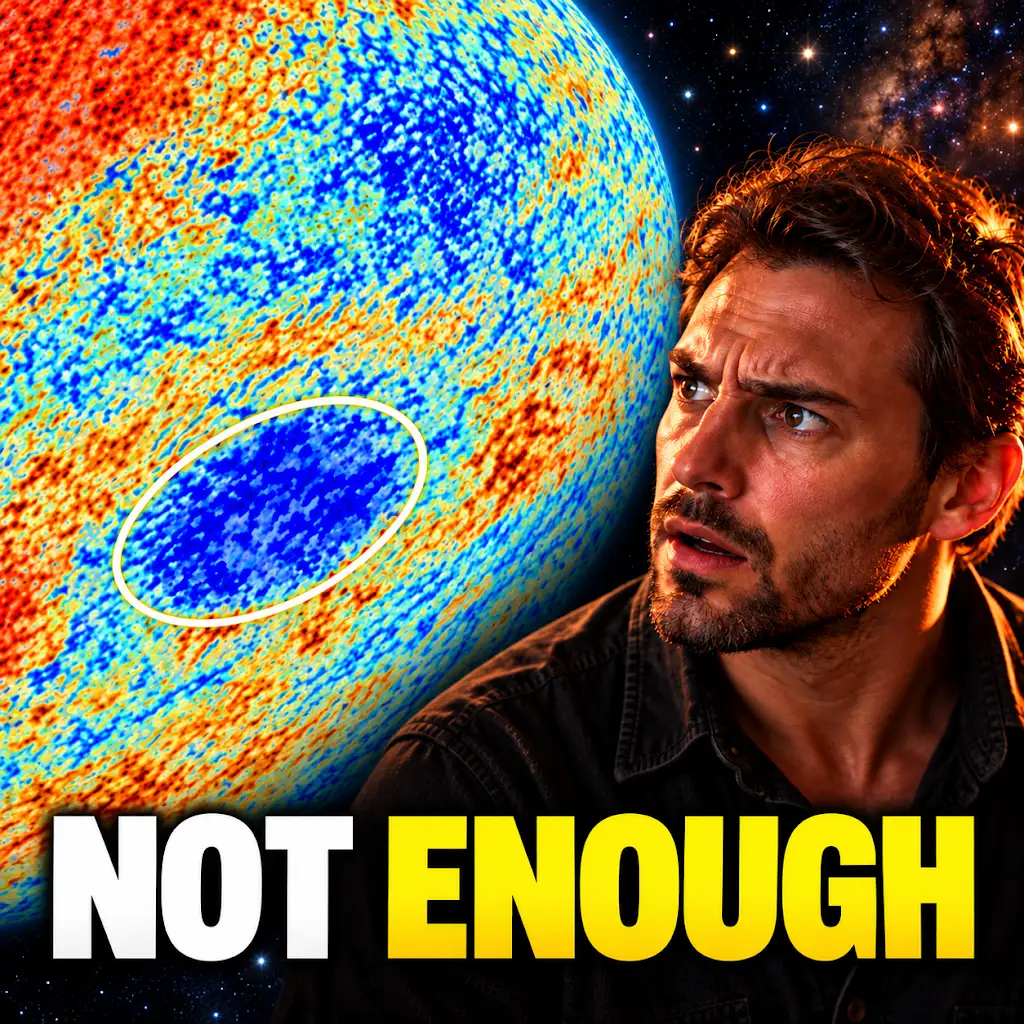
The Universe’s Cold Spot Has an Explanation. It’s Not Enough.
FAQs
What is the Szapudi Eridanus Supervoid?
The Szapudi Eridanus Supervoid is one of the largest known voids in the universe, spanning about 1.8 billion light-years across.
How was the Szapudi Eridanus Supervoid discovered?
The supervoid was discovered by István Szapudi and his team of researchers using data from the Sloan Digital Sky Survey.
What is the significance of the Szapudi Eridanus Supervoid?
The supervoid is significant because it challenges our current understanding of the distribution of matter in the universe and raises questions about the nature of dark energy.
How does the Szapudi Eridanus Supervoid affect the cosmic microwave background radiation?
The supervoid has been found to have a significant effect on the cosmic microwave background radiation, causing a cold spot in the radiation that is larger and colder than expected.
What are some theories about the formation of the Szapudi Eridanus Supervoid?
Some theories suggest that the supervoid may have been formed by the gravitational pull of surrounding galaxy clusters, while others propose that it could be a remnant of a collision between two voids.