You’ve probably seen them in sleek modern kitchens, or perhaps a friend boasts about their lightning-fast cooking times. Induction cooktops are no longer a niche novelty; they’re a sophisticated culinary tool that’s rapidly gaining popularity. But what exactly makes these cooktops so different, and frankly, so much better than their traditional counterparts? You’re about to dive into the captivating science behind induction, uncovering the “how” and “why” that transforms raw ingredients into delicious meals with remarkable efficiency and precision.
Forget the glowing red coils of your old electric stovetop or the flickering flames of gas. Induction operates on an entirely different principle, one that relies on the fundamental laws of electromagnetism. It’s not about heating the cooktop surface itself and then transferring that heat to your cookware. Instead, induction directly heats the pot or pan. This might sound like a subtle difference, but it’s the key to induction’s speed, efficiency, and superior control.
Electromagnetic Induction: The Core Principle
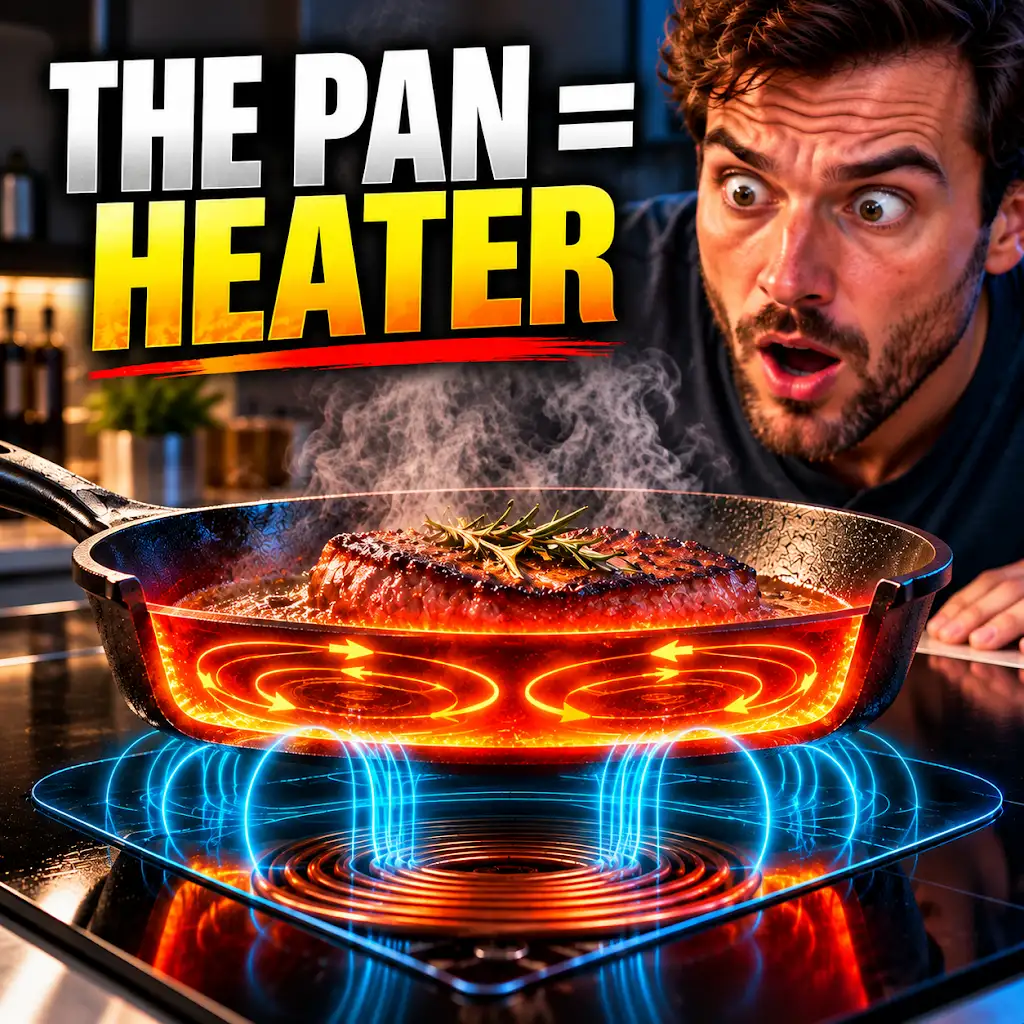
At its heart, induction cooking is a direct application of Faraday’s Law of Electromagnetic Induction. This law states that a changing magnetic field will induce an electric current in a nearby conductor. For your induction cooktop, this means a specially designed electromagnetic coil sits beneath the smooth glass-ceramic surface. When you turn on the cooktop and place a compatible pot or pan on it, an alternating electric current flows through this coil. This alternating current generates a fluctuating magnetic field.
The Role of the Cookware: Ferromagnetic Essentials
This is where your cookware plays a crucial, non-negotiable role. For induction to work, your pots and pans must be made of or contain ferromagnetic material. Think cast iron, most stainless steel, and enameled cast iron. These materials are strongly attracted to magnets. When the fluctuating magnetic field from the cooktop’s coil encounters the ferromagnetic base of your cookware, it causes the electrons within the metal to move rapidly back and forth. This rapid movement of electrons is, by definition, an electric current.
Eddy Currents and Hysteresis: Generating the Heat
This induced electric current within the cookware isn’t just a passive flow; it’s what generates heat. Two primary mechanisms are at play here:
- Eddy Currents: As the magnetic field oscillates, it induces circulating currents within the base of your cookware. These are known as eddy currents. Imagine them as tiny whirlpools of electricity swirling within the metal. As these currents flow through the resistance of the metal, they generate heat through a phenomenon called Joule heating, similar to how a toaster works. The more resistance the metal has, and the stronger the induced current, the more heat is generated.
- Hysteresis Losses: In ferromagnetic materials, the rapid reversal of the magnetic field causes the magnetic domains within the metal to reorient themselves. This reorientation process requires energy, and this energy is dissipated as heat. While eddy currents are generally the dominant source of heat, hysteresis losses contribute to the overall warming of the cookware, especially in materials with higher magnetic susceptibility.
Direct Heat Transfer: The Advantage
The beauty of this process is that the heat is generated directly within the base of your cookware. The glass-ceramic surface of the cooktop itself remains relatively cool, only getting warm from residual heat transferred from the pot or pan. This direct heat transfer is what leads to induction’s incredible responsiveness and efficiency.
Induction cooktops are fascinating devices that utilize electromagnetic fields to heat pots and pans directly, making them more efficient than traditional cooking methods. For a deeper understanding of the science behind induction cooking and its advantages, you can explore a related article that delves into the principles of electromagnetic induction and its applications in modern kitchens. To learn more, visit Freaky Science.
Efficiency and Energy Savings: Cooking Smarter, Not Harder
One of the most compelling arguments for induction cooktops is their remarkable energy efficiency. Compared to their gas and conventional electric counterparts, induction systems can significantly reduce your energy consumption, leading to lower utility bills and a smaller environmental footprint. This efficiency stems directly from the scientific principles at play.
Minimal Heat Loss to the Environment
Traditional stovetops, whether gas or electric coil, are inherently inefficient because they lose a substantial amount of heat to the surrounding air. With gas, flames lick up the sides of pots, heating the air rather than just the food. Electric coils also radiate heat outwards, warming your kitchen. Induction, however, focuses the energy precisely where it’s needed: directly into the base of your cookware. The glass-ceramic surface acts as an insulator, preventing most of the heat from escaping into the atmosphere. This means more of the energy you’re using is actually going into cooking your food.
Faster Heating Times Mean Less Energy Used Overall
Because induction heats the cookware so directly and efficiently, it boils water and heats food dramatically faster than other methods. While a traditional electric or gas burner might take several minutes to bring a pot of water to a rolling boil, an induction cooktop can often do it in half the time, or even less. This reduced cooking time translates directly into less overall energy consumption for a given task. You’re not just getting to your meal faster; you’re using less energy to get there.
Precise Temperature Control for Optimal Cooking
The efficiency of induction isn’t just about saving energy; it’s also about precision. The ability to generate heat directly within the cookware allows for incredibly fine-tuned temperature control. This precision prevents overcooking and wasted energy, ensuring that your food is cooked perfectly without burning or simmering unnecessarily. Imagine searing a delicate piece of fish without scorching it, or gently melting chocolate without it seizing up. Induction makes these culinary feats achievable with ease.
Precision and Control: The Chef’s Secret Weapon

For anyone who enjoys cooking, the level of control offered by induction cooktops is a game-changer. This precision goes far beyond simply adjusting a dial from low to high. Induction offers a nuanced and responsive way to manage heat, empowering you to execute complex recipes with confidence and consistently achieve superior results.
Instantaneous Heat Response
This is perhaps the most noticeable benefit of induction cooking. When you adjust the power setting on an induction cooktop, the change in heat output to your cookware is virtually instantaneous. Unlike traditional electric cooktops that require time for a coil to heat up or cool down, or gas burners that have a slight lag in flame adjustment, induction responds immediately. Turn the dial down, and the heat reduces instantly. Turn it up, and the heat increases without delay. This rapid responsiveness allows you to make subtle adjustments on the fly, preventing overcooking and ensuring perfect results every time.
A Wide Range of Power Settings
Induction cooktops typically offer a much wider range of power settings than their conventional counterparts. You might see settings numbered from 1 to 10, or even a more granular range. This allows for incredibly precise simmering at very low temperatures, perfect for delicate sauces or slow-cooked stews, as well as rapid, high-heat searing for achieving that perfect crust on meats and vegetables. This versatility means you can tackle a vast array of culinary techniques with just one appliance.
Programmable Features for Consistency
Many modern induction cooktops come equipped with programmable features that further enhance control and consistency. These might include:
- Boil-to-Simmer Functions: Automatically reduces heat after reaching a boil, preventing overflow and maintaining a gentle simmer.
- Melt Functions: Provides a very low, consistent heat perfect for melting butter or chocolate without scorching.
- Temperature Hold: Maintains a specific temperature for extended periods, ideal for keeping food warm without overcooking.
These features are not just gimmicks; they are built on the underlying principle of precise heat generation and control, allowing you to replicate successful dishes with confidence.
Safety Features: Peace of Mind for Your Kitchen

Beyond its performance benefits, induction cooking also offers significant advantages in terms of safety. The scientific principles at play contribute to a safer kitchen environment, reducing the risk of burns and accidental fires.
The Cool-to-Touch Surface
As mentioned earlier, the glass-ceramic surface of an induction cooktop remains relatively cool during operation. This is because the heat is generated directly within the cookware. While the surface will eventually warm up from residual heat transfer, it will never reach the extreme temperatures of a red-hot electric coil or an open gas flame. This significantly reduces the risk of accidental burns for you, your children, or pets. You can accidentally touch the surface without immediate, severe injury, offering a valuable buffer of safety.
Automatic Pan Detection
Induction cooktops are designed to only activate when a compatible ferromagnetic pot or pan is placed on the surface. If you accidentally turn on the cooktop without cookware, or if the cookware is removed during cooking, the induction element will automatically shut off. This prevents unnecessary energy waste and significantly reduces the risk of fire hazards. You won’t accidentally leave a burner on with nothing on it, a common concern with traditional cooktops.
Spill Detection and Auto Shut-Off
Many induction models incorporate sensors that can detect spills or boiling over. If liquid makes contact with the control panel or if the cooktop detects a potential hazard, it can automatically shut off. This feature provides an additional layer of safety, preventing minor spills from becoming major problems and reducing the risk of electrical issues or fires.
No Open Flames or Exposed Heating Elements
Unlike gas cooktops with open flames or electric coil cooktops with exposed heating elements, induction offers a completely enclosed and contained cooking surface. This eliminates the risk of flammable materials coming into contact with a heat source, reducing the likelihood of accidental fires. The smooth, flat surface also makes cleaning a breeze, further contributing to a safe and hygienic kitchen environment.
Induction cooktops have gained popularity for their efficiency and precision in cooking, and if you’re curious about the science behind this technology, you might find a related article on the principles of electromagnetic induction quite enlightening. This article delves into how induction cooktops utilize magnetic fields to heat cookware directly, making them faster and safer than traditional methods. For more insights, you can read the full article here.
Induction Cookware: The Essential Partnership
| Parameter | Description | Typical Value / Range | Unit |
|---|---|---|---|
| Operating Frequency | Frequency of the alternating current used to generate the magnetic field | 20,000 – 50,000 | Hz (Hertz) |
| Power Output | Maximum power delivered to the cookware | 1000 – 3500 | Watts |
| Magnetic Field Strength | Intensity of the magnetic field generated by the induction coil | 10 – 100 | mT (millitesla) |
| Cookware Material | Type of material compatible with induction heating | Ferromagnetic metals (e.g., cast iron, stainless steel) | N/A |
| Heating Efficiency | Percentage of electrical energy converted to heat in the cookware | 80 – 90 | % |
| Induced Eddy Currents | Electric currents generated in the cookware by changing magnetic field | Depends on cookware size and material | Amperes (A) |
| Skin Depth | Depth at which the magnetic field penetrates the cookware material | 0.1 – 1 | mm (millimeters) |
| Temperature Range | Typical cooking temperature achievable on induction cooktops | 100 – 300 | °C (Celsius) |
You can’t just grab any old pot and expect it to work on an induction cooktop. The specialized nature of induction cooking necessitates a specific type of cookware. Understanding these requirements is key to unlocking the full potential of your induction range.
Ferromagnetic Properties: The Golden Rule
The absolute most crucial requirement for induction cookware is that its base must be ferromagnetic. This means it needs to be attracted to a magnet. You can easily test your existing cookware by holding a magnet to the bottom. If it sticks firmly, it’s likely compatible. Common materials that fit this bill include:
- Cast Iron: A classic choice, cast iron is an excellent conductor and retains heat beautifully. Seasoned cast iron is a staple for many cooks.
- Enameled Cast Iron: Offers the same heat retention of cast iron with a non-reactive enamel coating, making it easier to clean and preventing metallic tastes.
- Stainless Steel (with a magnetic base): Not all stainless steel is magnetic. Look for stainless steel cookware that specifically states it’s induction-compatible. Often, these have a layered construction with a ferromagnetic core.
Materials to Avoid
Conversely, some common cookware materials are not compatible with induction cooktops:
- Pure Copper and Aluminum: While excellent heat conductors, pure copper and aluminum are not ferromagnetic and will not be heated by induction.
- Glass and Ceramic Cookware: Unless specifically designed with a ferromagnetic layer, these materials will not work.
- Non-Magnetic Stainless Steel: As mentioned, some stainless steel alloys lack the magnetic properties required for induction.
Types of Compatible Cookware Designs
Beyond the material, the design of your cookware also plays a role:
- Flat Bottoms: Induction works best with flat-bottomed cookware. This ensures maximum contact with the induction element, leading to the most efficient heat transfer. Warped or rounded bottoms can reduce efficiency and lead to uneven heating.
- Layered Construction: Many induction-compatible pots and pans feature a layered construction. This often involves an outer layer of stainless steel, a core of aluminum or copper for even heat distribution, and a ferromagnetic base layer that interacts with the induction element.
What About Adapters?
You might see induction cooktop adapters on the market – flat metal discs that you place between your cooktop and non-compatible cookware. While these can technically make non-magnetic pots work, they are generally not recommended for optimal performance. The adapter itself becomes the heated element, and it significantly reduces the efficiency and responsiveness of your induction cooktop. You lose the direct heating advantage that makes induction so special. It’s generally best to invest in cookware that is designed specifically for induction.
By understanding the science behind induction cooktops and the specific requirements of induction cookware, you can unlock a world of faster, more efficient, safer, and more precise cooking. You’re not just buying a new appliance; you’re embracing a smarter, more advanced way to prepare your meals.
The Pan Is the Heater: How Induction Cooking Really Works
FAQs
What is an induction cooktop?
An induction cooktop is a type of stove that uses electromagnetic energy to heat cookware directly, without the need for a traditional heating element like gas or electric coils.
How does an induction cooktop work?
An induction cooktop generates an electromagnetic field that creates heat directly in the cookware placed on top of it. The cookware must be made of a magnetic material, such as cast iron or stainless steel, for the heat to be produced.
What are the advantages of using an induction cooktop?
Some advantages of using an induction cooktop include faster heating times, precise temperature control, energy efficiency, and safety features like automatic shut-off when cookware is removed.
Are there any limitations to using an induction cooktop?
One limitation of using an induction cooktop is that not all cookware is compatible with induction technology. Cookware must be magnetic and have a flat bottom to make proper contact with the cooktop surface.
Is an induction cooktop safe to use?
Yes, induction cooktops are generally considered safe to use. They do not produce an open flame, and the cooktop surface remains cool to the touch during cooking, reducing the risk of burns.