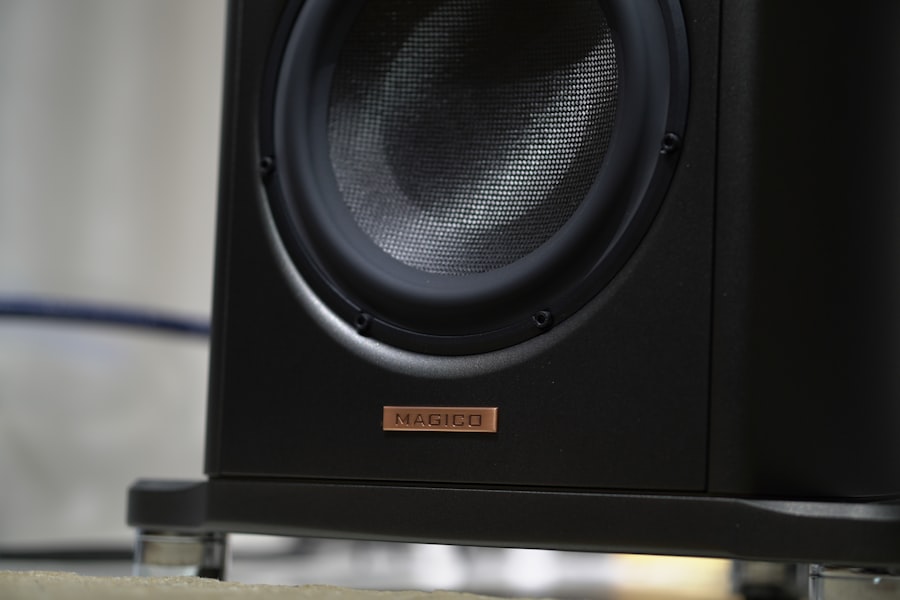
The history of high fidelity music represents a significant evolution in audio technology and listening practices over the past century. In the early 1900s, music consumption was limited to live performances or low-quality recordings that lacked clarity and dynamic range. The introduction of vinyl records during the 1940s represented a major advancement, providing improved sound reproduction that allowed people to listen to music at home with greater fidelity.
Vinyl records became associated with high-quality audio due to their ability to capture the warmth and richness of sound. Subsequent technological developments continued to improve audio quality. The 1960s and 1970s introduced stereo sound technology, which created a spatial dimension to music by using multiple channels.
This period also saw the emergence of audiophiles—enthusiasts who invested in high-quality equipment and sought out superior recordings. The 1980s brought cassette tapes and compact discs, which offered improved convenience and portability while maintaining sound quality standards. Each technological innovation in audio reproduction brought listeners closer to hearing music as originally recorded, establishing the foundation for modern high fidelity audio standards.
Experience the clarity and depth of
The impact of high fidelity on your music listening experience cannot be overstated. When you immerse yourself in a high fidelity environment, you are not just hearing music; you are experiencing it in a way that engages your senses and emotions. The clarity and depth provided by high fidelity systems allow you to connect with the music on a more profound level.
You may find yourself discovering nuances in your favorite songs that you never noticed before—subtle harmonies, intricate rhythms, and even the ambient sounds that contribute to the overall atmosphere. Moreover, high fidelity music encourages active listening rather than passive consumption. When you invest in quality audio equipment and recordings, you are more likely to pay attention to the details and appreciate the artistry involved in music production.
This heightened awareness can lead to a deeper emotional connection with the music, transforming your listening sessions into immersive experiences. Whether you’re enjoying a quiet evening at home or hosting a gathering with friends, high fidelity music elevates the atmosphere and fosters a shared appreciation for sound.
Debunking Myths Surrounding High Fidelity Music
Despite its growing popularity, several myths surrounding high fidelity music persist. One common misconception is that high fidelity systems are only for audiophiles or those with deep pockets. While it’s true that some high-end equipment can be expensive, there are many affordable options available that still deliver impressive sound quality.
You don’t need to break the bank to enjoy high fidelity music; with careful research and consideration, you can find equipment that fits your budget without compromising on audio performance. Another myth is that high fidelity is only relevant for certain genres of music. In reality, any genre can benefit from high fidelity reproduction.
Whether you’re a fan of classical symphonies or contemporary pop hits, high fidelity systems can enhance your listening experience by revealing layers of sound that standard audio systems might miss. By debunking these myths, you open yourself up to a world of possibilities in music enjoyment—one where quality takes precedence over quantity.
Exploring the Role of High Fidelity in Music Production
Aspect Description Metric / Data Notes Frequency Response Range of audio frequencies reproduced 20 Hz – 20 kHz (typical human hearing range) High fidelity systems aim to cover this full range accurately Signal-to-Noise Ratio (SNR) Ratio of desired signal to background noise 90 dB or higher for high fidelity Higher SNR means clearer sound with less noise Total Harmonic Distortion (THD) Amount of distortion introduced by audio equipment Less than 0.1% for high fidelity Lower THD indicates more accurate sound reproduction Dynamic Range Difference between the quietest and loudest sounds 90 dB or more High dynamic range allows for more expressive music playback Bit Depth (Digital Audio) Number of bits used per audio sample 16-bit (CD quality), 24-bit (studio quality) Higher bit depth reduces quantization noise Sampling Rate (Digital Audio) Number of samples per second 44.1 kHz (CD), 96 kHz or higher (high-res audio) Higher sampling rates can capture more detail Perceived Audio Quality Subjective listener experience Varies widely; influenced by equipment, environment, and listener Not all listeners can distinguish high fidelity differences Equipment Cost vs. Quality Relationship between price and audio fidelity High-end systems can cost thousands, but diminishing returns apply Expensive gear doesn’t always guarantee better perceived sound Source Material Quality Quality of original recording Lossless formats (FLAC, WAV) preferred over compressed (MP3) High fidelity depends heavily on source quality High fidelity plays a crucial role in music production, influencing how artists create and engineers mix their work. When you consider the production process, it becomes clear that achieving high fidelity requires meticulous attention to detail at every stage—from recording to mastering. Producers often use high-quality microphones and recording equipment to capture sound accurately, ensuring that every note and nuance is preserved.
This commitment to quality is essential for delivering an authentic listening experience. In addition to recording techniques, mixing and mastering are vital components of high fidelity music production. During mixing, engineers balance various elements such as vocals, instruments, and effects to create a cohesive sound.
Mastering involves fine-tuning the final mix to ensure it translates well across different playback systems. As you explore this process further, you’ll appreciate how high fidelity standards guide producers in their quest for sonic excellence, ultimately resulting in recordings that resonate with listeners on multiple levels.
How High Fidelity Technology has Revolutionized Music Consumption
The advent of high fidelity technology has revolutionized how you consume music today. Gone are the days when you had to rely solely on physical media; digital streaming services have made it easier than ever to access vast libraries of music at your fingertips. Many of these platforms now offer high-resolution audio options that cater to discerning listeners who seek superior sound quality.
With just a few clicks, you can explore an extensive catalog of songs while enjoying the benefits of high fidelity playback. Moreover, advancements in wireless technology have made it possible for you to enjoy high fidelity music without being tethered to your devices. Bluetooth speakers and headphones have come a long way in terms of sound quality, allowing you to experience rich audio even while on the go.
This convenience means that you can immerse yourself in your favorite tracks wherever life takes you—whether you’re commuting, exercising, or simply relaxing at home.
The Science Behind High Fidelity Sound
Understanding the science behind high fidelity sound can deepen your appreciation for this audio experience. At its core, high fidelity relies on principles of acoustics and psychoacoustics—the study of how humans perceive sound. Factors such as frequency response and dynamic range play significant roles in determining how accurately a system reproduces audio signals.
When you listen to music through a high fidelity system, you’re engaging with sound waves that have been meticulously crafted to evoke specific emotions and reactions. One key aspect of high fidelity sound is its ability to reproduce frequencies across the audible spectrum (20 Hz to 20 kHz) without distortion or loss of detail. This range allows you to hear everything from deep bass notes that resonate in your chest to crisp treble notes that sparkle in the air.
Additionally, dynamic range—the difference between the quietest and loudest sounds—enhances your listening experience by providing contrast and depth. By understanding these scientific principles, you can better appreciate why high fidelity systems deliver such an immersive audio experience.
When comparing high fidelity audio to standard audio systems, several key differences emerge that significantly impact your listening experience. One major distinction lies in sound quality; high fidelity systems are designed to reproduce audio with greater accuracy and detail than standard systems. This means that when you listen to a song on a hi-fi system, you’ll notice subtleties in instrumentation and vocal performance that may be lost on lower-quality setups.
Another important factor is the equipment used in each system. High fidelity setups often incorporate premium components such as advanced speakers, amplifiers, and digital-to-analog converters (DACs) that work together to deliver superior sound quality. In contrast, standard audio systems may rely on more basic components that prioritize convenience over performance.
As you explore these differences further, you’ll come to understand why investing in high fidelity equipment can transform your music listening experience into something truly extraordinary.
The Future of High Fidelity Music
As technology continues to evolve, so too does the future of high fidelity music. Emerging trends such as immersive audio formats like Dolby Atmos and spatial audio are reshaping how you experience sound by creating three-dimensional soundscapes that envelop you in music. These innovations promise to take your listening experience to new heights by providing an unparalleled sense of depth and realism.
Additionally, advancements in artificial intelligence and machine learning are beginning to influence music production and consumption as well.
AI-driven tools can analyze audio data to enhance mixing techniques or even assist artists in composing new material.
As these technologies develop further, they will likely play an integral role in shaping the future landscape of high fidelity music—making it more accessible and engaging than ever before.
Tips for Achieving High Fidelity Music at Home
If you’re eager to achieve high fidelity music at home, there are several steps you can take to enhance your listening environment. First and foremost, invest in quality audio equipment tailored to your preferences—this includes speakers or headphones known for their accurate sound reproduction capabilities. Additionally, consider incorporating a dedicated amplifier or DAC into your setup; these components can significantly improve audio clarity and detail.
Another important aspect is room acoustics; how sound interacts with your space can greatly affect your listening experience. You might want to experiment with speaker placement or add acoustic treatments such as rugs or curtains to minimize reflections and enhance sound quality. Finally, don’t overlook the importance of source material; opt for high-resolution audio files or vinyl records whenever possible to ensure you’re getting the most out of your system.
The Importance of High Fidelity in Preserving Music Quality
High fidelity plays a crucial role in preserving music quality for future generations. As technology advances and new formats emerge, maintaining the integrity of original recordings becomes increasingly important. High fidelity systems ensure that artists’ intentions are honored by reproducing their work as accurately as possible—allowing listeners like yourself to experience music as it was meant to be heard.
Moreover, investing in high-quality recordings helps support artists who prioritize sonic excellence in their work. By choosing hi-fi formats over lower-quality alternatives, you’re contributing to a culture that values artistry and craftsmanship in music production. In doing so, you help ensure that future generations will continue to enjoy rich and immersive musical experiences—preserving not just the sounds but also the emotions they evoke for years to come.
In conclusion, embracing high fidelity music opens up a world of auditory possibilities that enriches your listening experience while honoring the artistry behind each recording. From understanding its evolution and significance to exploring practical tips for achieving it at home, you’re now equipped with knowledge that enhances not only how you consume music but also how you connect with it on a deeper level.
For those interested in exploring the nuances of high fidelity music, a related article that delves into the science behind sound quality can be found at Freaky Science. This article provides insights into the technical aspects of audio fidelity and how it impacts the listening experience, making it a valuable resource for audiophiles and casual listeners alike.
WATCH THIS! Can You Really Hear High-Res Audio? 🎶
FAQs
What is high fidelity music?
High fidelity music, often abbreviated as hi-fi, refers to sound reproduction that is very faithful to the original recording, with minimal distortion and noise. It aims to provide listeners with a clear, accurate, and immersive audio experience.
How does high fidelity music differ from standard audio?
High fidelity music typically offers higher sound quality through better equipment, higher resolution audio files, and superior recording techniques. Standard audio may have more compression, lower bit rates, and less attention to detail, resulting in reduced sound clarity and depth.
Does high fidelity music require special equipment?
Yes, to fully experience high fidelity music, specialized audio equipment such as high-quality speakers, headphones, amplifiers, and digital-to-analog converters (DACs) are often necessary. These components help preserve the audio’s integrity and deliver superior sound.
Is high fidelity music only available in physical formats like vinyl or CDs?
No, high fidelity music is available in both physical formats (vinyl records, CDs) and digital formats. Many streaming services and digital stores offer high-resolution audio files that meet hi-fi standards, such as FLAC or ALAC.
Does high fidelity music make a noticeable difference to all listeners?
The perception of high fidelity music can vary among listeners. Audiophiles and those with trained ears may notice significant improvements, while casual listeners might find the difference subtle or less impactful, depending on their equipment and listening environment.
Is high fidelity music more expensive than standard audio?
High fidelity music and the equipment required to enjoy it can be more costly due to the quality of materials, technology, and production involved. However, there are affordable options available that offer improved sound quality over standard audio.
Can streaming services provide true high fidelity music?
Some streaming services offer high-resolution audio streaming that approaches or matches high fidelity standards. Examples include Tidal HiFi, Amazon Music HD, and Qobuz. However, not all streaming platforms provide this level of quality.
What factors affect the quality of high fidelity music?
Several factors influence hi-fi music quality, including the original recording quality, audio file format and bit rate, playback equipment, and the listening environment. Each element plays a role in delivering an authentic and high-quality sound experience.