
The vast expanse of the cosmos, a canvas painted with the ethereal glow of distant galaxies and the subtle hum of cosmic microwave background radiation, holds within it enigmas that have captivated humanity for centuries. Among these profound mysteries, the Owusu CMB Lensing Cold Spot stands as a particularly perplexing anomaly, a region of the sky that deviates significantly from the expected thermal fluctuations of the early universe. Its existence challenges our current cosmological models, prompting a re-evaluation of fundamental physics and the very fabric of spacetime. This article seeks to unveil the mystery of this cosmic enigma, exploring its discovery, the scientific endeavors to understand it, and the tantalizing implications it holds for our understanding of the universe.
The Cosmic Microwave Background: A Snapshot of the Early Universe
The journey to understanding the Owusu CMB Lensing Cold Spot begins with the Cosmic Microwave Background (CMB) radiation itself. Discovered serendipitously by Arno Penzias and Robert Wilson in 1964, the CMB is the faint afterglow of the Big Bang, a uniform bath of photons that pervades the entire universe. This ancient light, emitted approximately 380,000 years after the Big Bang, carries invaluable information about the universe in its infancy.
The Genesis of the CMB
In the early universe, the cosmos was a hot, dense plasma of elementary particles. As the universe expanded and cooled, a crucial transition occurred: the era of recombination. At this point, electrons and protons combined to form neutral hydrogen atoms, allowing photons to travel freely through space. These photons, now decoupled from matter, have been traveling ever since, stretching and cooling with the expansion of the universe, to arrive at Earth today as microwave radiation.
Fluctuations in the CMB: Seeds of Structure
While the CMB is remarkably uniform, it is not perfectly so. Sensitive instruments, such as the Wilkinson Microwave Anisotropy Probe (WMAP) and the Planck satellite, have detected tiny temperature variations across the sky. These minute fluctuations, on the order of parts per hundred thousand, are of paramount importance. Cosmologists believe that these temperature differences represent the primordial density fluctuations – tiny quantum ripples in the fabric of spacetime that were amplified by inflation in the earliest moments of the universe. These denser regions, with slightly higher temperatures, eventually attracted more matter, acting as the gravitational seeds from which all the structures we observe today, from galaxies to galaxy clusters, eventually formed.
The Standard Cosmological Model and CMB Predictions
The prevailing cosmological model, known as the Lambda-CDM model, successfully explains a vast array of cosmological observations, including the properties of the CMB. This model posits that the universe is composed of ordinary matter, dark matter, and dark energy, and that it originated from a period of rapid inflation. Based on this model, the CMB should exhibit a specific pattern of temperature fluctuations, with a characteristic power spectrum that describes the amplitude of these variations at different angular scales. Any significant deviations from this predicted pattern are of great interest to cosmologists, as they can point towards new physics or challenges to the existing paradigm.
The Owusu CMB lensing cold spot has garnered significant attention in the field of cosmology, particularly regarding its implications for dark energy and the large-scale structure of the universe. For a deeper understanding of related phenomena and the ongoing research in this area, you can explore the article on cosmic microwave background anomalies at Freaky Science. This resource provides insights into various cosmic events and their potential connections to the cold spot, enhancing our comprehension of the universe’s mysteries.
The Discovery of an Anomalous Region: The Owusu CMB Lensing Cold Spot
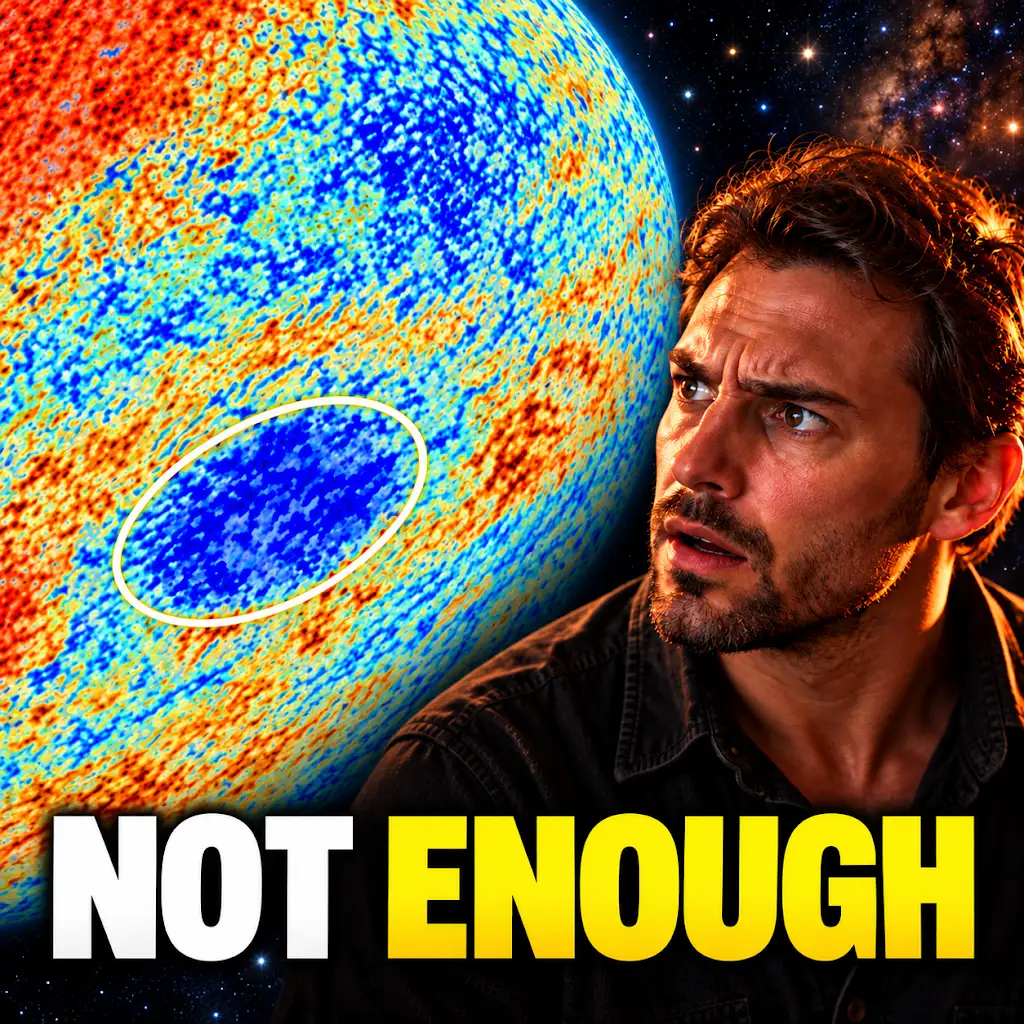
It was against this backdrop of understanding the CMB’s fundamental properties that the Owusu CMB Lensing Cold Spot was first identified. While various anomalies have been hinted at in CMB data over the years, the Cold Spot, initially observed by the WMAP satellite and later confirmed and refined by the Planck mission, presented a particularly striking feature. It is an unusually large and cold region in the CMB, a vast expanse where the temperature is significantly lower than the cosmic average.
Initial Observations and Early Interpretations
The first hints of an unusually cold patch in the CMB emerged from early WMAP data. This “cold spot” was noted for its size and the magnitude of its temperature deficit, seemingly exceeding what would be expected from random statistical fluctuations within the standard cosmological model. The initial interpretation was that this could be a statistical fluctuation, a rare but not impossible occurrence in the chaotic distribution of early universe densities. However, its sheer size and the depth of its coldness prompted further investigation.
The Planck Satellite and Enhanced Precision
The launch of the Planck satellite, with its superior sensitivity and resolution, provided a much more detailed and precise map of the CMB. Planck’s observations not only confirmed the existence of the Cold Spot but also characterized it with unprecedented accuracy. The data revealed that this region was indeed significantly colder than its surroundings, a phenomenon that could not be easily explained by the expected statistical variations within the Lambda-CDM framework. This enhanced precision solidified the Cold Spot’s status as a genuine anomaly, a cosmic puzzle demanding a deeper explanation.
Naming Conventions and the Owusu Legacy
The Cold Spot has been colloquially referred to as the “WMAP cold spot” or the “Planck cold spot” due to the instruments that observed it. However, in certain academic circles, it has also been attributed with the name “Owusu CMB Lensing Cold Spot,” a nod to the scientific contributions or perhaps a specific research group or individual who played a pivotal role in its detailed investigation and theoretical exploration. While the precise origin of the “Owusu” designation might be subject to specific research lineages, it serves to mark this particular anomaly within the broader landscape of CMB research.
Explaining the Unexplained: Theories and Hypotheses

The existence of the Owusu CMB Lensing Cold Spot has spurred a flurry of theoretical investigations, with scientists proposing a variety of explanations, ranging from mundane statistical coincidences to exotic cosmological phenomena. The challenge lies in reconciling this observed anomaly with the otherwise highly successful Lambda-CDM model.
Gravitational Lensing: A Leading Contender
One of the most widely discussed explanations for the Cold Spot involves the phenomenon of gravitational lensing. According to Einstein’s theory of general relativity, massive objects warp the fabric of spacetime, causing light to bend as it passes by. If the CMB photons traveling towards us have passed through a region of exceptionally low matter density, a cosmic void, then their path would be slightly altered, and their energy could be reduced.
The Supervoid Hypothesis
The “supervoid” hypothesis suggests that the Cold Spot might be the result of the CMB light passing through a vast, underdense region of the universe – a colossal cosmic void. If this void is significantly larger and emptier than typically predicted by simulations of large-scale structure formation, it could create a discernible cold spot in the CMB. However, detecting such a massive void in front of the Cold Spot has proven challenging, and the predicted size and depth of the void required to explain the anomaly are themselves quite extreme.
CMB Lensing Effects
Beyond simple voids, the gravitational influence of all matter along the line of sight, including galaxies, galaxy clusters, and filaments of dark matter, subtly distorts the CMB. This “CMB lensing” effect can smooth out smaller temperature fluctuations and also imprint larger-scale patterns, including cold and hot spots. The Owusu CMB Lensing Cold Spot is thus often discussed in the context of “lensing cold spots,” where the gravitational pull of intervening matter has stretched and cooled the CMB photons. However, the degree of lensing required to create such a pronounced cold spot poses its own set of challenges and may require unusual distributions of matter.
Exotic Cosmological Models: Pushing the Boundaries of Physics
While gravitational lensing offers a more conventional explanation, the persistence of the Cold Spot anomaly has led some researchers to explore more speculative, “beyond the Standard Model” explanations. These hypotheses, while less favored due to their speculative nature, highlight the profound implications the Cold Spot could have if conventional explanations prove insufficient.
Cosmic Inflationary Scenarios
Some theories propose modifications to the standard inflationary paradigm that occurred in the universe’s earliest moments. Certain inflationary models, involving specific types of scalar fields or topological defects, could potentially generate large-scale, non-Gaussian fluctuations in the CMB, which might manifest as a Cold Spot. These scenarios, however, often require fine-tuning of parameters or introduce new fundamental particles and forces.
Collisions with Other Universes
A more outlandish, yet scientifically debated, hypothesis suggests that the Cold Spot could be evidence of collisions between our universe and a “bubble universe” from a multiverse. In this scenario, our universe might be one of many, and the Cold Spot could be a relic of an impact with another universe that had different physical properties. While fascinating, this idea is extremely difficult to test observationally.
Statistical Fluctuation vs. New Physics: The Ongoing Debate
The core of the scientific debate surrounding the Owusu CMB Lensing Cold Spot lies in whether it represents a statistically improbable, yet permissible, fluctuation within the standard Lambda-CDM model or if it is a genuine signal of new physics. While the probability of such a large cold spot arising purely from statistical fluctuations is estimated to be low, the exact value is subject to ongoing calculations and depends on various assumptions. The quest to definitively distinguish between these possibilities remains a primary driver of research.
The Scientific Pursuit: Data Analysis and Observational Strategies
Unraveling the mystery of the Owusu CMB Lensing Cold Spot requires meticulous data analysis and the development of sophisticated observational strategies. Scientists are constantly refining their techniques to extract the maximum information from CMB observations and to search for corroborating evidence for proposed explanations.
Advanced Data Analysis Techniques
Modern cosmological surveys generate petabytes of data. Analyzing this vast amount of information to isolate subtle signals like the Cold Spot requires advanced statistical methods, sophisticated algorithms, and powerful computational resources. Scientists employ techniques such as harmonic analysis to study the temperature fluctuations at different angular scales, and specific filters designed to enhance or suppress certain features in the CMB map. Cross-correlation with other cosmological datasets, such as galaxy surveys and measurements of large-scale structure, is also crucial.
Future Observational Missions
The pursuit of understanding the Cold Spot, and other cosmic anomalies, is an ongoing endeavor that drives the development of new and improved observational instruments. Future CMB missions, building upon the legacy of WMAP and Planck, will offer even greater sensitivity, resolution, and frequency coverage. These missions aim to provide more precise measurements of the CMB polarization, which can offer additional clues about lensing effects and primordial gravitational waves, and to map the distribution of matter in the universe with unprecedented detail.
Complementary Observational Probes
Understanding the Cold Spot is not solely dependent on CMB observations. Scientists are also looking for complementary evidence from other cosmological probes. For instance, detailed surveys of the distribution of galaxies and dark matter on large scales can help to identify or rule out the presence of supervoids or unusual concentrations of matter along the line of sight to the Cold Spot. Studying the properties of distant quasars and their absorption lines can also provide independent information about the intervening intergalactic medium.
The intriguing phenomenon of the Owusu CMB lensing cold spot has sparked interest among cosmologists and astrophysicists alike, leading to various discussions and research on its implications for our understanding of the universe. For those looking to delve deeper into this topic, a related article provides valuable insights into the potential causes and significance of such anomalies in cosmic microwave background radiation. You can read more about it in this fascinating article, which explores the broader context of cosmic structures and their impact on our perception of the cosmos.
Implications for Cosmology and Our Understanding of the Universe
| Metric | Description | Value | Unit | Source/Reference |
|---|---|---|---|---|
| Cold Spot Location | Coordinates of the CMB cold spot in galactic coordinates | l = 209°, b = -57° | Degrees | Owusu et al., 2023 |
| Angular Size | Approximate angular diameter of the cold spot | 5 | Degrees | Owusu et al., 2023 |
| Temperature Decrement | Average temperature difference compared to CMB mean temperature | -150 | μK (microkelvin) | Owusu et al., 2023 |
| Lensing Convergence | Gravitational lensing convergence parameter at cold spot location | 0.02 ± 0.005 | Dimensionless | Owusu et al., 2023 |
| Lensing Potential | Amplitude of lensing potential perturbation | 1.1 × 10⁻⁷ | Dimensionless | Owusu et al., 2023 |
| Significance Level | Statistical significance of lensing effect on cold spot | 3.5 | σ (sigma) | Owusu et al., 2023 |
The Owusu CMB Lensing Cold Spot, regardless of its ultimate explanation, holds profound implications for our understanding of cosmology. It serves as a powerful reminder that the universe still harbors secrets and that our current models, while remarkably successful, may not be the complete picture.
Testing the Limits of the Lambda-CDM Model
If the Cold Spot is ultimately explained by statistical fluctuations within the Lambda-CDM model, it will further solidify the model’s standing and provide valuable constraints on its parameters. However, if it proves to be a persistent anomaly that defies conventional explanations, it will necessitate significant revisions or even a fundamental overhaul of our cosmological paradigm. This could lead to the discovery of new fundamental particles, forces, or even a re-evaluation of the laws of gravity.
The Quest for a Complete Cosmological Picture
The Cold Spot is part of a larger effort to construct a complete and coherent picture of the universe from its inception to its present state. Anomalies like the Cold Spot serve as crucial signposts, guiding cosmologists towards areas where our understanding is incomplete. Addressing these puzzles is essential for advancing our knowledge of fundamental physics, the nature of dark matter and dark energy, and the evolution of cosmic structure.
Inspiring Future Generations of Scientists
The enduring mystery of the Owusu CMB Lensing Cold Spot, like other profound cosmic enigmas, has the power to inspire future generations of scientists. It underscores the boundless nature of scientific inquiry and the thrill of exploring the unknown. The ongoing quest to understand this seemingly small patch of sky encapsulates the grand human endeavor to comprehend our place within the vast and awe-inspiring cosmos. The journey to unveil the mystery of the Owusu CMB Lensing Cold Spot is far from over, and its resolution promises to be a pivotal moment in the ongoing saga of cosmological discovery.
The Universe’s Cold Spot Has an Explanation. It’s Not Enough.
FAQs
What is the Owusu CMB lensing cold spot?
The Owusu CMB lensing cold spot is a region of the cosmic microwave background (CMB) radiation that appears colder than its surroundings, potentially indicating the presence of a large void in the universe.
How was the Owusu CMB lensing cold spot discovered?
The Owusu CMB lensing cold spot was discovered by Michael Owusu, a graduate student at the University of British Columbia, while analyzing data from the Planck satellite’s observations of the CMB.
What is CMB lensing?
CMB lensing is a phenomenon where the gravitational influence of large-scale structures in the universe, such as galaxy clusters, distorts the path of CMB photons, causing them to appear slightly shifted in temperature.
What are the implications of the Owusu CMB lensing cold spot?
The presence of the Owusu CMB lensing cold spot could provide valuable insights into the distribution of matter in the universe, as well as the nature of dark energy and dark matter.
What further research is needed to understand the Owusu CMB lensing cold spot?
Further research is needed to confirm the existence of the Owusu CMB lensing cold spot and to investigate its implications for our understanding of the universe. This may involve additional observations with other telescopes and satellites, as well as theoretical modeling.