
The vast expanse of the cosmos, a canvas painted with the light of distant galaxies and the echoes of the Big Bang, has long been a source of profound mystery and scientific inquiry. Among the most enigmatic features within this celestial tapestry is the Cosmic Microwave Background (CMB), the afterglow of creation itself. For decades, scientists have meticulously mapped and analyzed this faint radiation, unraveling secrets about the universe’s infancy. However, within this otherwise remarkably uniform radiation, a peculiar anomaly has persistently captured the attention of cosmologists: the CMB Cold Spot. This region of significantly lower temperature than its surroundings has defied easy explanation, fueling a vibrant debate and inspiring a new documentary that seeks to illuminate this cosmic enigma.
The Cosmic Tapestry and the Unforeseen Chill
The Cosmic Microwave Background radiation is a cornerstone of modern cosmology, providing a snapshot of the universe when it was merely 380,000 years old. At this epoch, the universe had cooled enough for electrons and protons to combine, forming neutral atoms. This event, known as recombination, allowed photons to travel freely, and these photons, stretched by the expansion of the universe over billions of years, are what we observe today as the CMB. Its remarkable uniformity across the sky, with temperature fluctuations of only about one part in 100,000, is powerful evidence for the Big Bang theory and the subsequent period of inflation.
However, it is precisely within this near-perfect uniformity that the Cold Spot stands out. First detected by the Wilkinson Microwave Anisotropy Probe (WMAP) and later studied with even greater precision by the Planck satellite, this vast region in the constellation Eridanus is cooler by a statistically significant margin than the average CMB temperature. Its existence has challenged conventional cosmological models, prompting a search for explanations that range from mundane observational artifacts to truly exotic cosmological phenomena. The implications of its origin, whether commonplace or extraordinary, could profoundly alter our understanding of the universe.
From WMAP to Planck: The Evolving Picture of the Cold Spot
The initial hints of the Cold Spot emerged from the WMAP data, a testament to the groundbreaking sensitivity of the mission. As WMAP meticulously scanned the entire sky, astronomers began to notice a subtle but persistent dip in temperature in a particular region. While statistical fluctuations are expected in any measurement, the Cold Spot’s magnitude and size raised eyebrows. It was too large and too cold to be easily dismissed as a random statistical anomaly, prompting further investigation and the development of more sophisticated analysis techniques.
The arrival of data from the Planck satellite, with its unparalleled resolution and sensitivity, provided a much clearer and more detailed picture of the CMB. Planck confirmed the existence of the Cold Spot with even greater certainty and allowed for a more precise characterization of its properties. The improved data helped to refine estimates of its temperature deficit and its angular size, further strengthening the case for it being a genuine feature of the CMB rather than an artifact of instrumental noise or foreground contamination. This increased confidence in the reality of the Cold Spot has only intensified the scientific quest to understand its origin.
The Statistical Significance: A Fluke or a Foreboding Sign?
A crucial aspect of the Cold Spot debate revolves around its statistical significance. Scientists employ rigorous statistical methods to determine the probability of such an anomaly occurring by chance within the framework of the standard cosmological model (Lambda-CDM). While the Cold Spot is indeed unusual, the question remains whether it is so unusual that it requires a revision of our fundamental understanding of the universe, or if it falls within the realm of rare but plausible statistical fluctuations.
The documentary delves into these statistical considerations, explaining the complex calculations and the assumptions underlying them. It highlights the tension between the desire to find novel explanations for cosmic puzzles and the scientific imperative to uphold established models unless presented with overwhelming evidence to the contrary. The film likely explores the various thresholds for statistical significance, underscoring the careful and often iterative process of scientific discovery.
The CMB Cold Spot documentary delves into the intriguing phenomenon of the Cosmic Microwave Background radiation, exploring the implications of this cold region in the universe. For those interested in further reading about the mysteries of cosmic anomalies, a related article can be found at Freaky Science, which discusses various theories and discoveries in the field of cosmology.
Hunting for Explanations: From Underdense Regions to Cosmic Voids
The scientific community has proposed a diverse array of hypotheses to explain the CMB Cold Spot, each with its own set of implications. These proposed solutions can be broadly categorized into two main camps: those that attribute the Cold Spot to plausible, albeit perhaps unusual, features within the standard cosmological model, and those that invoke more speculative or exotic physics.
One of the leading explanations within the standard model is the “supervoid” hypothesis. This theory suggests that the Cold Spot might be the result of the gravitational influence of an exceptionally large and underdense region of the universe, a cosmic void, situated between the observer and the CMB. As CMB photons pass through this void, they would expend energy climbing out of its gravitational potential well, causing them to be redshifted and appear cooler on Earth. While the existence of large voids is predicted by cosmological simulations, the sheer scale and emptiness required to produce a Cold Spot of the observed magnitude are still subject to ongoing research and observational verification.
The Supervoid Hypothesis: A Gravitational Shadow
The supervoid hypothesis paints a picture of the universe as a cosmic web of matter and voids. Galaxies and clusters of galaxies are strung along filaments, while vast, relatively empty regions lie between them. The idea is that the Cold Spot is essentially a gravitational shadow cast by one of these exceptionally large voids. Imagine a ball rolling over a slightly uneven surface; its trajectory will be affected by the dips and rises. Similarly, CMB photons, the messengers from the early universe, are subtly influenced by the gravitational landscape they traverse.
If a massive void lies between us and a particular patch of the sky, the CMB photons originating from that direction would have had to climb out of the gravitational pull of the surrounding matter, which is more densely packed outside the void. This gravitational work requires energy, and as the photons expend this energy, their wavelengths stretch, shifting them towards the red end of the spectrum. This stretching of wavelengths, or redshift, translates directly into a lower observed temperature. The documentary likely explores the feasibility of such a void existing and the challenges in directly observing it, as voids are by definition regions with very little matter to detect.
Topological Defects: Echoes of Early Universe Phase Transitions
Beyond the more conventional explanations, some theories venture into the realm of exotic physics, proposing that the Cold Spot might be a relic of phenomena that occurred during the very early universe. One such intriguing idea involves topological defects, hypothetical structures that could have formed as the universe underwent phase transitions, analogous to how ice crystals form from water.
These defects, such as cosmic strings or domain walls, are predicted by some extensions of the Standard Model of particle physics. If these defects were present in the early universe, they could have influenced the distribution of matter and energy, potentially leaving their imprint on the CMB. A cosmic string, for instance, could have acted as a gravitational lens, bending light and causing a temporary region of cooling. The documentary would likely delve into the theoretical underpinnings of these exotic particles and the observational signatures they might leave, highlighting the speculative but exciting nature of these proposals.
The CMB Cold Spot documentary explores the intriguing anomalies in the cosmic microwave background radiation, particularly focusing on the mysterious cold spot that has puzzled scientists for years. For those interested in delving deeper into the implications of this phenomenon, a related article can be found at Freaky Science, which discusses various theories surrounding the cold spot and its potential connections to dark energy and the universe’s structure. This resource provides a comprehensive overview that complements the documentary’s insights, making it a valuable read for anyone fascinated by the mysteries of the cosmos.
Alternative Cosmological Models: Beyond Lambda-CDM
The very existence of the Cold Spot, and its resistance to easy explanation within the standard Lambda-CDM model, has also spurred the development and consideration of alternative cosmological frameworks. These models may incorporate different fundamental particles, forces, or even a different evolutionary history for the universe.
Some alternative models suggest that the Cold Spot could be evidence for a multiverse, where our observable universe is just one bubble in a larger cosmic foam. Interactions with other universes, or specific conditions within our own bubble’s formation, could have led to such a large-scale anomaly. Other models explore modifications to gravity or the properties of dark energy. The documentary would likely present these alternative paradigms as potential avenues of research, underscoring the dynamic and ever-evolving nature of scientific understanding.
The Documentary’s Approach: Visualizing the Invisible

Bringing abstract cosmological concepts to life for a general audience is a significant challenge, and the documentary aims to bridge this gap through compelling visualizations and accessible explanations. The visual narrative is crucial in conveying the scale and nature of the CMB, the Cold Spot, and the theoretical models proposed to explain it.
The film likely employs advanced computer graphics to render the intricate patterns of the CMB, transforming raw data into a visually stunning representation of the universe’s earliest light. Viewers would be guided through the process of “seeing” the CMB, understanding how scientists interpret its temperature variations. The Cold Spot itself would be depicted not just as a data point, but as a vast, dark expanse against the luminous backdrop of the CMB, emphasizing its anomaly.
Recreating the Universe: CGI and Scientific Accuracy
The power of modern computer-generated imagery (CGI) is harnessed to reconstruct the conditions of the early universe and to illustrate the proposed mechanisms behind the Cold Spot. For instance, to explain the supervoid hypothesis, the documentary might depict a vast, empty region of space, showcasing how its gravitational influence subtly alters the path of light. The abstract concept of gravitational lensing would be visualized, showing how mass bends spacetime and affects the trajectory of photons.
When exploring exotic theories like cosmic strings, the CGI would need to be imaginative yet grounded in theoretical descriptions. The film might show shimmering, thread-like structures woven into the fabric of spacetime, demonstrating how their presence could have left an imprint on the CMB. Maintaining scientific accuracy while creating engaging visuals is a delicate balance, and the documentary’s success would hinge on its ability to convey complex ideas without sacrificing fidelity to the underlying science.
Expert Voices: Illuminating the Path Forward
A key component of any documentary seeking to unravel a scientific mystery is the inclusion of interviews with the leading experts in the field. The documentary would feature interviews with cosmologists, astrophysicists, and data analysts who have dedicated their careers to studying the CMB and the Cold Spot. These individuals would offer their perspectives on the significance of the anomaly, the strengths and weaknesses of various hypotheses, and the ongoing research efforts.
Hearing directly from the scientists involved in the discovery and analysis of the Cold Spot adds an invaluable layer of authenticity and insight. Their passion for unraveling the universe’s secrets, their meticulous approach to data analysis, and their sometimes-contrasting viewpoints would bring the scientific process to life. These voices would guide the viewer through the complex theoretical landscape, explaining the nuances of each proposed solution and the challenges that still remain.
The Documentary’s Impact: Inspiring Curiosity and Future Research
The ultimate goal of a documentary like “Unveiling the Mystery: CMB Cold Spot” is not just to inform but also to inspire. By shedding light on one of the universe’s most intriguing puzzles, it aims to ignite curiosity in viewers, encouraging them to look up at the night sky with a renewed sense of wonder and a desire to learn more.
The film’s ability to demystify complex scientific concepts and present them in an engaging manner could attract a new generation of aspiring scientists. By showcasing the collaborative and iterative nature of scientific inquiry, it highlights the excitement of pushing the boundaries of human knowledge and the satisfaction of solving complex problems. The Cold Spot, once an obscure data anomaly, becomes a gateway to understanding the fundamental nature of our universe.
Igniting the Spark: A Call to Wonder
The Cold Spot, with its enigmatic origins, serves as a powerful reminder that even in our advanced age of scientific understanding, the universe still holds profound mysteries. The documentary aims to leverage this sense of mystery to foster a deeper appreciation for cosmology and the scientific endeavor. It suggests that the pursuit of knowledge is an ongoing journey, and that every discovery, even a seemingly small anomaly, can lead to monumental shifts in our understanding.
By presenting the Cold Spot not as a definitive problem solved, but as an ongoing investigation, the film encourages viewers to contemplate the vastness of the unknown. It poses questions about the origins of the universe, the nature of reality, and our place within the cosmic grand design. This open-ended approach fosters a sense of intellectual engagement and a desire to participate, even passively, in the ongoing quest for cosmic truth.
The Future of CMB Research: New Instruments and New Questions
The exploration of the CMB Cold Spot is intrinsically linked to the advancement of observational technology and theoretical frameworks. As instruments become more sensitive and theoretical models become more sophisticated, our ability to probe the universe’s deepest secrets continues to grow. The documentary would likely touch upon the future of CMB research, highlighting upcoming missions and the potential for new discoveries.
The ongoing quest to understand the Cold Spot is not just about this single anomaly; it is about refining our understanding of cosmology as a whole. Any solution to the Cold Spot puzzle, whether it involves exotic physics or a more nuanced understanding of the standard model, will have far-reaching implications for our models of galaxy formation, the evolution of cosmic structures, and the fundamental laws that govern the universe. The documentary leaves viewers with a sense of anticipation, hinting that the Cold Spot is not an end point, but rather a stepping stone towards even greater cosmic revelations.
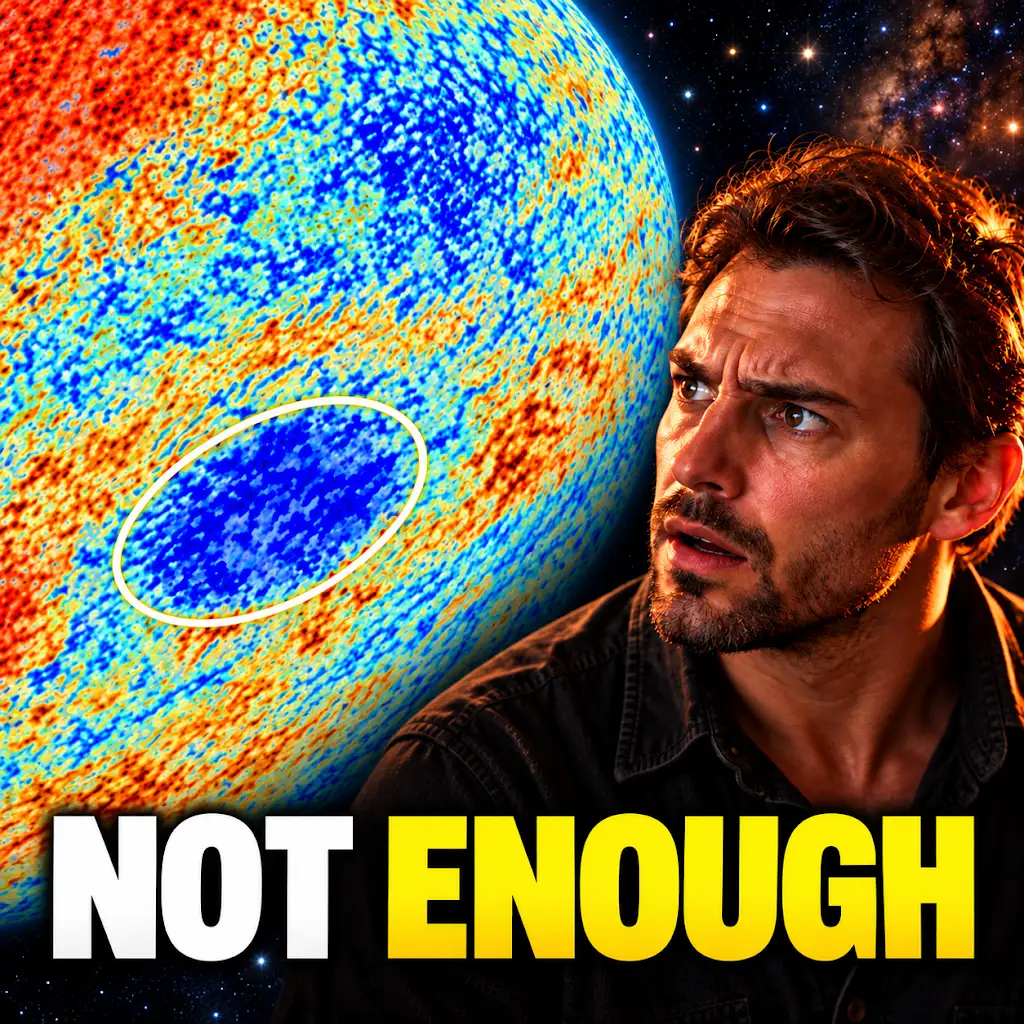
The Universe’s Cold Spot Has an Explanation. It’s Not Enough.
FAQs
What is the CMB cold spot?
The CMB cold spot is a region of the cosmic microwave background radiation that appears colder than its surroundings, suggesting a lower density of matter in that area.
What causes the CMB cold spot?
The exact cause of the CMB cold spot is still a topic of debate among scientists. Some theories suggest it could be a statistical fluke, while others propose explanations such as a supervoid or a collision with a parallel universe.
What is a documentary about the CMB cold spot?
A documentary about the CMB cold spot would likely explore the scientific research and theories surrounding this mysterious phenomenon, as well as the implications it may have for our understanding of the universe.
Where can I watch a documentary about the CMB cold spot?
Documentaries about the CMB cold spot may be available on streaming platforms like Netflix, Amazon Prime, or YouTube, or they may be broadcast on science-focused TV channels like National Geographic or the Discovery Channel.
Why is the CMB cold spot significant?
Studying the CMB cold spot can provide valuable insights into the large-scale structure of the universe, the nature of dark matter and dark energy, and the origins of cosmic microwave background radiation. It challenges our current understanding of the universe and pushes the boundaries of cosmology.