The abyssal plains, vast and silent expanses of the deep ocean, hold a profound mystique. For millennia, these regions remained largely unexplored, shrouded in darkness and pressure unimaginable to surface dwellers. Yet, within this extreme environment, life persists, adapting in remarkable ways to survive. Among the most enigmatic inhabitants of these hadal zones is the snailfish, a creature that has pushed the boundaries of our understanding of life’s resilience. The discovery of a snailfish at an astonishing depth of 8336 meters marks a significant milestone in deep-sea exploration, offering a tantalizing glimpse into a world few have ever witnessed.
The discovery of a snailfish at 8336 meters is not merely an interesting anecdote; it represents the current deepest living vertebrate ever recorded. This remarkable achievement challenges previous assumptions about the physiological limits of complex organisms. Before this groundbreaking find, the deepest known fish were found at depths hovering around 8000 meters, making this new record a significant leap into the largely unknown. The hadal zone, the deepest part of the ocean trenches, generally extends from 6,000 to over 11,000 meters. This environment is characterized by crushing pressures, near-freezing temperatures, and complete absence of sunlight. The fact that a vertebrate, with its relatively complex skeletal and organ systems, can not only survive but thrive under such conditions is a testament to evolutionary ingenuity.
Understanding the Hadal Zone’s Extremes
The hadal zone is an alien world for surface-dwelling life. The pressure at 8336 meters is immense, approximately 836 times greater than at sea level. This is equivalent to having nearly 50 jumbo jets stacked on top of each other pressing down on a single square meter. To put it another way, a human body would be instantly crushed under such forces. Yet, life has found a way. The absence of sunlight means that photosynthesis, the basis of most surface ecosystems, is impossible. Instead, life in the hadal zone relies on chemosynthesis, where microbes derive energy from chemical reactions, or on organic matter that slowly drifts down from shallower waters, forming the so-called “marine snow.”
The Significance of Vertebrate Life at Extreme Depths
The presence of a vertebrate at such profound depths is particularly noteworthy. Vertebrates, characterized by their backbone, represent a higher level of biological complexity compared to invertebrates. Their physiological systems are more intricate and generally considered more susceptible to extreme environmental changes. The ability of a snailfish to maintain cellular integrity, function, and reproduction under the crushing pressure and frigid temperatures of the hadal zone is a profound biological puzzle. It forces scientists to re-evaluate the very definitions of “extreme” environments and the adaptability of life. This discovery opens up new avenues of research into the biochemical and genetic mechanisms that allow these creatures to survive.
Recent studies have highlighted the remarkable adaptations of the snailfish, a species that thrives at extreme ocean depths, including a record-setting discovery at 8,336 meters in the Mariana Trench. This fascinating creature has evolved unique physiological traits that allow it to survive in such harsh conditions, making it a subject of interest for marine biologists. For more insights into the life of the snailfish and its extraordinary habitat, you can read the related article here: Freaky Science.
The Unassuming Architect of the Deep: Introducing the Snailfish
The snailfish, belonging to the family Liparidae, are a diverse group of fish found in marine environments worldwide, from polar regions to the tropics, and from shallow waters to the deepest oceanic trenches. Their name derives from their often slimy, tadpole-like appearance, with smooth, scaleless skin and a gelatinous body that aids in buoyancy and survival under pressure. Prior to the recent discovery, snailfish were already recognized as frequent inhabitants of the deep sea, with several species documented in the abyssal and hadal zones. However, the record-breaking specimen has propelled this humble fish into the scientific spotlight, prompting a deeper investigation into its unique adaptations.
Evolutionary Pathways to the Abyss
The journey of snailfish into the deepest parts of the ocean is a fascinating evolutionary narrative. It is believed that their ancestors likely inhabited shallower waters and gradually, over millions of years, adapted to progressively deeper environments. This adaptation would have involved a series of genetic mutations and physiological changes, driven by the selective pressures of increasing pressure, decreasing temperature, and limited food availability. The development of gelatinous bodies, for instance, likely helped them cope with immense pressure by reducing the amount of compressible gas-filled organs, such as swim bladders, which are absent or greatly reduced in deep-sea species.
The Snailfish’s Physical Marvels
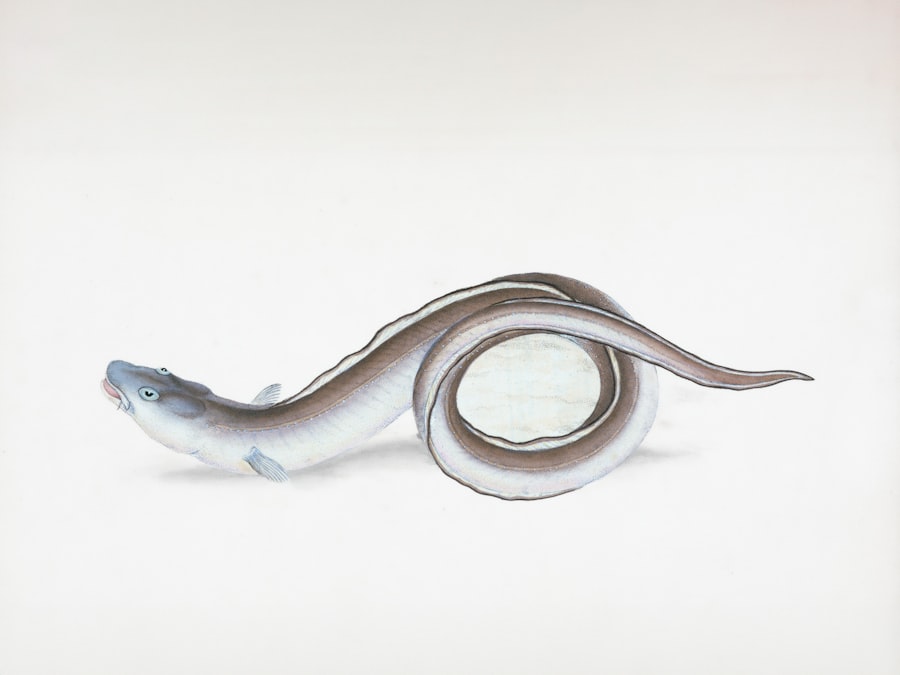
The snailfish’s physical characteristics are a direct consequence of its extreme habitat. Their bodies are typically elongated and tapering, with large heads and small eyes, often reduced or absent in species living in perpetual darkness. The lack of scales and the presence of thick, gelatinous skin provide a protective buffer against the crushing pressure. Their fins are often fused into a single, continuous dorsal and anal fin, aiding in locomotion and stability in the water column. The internal anatomy of these deep-sea snailfish is also highly specialized, with modifications to their skeletal structure, cardiovascular system, and cellular biochemistry to withstand the rigonous conditions.
Unlocking the Secrets of Deep-Sea Survival: Physiological Adaptations
The survival of the snailfish at 8336 meters is a triumph of physiological adaptation. Scientists are eager to understand the complex mechanisms that allow these creatures to function under such immense pressure and in the absence of light. Research into their cellular structure, metabolic processes, and genetic makeup is shedding light on how they overcome the challenges of the hadal zone. These adaptations are not merely for survival; they are sophisticated solutions to environmental extremes that can inform our understanding of biology and potentially lead to new technological innovations.
Coping with Crushing Pressure: Molecular Mechanisms
One of the primary challenges faced by deep-sea organisms is the extreme hydrostatic pressure. At 8336 meters, this pressure would normally disrupt the delicate balance of proteins and cellular membranes, leading to their denaturation and failure. Snailfish, however, have evolved ingenious molecular mechanisms to counteract this. They accumulate high concentrations of organic osmolytes, such as trimethylamine N-oxide (TMAO), within their cells. TMAO acts as a counteracting solute, stabilizing proteins and preventing them from unfolding under pressure. This allows the cellular machinery to continue functioning, albeit in a dramatically different environment.
The Role of the Gelatinous Body
The characteristic gelatinous body of the snailfish plays a crucial role in its survival at extreme depths. This jelly-like substance is primarily composed of water and a matrix of collagen and glycosaminoglycans. Its low density and high compressibility allow the snailfish to maintain neutral buoyancy, expending minimal energy to stay afloat in the water column. Furthermore, the gelatinous tissues are less susceptible to compression than more rigid tissues. The absence of air-filled organs like swim bladders, which would collapse under such pressure, is another key adaptation.
Sensory Systems in Perpetual Darkness
In the aphotic zone, where sunlight never penetrates, traditional visual senses become largely irrelevant. Snailfish have adapted their sensory systems accordingly. While some species found at shallower depths retain functional eyes, those residing in the deepest trenches often have reduced or absent eyes, relying instead on other senses. The lateral line system, a sensory organ that detects vibrations and pressure changes in the water, is highly developed in deep-sea snailfish, allowing them to navigate, detect prey, and avoid predators in the darkness. Their sense of smell may also be enhanced, enabling them to locate scarce food sources.
The Expedition of Discovery: Technology and Methodology
The discovery of the snailfish at 8336 meters was not a serendipitous event but the result of a carefully planned and technologically advanced expedition. Scientists utilized state-of-the-art deep-sea submersibles and remotely operated vehicles (ROVs) equipped with specialized sampling equipment and high-definition cameras. These tools are essential for exploring environments that are inaccessible to human divers and for collecting specimens without damaging them. The data gathered from these expeditions provides invaluable insights into the biodiversity and ecological processes of the deep ocean.
The Power of Deep-Sea Technology
Modern deep-sea exploration relies on sophisticated technology. Remotely operated vehicles (ROVs) and autonomous underwater vehicles (AUVs) are indispensable tools. ROVs are tethered to a surface vessel and can be piloted by humans in real-time, allowing for precise maneuverability and immediate data collection. AUVs, on the other hand, operate independently on pre-programmed missions, covering vast areas of the seafloor. For the snailfish discovery, advanced imaging systems, powerful lights, and specialized sampling arms were crucial for identifying, observing, and collecting the specimens at extreme depths.
Challenges of Deep-Sea Sampling
Collecting specimens from the hadal zone presents significant challenges. The immense pressure can crush delicate equipment and alter the physiology of captured organisms if not handled properly. Specialized pressure-resistant sample containers and carefully controlled decompression procedures are necessary to bring specimens to the surface intact and in a condition suitable for scientific study. The logistical complexities of deploying and recovering equipment from such extreme depths, often in remote ocean locations, also add to the challenge.
The Role of International Collaboration
Deep-sea exploration is often a collaborative effort involving scientists and institutions from around the globe. Sharing resources, expertise, and data allows for more comprehensive and efficient research. The discovery of the 8336-meter snailfish likely involved international partnerships, pooling the collective knowledge and technological capabilities to achieve such a remarkable feat. This collaborative spirit is essential for unraveling the mysteries of our planet’s largest and least explored biome.
Recent discoveries in the deep ocean have highlighted the fascinating adaptations of the snailfish, which has been found at depths of 8336 meters in the Mariana Trench. This remarkable fish has evolved unique features that allow it to thrive in extreme conditions, making it a subject of interest for marine biologists. For more insights into the incredible world of deep-sea creatures, you can read an engaging article on this topic at Freaky Science. The adaptations of the snailfish not only showcase the resilience of life but also raise questions about the mysteries that still lie beneath the ocean’s surface.
Future Frontiers: What Lies Beyond the Snailfish?
| Depth | 8336 meters |
|---|---|
| Species | Snailfish |
| Location | Deep sea |
| Pressure | Approximately 823 atmospheres |
| Temperature | Approximately 1-4°C |
The discovery of the snailfish at 8336 meters is a momentous achievement, but it also highlights how much remains unknown about the deep ocean. This record-breaking find serves as a stepping stone, inspiring further exploration and scientific inquiry into the hadal zone and beyond. Scientists are eager to discover new species, understand their ecological roles, and learn more about the resilience of life in Earth’s most extreme environments. The potential for groundbreaking discoveries in the deep sea is virtually limitless.
Expanding the Known Limits of Life
The quest to find life at even greater depths continues. While the 8336-meter snailfish currently holds the record for a vertebrate, it is plausible that other, yet undiscovered, organisms may inhabit even deeper regions of the ocean trenches. Further exploration using advanced technologies will be crucial in answering this question. The search for life in these extreme environments is not just about cataloging species; it’s about understanding the fundamental principles of life itself and its potential to exist in extraterrestrial settings.
Understanding Deep-Sea Ecosystems
The deep ocean is not a barren wasteland; it is a complex and interconnected ecosystem. Understanding the role of species like the snailfish within these food webs is vital. How do they interact with other inhabitants of the hadal zone? What are their prey and predators? Answering these questions will provide a more complete picture of deep-sea biodiversity and the delicate balance of these remote environments. The influence of processes occurring in the deep sea, such as carbon cycling, also has implications for the global ocean system.
Implications for Astrobiology
The study of life in Earth’s extreme environments has profound implications for astrobiology – the search for life beyond our planet. The conditions found in the deep ocean, such as high pressure, low temperature, and lack of sunlight, are analogous to environments that might exist on other planets and moons in our solar system. By understanding how life thrives in these terrestrial extremes, scientists gain valuable insights into the potential for life to exist in similar conditions elsewhere in the universe. The deep-sea snailfish, in its own way, offers a glimpse into the possibilities of life beyond Earth.

The Deeper You Go, the Less Life Looks Like Life
FAQs
What is the snailfish at 8336 meters?
The snailfish at 8336 meters is a species of fish that has been discovered at a depth of 8,336 meters in the Mariana Trench, making it the deepest living fish ever recorded.
What is the significance of this discovery?
The discovery of the snailfish at 8336 meters is significant because it provides valuable insights into the adaptability and resilience of marine life in extreme environments, and it expands our understanding of the biodiversity of the deep sea.
How does the snailfish at 8336 meters survive in such extreme conditions?
The snailfish at 8336 meters has adapted to survive in the extreme conditions of the deep sea by possessing unique physiological and behavioral adaptations, such as a lack of swim bladder, slow metabolism, and the ability to withstand high pressure.
What are the characteristics of the snailfish at 8336 meters?
The snailfish at 8336 meters is a small, translucent fish with a gelatinous body and large, wing-like fins. It lacks scales and has a soft, fleshy appearance, which allows it to navigate the deep-sea environment more effectively.
What does the discovery of the snailfish at 8336 meters mean for future research?
The discovery of the snailfish at 8336 meters opens up new opportunities for further research into the deep-sea ecosystem and the potential for discovering other unique and previously unknown species that inhabit the deepest parts of the ocean.