
A Cosmic Enigma: The Anomalous Cold Spot
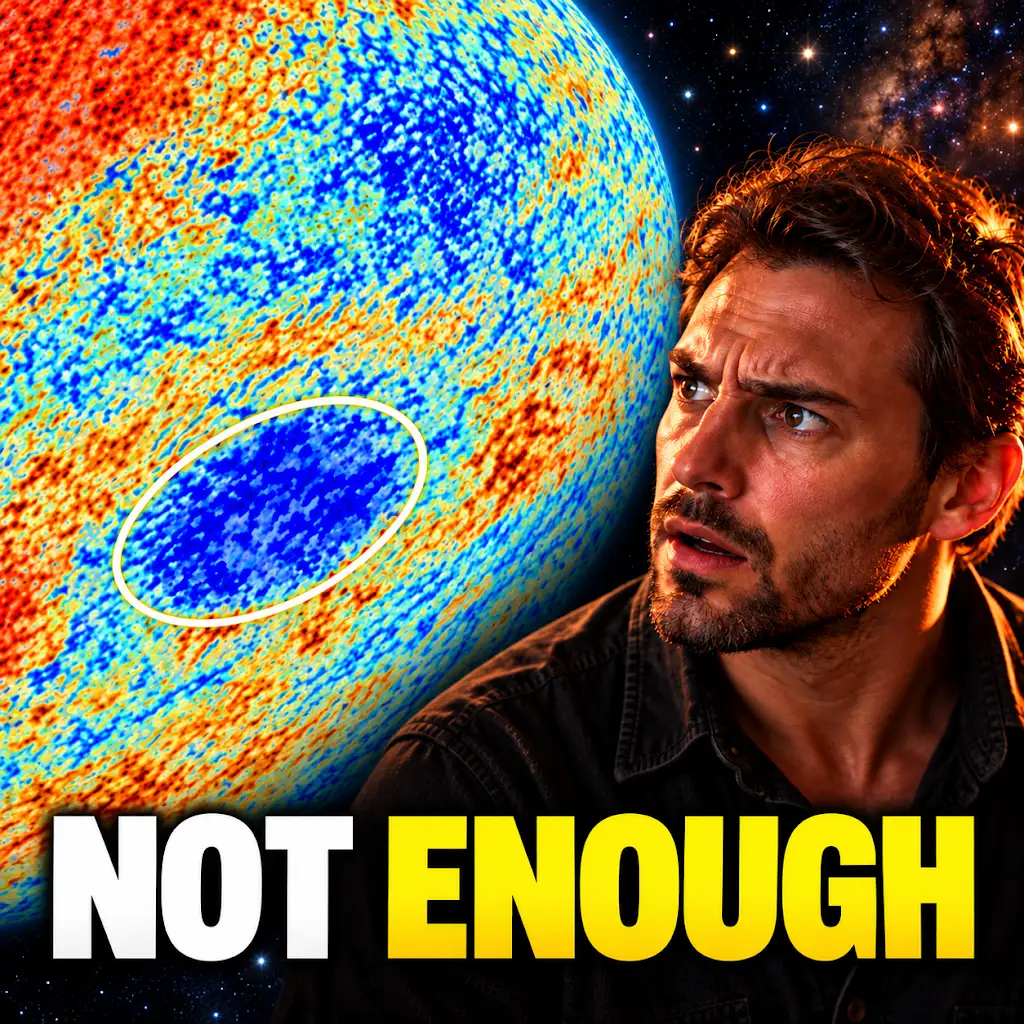
The vast expanse of the universe, a tapestry woven from galaxies, stars, and enigmatic dark matter, has long held secrets that challenge human understanding. Among its many mysteries, one anomaly has particularly captured the attention of cosmologists: the Boötes Void, often referred to as the “Great Nothingness,” and a curious region within the cosmic microwave background (CMB) radiation known as the “Cold Spot.” While the Boötes Void represents a colossal region largely devoid of matter, the Cold Spot is a peculiar area of lower temperature in the otherwise remarkably uniform CMB. This temperature fluctuation, though minuscule in absolute terms, represents a significant deviation from the expected homogeneity predicted by the standard cosmological model, the Lambda-CDM model. For years, the Cold Spot has been a source of intense scientific debate, with various theories proposed to explain its existence, ranging from mundane statistical flukes to exotic physics beyond our current comprehension. The advent of sophisticated redshift surveys, which meticulously map the distribution of galaxies in three-dimensional space, has provided astronomers with unprecedented tools to probe the cosmic web and potentially shed light on the origins of this intriguing celestial cold patch. These surveys, by charting the ebb and flow of matter across billions of light-years, offer a unique perspective, allowing scientists to look back in time and examine the large-scale structure of the universe in the epoch when the CMB was imprinted.
The redshift survey cold spot has been a topic of interest among astronomers and cosmologists, as it presents intriguing questions about the large-scale structure of the universe. For those looking to delve deeper into this phenomenon, a related article can be found at Freaky Science, which explores various theories and observations surrounding cosmic voids and their implications for our understanding of the cosmos.
Foundations of Cosmic Understanding: The Cosmic Microwave Background

The cosmic microwave background (CMB) radiation is a faint afterglow from the Big Bang, a relic of the universe when it was only about 380,000 years old. At this epoch, the universe had cooled sufficiently for electrons and protons to combine and form neutral atoms. This event, known as recombination, allowed photons, which had been scattering off free electrons, to travel unimpeded through space. These ancient photons, stretched by the expansion of the universe over billions of years, now arrive at Earth as microwave radiation, bathing the entire sky with a nearly uniform temperature of approximately 2.7 Kelvin. The remarkable uniformity of the CMB is a cornerstone of the Big Bang theory, providing strong evidence for a hot, dense early universe that has since expanded and cooled. However, the CMB is not perfectly uniform; it contains tiny temperature fluctuations, on the order of microkelvins, which are of immense cosmological significance. These slight variations in temperature correspond to minuscule differences in density in the early universe. These denser regions acted as seeds, gravitationally attracting more matter over time to eventually form the stars, galaxies, and the vast cosmic structures we observe today. The distribution and amplitude of these fluctuations are exquisitely predicted by the Lambda-CDM model, which incorporates dark energy (Lambda) and cold dark matter (CDM) as the dominant components of the universe. The existence of anomalies in the CMB, such as the Cold Spot, therefore presents a direct challenge to this well-established model, prompting scientists to scrutinize both the observational data and the theoretical framework.
The Symphony of Temperature Fluctuations
The CMB is often described as a “baby picture” of the universe, capturing a snapshot of its infancy. The temperature variations observed in this radiation are not random; they follow a specific statistical pattern known as the angular power spectrum. This spectrum reveals how the intensity of these fluctuations varies with angular scale across the sky. The dominant peaks and troughs in the power spectrum correspond to different physical processes in the early universe, such as the oscillations of primordial plasma and the gravitational effects of dark matter. The Lambda-CDM model, with its specific parameters for the proportions of baryonic matter, dark matter, dark energy, and the initial conditions of the universe, accurately predicts this power spectrum with remarkable precision. The observed temperature fluctuations are typically on the order of tens to hundreds of microkelvins. The standard model posits that these fluctuations are essentially Gaussian, meaning they are randomly distributed according to a bell curve. However, there are subtle deviations from this Gaussianity that cosmologists are actively investigating. The Cold Spot, with its significant deviation in temperature, falls into this category of anomalous features that require careful examination.
The Significance of Anomalies
The discovery of anomalies in the CMB, such as the Cold Spot, has profound implications for our understanding of cosmology. While most of the CMB aligns beautifully with the predictions of the Lambda-CDM model, these deviations hint at possible limitations of the model or even the existence of new physics. One of the primary challenges posed by the Cold Spot is its unusual size and low temperature. Statistically, a region of such low temperature and large angular extent is improbable within the framework of standard cosmological fluctuations. This improbability has led to a spectrum of explanations, from the idea that it is simply a rare statistical fluctuation to more speculative hypotheses involving exotic phenomena. Redshift surveys play a crucial role in investigating these anomalies by providing a three-dimensional map of the universe. By understanding the distribution of matter on large scales, particularly the presence and distribution of voids and superclusters, scientists can investigate whether these structures might have influenced the CMB in ways not fully accounted for by the standard model.
Probing the Cosmic Web: The Power of Redshift Surveys

Redshift surveys represent a cornerstone of modern extragalactic astronomy. These surveys meticulously measure the redshift of light from distant galaxies. Redshift is the phenomenon where light from objects moving away from us is stretched to longer wavelengths, analogous to the Doppler effect for sound. The amount of redshift is directly proportional to the object’s recessional velocity, and by the Hubble Law, this velocity is proportional to the distance. Therefore, by measuring the redshift of a galaxy, astronomers can estimate its distance from Earth. When combined with precise angular position measurements on the sky, this allows for the construction of three-dimensional maps of the universe, revealing the intricate large-scale structure of the cosmos. This structure is not random; it is characterized by a cosmic web of filaments and voids, with galaxies and galaxy clusters congregating in the densest regions and vast, underdense regions, known as voids, separating them. Understanding this cosmic web is paramount to investigating anomalies like the Cold Spot.
Mapping the Universe in Three Dimensions
The process of conducting a redshift survey involves observing thousands, and often millions, of galaxies. Each observation yields the galaxy’s position on the sky (its celestial coordinates) and its redshift. Sophisticated instruments on telescopes, such as spectrographs, are used to break down the light from each galaxy into its constituent wavelengths, allowing astronomers to identify characteristic spectral lines. The shift in these lines compared to their laboratory wavelengths directly reveals the galaxy’s redshift. This redshift data is then converted into a velocity and, using the Hubble constant (which relates redshift to distance), a distance measurement. By compiling these measurements for a vast number of galaxies, astronomers can build a detailed map of the universe, visualizing the filamentary structures, clusters, and voids that define the cosmic web. These maps are not static snapshots but rather glimpses into the past, as light from distant galaxies takes billions of years to reach us. The deeper and wider the survey, the further back in cosmic history we can peer.
Identifying Cosmic Structures: Filaments and Voids
The maps generated by redshift surveys reveal a hierarchical structure. On smaller scales, galaxies are found in groups and clusters. On larger scales, these groups and clusters are interconnected by vast filaments of galaxies, forming a cosmic web. In between these filaments and clusters lie enormous, almost empty regions known as voids. These voids are not entirely devoid of matter, but their density is significantly lower than the average density of the universe. The formation of this cosmic web is a natural consequence of gravity acting on small density fluctuations in the early universe, as imprinted on the CMB. Denser regions attract more matter, leading to the formation of structures, while less dense regions become even emptier, forming voids. The Boötes Void, mentioned earlier, is an exceptionally large and well-known example of such a void. The presence and characteristics of these large-scale structures are crucial for understanding potential explanations for the CMB Cold Spot.
Redshift Survey Evidence and the Cold Spot Hypothesis
The implications of redshift surveys for the Cold Spot anomaly are multifaceted. One prominent hypothesis suggests that the Cold Spot might be a result of a very large, underdense region in the universe, a super-void, that lies along our line of sight to that particular region of the CMB. If such a void is sufficiently large and deep, it could gravitationally “pull” photons passing through it, causing them to lose energy. This energy loss would manifest as a lower temperature in the CMB radiation originating from behind the void. Redshift surveys are instrumental in identifying and characterizing these large-scale voids. By mapping the distribution of galaxies, astronomers can determine the boundaries and emptiness of these voids. If a super-void is found to be situated in the direction of the Cold Spot, it would provide compelling evidence for this gravitational lensing explanation.
The Gravitational Pull of Super-Voids
The concept of gravitational lensing is central to the super-void hypothesis. According to Einstein’s theory of general relativity, mass warps spacetime. Photons, though massless, travel along the curvature of spacetime. When CMB photons pass through a region with a significant deficit of mass, such as a super-void, they traverse a region of less curved spacetime compared to photons passing through denser regions. As they emerge from this underdense region, they effectively expend energy climbing out of a gravitational “well,” even though it’s a shallow one. This energy loss translates directly into a redshift of the photons, which, in the context of the CMB, means a lower observed temperature. Redshift surveys have been instrumental in identifying several large voids in the universe. However, the specific characteristics of the voids needed to explain the Cold Spot’s depth and angular size require exceptionally large and deep structures.
Searching for a Cosmic Shadow
The search for a super-void coinciding with the Cold Spot is an active area of research. Astronomers examine the distribution of galaxies in the direction of the Cold Spot, looking for a significant depletion of matter. If a large enough void is found, its dimensions and the estimated density within it can be used to model the expected temperature drop in the CMB. The results of these studies are then compared to the observed temperature of the Cold Spot. Some surveys have indicated the presence of an unusually large void in the general direction of the Cold Spot, known as the “Giant Void.” However, the exact alignment and the depth of this void remain subjects of ongoing debate and refinement. The challenge lies in precisely mapping the extent and density profile of such massive structures, which can span hundreds of millions of light-years.
The intriguing phenomenon known as the redshift survey cold spot has sparked considerable interest among astronomers and cosmologists, leading to various studies and discussions about its implications for our understanding of the universe. For those looking to delve deeper into this topic, a related article provides valuable insights into the potential causes and consequences of this cosmic anomaly. You can explore more about this fascinating subject in the article found here.
Beyond Gravitational Lensing: Alternative Explanations
| Metric | Value | Unit | Description |
|---|---|---|---|
| Angular Size | 5 | Degrees | Approximate diameter of the cold spot on the cosmic microwave background |
| Redshift Range | 0.1 – 0.3 | z | Range of redshifts surveyed to investigate the cold spot region |
| Galaxy Underdensity | 20-30 | Percent | Estimated deficit of galaxies in the cold spot region compared to average |
| Survey Area | 100 | Square Degrees | Area covered by the redshift survey targeting the cold spot |
| Mean Redshift | 0.2 | z | Average redshift of galaxies in the surveyed cold spot region |
| Temperature Decrement | -150 | μK | Temperature difference of the cold spot relative to the CMB mean |
| Survey Instrument | 2dF Galaxy Redshift Survey | N/A | Instrument used for collecting redshift data in the cold spot region |
While the super-void hypothesis offers a compelling explanation for the Cold Spot, it is not the only one. The discrepancy between the observed anomaly and the predictions of the Lambda-CDM model has spurred the development of alternative theories, some of which venture into more speculative territory. These theories attempt to reconcile the Cold Spot with the standard model or propose modifications to it. The ongoing analysis of CMB data and increasingly precise redshift surveys are crucial for testing these various hypotheses and narrowing down the possibilities.
A Statistical Fluke in the Cosmic Tapestry
One of the simplest explanations for the Cold Spot is that it is simply a rare statistical fluctuation within the expected distribution of CMB temperature variations. The Lambda-CDM model predicts that while most regions of the sky will have temperatures close to the average, there is a non-zero probability of encountering regions that are unusually hot or cold, purely by chance. The question then becomes: how improbable is it? Statistical analyses suggest that while the Cold Spot is indeed an outlier, it might not be statistically impossible within the standard model. However, the combination of its low temperature and large angular size makes it a particularly intriguing anomaly, prompting further investigation.
Exotic Physics and Cosmic String Scenarios
More speculative explanations involve physics beyond the standard cosmological model. One such idea proposes the existence of cosmic strings, hypothetical topological defects that may have formed in the early universe. These extremely thin, but incredibly dense, one-dimensional objects could, in theory, interact with CMB photons in a way that creates cold spots. Another avenue of research explores the possibility of modifications to the standard inflationary paradigm, the period of rapid expansion in the very early universe. Certain inflationary models might produce different statistical properties for the CMB fluctuations, potentially allowing for the existence of anomalies like the Cold Spot. The challenge with these exotic explanations is their inherent difficulty to test observationally. However, as our observational capabilities improve, especially with missions like the future Simons Observatory and CMB-S4, these theories may become more constrained.
The Future of Cosmic Exploration: Unraveling the Cold Spot
The mystery of the CMB Cold Spot continues to drive advancements in observational cosmology and theoretical physics. The synergy between high-precision CMB observations and the detailed mapping capabilities of redshift surveys is proving to be an invaluable tool in this endeavor. As new generations of telescopes and surveys come online, the resolution and depth of our cosmic maps will continue to improve, allowing for a more refined understanding of the large-scale structure of the universe and its potential impact on the CMB.
Next-Generation Observatories and Enhanced Precision
Future CMB experiments, such as the Simons Observatory and CMB-S4, will provide unprecedented sensitivity and resolution, allowing for more detailed measurements of the CMB across the entire sky. These instruments are designed to probe fainter fluctuations and more subtle features, potentially revealing more about the statistical properties of the CMB and helping to distinguish between different theoretical explanations for anomalies like the Cold Spot. Simultaneously, ongoing and future large-scale redshift surveys, such as the Dark Energy Spectroscopic Instrument (DESI) and the Legacy Survey of Space and Time (LSST), will continue to map the distribution of matter with ever-increasing precision. The combination of these advanced observational capabilities promises to provide a more comprehensive and detailed picture of the cosmic web, allowing scientists to more definitively test hypotheses about the Cold Spot’s origin.
Refining Cosmological Models and Pushing the Boundaries of Knowledge
Ultimately, the investigation of the CMB Cold Spot is not just about understanding a single anomaly; it is about testing the limits of our current cosmological model and potentially discovering new physics. If the super-void explanation is confirmed, it will refine our understanding of large-scale structure formation and the evolution of the universe. If, however, more exotic explanations are required, it could signal a paradigm shift in our understanding of fundamental physics. The ongoing quest to unravel the mystery of the Cold Spot underscores the dynamic and ever-evolving nature of scientific inquiry, pushing the boundaries of human knowledge with each new observation and theoretical insight. The universe, in its vastness and complexity, continues to offer compelling puzzles that inspire curiosity and fuel our relentless pursuit of understanding.
The Universe’s Cold Spot Has an Explanation. It’s Not Enough.
FAQs
What is a redshift survey cold spot?
A redshift survey cold spot refers to a region in the universe where galaxies are less densely distributed compared to surrounding areas, resulting in a lower number of galaxies with redshift measurements.
How are redshift survey cold spots identified?
Redshift survey cold spots are identified through large-scale surveys of galaxies in the universe, where researchers analyze the distribution of galaxies and look for regions with lower galaxy density and fewer redshift measurements.
What causes redshift survey cold spots?
Redshift survey cold spots can be caused by various factors, such as cosmic voids (regions with fewer galaxies), large-scale structures in the universe, or observational biases in the data collection process.
What can we learn from studying redshift survey cold spots?
Studying redshift survey cold spots can provide insights into the large-scale structure of the universe, the distribution of galaxies, and the effects of cosmic voids on galaxy clustering. It can also help researchers better understand the overall dynamics and evolution of the universe.
How do redshift survey cold spots contribute to cosmology research?
Redshift survey cold spots contribute to cosmology research by helping scientists refine models of the universe, test theories of galaxy formation and evolution, and investigate the impact of dark matter and dark energy on the large-scale structure of the cosmos.